A French Word to Live By
How to Conjugate Effarer in French
/e.fa.ʁe/
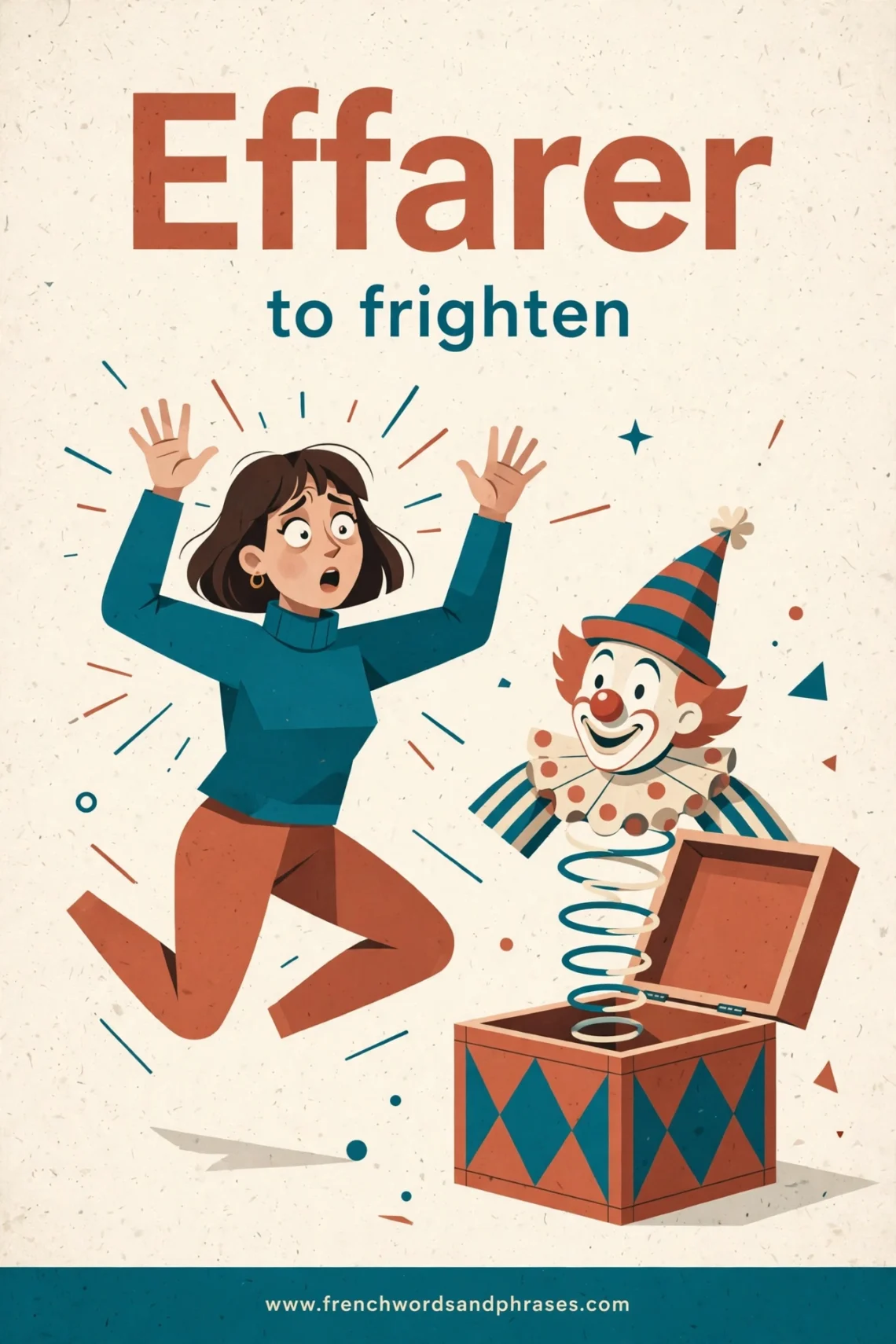
Effarer means to frighten.
A horse shying at a plastic bag, hens bursting from the coop at a shadow, a child with round startled eyes — effarer is the verb of sudden fright, the scare that makes creatures bolt and stare.
In this guide, you’ll learn how to conjugate effarer in all the major French tenses and moods. Explore complete conjugation tables, French examples, English translations, and practice quizzes.
Understanding the French Verb Effarer
Effarer is a regular French verb belonging to the first group of verbs, those ending in -er.
It means to frighten. It is commonly used for frightening animals and people with sudden noises, storms and gestures, for taking fright in the reflexive — horses, hens and crowds are its favourite subjects — and in its participle form, effaré, for the startled looks and panicked movements that follow a scare.
Verb classification: First group (-er)
Auxiliary verb: Avoir
Past participle: effaré
Present participle: effarant
English equivalents: To frighten, to scare; s’effarer — to take fright, to be scared (especially of animals); un air effaré — a startled, frightened look.
One important detail: effarer works in two directions. Transitive, it frightens someone else: le tonnerre effare les chevaux, with avoir in compound tenses. Reflexive, the fright is your own: s’effarer — to take fright — conjugated with être (les poules se sont effarées), and its classic subject is a nervous horse: ce cheval s’effare d’un rien, it takes fright at the slightest thing. The form you will meet most often of all is the adjective: des yeux effarés, startled, wide-open eyes.
Experience the Word
Effarer is the verb of the half-second of fright — before thought, before courage, the body has already jumped.
Imagine a farmyard at siesta time. A gate slams in the wind — and the whole yard erupts: hens scatter in feathers, the horse throws up its head, the dog barks at nothing. Everything has been effaré by a sound that meant nothing at all.
Nothing dangerous was there. They were effarés — startled clean out of their calm.
How to Conjugate Effarer: Complete French Conjugation Guide
Let’s explore every major conjugation of effarer, beginning with the indicative mood.
How to Conjugate Effarer in the Indicative Mood
The indicative mood is used to express facts, observations, actions, and events.
How to Conjugate Effarer in the Present Tense (Présent)
Used for actions happening now, habitual actions, and general truths.
| Subject | Conjugation |
|---|---|
| je | effare |
| tu | effares |
| il / elle | effare |
| nous | effarons |
| vous | effarez |
| ils / elles | effarent |
Example
Le bruit des pétards effare les chiens du quartier.
The noise of the firecrackers frightens the neighbourhood dogs.
Quick Quiz 1
Complete the sentence:
Nous ______ les oiseaux en claquant des mains.
Reveal the answer
effarons
Nous effarons les oiseaux en claquant des mains.
We frighten the birds by clapping our hands.
How to Conjugate Effarer in the Passé Composé
Used for completed actions in the past. Effarer takes the auxiliary verb avoir.
| Subject | Conjugation |
|---|---|
| j’ | ai effaré |
| tu | as effaré |
| il / elle | a effaré |
| nous | avons effaré |
| vous | avez effaré |
| ils / elles | ont effaré |
Example
L’orage a effaré les chevaux dans le pré.
The storm frightened the horses in the field.
How to Conjugate Effarer in the Imparfait (Imperfect Tense)
Used for habitual past actions, descriptions, and ongoing situations in the past.
| Subject | Conjugation |
|---|---|
| je | effarais |
| tu | effarais |
| il / elle | effarait |
| nous | effarions |
| vous | effariez |
| ils / elles | effaraient |
Example
Autrefois, les loups effaraient les villageois.
In the old days, wolves used to frighten the villagers.
Quick Quiz 2
Choose the correct form:
The storm frightened the horses.
L’orage ______ les chevaux. (a effaré / est effaré)
Reveal the answer
a effaré
L’orage a effaré les chevaux.
Effarer takes avoir.
How to Conjugate Effarer in the Plus-que-parfait
Used to describe an action that had already been completed before another past event.
| Subject | Conjugation |
|---|---|
| j’ | avais effaré |
| tu | avais effaré |
| il / elle | avait effaré |
| nous | avions effaré |
| vous | aviez effaré |
| ils / elles | avaient effaré |
Example
Le coup de tonnerre avait effaré tout le troupeau.
The clap of thunder had frightened the whole herd.
How to Conjugate Effarer in the Passé Simple
Primarily used in formal writing, literature, and historical narratives. It is rarely used in everyday conversation.
| Subject | Conjugation |
|---|---|
| je | effarai |
| tu | effaras |
| il / elle | effara |
| nous | effarâmes |
| vous | effarâtes |
| ils / elles | effarèrent |
Example
Un cri soudain effara les oiseaux, qui s’envolèrent.
A sudden cry frightened the birds, which flew off.
How to Conjugate Effarer in the Passé Antérieur
A literary tense used to express an action completed immediately before another past action, generally in the passé simple.
| Subject | Conjugation |
|---|---|
| j’ | eus effaré |
| tu | eus effaré |
| il / elle | eut effaré |
| nous | eûmes effaré |
| vous | eûtes effaré |
| ils / elles | eurent effaré |
Example
Quand le chien eut effaré les poules, le fermier sortit en courant.
When the dog had frightened the hens, the farmer came running out.
How to Conjugate Effarer in the Future Tense (Futur Simple)
Used to describe actions that will take place in the future.
| Subject | Conjugation |
|---|---|
| je | effarerai |
| tu | effareras |
| il / elle | effarera |
| nous | effarerons |
| vous | effarerez |
| ils / elles | effareront |
Example
Ne fais pas ce geste, tu effareras le chat.
Do not make that gesture, you will frighten the cat.
How to Conjugate Effarer in the Futur Antérieur (Future Perfect)
Used for an action that will have been completed before a particular point in the future.
| Subject | Conjugation |
|---|---|
| j’ | aurai effaré |
| tu | auras effaré |
| il / elle | aura effaré |
| nous | aurons effaré |
| vous | aurez effaré |
| ils / elles | auront effaré |
Example
À la tombée de la nuit, le vent aura effaré toutes les bêtes.
By nightfall, the wind will have frightened all the animals.
How to Conjugate Effarer in the Near Future (Futur Proche)
Used to describe something that is going to happen soon. Formed with aller + infinitive.
| Subject | Conjugation |
|---|---|
| je | vais effarer |
| tu | vas effarer |
| il / elle | va effarer |
| nous | allons effarer |
| vous | allez effarer |
| ils / elles | vont effarer |
Example
Ce masque va effarer les enfants !
That mask is going to frighten the children!
How to Conjugate Effarer in the Conditional Mood
The conditional mood expresses what would happen under certain circumstances. It is also frequently used to make polite requests or express wishes.
How to Conjugate Effarer in the Present Conditional
| Subject | Conjugation |
|---|---|
| je | effarerais |
| tu | effarerais |
| il / elle | effarerait |
| nous | effarerions |
| vous | effareriez |
| ils / elles | effareraient |
Example
Un rien effarerait ce cheval nerveux.
The slightest thing would frighten this nervous horse.
How to Conjugate Effarer in the Past Conditional
| Subject | Conjugation |
|---|---|
| j’ | aurais effaré |
| tu | aurais effaré |
| il / elle | aurait effaré |
| nous | aurions effaré |
| vous | auriez effaré |
| ils / elles | auraient effaré |
Example
Le tonnerre aurait effaré le troupeau sans l’abri.
The thunder would have frightened the herd without the shelter.
Effarer in the Literary Past Conditional Form
This less common literary form uses the imperfect subjunctive of avoir.
| Subject | Conjugation |
|---|---|
| j’ | eusse effaré |
| tu | eusses effaré |
| il / elle | eût effaré |
| nous | eussions effaré |
| vous | eussiez effaré |
| ils / elles | eussent effaré |
Example
Le spectre eût effaré les voyageurs égarés.
The spectre would have frightened the lost travellers.
How to Conjugate Effarer in the Subjunctive Mood
The subjunctive is used to express wishes, emotions, doubts, necessity, and uncertainty. It frequently follows expressions such as il faut que (it is necessary that) or bien que (although).
How to Conjugate Effarer in the Present Subjunctive
| Subject | Conjugation |
|---|---|
| que je | effare |
| que tu | effares |
| qu’il / qu’elle | effare |
| que nous | effarions |
| que vous | effariez |
| qu’ils / qu’elles | effarent |
Example
Je ne veux pas que ce film effare les petits.
I do not want this film to frighten the little ones.
Quick Quiz 3
Complete the sentence using the subjunctive:
Il faut que vous n’______ pas les animaux.
Reveal the answer
effariez
Il faut que vous n’effariez pas les animaux.
You must not frighten the animals.
How to Conjugate Effarer in the Imperfect Subjunctive
A literary tense, rarely encountered in modern spoken French.
| Subject | Conjugation |
|---|---|
| que je | effarasse |
| que tu | effarasses |
| qu’il / qu’elle | effarât |
| que nous | effarassions |
| que vous | effarassiez |
| qu’ils / qu’elles | effarassent |
Example
Il parlait bas pour que rien n’effarât le cheval.
He spoke softly so that nothing would frighten the horse.
How to Conjugate Effarer in the Pluperfect Subjunctive
A literary construction used to express an action completed before another past action.
| Subject | Conjugation |
|---|---|
| que j’ | eusse effaré |
| que tu | eusses effaré |
| qu’il / qu’elle | eût effaré |
| que nous | eussions effaré |
| que vous | eussiez effaré |
| qu’ils / qu’elles | eussent effaré |
Example
On raconta que la tempête eût effaré même les marins.
They said the storm had frightened even the sailors.
How to Conjugate Effarer in the Past Subjunctive
| Subject | Conjugation |
|---|---|
| que j’ | aie effaré |
| que tu | aies effaré |
| qu’il / qu’elle | ait effaré |
| que nous | ayons effaré |
| que vous | ayez effaré |
| qu’ils / qu’elles | aient effaré |
Example
Je suis désolé que ce bruit ait effaré ton chien.
I am sorry that noise frightened your dog.
How to Conjugate Effarer in the Imperative
The imperative is used to give commands, instructions, invitations, or suggestions. Subject pronouns are omitted.
How to Conjugate Effarer in the Present Imperative
| Person | Conjugation |
|---|---|
| (tu) | effare |
| (nous) | effarons |
| (vous) | effarez |
Example
N’effarez pas les animaux, avancez lentement !
Do not frighten the animals, walk slowly!
Quick Quiz 4
How would you say Do not frighten the cat (tu form)?
Reveal the answer
N’effare pas le chat !
French Participles of Effarer
Participles are verb forms that can be used in compound tenses and other grammatical constructions.
Present Participle of Effarer
effarant
En effarant les pigeons, l’enfant les a fait s’envoler d’un coup.
By frightening the pigeons, the child made them all fly off at once.
Past Participle of Effarer
effaré
Effarés par l’orage, les chevaux couraient dans le pré.
Frightened by the storm, the horses were galloping in the field.
Effarer in Everyday French: Real-Life Examples
Now that you know the conjugations, let’s see how effarer appears in everyday French.
Example 1 — Present
Le cheval s’effare d’un rien.
The horse takes fright at the slightest thing.
Example 2 — Passé composé
Les poules se sont effarées à cause du chien.
The hens got frightened because of the dog.
Example 3 — Imparfait
Les enfants s’effaraient devant les ombres du grenier.
The children used to get frightened by the shadows in the attic.
Example 4 — Future
Tu effareras les oiseaux avec ce chapeau.
You will frighten the birds with that hat.
Example 5 — Conditional
Elle s’effarerait si elle voyait une araignée.
She would take fright if she saw a spider.
Example 6 — Imperative
N’effare pas le bébé avec ce masque !
Do not frighten the baby with that mask!
Beyond Translation: The Meaning of Effarer
English separates the two directions of fear with different words — frighten for the cause, take fright or shy for the animal. French effarer holds both in one verb and lets a little reflexive pronoun turn the scare around: effarer le cheval, s’effarer — to be the horse.
One verb, both ends of the fright.
And when the moment passes, what remains is the look: un air effaré, the wide eyes of someone — or some horse — who has just seen a ghost that turned out to be a gate.
How to Remember the French Verb Effarer
Remember it this way: Effarer is about the startled horse — fright given, fright taken.
- Effarer quelqu’un — to frighten someone; s’effarer — to take fright yourself.
- Des yeux effarés — startled, wide eyes: the adjective is the everyday survivor of the family.
- Regular -er: j’effare, nous effarons, past participle effaré; the reflexive takes être: elle s’est effarée.
The key idea is the startled horse — fright given, fright taken.
Test Your Knowledge of Effarer
Let’s see how much you’ve learned. Try answering these questions before revealing the answers.
Question 1
What does s’effarer mean?
Reveal the answer
To take fright — to be startled into fear yourself, as a horse does at a sudden noise.
Question 2
How do you say The storm frightened the horses in French?
Reveal the answer
L’orage a effaré les chevaux.
Question 3
Translate: The horse takes fright at the slightest thing.
Reveal the answer
Le cheval s’effare d’un rien.
Question 4
What is the past participle of effarer?
Reveal the answer
Effaré.
Question 5
Complete the sentence:
Je ne veux pas que ce film ______ les petits.
Reveal the answer
effare
Je ne veux pas que ce film effare les petits.
I do not want this film to frighten the little ones.
Your Final Challenge
Can You Use It?
How would you say this in French?
A clap of thunder frightened the horses, and the whole field started running.
Reveal the answer
Un coup de tonnerre a effaré les chevaux, et tout le pré s’est mis à courir.
A clap of thunder frightened the horses, and the whole field started running.
A little French. A little curiosity. A richer everyday life.
LEARN FRENCH ONE WORD AT A TIME