A French Word to Live By
How to Conjugate Effaroucher in French
/e.fa.ʁu.ʃe/
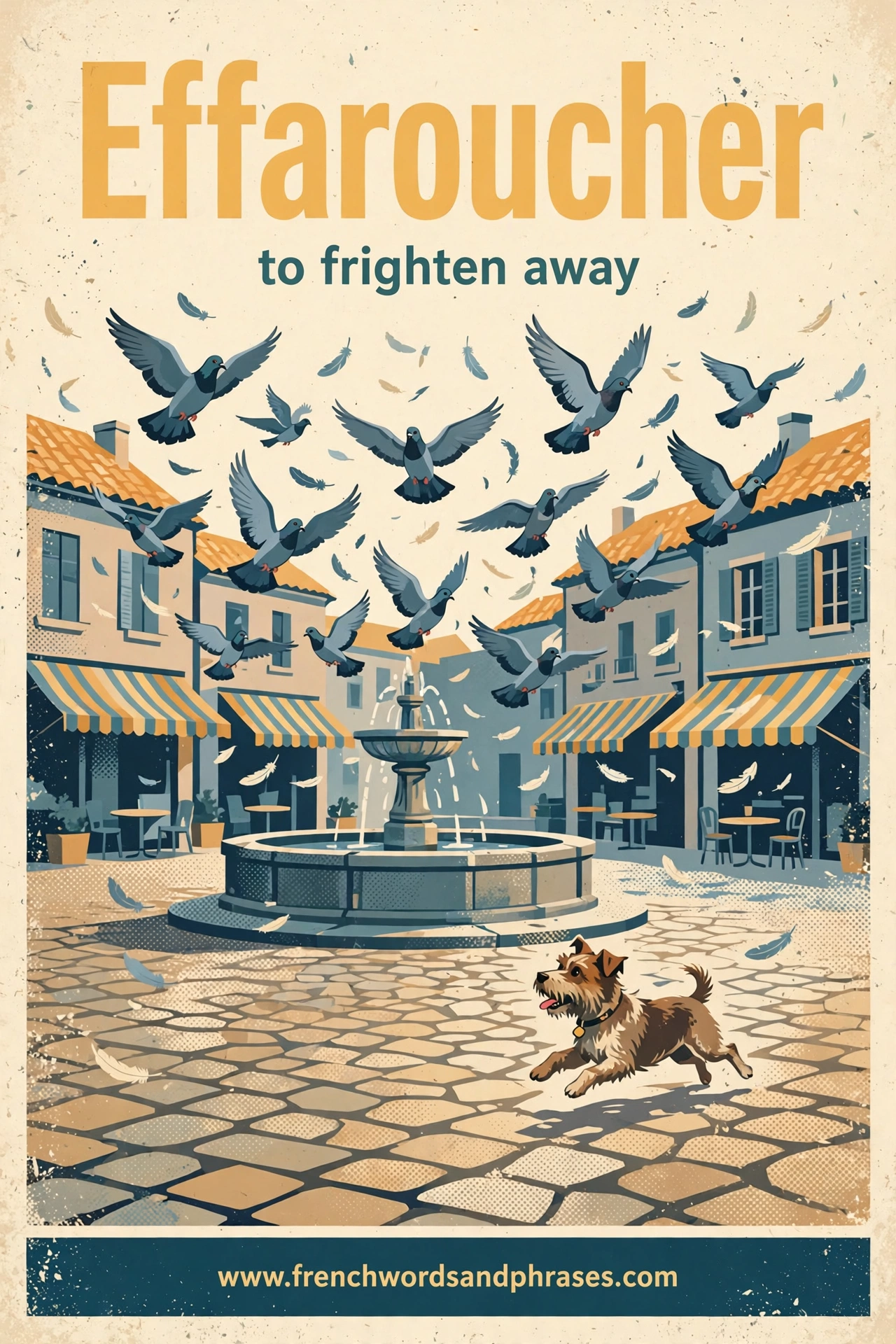
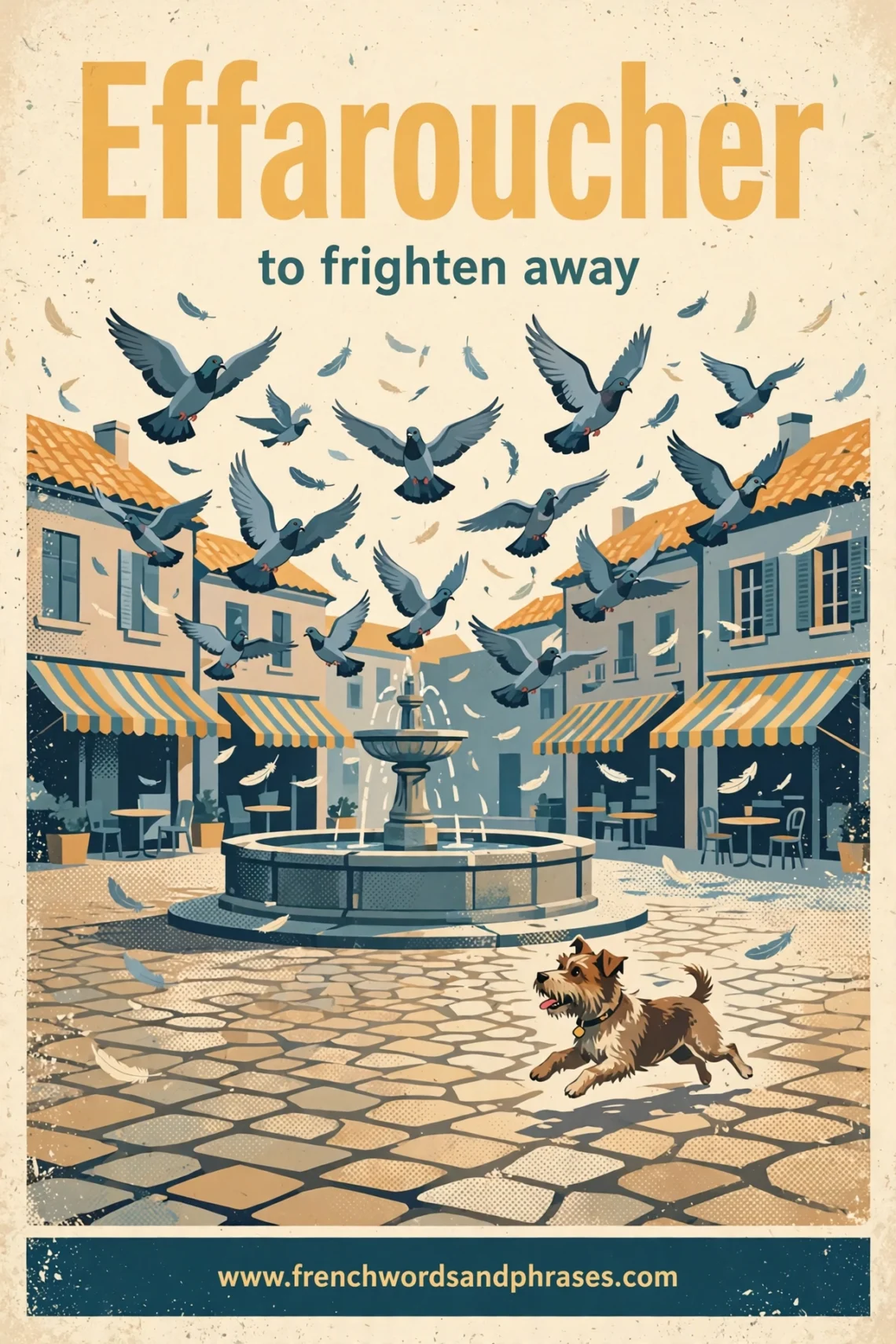
Effaroucher means to frighten away.
A sparrow scattering at a footstep, a horse shying at a shadow, crows lifting off a field in one black wave — effaroucher is the verb of the startled flight, of frightening something wild into the air.
In this guide, you’ll learn how to conjugate effaroucher in all the major French tenses and moods. Explore complete conjugation tables, French examples, English translations, and practice quizzes.
Understanding the French Verb Effaroucher
Effaroucher is a regular French verb belonging to the first group of verbs, those ending in -er.
It means to frighten away. It is commonly used for scaring birds off fields, balconies and fruit trees, for startling wild animals — deer, hares, foxes — and for horses that shy at noises and shadows; figuratively, it also describes putting off shy people with a brusque manner.
Verb classification: First group (-er)
Auxiliary verb: Avoir
Past participle: effarouché
Present participle: effarouchant
English equivalents: To frighten away, to scare off; s’effaroucher — to take fright, to shy away.
One important detail: effaroucher is built on farouche — wild, shy, untamed. To effaroucher is to make something farouche for a moment: to startle it into flight. The reflexive is just as common in the stable: le cheval s’effarouche, the horse shies; ne t’effarouche pas, do not take fright. Farmers effarouchent birds from their crops; riders calm horses that s’effarouchent at shadows.
Experience the Word
Effaroucher is the verb of the sudden start — one noise, one gesture, and the whole field is in the air.
Imagine a cherry orchard in June. The farmer has hung ribbons and an old scarecrow among the branches, but the starlings still come — until the dog arrives, and in one second the tree empties into the sky.
Nothing was caught or harmed. It was frightened away — effarouché, gone on wings.
How to Conjugate Effaroucher: Complete French Conjugation Guide
Let’s explore every major conjugation of effaroucher, beginning with the indicative mood.
How to Conjugate Effaroucher in the Indicative Mood
The indicative mood is used to express facts, observations, actions, and events.
How to Conjugate Effaroucher in the Present Tense (Présent)
Used for actions happening now, habitual actions, and general truths.
| Subject | Conjugation |
|---|---|
| je | effarouche |
| tu | effarouches |
| il / elle | effarouche |
| nous | effarouchons |
| vous | effarouchez |
| ils / elles | effarouchent |
Example
Le chien effarouche les pigeons de la cour.
The dog frightens away the pigeons in the courtyard.
Quick Quiz 1
Complete the sentence:
Nous ______ les corbeaux du jardin.
Reveal the answer
effarouchons
Nous effarouchons les corbeaux du jardin.
We frighten away the crows from the garden.
How to Conjugate Effaroucher in the Passé Composé
Used for completed actions in the past. Effaroucher takes the auxiliary verb avoir.
| Subject | Conjugation |
|---|---|
| j’ | ai effarouché |
| tu | as effarouché |
| il / elle | a effarouché |
| nous | avons effarouché |
| vous | avez effarouché |
| ils / elles | ont effarouché |
Example
L’épouvantail a effarouché les corbeaux pendant une semaine.
The scarecrow frightened away the crows for a week.
How to Conjugate Effaroucher in the Imparfait (Imperfect Tense)
Used for habitual past actions, descriptions, and ongoing situations in the past.
| Subject | Conjugation |
|---|---|
| je | effarouchais |
| tu | effarouchais |
| il / elle | effarouchait |
| nous | effarouchions |
| vous | effarouchiez |
| ils / elles | effarouchaient |
Example
Le moindre bruit effarouchait le cheval.
The slightest noise used to frighten the horse.
Quick Quiz 2
Choose the correct form:
The cat frightened away the mice.
Le chat ______ les souris. (a effarouché / est effarouché)
Reveal the answer
a effarouché
Le chat a effarouché les souris.
Effaroucher takes avoir.
How to Conjugate Effaroucher in the Plus-que-parfait
Used to describe an action that had already been completed before another past event.
| Subject | Conjugation |
|---|---|
| j’ | avais effarouché |
| tu | avais effarouché |
| il / elle | avait effarouché |
| nous | avions effarouché |
| vous | aviez effarouché |
| ils / elles | avaient effarouché |
Example
Les chasseurs avaient effarouché tout le gibier du bois.
The hunters had frightened away all the game in the wood.
How to Conjugate Effaroucher in the Passé Simple
Primarily used in formal writing, literature, and historical narratives. It is rarely used in everyday conversation.
| Subject | Conjugation |
|---|---|
| je | effarouchai |
| tu | effarouchas |
| il / elle | effaroucha |
| nous | effarouchâmes |
| vous | effarouchâtes |
| ils / elles | effarouchèrent |
Example
Un coup de feu effaroucha les oiseaux du lac.
A gunshot frightened away the birds on the lake.
How to Conjugate Effaroucher in the Passé Antérieur
A literary tense used to express an action completed immediately before another past action, generally in the passé simple.
| Subject | Conjugation |
|---|---|
| j’ | eus effarouché |
| tu | eus effarouché |
| il / elle | eut effarouché |
| nous | eûmes effarouché |
| vous | eûtes effarouché |
| ils / elles | eurent effarouché |
Example
Quand le tonnerre eut effarouché le troupeau, les bergers coururent.
When the thunder had frightened the flock, the shepherds ran.
How to Conjugate Effaroucher in the Future Tense (Futur Simple)
Used to describe actions that will take place in the future.
| Subject | Conjugation |
|---|---|
| je | effaroucherai |
| tu | effaroucheras |
| il / elle | effarouchera |
| nous | effaroucherons |
| vous | effaroucherez |
| ils / elles | effaroucheront |
Example
Ce chien de garde effarouchera les renards.
This guard dog will frighten away the foxes.
How to Conjugate Effaroucher in the Futur Antérieur (Future Perfect)
Used for an action that will have been completed before a particular point in the future.
| Subject | Conjugation |
|---|---|
| j’ | aurai effarouché |
| tu | auras effarouché |
| il / elle | aura effarouché |
| nous | aurons effarouché |
| vous | aurez effarouché |
| ils / elles | auront effarouché |
Example
À la tombée de la nuit, le bruit aura effarouché toutes les bêtes.
By nightfall, the noise will have frightened away all the animals.
How to Conjugate Effaroucher in the Near Future (Futur Proche)
Used to describe something that is going to happen soon. Formed with aller + infinitive.
| Subject | Conjugation |
|---|---|
| je | vais effaroucher |
| tu | vas effaroucher |
| il / elle | va effaroucher |
| nous | allons effaroucher |
| vous | allez effaroucher |
| ils / elles | vont effaroucher |
Example
Attention, tu vas effaroucher les papillons !
Careful, you are going to frighten away the butterflies!
How to Conjugate Effaroucher in the Conditional Mood
The conditional mood expresses what would happen under certain circumstances. It is also frequently used to make polite requests or express wishes.
How to Conjugate Effaroucher in the Present Conditional
| Subject | Conjugation |
|---|---|
| je | effaroucherais |
| tu | effaroucherais |
| il / elle | effaroucherait |
| nous | effaroucherions |
| vous | effaroucheriez |
| ils / elles | effaroucheraient |
Example
Un geste brusque effaroucherait le chevreuil.
A sudden movement would frighten away the deer.
How to Conjugate Effaroucher in the Past Conditional
| Subject | Conjugation |
|---|---|
| j’ | aurais effarouché |
| tu | aurais effarouché |
| il / elle | aurait effarouché |
| nous | aurions effarouché |
| vous | auriez effarouché |
| ils / elles | auraient effarouché |
Example
Sans le vent, l’épouvantail aurait effarouché plus d’oiseaux.
Without the wind, the scarecrow would have frightened away more birds.
Effaroucher in the Literary Past Conditional Form
This less common literary form uses the imperfect subjunctive of avoir.
| Subject | Conjugation |
|---|---|
| j’ | eusse effarouché |
| tu | eusses effarouché |
| il / elle | eût effarouché |
| nous | eussions effarouché |
| vous | eussiez effarouché |
| ils / elles | eussent effarouché |
Example
Le loup eût effarouché tout le village.
The wolf would have frightened the whole village.
How to Conjugate Effaroucher in the Subjunctive Mood
The subjunctive is used to express wishes, emotions, doubts, necessity, and uncertainty. It frequently follows expressions such as il faut que (it is necessary that) or bien que (although).
How to Conjugate Effaroucher in the Present Subjunctive
| Subject | Conjugation |
|---|---|
| que je | effarouche |
| que tu | effarouches |
| qu’il / qu’elle | effarouche |
| que nous | effarouchions |
| que vous | effarouchiez |
| qu’ils / qu’elles | effarouchent |
Example
Je veux un chien qui effarouche les corbeaux du jardin.
I want a dog that frightens away the crows from the garden.
Quick Quiz 3
Complete the sentence using the subjunctive:
Je veux un chien qui ______ les renards.
Reveal the answer
effarouche
Je veux un chien qui effarouche les renards.
I want a dog that frightens away the foxes.
How to Conjugate Effaroucher in the Imperfect Subjunctive
A literary tense, rarely encountered in modern spoken French.
| Subject | Conjugation |
|---|---|
| que je | effarouchasse |
| que tu | effarouchasses |
| qu’il / qu’elle | effarouchât |
| que nous | effarouchassions |
| que vous | effarouchassiez |
| qu’ils / qu’elles | effarouchassent |
Example
Il craignait que le chien effarouchât les moutons.
He feared the dog might frighten the sheep.
How to Conjugate Effaroucher in the Pluperfect Subjunctive
A literary construction used to express an action completed before another past action.
| Subject | Conjugation |
|---|---|
| que j’ | eusse effarouché |
| que tu | eusses effarouché |
| qu’il / qu’elle | eût effarouché |
| que nous | eussions effarouché |
| que vous | eussiez effarouché |
| qu’ils / qu’elles | eussent effarouché |
Example
On regretta que les travaux eussent effarouché les hirondelles.
People regretted that the works had frightened away the swallows.
How to Conjugate Effaroucher in the Past Subjunctive
| Subject | Conjugation |
|---|---|
| que j’ | aie effarouché |
| que tu | aies effarouché |
| qu’il / qu’elle | ait effarouché |
| que nous | ayons effarouché |
| que vous | ayez effarouché |
| qu’ils / qu’elles | aient effarouché |
Example
Je suis content que le chat ait effarouché les souris.
I am glad the cat frightened away the mice.
How to Conjugate Effaroucher in the Imperative
The imperative is used to give commands, instructions, invitations, or suggestions. Subject pronouns are omitted.
How to Conjugate Effaroucher in the Present Imperative
| Person | Conjugation |
|---|---|
| (tu) | effarouche |
| (nous) | effarouchons |
| (vous) | effarouchez |
Example
Effarouche ces corbeaux, ils mangent les semis !
Frighten away those crows, they are eating the seedlings!
Quick Quiz 4
How would you say Do not frighten away the butterflies (tu form)?
Reveal the answer
N’effarouche pas les papillons !
French Participles of Effaroucher
Participles are verb forms that can be used in compound tenses and other grammatical constructions.
Present Participle of Effaroucher
effarouchant
En effarouchant les pigeons, il a fait tomber les graines.
While frightening away the pigeons, he knocked over the seeds.
Past Participle of Effaroucher
effarouché
Effarouchés par le tonnerre, les chevaux ont fui l’écurie.
Frightened by the thunder, the horses fled the stable.
Effaroucher in Everyday French: Real-Life Examples
Now that you know the conjugations, let’s see how effaroucher appears in everyday French.
Example 1 — Present
Le chat effarouche les oiseaux du balcon.
The cat frightens away the birds on the balcony.
Example 2 — Passé composé
Tu as effarouché le chat avec ton éternuement.
You frightened the cat with your sneeze.
Example 3 — Imparfait
Le vieux chien effarouchait les poules du voisin.
The old dog used to frighten the neighbour’s hens.
Example 4 — Future
Ce bruit effarouchera les chevreuils.
That noise will frighten away the deer.
Example 5 — Conditional
Un pas de plus effaroucherait le lièvre.
One more step would frighten away the hare.
Example 6 — Imperative
N’effarouche pas les papillons !
Do not frighten away the butterflies!
Beyond Translation: The Meaning of Effaroucher
English says scare off or startle and loses the animal inside the word; French effaroucher keeps farouche, the wild shyness itself.
It is the farmer’s and the rider’s verb.
The scarecrow — un épouvantail — exists to effaroucher; the good rider exists to calm what s’effarouche. Between the two, a whole countryside of wings and hooves.
How to Remember the French Verb Effaroucher
Remember it this way: Effaroucher is about the startled flight — one noise and the field is in the air.
- Farouche = wild and shy: effaroucher is to startle the wild thing into flight.
- S’effaroucher — to take fright; horses and shy people do it.
- Regular -er: j’effarouche, nous effarouchons, past participle effarouché.
The key idea is the startled flight — one noise and the field is in the air.
Test Your Knowledge of Effaroucher
Let’s see how much you’ve learned. Try answering these questions before revealing the answers.
Question 1
What does farouche mean, inside effaroucher?
Reveal the answer
Wild, shy, untamed — effaroucher startles the wild thing into flight.
Question 2
How do you say The dog frightens away the pigeons in French?
Reveal the answer
Le chien effarouche les pigeons.
Question 3
Translate: The horse shies at the slightest noise.
Reveal the answer
Le cheval s’effarouche au moindre bruit.
Question 4
What is the past participle of effaroucher?
Reveal the answer
Effarouché.
Question 5
Complete the sentence:
Un geste brusque ______ le chevreuil.
Reveal the answer
effaroucherait
Un geste brusque effaroucherait le chevreuil.
A sudden movement would frighten away the deer.
Your Final Challenge
Can You Use It?
How would you say this in French?
The dog frightens away the crows, and the vegetable garden can finally breathe.
Reveal the answer
Le chien effarouche les corbeaux, et le potager respire enfin.
The dog frightens away the crows, and the vegetable garden can finally breathe.
A little French. A little curiosity. A richer everyday life.
LEARN FRENCH ONE WORD AT A TIME