
A French Word to Live By
How to Conjugate Éculer in French
/e.ky.le/
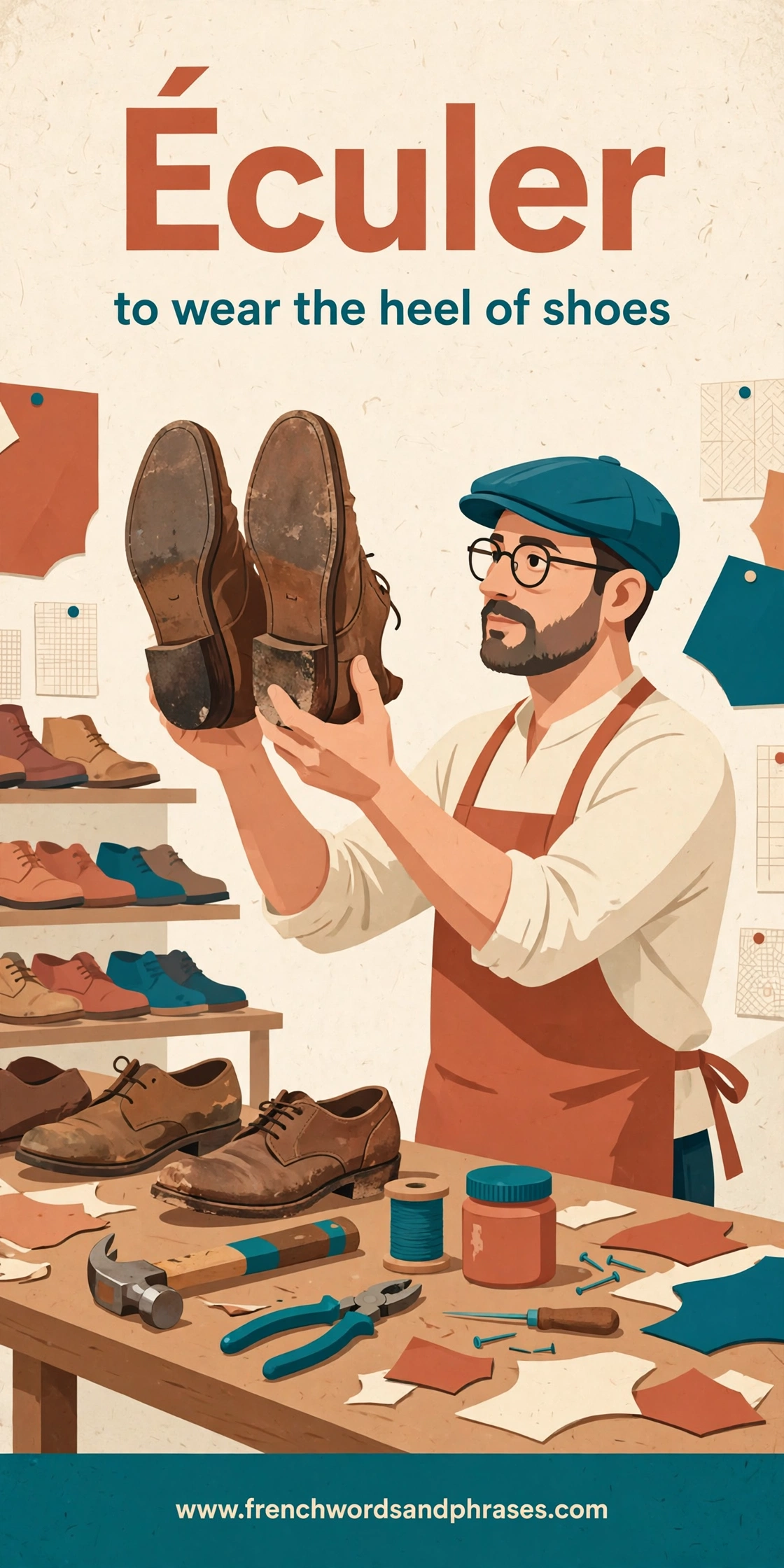
Éculer means to wear down the heel of a shoe.
Shoes that lean to one side, heels ground down at an angle by years of the same walk to the same station — éculer is the cobbler’s verb for what our own feet slowly do to our shoes.
In this guide, you’ll learn how to conjugate éculer in all the major French tenses and moods. Explore complete conjugation tables, French examples, English translations, and practice quizzes.
Understanding the French Verb Éculer
Éculer is a regular French verb belonging to the first group of verbs, those ending in -er.
It means to wear the heel of shoes. It is commonly used by cobblers and shoe lovers for heels worn down unevenly, in complaints about walking habits that ruin good shoes, and — through its participle éculé — in reviews and essays for ideas, plots and jokes that have been worn out by repetition.
Verb classification: First group (-er)
Auxiliary verb: Avoir
Past participle: éculé
Present participle: éculant
English equivalents: To wear down the heel of a shoe; éculé — worn at the heel, and figuratively hackneyed: un sujet éculé, a well-worn subject.
One important detail: éculer has a famous second life as an adjective. A shoe is éculée when its heel is worn down — and a joke, an argument or a theme is éculé when it has been used so often that it leans and limps like an old shoe: un sujet éculé, a hackneyed subject; une blague éculée, a joke worn thin. The cobbler’s image does all the work.
Experience the Word
Éculer is the verb of slow, honest wear — nothing breaks; everything simply leans a little more each year.
Imagine an old cobbler turning a customer’s shoe over in his hands. He taps the heel with one finger and smiles: you walk on the outside, monsieur — every pair he has repaired for twenty years tells the same story.
The shoes are not ruined. They have been éculés — worn down at the heel by a faithful, lopsided walk.
How to Conjugate Éculer: Complete French Conjugation Guide
Let’s explore every major conjugation of éculer, beginning with the indicative mood.
How to Conjugate Éculer in the Indicative Mood
The indicative mood is used to express facts, observations, actions, and events.
How to Conjugate Éculer in the Present Tense (Présent)
Used for actions happening now, habitual actions, and general truths.
| Subject | Conjugation |
|---|---|
| je | écule |
| tu | écules |
| il / elle | écule |
| nous | éculons |
| vous | éculez |
| ils / elles | éculent |
Example
Il écule toujours ses chaussures du côté droit.
He always wears down the heels of his shoes on the right side.
Quick Quiz 1
Complete the sentence:
Nous ______ nos talons sur les pavés.
Reveal the answer
éculons
Nous éculons nos talons sur les pavés.
We wear our heels down on the cobbles.
How to Conjugate Éculer in the Passé Composé
Used for completed actions in the past. Éculer takes the auxiliary verb avoir.
| Subject | Conjugation |
|---|---|
| j’ | ai éculé |
| tu | as éculé |
| il / elle | a éculé |
| nous | avons éculé |
| vous | avez éculé |
| ils / elles | ont éculé |
Example
Tu as éculé tes talons en six mois à peine.
You wore your heels down in barely six months.
How to Conjugate Éculer in the Imparfait (Imperfect Tense)
Used for habitual past actions, descriptions, and ongoing situations in the past.
| Subject | Conjugation |
|---|---|
| je | éculais |
| tu | éculais |
| il / elle | éculait |
| nous | éculions |
| vous | éculiez |
| ils / elles | éculaient |
Example
Mon père éculait ses souliers en marchant vers l’usine.
My father used to wear down his shoes walking to the factory.
Quick Quiz 2
Choose the correct form:
You wore your heels down.
Tu ______ tes talons. (as éculé / es éculé)
Reveal the answer
as éculé
Tu as éculé tes talons.
Éculer takes avoir.
How to Conjugate Éculer in the Plus-que-parfait
Used to describe an action that had already been completed before another past event.
| Subject | Conjugation |
|---|---|
| j’ | avais éculé |
| tu | avais éculé |
| il / elle | avait éculé |
| nous | avions éculé |
| vous | aviez éculé |
| ils / elles | avaient éculé |
Example
Elle avait éculé ses bottes sur les chemins de montagne.
She had worn down her boots on the mountain paths.
How to Conjugate Éculer in the Passé Simple
Primarily used in formal writing, literature, and historical narratives. It is rarely used in everyday conversation.
| Subject | Conjugation |
|---|---|
| je | éculai |
| tu | éculas |
| il / elle | écula |
| nous | éculâmes |
| vous | éculâtes |
| ils / elles | éculèrent |
Example
Le voyageur écula ses chaussures sur les pavés de la ville.
The traveller wore down his shoes on the cobbles of the city.
How to Conjugate Éculer in the Passé Antérieur
A literary tense used to express an action completed immediately before another past action, generally in the passé simple.
| Subject | Conjugation |
|---|---|
| j’ | eus éculé |
| tu | eus éculé |
| il / elle | eut éculé |
| nous | eûmes éculé |
| vous | eûtes éculé |
| ils / elles | eurent éculé |
Example
Quand il eut éculé sa troisième paire, il acheta des semelles de fer.
When he had worn down his third pair, he bought iron soles.
How to Conjugate Éculer in the Future Tense (Futur Simple)
Used to describe actions that will take place in the future.
| Subject | Conjugation |
|---|---|
| je | éculerai |
| tu | éculeras |
| il / elle | éculera |
| nous | éculerons |
| vous | éculerez |
| ils / elles | éculeront |
Example
À ce rythme, tu éculeras tes chaussures avant l’hiver.
At this rate, you will wear your shoes down before winter.
How to Conjugate Éculer in the Futur Antérieur (Future Perfect)
Used for an action that will have been completed before a particular point in the future.
| Subject | Conjugation |
|---|---|
| j’ | aurai éculé |
| tu | auras éculé |
| il / elle | aura éculé |
| nous | aurons éculé |
| vous | aurez éculé |
| ils / elles | auront éculé |
Example
À la fin de l’année, il aura éculé deux paires de mocassins.
By the end of the year, he will have worn down two pairs of loafers.
How to Conjugate Éculer in the Near Future (Futur Proche)
Used to describe something that is going to happen soon. Formed with aller + infinitive.
| Subject | Conjugation |
|---|---|
| je | vais éculer |
| tu | vas éculer |
| il / elle | va éculer |
| nous | allons éculer |
| vous | allez éculer |
| ils / elles | vont éculer |
Example
Regarde tes talons : tu vas éculer tes nouvelles chaussures.
Look at your heels: you are going to wear down your new shoes.
How to Conjugate Éculer in the Conditional Mood
The conditional mood expresses what would happen under certain circumstances. It is also frequently used to make polite requests or express wishes.
How to Conjugate Éculer in the Present Conditional
| Subject | Conjugation |
|---|---|
| je | éculerais |
| tu | éculerais |
| il / elle | éculerait |
| nous | éculerions |
| vous | éculeriez |
| ils / elles | éculeraient |
Example
Avec une meilleure posture, on éculerait moins ses chaussures.
With better posture, we would wear our shoes down less.
How to Conjugate Éculer in the Past Conditional
| Subject | Conjugation |
|---|---|
| j’ | aurais éculé |
| tu | aurais éculé |
| il / elle | aurait éculé |
| nous | aurions éculé |
| vous | auriez éculé |
| ils / elles | auraient éculé |
Example
Elle aurait éculé ses bottes si elle avait marché jusqu’au village.
She would have worn down her boots if she had walked to the village.
Éculer in the Literary Past Conditional Form
This less common literary form uses the imperfect subjunctive of avoir.
| Subject | Conjugation |
|---|---|
| j’ | eusse éculé |
| tu | eusses éculé |
| il / elle | eût éculé |
| nous | eussions éculé |
| vous | eussiez éculé |
| ils / elles | eussent éculé |
Example
Le pèlerin eût éculé ses sandales sur la route de Compostelle.
The pilgrim would have worn down his sandals on the road to Compostela.
How to Conjugate Éculer in the Subjunctive Mood
The subjunctive is used to express wishes, emotions, doubts, necessity, and uncertainty. It frequently follows expressions such as il faut que (it is necessary that) or bien que (although).
How to Conjugate Éculer in the Present Subjunctive
| Subject | Conjugation |
|---|---|
| que je | écule |
| que tu | écules |
| qu’il / qu’elle | écule |
| que nous | éculions |
| que vous | éculiez |
| qu’ils / qu’elles | éculent |
Example
Le cordonnier ne veut pas que tu écules encore tes talons.
The cobbler does not want you to wear your heels down again.
Quick Quiz 3
Complete the sentence using the subjunctive:
Le cordonnier ne veut pas que vous ______ vos talons.
Reveal the answer
éculiez
Le cordonnier ne veut pas que vous éculiez vos talons.
The cobbler does not want you to wear your heels down.
How to Conjugate Éculer in the Imperfect Subjunctive
A literary tense, rarely encountered in modern spoken French.
| Subject | Conjugation |
|---|---|
| que je | éculasse |
| que tu | éculasses |
| qu’il / qu’elle | éculât |
| que nous | éculassions |
| que vous | éculassiez |
| qu’ils / qu’elles | éculassent |
Example
Il craignait que son fils éculât ses chaussures neuves.
He feared his son would wear down his new shoes.
How to Conjugate Éculer in the Pluperfect Subjunctive
A literary construction used to express an action completed before another past action.
| Subject | Conjugation |
|---|---|
| que j’ | eusse éculé |
| que tu | eusses éculé |
| qu’il / qu’elle | eût éculé |
| que nous | eussions éculé |
| que vous | eussiez éculé |
| qu’ils / qu’elles | eussent éculé |
Example
On voyait qu’il eût éculé ses souliers pendant des années.
You could see he had worn his shoes down over years.
How to Conjugate Éculer in the Past Subjunctive
| Subject | Conjugation |
|---|---|
| que j’ | aie éculé |
| que tu | aies éculé |
| qu’il / qu’elle | ait éculé |
| que nous | ayons éculé |
| que vous | ayez éculé |
| qu’ils / qu’elles | aient éculé |
Example
Je suis étonné que tu aies éculé ces talons si vite.
I am surprised you wore these heels down so fast.
How to Conjugate Éculer in the Imperative
The imperative is used to give commands, instructions, invitations, or suggestions. Subject pronouns are omitted.
How to Conjugate Éculer in the Present Imperative
| Person | Conjugation |
|---|---|
| (tu) | écule |
| (nous) | éculons |
| (vous) | éculez |
Example
N’écule pas tes chaussures, marche droit !
Do not wear your shoes down, walk straight!
Quick Quiz 4
How would you say Do not wear your shoes down (tu form)?
Reveal the answer
N’écule pas tes chaussures !
French Participles of Éculer
Participles are verb forms that can be used in compound tenses and other grammatical constructions.
Present Participle of Éculer
éculant
En éculant ses talons, il a fini par marcher de travers.
By wearing down his heels, he ended up walking crookedly.
Past Participle of Éculer
éculé
Éculés après des années de marche, ses souliers racontaient sa vie.
Worn down after years of walking, his shoes told the story of his life.
Éculer in Everyday French: Real-Life Examples
Now that you know the conjugations, let’s see how éculer appears in everyday French.
Example 1 — Present
Il écule ses chaussures toujours du même côté.
He wears his shoes down always on the same side.
Example 2 — Passé composé
J’ai éculé mes talons sur les pavés.
I wore my heels down on the cobbles.
Example 3 — Imparfait
Les facteurs éculaient leurs chaussures dans tout le village.
The postmen used to wear their shoes down all over the village.
Example 4 — Future
Tu éculeras moins tes chaussures avec ces semelles.
You will wear your shoes down less with these soles.
Example 5 — Conditional
On éculerait moins vite ses talons en marchant moins.
We would wear our heels down more slowly by walking less.
Example 6 — Imperative
N’éculez pas vos chaussures toutes neuves !
Do not wear down your brand-new shoes!
Beyond Translation: The Meaning of Éculer
English keeps the idea in the workshop — worn down at the heel; French éculer escaped the cobbler’s bench and now reviews books and films.
Éculé is the critic’s favourite insult.
Call a plot éculé and every reader pictures the leaning shoe: an idea that has walked too many miles in the same direction and can no longer stand straight.
How to Remember the French Verb Éculer
Remember it this way: Éculer is about the leaning heel — worn shoes and worn-out jokes.
- Un talon éculé — a heel worn down; éculer is what walking does to it.
- Un sujet éculé, une blague éculée — a hackneyed subject, a worn-out joke.
- Regular -er: j’écule, nous éculons, past participle éculé.
The key idea is the leaning heel — worn shoes and worn-out jokes.
Test Your Knowledge of Éculer
Let’s see how much you’ve learned. Try answering these questions before revealing the answers.
Question 1
What does un sujet éculé mean?
Reveal the answer
A hackneyed subject — an idea worn out by repetition, like an old heel.
Question 2
How do you say He always wears down his shoes on the same side in French?
Reveal the answer
Il écule toujours ses chaussures du même côté.
Question 3
Translate: You wore your heels down in six months.
Reveal the answer
Tu as éculé tes talons en six mois.
Question 4
What is the past participle of éculer?
Reveal the answer
Éculé.
Question 5
Complete the sentence:
Je suis étonné que tu ______ ces talons si vite.
Reveal the answer
aies éculé
Je suis étonné que tu aies éculé ces talons si vite.
I am surprised you wore these heels down so fast.
Your Final Challenge
Can You Use It?
How would you say this in French?
He wears his shoes down on the right side, and the cobbler recognises him by his heels.
Reveal the answer
Il écule ses chaussures du côté droit, et le cordonnier le reconnaît à ses talons.
He wears his shoes down on the right side, and the cobbler recognises him by his heels.
A little French. A little curiosity. A richer everyday life.
LEARN FRENCH ONE WORD AT A TIME




