A French Word to Live By
How to Conjugate Écroûter in French
/e.kʁu.te/
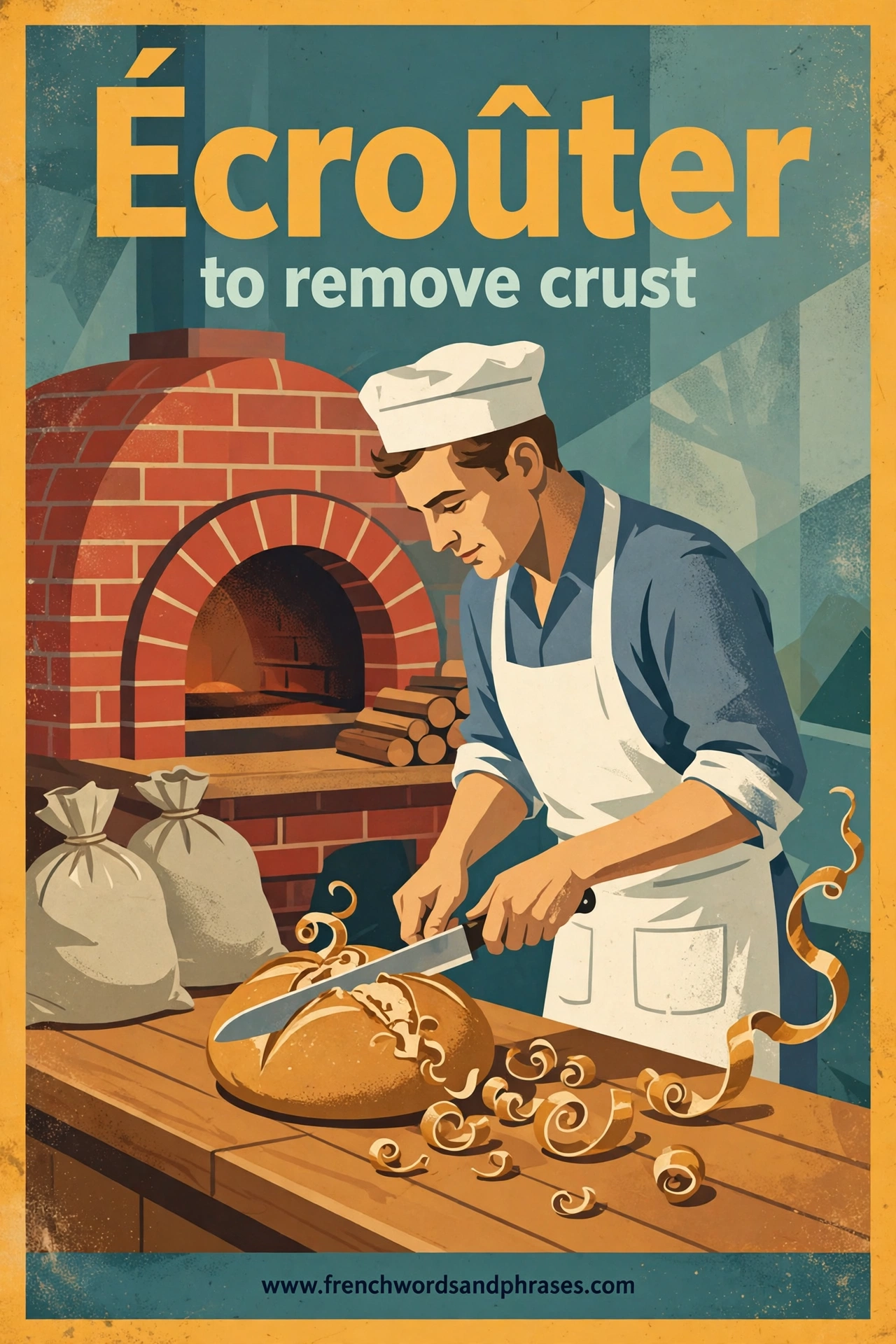
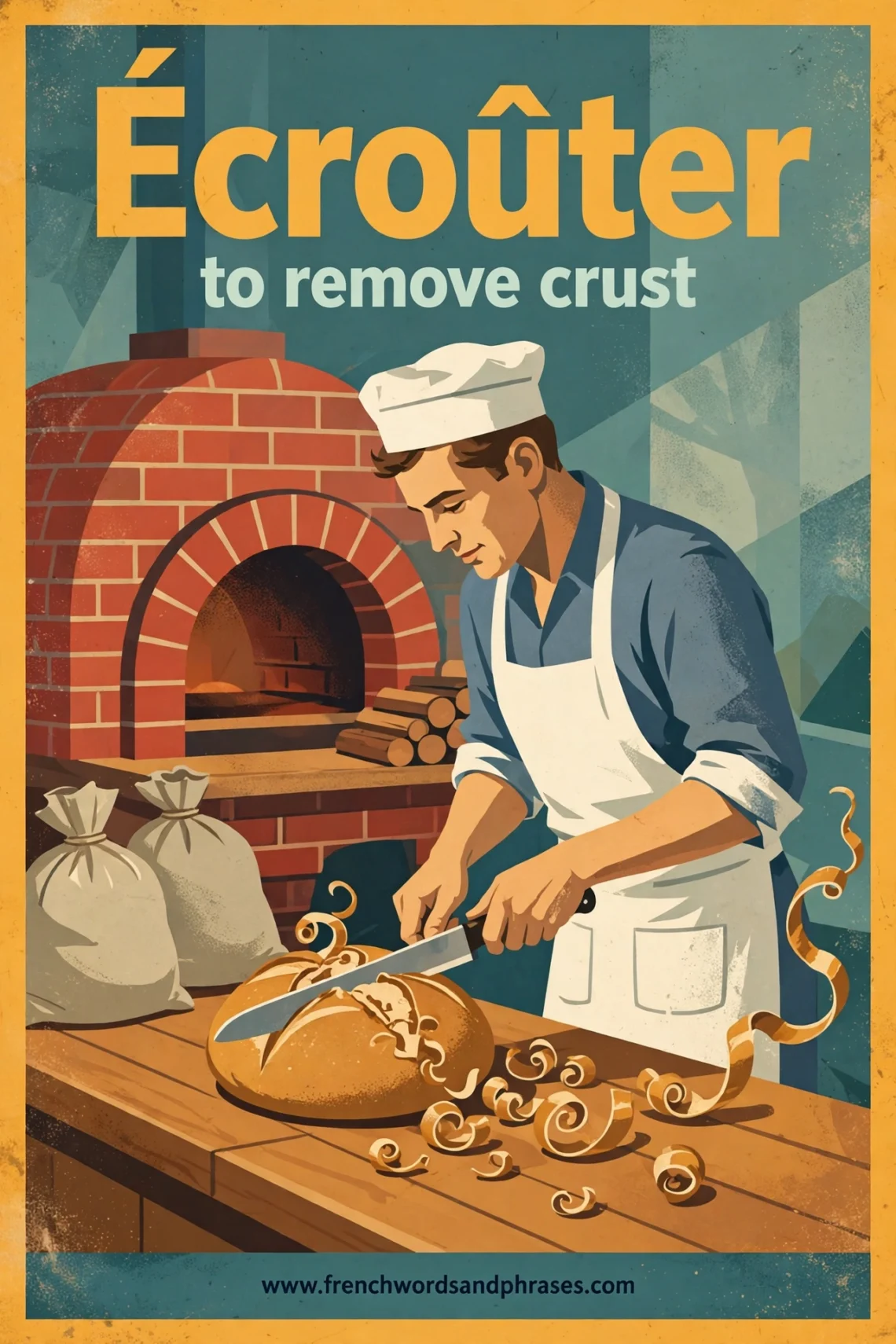
Écroûter means to remove the crust.
A loaf whose dark crust is too hard for a grandfather’s teeth, a wheel of cheese hiding its soft heart under a thick rind — écroûter is the quiet verb of taking the crust off so the tender inside can be reached.
In this guide, you’ll learn how to conjugate écroûter in all the major French tenses and moods. Explore complete conjugation tables, French examples, English translations, and practice quizzes.
Understanding the French Verb Écroûter
Écroûter is a regular French verb belonging to the first group of verbs, those ending in -er.
It means to remove crust. It is commonly used for cutting the crust off bread for children and old people, for trimming the rind from cheese before serving, and in the garden and the fields for breaking up the hard crust that rain and sun bake onto the soil.
Verb classification: First group (-er)
Auxiliary verb: Avoir
Past participle: écroûté
Present participle: écroûtant
English equivalents: To remove the crust, to cut the crust off; la croûte — the crust, the rind; un pain écroûté — a loaf with its crust taken off.
One important detail: écroûter keeps the old circumflex on its û, a little hat that remembers a lost letter in croûte, crust; the 1990 spelling reform allows écrouter without it, but the traditional form is still the one you will meet. The verb works beyond the kitchen, too: after hard rain, farmers écroûtent la terre — they break the crust that forms on the soil so the seedlings can breathe.
Experience the Word
Écroûter is the verb of kindness at the table — the hard outside comes off, and what is soft and good is left.
Imagine a farmhouse kitchen at breakfast. The grandfather pushes his plate forward with a smile, and without a word his daughter écroûte his slice of the big loaf, the way she has done every morning for ten years.
The bread itself has not changed. Its crust has been removed — écroûté, made gentle.
How to Conjugate Écroûter: Complete French Conjugation Guide
Let’s explore every major conjugation of écroûter, beginning with the indicative mood.
How to Conjugate Écroûter in the Indicative Mood
The indicative mood is used to express facts, observations, actions, and events.
How to Conjugate Écroûter in the Present Tense (Présent)
Used for actions happening now, habitual actions, and general truths.
| Subject | Conjugation |
|---|---|
| je | écroûte |
| tu | écroûtes |
| il / elle | écroûte |
| nous | écroûtons |
| vous | écroûtez |
| ils / elles | écroûtent |
Example
Elle écroûte le pain pour son grand-père.
She removes the crust from the bread for her grandfather.
Quick Quiz 1
Complete the sentence:
Nous ______ le fromage avant de le servir.
Reveal the answer
écroûtons
Nous écroûtons le fromage avant de le servir.
We remove the rind from the cheese before serving it.
How to Conjugate Écroûter in the Passé Composé
Used for completed actions in the past. Écroûter takes the auxiliary verb avoir.
| Subject | Conjugation |
|---|---|
| j’ | ai écroûté |
| tu | as écroûté |
| il / elle | a écroûté |
| nous | avons écroûté |
| vous | avez écroûté |
| ils / elles | ont écroûté |
Example
J’ai écroûté le fromage avant de le servir.
I removed the rind from the cheese before serving it.
How to Conjugate Écroûter in the Imparfait (Imperfect Tense)
Used for habitual past actions, descriptions, and ongoing situations in the past.
| Subject | Conjugation |
|---|---|
| je | écroûtais |
| tu | écroûtais |
| il / elle | écroûtait |
| nous | écroûtions |
| vous | écroûtiez |
| ils / elles | écroûtaient |
Example
Autrefois, on écroûtait la terre après chaque pluie.
In the old days, people used to break the crust of the soil after every rain.
Quick Quiz 2
Choose the correct form:
I removed the rind from the cheese.
J’______ le fromage. (ai écroûté / suis écroûté)
Reveal the answer
ai écroûté
J’ai écroûté le fromage.
Écroûter takes avoir.
How to Conjugate Écroûter in the Plus-que-parfait
Used to describe an action that had already been completed before another past event.
| Subject | Conjugation |
|---|---|
| j’ | avais écroûté |
| tu | avais écroûté |
| il / elle | avait écroûté |
| nous | avions écroûté |
| vous | aviez écroûté |
| ils / elles | avaient écroûté |
Example
Elle avait écroûté toutes les tartines avant l’arrivée des enfants.
She had removed the crusts from all the slices before the children arrived.
How to Conjugate Écroûter in the Passé Simple
Primarily used in formal writing, literature, and historical narratives. It is rarely used in everyday conversation.
| Subject | Conjugation |
|---|---|
| je | écroûtai |
| tu | écroûtas |
| il / elle | écroûta |
| nous | écroûtâmes |
| vous | écroûtâtes |
| ils / elles | écroûtèrent |
Example
Le boulanger écroûta le pain encore chaud.
The baker removed the crust from the still-warm loaf.
How to Conjugate Écroûter in the Passé Antérieur
A literary tense used to express an action completed immediately before another past action, generally in the passé simple.
| Subject | Conjugation |
|---|---|
| j’ | eus écroûté |
| tu | eus écroûté |
| il / elle | eut écroûté |
| nous | eûmes écroûté |
| vous | eûtes écroûté |
| ils / elles | eurent écroûté |
Example
Quand il eut écroûté le fromage, il le coupa en fines tranches.
When he had removed the rind from the cheese, he cut it into thin slices.
How to Conjugate Écroûter in the Future Tense (Futur Simple)
Used to describe actions that will take place in the future.
| Subject | Conjugation |
|---|---|
| je | écroûterai |
| tu | écroûteras |
| il / elle | écroûtera |
| nous | écroûterons |
| vous | écroûterez |
| ils / elles | écroûteront |
Example
Demain, nous écroûterons le potager avant de semer.
Tomorrow, we will break the crust of the vegetable garden before sowing.
How to Conjugate Écroûter in the Futur Antérieur (Future Perfect)
Used for an action that will have been completed before a particular point in the future.
| Subject | Conjugation |
|---|---|
| j’ | aurai écroûté |
| tu | auras écroûté |
| il / elle | aura écroûté |
| nous | aurons écroûté |
| vous | aurez écroûté |
| ils / elles | auront écroûté |
Example
À midi, elle aura écroûté tout le pain du petit déjeuner.
By noon, she will have removed the crusts from all the breakfast bread.
How to Conjugate Écroûter in the Near Future (Futur Proche)
Used to describe something that is going to happen soon. Formed with aller + infinitive.
| Subject | Conjugation |
|---|---|
| je | vais écroûter |
| tu | vas écroûter |
| il / elle | va écroûter |
| nous | allons écroûter |
| vous | allez écroûter |
| ils / elles | vont écroûter |
Example
Je vais écroûter cette part de camembert pour toi.
I am going to remove the rind from this piece of camembert for you.
How to Conjugate Écroûter in the Conditional Mood
The conditional mood expresses what would happen under certain circumstances. It is also frequently used to make polite requests or express wishes.
How to Conjugate Écroûter in the Present Conditional
| Subject | Conjugation |
|---|---|
| je | écroûterais |
| tu | écroûterais |
| il / elle | écroûterait |
| nous | écroûterions |
| vous | écroûteriez |
| ils / elles | écroûteraient |
Example
Sans ce couteau, on n’écroûterait pas le pain aussi facilement.
Without this knife, we would not remove the crust from the bread so easily.
How to Conjugate Écroûter in the Past Conditional
| Subject | Conjugation |
|---|---|
| j’ | aurais écroûté |
| tu | aurais écroûté |
| il / elle | aurait écroûté |
| nous | aurions écroûté |
| vous | auriez écroûté |
| ils / elles | auraient écroûté |
Example
Il aurait écroûté le fromage si on le lui avait demandé.
He would have removed the rind from the cheese if he had been asked.
Écroûter in the Literary Past Conditional Form
This less common literary form uses the imperfect subjunctive of avoir.
| Subject | Conjugation |
|---|---|
| j’ | eusse écroûté |
| tu | eusses écroûté |
| il / elle | eût écroûté |
| nous | eussions écroûté |
| vous | eussiez écroûté |
| ils / elles | eussent écroûté |
Example
La servante eût écroûté les pains avant le festin.
The maid would have removed the crusts from the loaves before the feast.
How to Conjugate Écroûter in the Subjunctive Mood
The subjunctive is used to express wishes, emotions, doubts, necessity, and uncertainty. It frequently follows expressions such as il faut que (it is necessary that) or bien que (although).
How to Conjugate Écroûter in the Present Subjunctive
| Subject | Conjugation |
|---|---|
| que je | écroûte |
| que tu | écroûtes |
| qu’il / qu’elle | écroûte |
| que nous | écroûtions |
| que vous | écroûtiez |
| qu’ils / qu’elles | écroûtent |
Example
Il faut que tu écroûtes le pain de mamie.
You must remove the crust from granny’s bread.
Quick Quiz 3
Complete the sentence using the subjunctive:
Il faut que vous ______ la terre du jardin.
Reveal the answer
écroûtiez
Il faut que vous écroûtiez la terre du jardin.
You must break the crust of the garden soil.
How to Conjugate Écroûter in the Imperfect Subjunctive
A literary tense, rarely encountered in modern spoken French.
| Subject | Conjugation |
|---|---|
| que je | écroûtasse |
| que tu | écroûtasses |
| qu’il / qu’elle | écroûtât |
| que nous | écroûtassions |
| que vous | écroûtassiez |
| qu’ils / qu’elles | écroûtassent |
Example
Elle voulait que le jardinier écroûtât la terre du jardin.
She wanted the gardener to break the crust of the garden soil.
How to Conjugate Écroûter in the Pluperfect Subjunctive
A literary construction used to express an action completed before another past action.
| Subject | Conjugation |
|---|---|
| que j’ | eusse écroûté |
| que tu | eusses écroûté |
| qu’il / qu’elle | eût écroûté |
| que nous | eussions écroûté |
| que vous | eussiez écroûté |
| qu’ils / qu’elles | eussent écroûté |
Example
Il regrettait qu’elle eût écroûté le fromage trop tôt.
He regretted that she had removed the rind from the cheese too early.
How to Conjugate Écroûter in the Past Subjunctive
| Subject | Conjugation |
|---|---|
| que j’ | aie écroûté |
| que tu | aies écroûté |
| qu’il / qu’elle | ait écroûté |
| que nous | ayons écroûté |
| que vous | ayez écroûté |
| qu’ils / qu’elles | aient écroûté |
Example
Je suis content que vous ayez écroûté le pain pour les enfants.
I am glad you removed the crusts from the bread for the children.
How to Conjugate Écroûter in the Imperative
The imperative is used to give commands, instructions, invitations, or suggestions. Subject pronouns are omitted.
How to Conjugate Écroûter in the Present Imperative
| Person | Conjugation |
|---|---|
| (tu) | écroûte |
| (nous) | écroûtons |
| (vous) | écroûtez |
Example
Écroûte ce pain, il est trop dur pour le petit !
Remove the crust from this bread, it is too hard for the little one!
Quick Quiz 4
How would you say Remove the crust from this bread (tu form)?
Reveal the answer
Écroûte ce pain !
French Participles of Écroûter
Participles are verb forms that can be used in compound tenses and other grammatical constructions.
Present Participle of Écroûter
écroûtant
En écroûtant le fromage, elle a gardé la croûte pour la soupe.
While removing the rind from the cheese, she kept the rind for the soup.
Past Participle of Écroûter
écroûté
Écroûté avec soin, le pain était parfait pour les enfants.
With its crust carefully removed, the bread was perfect for the children.
Écroûter in Everyday French: Real-Life Examples
Now that you know the conjugations, let’s see how écroûter appears in everyday French.
Example 1 — Present
Elle écroûte toujours son pain avant de manger.
She always removes the crust from her bread before eating.
Example 2 — Passé composé
Nous avons écroûté le camembert pour les invités.
We removed the rind from the camembert for the guests.
Example 3 — Imparfait
Le jardinier écroûtait la terre chaque printemps.
The gardener used to break the crust of the soil every spring.
Example 4 — Future
J’écroûterai les tartines des enfants demain.
I will remove the crusts from the children’s slices tomorrow.
Example 5 — Conditional
Tu écroûterais ce fromage pour moi ?
Would you remove the rind from this cheese for me?
Example 6 — Imperative
Écroûtez le pain avant de le donner au bébé !
Remove the crust from the bread before giving it to the baby!
Beyond Translation: The Meaning of Écroûter
English says to cut the crusts off and leaves it at that; French écroûter gives the gesture its own verb, and lets it travel from the breadboard to the cheese board to the ploughed field.
One verb for every hard shell that hides something soft.
Bread, rind, baked earth — écroûter is always the same kind act: removing the armour so the inside can be enjoyed.
How to Remember the French Verb Écroûter
Remember it this way: Écroûter is about taking the crust off — bread, cheese and garden soil.
- La croûte — the crust or rind; écroûter is taking it off.
- Écroûter le pain, écroûter le fromage, écroûter la terre — bread, cheese, soil.
- Regular -er: j’écroûte, nous écroûtons, past participle écroûté.
The key idea is taking the crust off — bread, cheese and garden soil.
Test Your Knowledge of Écroûter
Let’s see how much you’ve learned. Try answering these questions before revealing the answers.
Question 1
What is la croûte?
Reveal the answer
The crust — of bread, or the rind of a cheese.
Question 2
How do you say She removes the crust from the bread in French?
Reveal the answer
Elle écroûte le pain.
Question 3
Translate: I removed the rind from the cheese before serving it.
Reveal the answer
J’ai écroûté le fromage avant de le servir.
Question 4
What is the past participle of écroûter?
Reveal the answer
Écroûté.
Question 5
Complete the sentence:
Il faut que tu ______ le pain de mamie.
Reveal the answer
écroûtes
Il faut que tu écroûtes le pain de mamie.
You must remove the crust from granny’s bread.
Your Final Challenge
Can You Use It?
How would you say this in French?
She removes the crust from the morning bread, and breakfast becomes gentle for everyone.
Reveal the answer
Elle écroûte le pain du matin, et le petit déjeuner devient doux pour tout le monde.
She removes the crust from the morning bread, and breakfast becomes gentle for everyone.
A little French. A little curiosity. A richer everyday life.
LEARN FRENCH ONE WORD AT A TIME