A French Word to Live By
How to Conjugate Écumer in French
/e.ky.me/
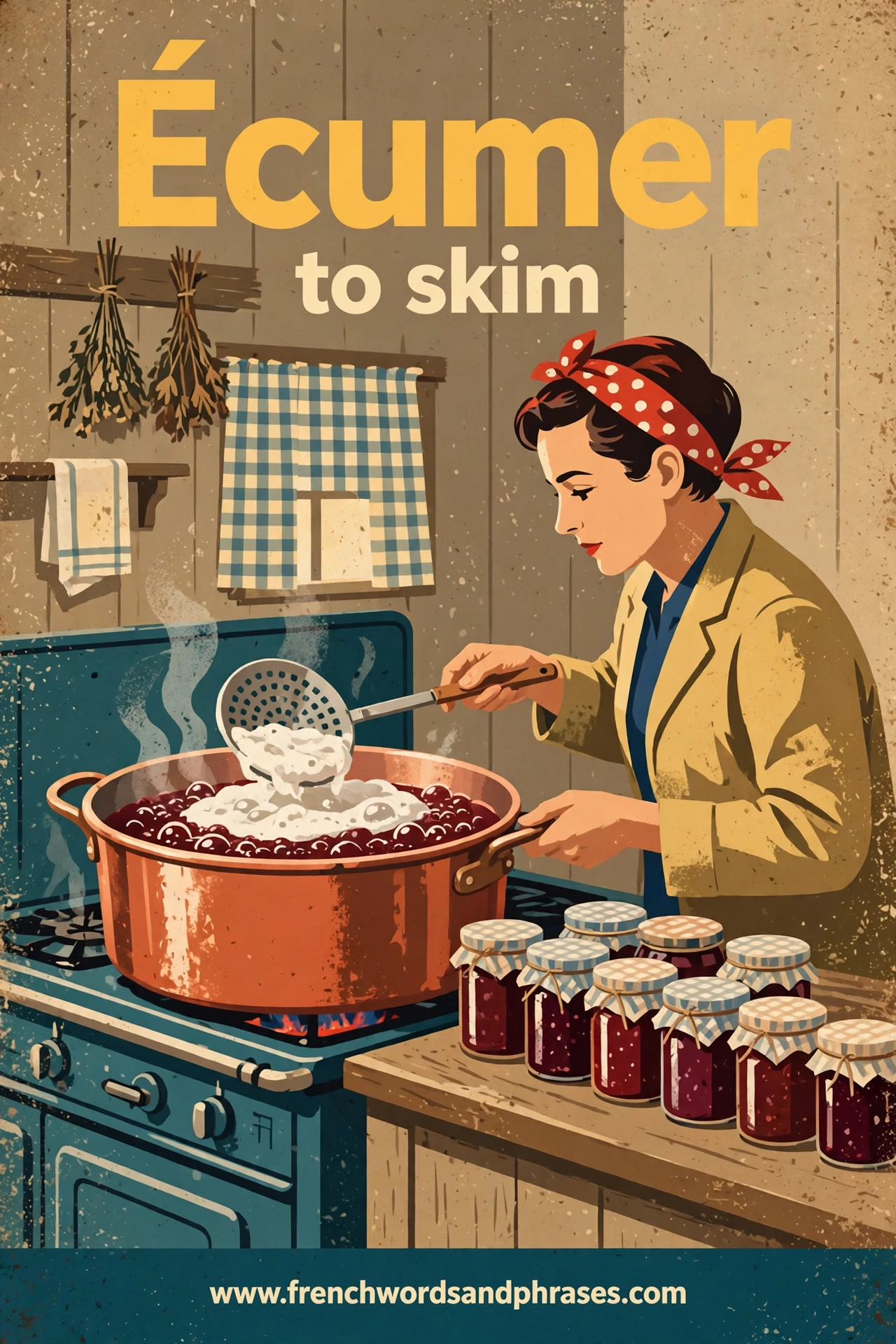
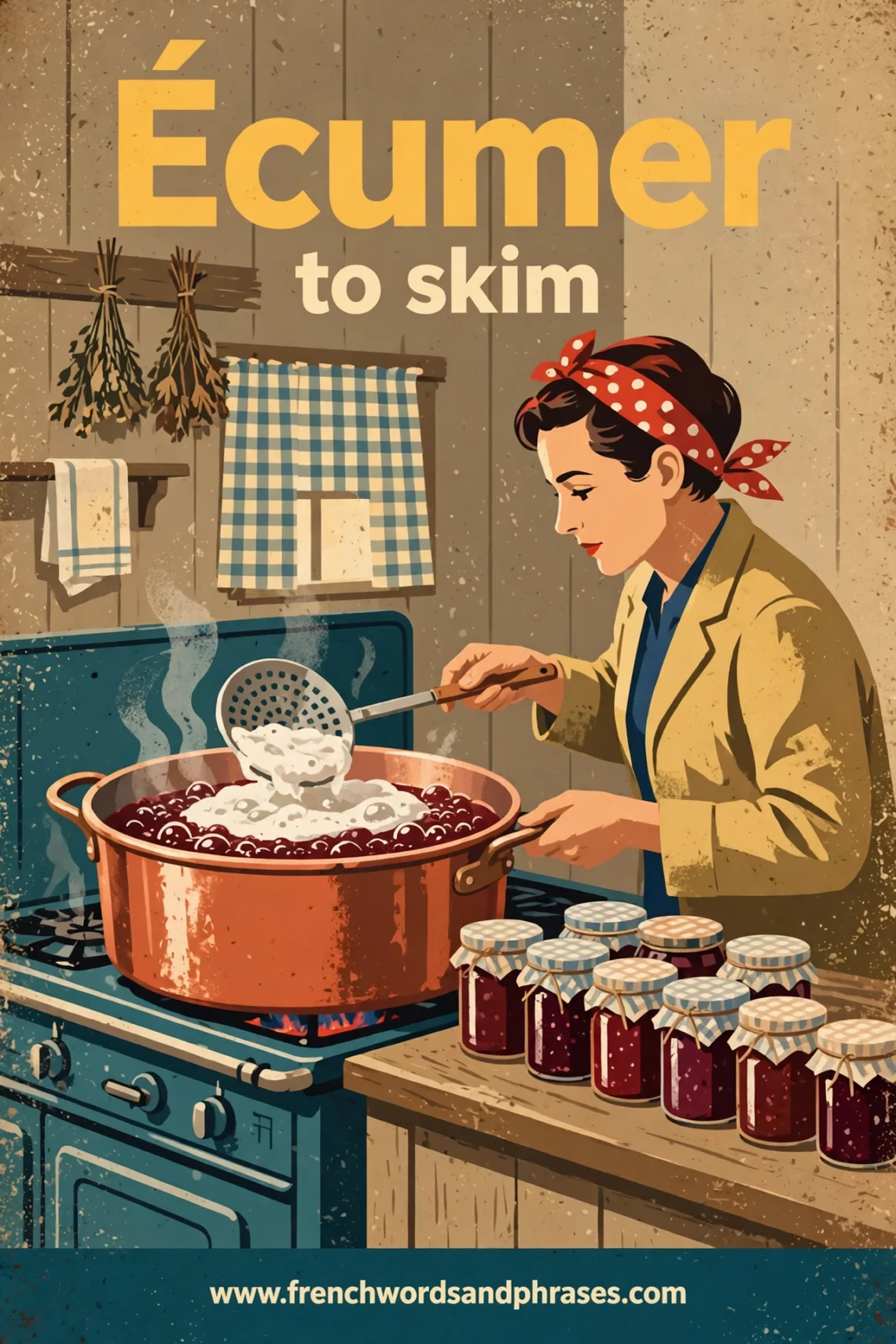
Écumer means to skim.
A spoon gliding over a simmering broth, lifting away the grey foam; white horses on a breaking wave; a pirate flag on the horizon — écumer is the verb of foam, and of everything that skims across a surface taking the best or the worst of it.
In this guide, you’ll learn how to conjugate écumer in all the major French tenses and moods. Explore complete conjugation tables, French examples, English translations, and practice quizzes.
Understanding the French Verb Écumer
Écumer is a regular French verb belonging to the first group of verbs, those ending in -er.
It means to skim. It is commonly used in the kitchen for skimming foam and fat from broths, jams and sauces, in adventure stories for pirates and raiders scouring seas and coasts, and in the set phrase écumer de rage for someone literally foaming with fury.
Verb classification: First group (-er)
Auxiliary verb: Avoir
Past participle: écumé
Present participle: écumant
English equivalents: To skim, to skim the foam off; écumer de rage — to foam with rage; un écumeur des mers — a scourer of the seas, a pirate.
One important detail: écumer is built on l’écume — foam, froth, scum, the same word for the foam on a broth, on beer and on a wave (l’écume des vagues). From the kitchen the verb sails outward: pirates écument les mers, they scour the seas; a furious man écume de rage, he foams with rage; and a pickpocket can écumer a neighbourhood, working its surface and skimming its valuables.
Experience the Word
Écumer is the verb of the surface — a spoon, a wave or a pirate ship passing over and carrying something away.
Imagine a kitchen in the hour before a feast. The cook stands over a great pot, patient as a fisherman, and every few minutes her spoon écume the broth, until what remains is clear as amber and ready for the table.
The broth has not been changed, only cleared. It has been écumé — skimmed clean of its foam.
How to Conjugate Écumer: Complete French Conjugation Guide
Let’s explore every major conjugation of écumer, beginning with the indicative mood.
How to Conjugate Écumer in the Indicative Mood
The indicative mood is used to express facts, observations, actions, and events.
How to Conjugate Écumer in the Present Tense (Présent)
Used for actions happening now, habitual actions, and general truths.
| Subject | Conjugation |
|---|---|
| je | écume |
| tu | écumes |
| il / elle | écume |
| nous | écumons |
| vous | écumez |
| ils / elles | écument |
Example
Elle écume le bouillon avec une petite louche.
She skims the broth with a small ladle.
Quick Quiz 1
Complete the sentence:
Nous ______ la sauce avant de servir.
Reveal the answer
écumons
Nous écumons la sauce avant de servir.
We skim the sauce before serving.
How to Conjugate Écumer in the Passé Composé
Used for completed actions in the past. Écumer takes the auxiliary verb avoir.
| Subject | Conjugation |
|---|---|
| j’ | ai écumé |
| tu | as écumé |
| il / elle | a écumé |
| nous | avons écumé |
| vous | avez écumé |
| ils / elles | ont écumé |
Example
Les pirates ont écumé ces mers pendant dix ans.
The pirates scoured these seas for ten years.
How to Conjugate Écumer in the Imparfait (Imperfect Tense)
Used for habitual past actions, descriptions, and ongoing situations in the past.
| Subject | Conjugation |
|---|---|
| je | écumais |
| tu | écumais |
| il / elle | écumait |
| nous | écumions |
| vous | écumiez |
| ils / elles | écumaient |
Example
Le cuisinier écumait la confiture dès qu’elle bouillait.
The cook used to skim the jam as soon as it boiled.
Quick Quiz 2
Choose the correct form:
I skimmed the jam.
J’______ la confiture. (ai écumé / suis écumé)
Reveal the answer
ai écumé
J’ai écumé la confiture.
Écumer takes avoir.
How to Conjugate Écumer in the Plus-que-parfait
Used to describe an action that had already been completed before another past event.
| Subject | Conjugation |
|---|---|
| j’ | avais écumé |
| tu | avais écumé |
| il / elle | avait écumé |
| nous | avions écumé |
| vous | aviez écumé |
| ils / elles | avaient écumé |
Example
Il avait écumé la soupe avant d’ajouter les légumes.
He had skimmed the soup before adding the vegetables.
How to Conjugate Écumer in the Passé Simple
Primarily used in formal writing, literature, and historical narratives. It is rarely used in everyday conversation.
| Subject | Conjugation |
|---|---|
| je | écumai |
| tu | écumas |
| il / elle | écuma |
| nous | écumâmes |
| vous | écumâtes |
| ils / elles | écumèrent |
Example
Le corsaire écuma les côtes tout l’été.
The privateer scoured the coasts all summer.
How to Conjugate Écumer in the Passé Antérieur
A literary tense used to express an action completed immediately before another past action, generally in the passé simple.
| Subject | Conjugation |
|---|---|
| j’ | eus écumé |
| tu | eus écumé |
| il / elle | eut écumé |
| nous | eûmes écumé |
| vous | eûtes écumé |
| ils / elles | eurent écumé |
Example
Quand elle eut écumé le bouillon, elle le servit bien clair.
When she had skimmed the broth, she served it nice and clear.
How to Conjugate Écumer in the Future Tense (Futur Simple)
Used to describe actions that will take place in the future.
| Subject | Conjugation |
|---|---|
| je | écumerai |
| tu | écumeras |
| il / elle | écumera |
| nous | écumerons |
| vous | écumerez |
| ils / elles | écumeront |
Example
J’écumerai la sauce juste avant de servir.
I will skim the sauce just before serving.
How to Conjugate Écumer in the Futur Antérieur (Future Perfect)
Used for an action that will have been completed before a particular point in the future.
| Subject | Conjugation |
|---|---|
| j’ | aurai écumé |
| tu | auras écumé |
| il / elle | aura écumé |
| nous | aurons écumé |
| vous | aurez écumé |
| ils / elles | auront écumé |
Example
À la fin de la cuisson, tu auras écumé le bouillon trois fois.
By the end of the cooking, you will have skimmed the broth three times.
How to Conjugate Écumer in the Near Future (Futur Proche)
Used to describe something that is going to happen soon. Formed with aller + infinitive.
| Subject | Conjugation |
|---|---|
| je | vais écumer |
| tu | vas écumer |
| il / elle | va écumer |
| nous | allons écumer |
| vous | allez écumer |
| ils / elles | vont écumer |
Example
Attention, la soupe bout : je vais l’écumer.
Careful, the soup is boiling: I am going to skim it.
How to Conjugate Écumer in the Conditional Mood
The conditional mood expresses what would happen under certain circumstances. It is also frequently used to make polite requests or express wishes.
How to Conjugate Écumer in the Present Conditional
| Subject | Conjugation |
|---|---|
| je | écumerais |
| tu | écumerais |
| il / elle | écumerait |
| nous | écumerions |
| vous | écumeriez |
| ils / elles | écumeraient |
Example
Sans écumoire, on écumerait moins bien le bouillon.
Without a skimmer, we would skim the broth less well.
How to Conjugate Écumer in the Past Conditional
| Subject | Conjugation |
|---|---|
| j’ | aurais écumé |
| tu | aurais écumé |
| il / elle | aurait écumé |
| nous | aurions écumé |
| vous | auriez écumé |
| ils / elles | auraient écumé |
Example
Elle aurait écumé la confiture si elle avait eu le temps.
She would have skimmed the jam if she had had the time.
Écumer in the Literary Past Conditional Form
This less common literary form uses the imperfect subjunctive of avoir.
| Subject | Conjugation |
|---|---|
| j’ | eusse écumé |
| tu | eusses écumé |
| il / elle | eût écumé |
| nous | eussions écumé |
| vous | eussiez écumé |
| ils / elles | eussent écumé |
Example
Le pirate eût écumé les mers du Sud sans relâche.
The pirate would have scoured the southern seas without rest.
How to Conjugate Écumer in the Subjunctive Mood
The subjunctive is used to express wishes, emotions, doubts, necessity, and uncertainty. It frequently follows expressions such as il faut que (it is necessary that) or bien que (although).
How to Conjugate Écumer in the Present Subjunctive
| Subject | Conjugation |
|---|---|
| que je | écume |
| que tu | écumes |
| qu’il / qu’elle | écume |
| que nous | écumions |
| que vous | écumiez |
| qu’ils / qu’elles | écument |
Example
Il faut que tu écumes le bouillon dès qu’il bout.
You must skim the broth as soon as it boils.
Quick Quiz 3
Complete the sentence using the subjunctive:
Il faut que vous ______ le bouillon.
Reveal the answer
écumiez
Il faut que vous écumiez le bouillon.
You must skim the broth.
How to Conjugate Écumer in the Imperfect Subjunctive
A literary tense, rarely encountered in modern spoken French.
| Subject | Conjugation |
|---|---|
| que je | écumasse |
| que tu | écumasses |
| qu’il / qu’elle | écumât |
| que nous | écumassions |
| que vous | écumassiez |
| qu’ils / qu’elles | écumassent |
Example
Le chef voulait que l’apprenti écumât la sauce lui-même.
The chef wanted the apprentice to skim the sauce himself.
How to Conjugate Écumer in the Pluperfect Subjunctive
A literary construction used to express an action completed before another past action.
| Subject | Conjugation |
|---|---|
| que j’ | eusse écumé |
| que tu | eusses écumé |
| qu’il / qu’elle | eût écumé |
| que nous | eussions écumé |
| que vous | eussiez écumé |
| qu’ils / qu’elles | eussent écumé |
Example
On raconte qu’ils eussent écumé les mers avant de disparaître.
They say the pirates had scoured the seas before disappearing.
How to Conjugate Écumer in the Past Subjunctive
| Subject | Conjugation |
|---|---|
| que j’ | aie écumé |
| que tu | aies écumé |
| qu’il / qu’elle | ait écumé |
| que nous | ayons écumé |
| que vous | ayez écumé |
| qu’ils / qu’elles | aient écumé |
Example
Je suis content que vous ayez écumé la soupe à temps.
I am glad you skimmed the soup in time.
How to Conjugate Écumer in the Imperative
The imperative is used to give commands, instructions, invitations, or suggestions. Subject pronouns are omitted.
How to Conjugate Écumer in the Present Imperative
| Person | Conjugation |
|---|---|
| (tu) | écume |
| (nous) | écumons |
| (vous) | écumez |
Example
Écume le bouillon, sinon il restera trouble !
Skim the broth, otherwise it will stay cloudy!
Quick Quiz 4
How would you say Skim the broth (tu form)?
Reveal the answer
Écume le bouillon !
French Participles of Écumer
Participles are verb forms that can be used in compound tenses and other grammatical constructions.
Present Participle of Écumer
écumant
En écumant la confiture, elle s’est brûlé le doigt.
While skimming the jam, she burned her finger.
Past Participle of Écumer
écumé
Écumé avec patience, le bouillon était limpide comme de l’eau.
Skimmed with patience, the broth was as clear as water.
Écumer in Everyday French: Real-Life Examples
Now that you know the conjugations, let’s see how écumer appears in everyday French.
Example 1 — Present
Elle écume la soupe pendant qu’elle mijote.
She skims the soup while it simmers.
Example 2 — Passé composé
J’ai écumé la confiture de fraises ce matin.
I skimmed the strawberry jam this morning.
Example 3 — Imparfait
Les corsaires écumaient les mers des Caraïbes.
The privateers used to scour the Caribbean seas.
Example 4 — Future
Nous écumerons la sauce avant le dîner.
We will skim the sauce before dinner.
Example 5 — Conditional
Il écumerait de rage en apprenant la nouvelle.
He would foam with rage on hearing the news.
Example 6 — Imperative
Écumez le bouillon dès qu’il commence à bouillir !
Skim the broth as soon as it starts to boil!
Beyond Translation: The Meaning of Écumer
English skim stays mostly in the kitchen; French écumer follows its foam everywhere — to the wave, to the furious face, to the pirate ship.
Wherever there is foam, écumer is at home.
Une écumoire, the skimming ladle, sits in the kitchen drawer; un écumeur des mers, the scourer of the seas, sails out of the storybooks — one word family for both.
How to Remember the French Verb Écumer
Remember it this way: Écumer is about foam work — skimming broths and scouring seas.
- L’écume — foam: on the broth, on beer, on the waves; écumer removes or rides it.
- Écumer de rage — to foam with rage; un écumeur des mers — a pirate.
- Regular -er: j’écume, nous écumons, past participle écumé.
The key idea is foam work — skimming broths and scouring seas.
Test Your Knowledge of Écumer
Let’s see how much you’ve learned. Try answering these questions before revealing the answers.
Question 1
What is l’écume?
Reveal the answer
Foam — on a broth, on beer, or on a wave.
Question 2
How do you say She skims the broth in French?
Reveal the answer
Elle écume le bouillon.
Question 3
Translate: The pirates scoured these seas for ten years.
Reveal the answer
Les pirates ont écumé ces mers pendant dix ans.
Question 4
What is the past participle of écumer?
Reveal the answer
Écumé.
Question 5
Complete the sentence:
Il faut que tu ______ le bouillon dès qu’il bout.
Reveal the answer
écumes
Il faut que tu écumes le bouillon dès qu’il bout.
You must skim the broth as soon as it boils.
Your Final Challenge
Can You Use It?
How would you say this in French?
She skims the broth with a steady hand, and the soup becomes clear as a winter morning.
Reveal the answer
Elle écume le bouillon d’une main sûre, et la soupe devient claire comme un matin d’hiver.
She skims the broth with a steady hand, and the soup becomes clear as a winter morning.
A little French. A little curiosity. A richer everyday life.
LEARN FRENCH ONE WORD AT A TIME