A French Word to Live By
How to Conjugate Marcotter in French
/maʁ.kɔ.te/
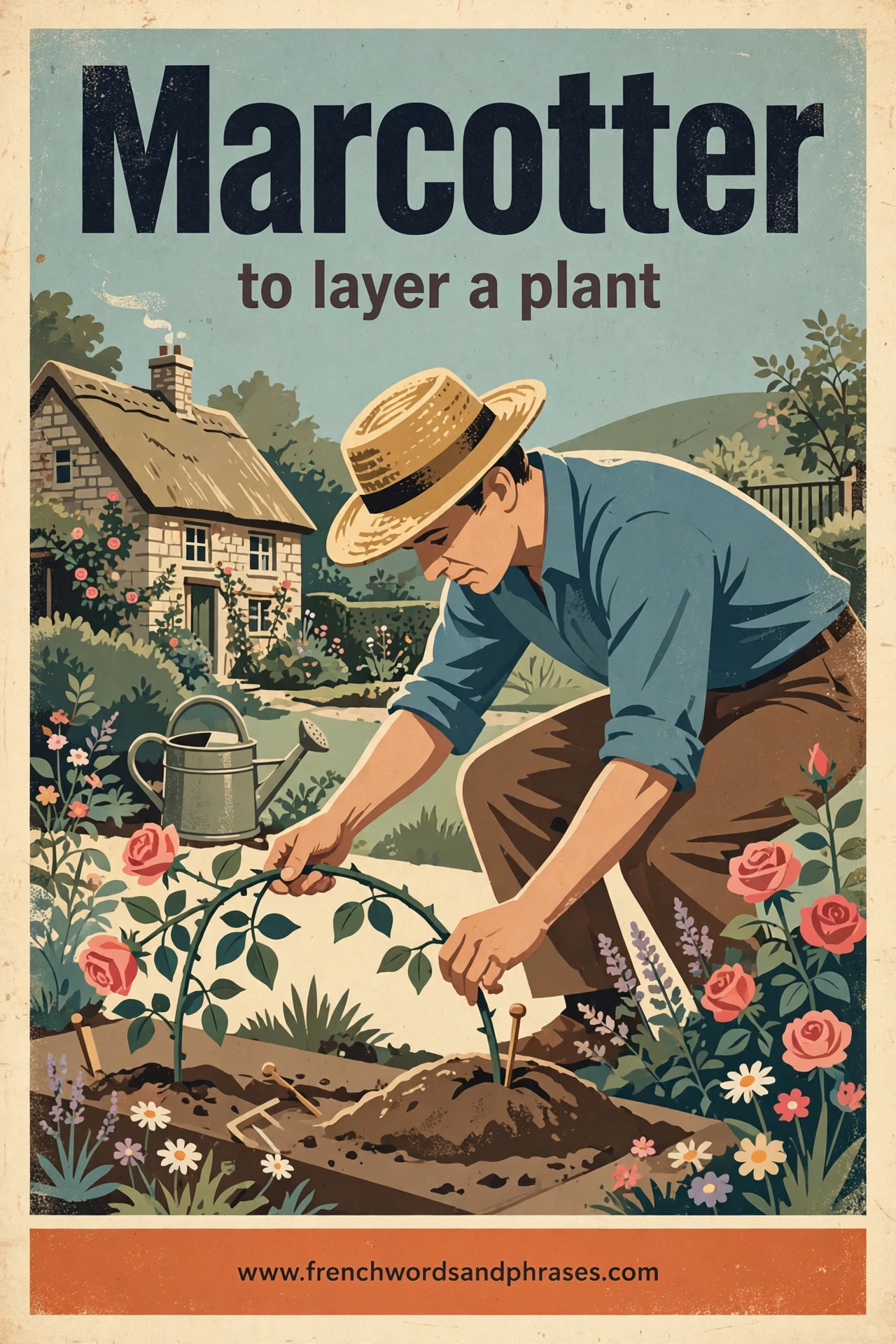
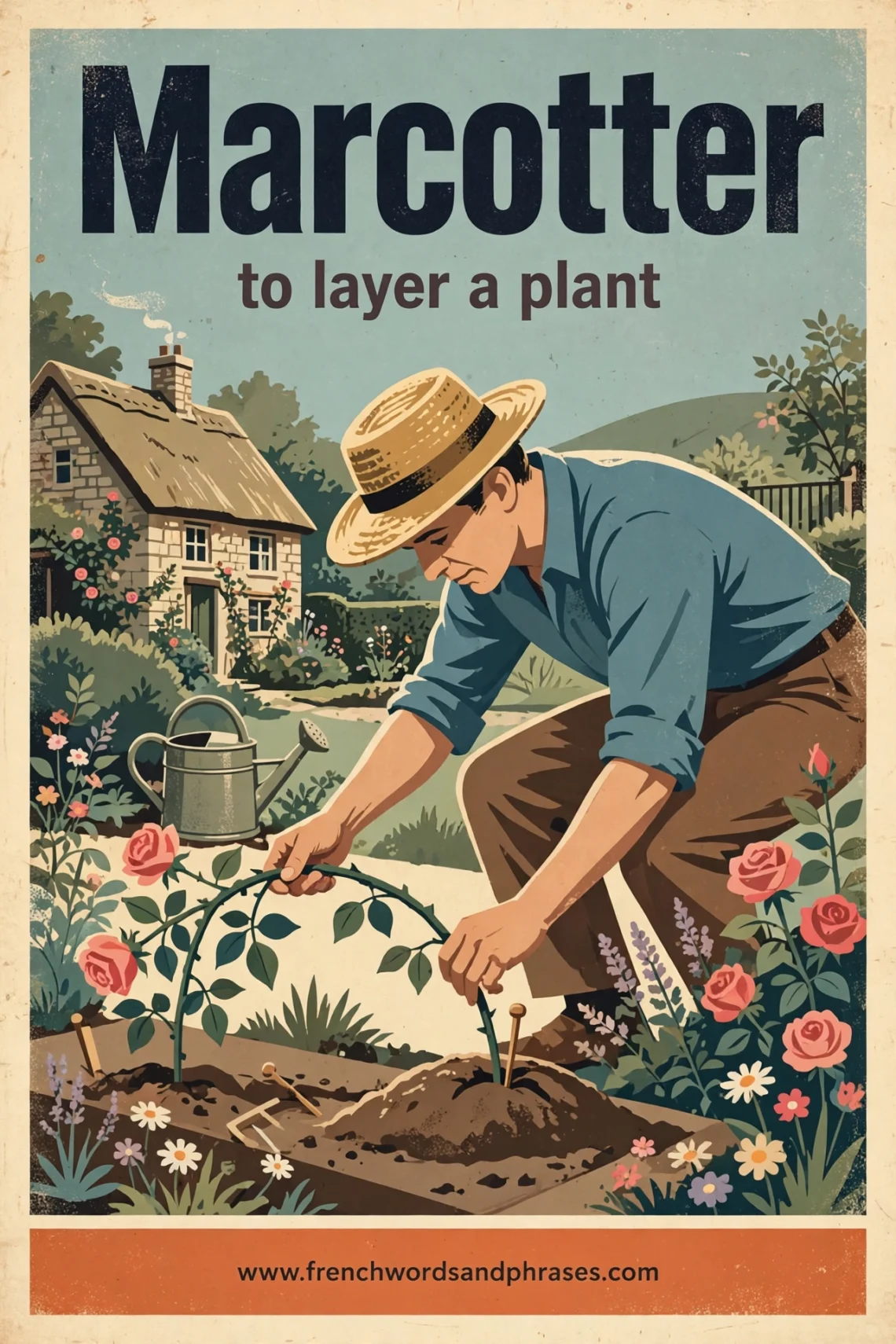
Marcotter means to layer a plant — to root a stem while it is still attached.
A low branch of jasmine bent down and buried in the soil, a strawberry runner pegged to the earth — marcotter is the gardener’s patient trick: the stem takes root before it ever leaves its mother plant.
In this guide, you’ll learn how to conjugate marcotter in all the major French tenses and moods. Explore complete conjugation tables, French examples, English translations, and practice quizzes.
Understanding the French Verb Marcotter
Marcotter is a regular French verb belonging to the first group of verbs, those ending in -er.
It means to layer a plant. It is commonly used in the garden for propagating roses, jasmine, honeysuckle and grapevines, for strawberry runners that root where they touch the soil, and in the two classic techniques — marcotter en terre (in the ground) and marcotter en l’air (air layering, in a moss-filled sleeve).
Verb classification: First group (-er)
Auxiliary verb: Avoir
Past participle: marcotté
Present participle: marcottant
English equivalents: To layer (a plant); une marcotte — a layered shoot, a cutting rooted in place.
One important detail: marcotter names its own result — une marcotte is the layered stem itself, the shoot you bend, bury and later cut free once it has roots of its own. Gardeners marcottent what refuses to grow from seed or cutting: marcotter un rosier, un jasmin, un fraisier, une vigne. The stem stays attached to the mother plant while it roots, which is exactly why the method almost never fails.
Experience the Word
Marcotter is the verb of propagation without separation — the child plant stays fed by its mother until it can stand alone.
Imagine an old gardener with a jasmine older than his grandchildren. He chooses a supple stem, bends it gently to the soil, covers one joint with earth and a flat stone, and walks away — nature does the rest by autumn.
Nothing has been cut or sown. A stem has been layered — a new plant born without leaving home.
How to Conjugate Marcotter: Complete French Conjugation Guide
Let’s explore every major conjugation of marcotter, beginning with the indicative mood.
How to Conjugate Marcotter in the Indicative Mood
The indicative mood is used to express facts, observations, actions, and events.
How to Conjugate Marcotter in the Present Tense (Présent)
Used for actions happening now, habitual actions, and general truths.
| Subject | Conjugation |
|---|---|
| je | marcotte |
| tu | marcottes |
| il / elle | marcotte |
| nous | marcottons |
| vous | marcottez |
| ils / elles | marcottent |
Example
Elle marcotte le jasmin le long du mur.
She layers the jasmine along the wall.
Quick Quiz 1
Complete the sentence:
Nous ______ le rosier au printemps.
Reveal the answer
marcottons
Nous marcottons le rosier au printemps.
We layer the rose bush in spring.
How to Conjugate Marcotter in the Passé Composé
Used for completed actions in the past. Marcotter takes the auxiliary verb avoir.
| Subject | Conjugation |
|---|---|
| j’ | ai marcotté |
| tu | as marcotté |
| il / elle | a marcotté |
| nous | avons marcotté |
| vous | avez marcotté |
| ils / elles | ont marcotté |
Example
Il a marcotté le rosier au printemps dernier.
He layered the rose bush last spring.
How to Conjugate Marcotter in the Imparfait (Imperfect Tense)
Used for habitual past actions, descriptions, and ongoing situations in the past.
| Subject | Conjugation |
|---|---|
| je | marcottais |
| tu | marcottais |
| il / elle | marcottait |
| nous | marcottions |
| vous | marcottiez |
| ils / elles | marcottaient |
Example
Mon grand-père marcottait ses vignes chaque automne.
My grandfather used to layer his vines every autumn.
Quick Quiz 2
Choose the correct form:
He layered the vine.
Il ______ la vigne. (a marcotté / est marcotté)
Reveal the answer
a marcotté
Il a marcotté la vigne.
Marcotter takes avoir.
How to Conjugate Marcotter in the Plus-que-parfait
Used to describe an action that had already been completed before another past event.
| Subject | Conjugation |
|---|---|
| j’ | avais marcotté |
| tu | avais marcotté |
| il / elle | avait marcotté |
| nous | avions marcotté |
| vous | aviez marcotté |
| ils / elles | avaient marcotté |
Example
Nous avions marcotté les fraisiers avant les premières gelées.
We had layered the strawberry plants before the first frosts.
How to Conjugate Marcotter in the Passé Simple
Primarily used in formal writing, literature, and historical narratives. It is rarely used in everyday conversation.
| Subject | Conjugation |
|---|---|
| je | marcottai |
| tu | marcottas |
| il / elle | marcotta |
| nous | marcottâmes |
| vous | marcottâtes |
| ils / elles | marcottèrent |
Example
Elle marcotta une branche du lilas près de la haie.
She layered a branch of the lilac near the hedge.
How to Conjugate Marcotter in the Passé Antérieur
A literary tense used to express an action completed immediately before another past action, generally in the passé simple.
| Subject | Conjugation |
|---|---|
| j’ | eus marcotté |
| tu | eus marcotté |
| il / elle | eut marcotté |
| nous | eûmes marcotté |
| vous | eûtes marcotté |
| ils / elles | eurent marcotté |
Example
Quand il eut marcotté le chèvrefeuille, il marqua l’endroit d’un bâton.
When he had layered the honeysuckle, he marked the spot with a stick.
How to Conjugate Marcotter in the Future Tense (Futur Simple)
Used to describe actions that will take place in the future.
| Subject | Conjugation |
|---|---|
| je | marcotterai |
| tu | marcotteras |
| il / elle | marcottera |
| nous | marcotterons |
| vous | marcotterez |
| ils / elles | marcotteront |
Example
Demain, je marcotterai le groseillier du fond du jardin.
Tomorrow, I will layer the currant bush at the bottom of the garden.
How to Conjugate Marcotter in the Futur Antérieur (Future Perfect)
Used for an action that will have been completed before a particular point in the future.
| Subject | Conjugation |
|---|---|
| j’ | aurai marcotté |
| tu | auras marcotté |
| il / elle | aura marcotté |
| nous | aurons marcotté |
| vous | aurez marcotté |
| ils / elles | auront marcotté |
Example
À l’automne, elle aura marcotté toutes ses plantes grimpantes.
By autumn, she will have layered all her climbing plants.
How to Conjugate Marcotter in the Near Future (Futur Proche)
Used to describe something that is going to happen soon. Formed with aller + infinitive.
| Subject | Conjugation |
|---|---|
| je | vais marcotter |
| tu | vas marcotter |
| il / elle | va marcotter |
| nous | allons marcotter |
| vous | allez marcotter |
| ils / elles | vont marcotter |
Example
Je vais marcotter cette branche de jasmin, elle touche déjà la terre.
I am going to layer this jasmine branch, it is already touching the ground.
How to Conjugate Marcotter in the Conditional Mood
The conditional mood expresses what would happen under certain circumstances. It is also frequently used to make polite requests or express wishes.
How to Conjugate Marcotter in the Present Conditional
| Subject | Conjugation |
|---|---|
| je | marcotterais |
| tu | marcotterais |
| il / elle | marcotterait |
| nous | marcotterions |
| vous | marcotteriez |
| ils / elles | marcotteraient |
Example
Avec un peu de mousse, je marcotterais ce ficus en l’air.
With a little moss, I would air-layer this fig tree.
How to Conjugate Marcotter in the Past Conditional
| Subject | Conjugation |
|---|---|
| j’ | aurais marcotté |
| tu | aurais marcotté |
| il / elle | aurait marcotté |
| nous | aurions marcotté |
| vous | auriez marcotté |
| ils / elles | auraient marcotté |
Example
Elle aurait marcotté le rosier si la branche avait été plus souple.
She would have layered the rose bush if the branch had been more supple.
Marcotter in the Literary Past Conditional Form
This less common literary form uses the imperfect subjunctive of avoir.
| Subject | Conjugation |
|---|---|
| j’ | eusse marcotté |
| tu | eusses marcotté |
| il / elle | eût marcotté |
| nous | eussions marcotté |
| vous | eussiez marcotté |
| ils / elles | eussent marcotté |
Example
Il eût marcotté la vigne comme le faisaient les anciens.
He would have layered the vine as the old-timers used to do.
How to Conjugate Marcotter in the Subjunctive Mood
The subjunctive is used to express wishes, emotions, doubts, necessity, and uncertainty. It frequently follows expressions such as il faut que (it is necessary that) or bien que (although).
How to Conjugate Marcotter in the Present Subjunctive
| Subject | Conjugation |
|---|---|
| que je | marcotte |
| que tu | marcottes |
| qu’il / qu’elle | marcotte |
| que nous | marcottions |
| que vous | marcottiez |
| qu’ils / qu’elles | marcottent |
Example
Il faut que tu marcottes la branche avant l’été.
You must layer the branch before the summer.
Quick Quiz 3
Complete the sentence using the subjunctive:
Il faut que vous ______ les fraisiers.
Reveal the answer
marcottiez
Il faut que vous marcottiez les fraisiers.
You must layer the strawberry plants.
How to Conjugate Marcotter in the Imperfect Subjunctive
A literary tense, rarely encountered in modern spoken French.
| Subject | Conjugation |
|---|---|
| que je | marcottasse |
| que tu | marcottasses |
| qu’il / qu’elle | marcottât |
| que nous | marcottassions |
| que vous | marcottassiez |
| qu’ils / qu’elles | marcottassent |
Example
Je voulais qu’elle marcottât le lilas près du portail.
I wanted her to layer the lilac near the gate.
How to Conjugate Marcotter in the Pluperfect Subjunctive
A literary construction used to express an action completed before another past action.
| Subject | Conjugation |
|---|---|
| que j’ | eusse marcotté |
| que tu | eusses marcotté |
| qu’il / qu’elle | eût marcotté |
| que nous | eussions marcotté |
| que vous | eussiez marcotté |
| qu’ils / qu’elles | eussent marcotté |
Example
Il regrettait que nous eussions marcotté si tard dans la saison.
He regretted that we had layered so late in the season.
How to Conjugate Marcotter in the Past Subjunctive
| Subject | Conjugation |
|---|---|
| que j’ | aie marcotté |
| que tu | aies marcotté |
| qu’il / qu’elle | ait marcotté |
| que nous | ayons marcotté |
| que vous | ayez marcotté |
| qu’ils / qu’elles | aient marcotté |
Example
Je suis content que tu aies marcotté le jasmin, il repart déjà.
I am glad you layered the jasmine, it is already growing again.
How to Conjugate Marcotter in the Imperative
The imperative is used to give commands, instructions, invitations, or suggestions. Subject pronouns are omitted.
How to Conjugate Marcotter in the Present Imperative
| Person | Conjugation |
|---|---|
| (tu) | marcotte |
| (nous) | marcottons |
| (vous) | marcottez |
Example
Marcotte cette branche souple, elle s’enracinera vite !
Layer this supple branch, it will root quickly!
Quick Quiz 4
How would you say Layer this branch (tu form)?
Reveal the answer
Marcotte cette branche !
French Participles of Marcotter
Participles are verb forms that can be used in compound tenses and other grammatical constructions.
Present Participle of Marcotter
marcottant
En marcottant le fraisier, elle a découvert trois stolons déjà enracinés.
While layering the strawberry plant, she found three runners already rooted.
Past Participle of Marcotter
marcotté
Marcottée au printemps, la branche se sèvre à l’automne.
Layered in spring, the branch is weaned in autumn.
Marcotter in Everyday French: Real-Life Examples
Now that you know the conjugations, let’s see how marcotter appears in everyday French.
Example 1 — Present
Je marcotte le jasmin chaque printemps.
I layer the jasmine every spring.
Example 2 — Passé composé
Nous avons marcotté les fraisiers du potager.
We layered the strawberry plants in the vegetable patch.
Example 3 — Imparfait
Les anciens marcottaient la vigne au lieu de la semer.
Gardeners of old used to layer the vine instead of sowing it.
Example 4 — Future
Tu marcotteras le rosier près de la fenêtre.
You will layer the rose bush near the window.
Example 5 — Conditional
Je marcotterais bien ce lilas, si la branche touchait la terre.
I would gladly layer this lilac, if the branch reached the ground.
Example 6 — Imperative
Marcottez les stolons des fraisiers avant l’hiver !
Layer the strawberry runners before winter!
Beyond Translation: The Meaning of Marcotter
English gardeners say to layer, a plain description of the gesture; French marcotter packs the whole technique into one word, tool and result included.
Une marcotte is both the act and the outcome.
The stem you bury is une marcotte, and the rooted young plant you cut free months later is still une marcotte — the verb, the method and the new plant share a single name.
How to Remember the French Verb Marcotter
Remember it this way: Marcotter is about the bent stem — a new plant rooted before it leaves its mother.
- Une marcotte — the layered stem, and later the young plant it becomes.
- Marcotter works where seeds and cuttings fail: the stem roots while still attached.
- Regular -er: je marcotte, nous marcottons, past participle marcotté.
The key idea is the bent stem — a new plant rooted before it leaves its mother.
Test Your Knowledge of Marcotter
Let’s see how much you’ve learned. Try answering these questions before revealing the answers.
Question 1
What is une marcotte?
Reveal the answer
A layered shoot — a stem bent to the soil that roots while still attached to the mother plant.
Question 2
How do you say You must layer the branch in French?
Reveal the answer
Il faut que tu marcottes la branche.
Question 3
Translate: He layered the rose bush last spring.
Reveal the answer
Il a marcotté le rosier au printemps dernier.
Question 4
What is the past participle of marcotter?
Reveal the answer
Marcotté.
Question 5
Complete the sentence:
Il faut que vous ______ les fraisiers.
Reveal the answer
marcottiez
Il faut que vous marcottiez les fraisiers.
You must layer the strawberry plants.
Your Final Challenge
Can You Use It?
How would you say this in French?
She layers the jasmine in spring, and autumn offers her a brand-new plant.
Reveal the answer
Elle marcotte le jasmin au printemps, et l’automne lui offre une plante toute neuve.
She layers the jasmine in spring, and autumn offers her a brand-new plant.
A little French. A little curiosity. A richer everyday life.
LEARN FRENCH ONE WORD AT A TIME