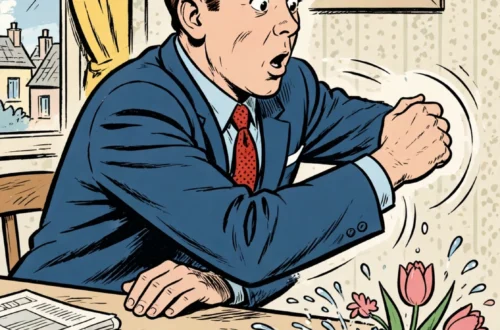
A French Word to Live By
Translate Tôt to English
/to/
Tôt means early.
The harbour is still blue with night when the first fishermen unfasten their boats. No café is open, no bell has rung — but the gulls are already arguing over the quay. The town belongs, for one quiet hour, to those who rise tôt.
In this guide, you’ll learn what tôt means in English, where it sits in a French sentence, how it pairs with tard in tôt ou tard, and how it differs from en avance. Explore French examples, English translations, and practice quizzes.
Understanding the French Adverb Tôt
Tôt is a French adverb of time — the mirror image of tard. Adverbs do not change their form, and tôt never does; its little hat, the circumflex on the ô, is a souvenir of an old letter s that history wore away.
It means early. It answers the question when? — sooner than the ordinary hour, before the day has really begun. The train caught at dawn, the baker’s first batch, the visitor who arrives before the coffee is ready: all of them are tôt.
Type: Adverb of time
Answers the question: When?
Changes form: Never — tôt is invariable
English equivalents: Early.
One important usage detail: English early splits in French just as late does. Tôt is early on the clock — je me lève tôt, I get up early. But early compared with a schedule, arriving before the appointed time, is en avance: le train est arrivé en avance, the train arrived early. Clock time takes tôt; appointments take en avance.
Experience the Word
Tôt is the adverb of empty streets and first light. It smells of bread ovens warming up and sounds like a single bicycle crossing a sleeping square.
Imagine the market gardeners setting out their stalls at five in the morning, arranging lettuces in the dark like jewellers, so that everything is ready when the town wakes.
You have not just set an alarm. You have bought yourself an extra piece of the day.
How to Use Tôt in French: Complete Guide
Let’s explore how tôt works in French, beginning with where it belongs in the sentence.
Tôt at a Glance
Before the details, here is the whole word on one card.
Before the details, here is the whole word on one card.
| Point | Tôt |
|---|---|
| Meaning | early |
| Type | adverb of time |
| Usual position | after the verb, often at the end of the sentence |
| Form | invariable — never changes (but keep the circumflex: tôt) |
Example
Demain, nous partirons tôt pour éviter la circulation.
Tomorrow, we will leave early to avoid the traffic.
Where Tôt Goes in the Sentence
Tôt is flexible: it follows the verb, closes the sentence, and loves to team up with a time of day — tôt le matin, early in the morning.
| Situation | Pattern |
|---|---|
| Simple tense | verb + tôt — je me lève tôt |
| End of the sentence | elle est partie tôt — she left early |
| With a time phrase | tôt le matin — early in the morning |
| Passé composé | after the participle — il s’est levé tôt |
| At the head | Tôt le matin, le port s’éveille |
Example
Le dimanche, ils se lèvent tôt pour aller au marché.
On Sundays, they get up early to go to the market.
Quick Quiz 1
Complete the sentence:
Ce matin, je me suis levé très ______.
Reveal the answer
tôt
Ce matin, je me suis levé très tôt.
This morning, I got up very early.
Tôt with Different Tenses
The adverb never changes — only its neighbours do. Here is tôt waking up the main tenses.
| Tense | Example |
|---|---|
| Present | Je me lève tôt tous les jours de semaine. |
| Passé composé | Elle s’est couchée tôt hier soir. |
| Imparfait | Mon grand-père se levait toujours tôt. |
| Future | Nous arriverons tôt à la gare. |
| Conditional | Tu devrais partir plus tôt. |
Example
Quand j’étais enfant, on se couchait tôt à la campagne.
When I was a child, we went to bed early in the countryside.
Plus Tôt: Earlier, and the Race Against Time
With plus, tôt becomes earlier — and grows a small family of phrases for planning, deadlines and polite urgency.
| French | In English |
|---|---|
| plus tôt | earlier |
| au plus tôt | at the earliest |
| le plus tôt possible | as early as possible |
| plus tôt que prévu | earlier than expected |
| pas plus tôt que midi | no earlier than noon |
Example
Je te téléphonerai au plus tôt demain matin.
I will phone you tomorrow morning at the earliest.
Quick Quiz 2
What does au plus tôt mean?
Reveal the answer
At the earliest
Le colis arrivera au plus tôt vendredi.
The parcel will arrive on Friday at the earliest.
Making Tôt Stronger and Softer
Small words tune tôt up and down, from a peaceful ‘nice and early’ to a groan of ‘far too early’.
| Combination | In English |
|---|---|
| très tôt | very early |
| trop tôt | too early |
| si tôt | so early |
| aussi tôt que | as early as |
| plus tôt | earlier |
Example
Tu es arrivé trop tôt, la réunion commence à dix heures.
You arrived too early, the meeting starts at ten.
Everyday Expressions with Tôt
From proverbs to playful scolding, these are the tôt phrases of daily life — including one it shares with its opposite, tard.
| Expression | In English |
|---|---|
| tôt ou tard | sooner or later |
| tôt le matin | early in the morning |
| pas trop tôt ! | about time! (when someone finally arrives) |
| se lever tôt | to get up early |
| de bonne heure | early — the favourite set phrase for it |
Example
Te voilà enfin ! Pas trop tôt !
There you are at last! About time!
Quick Quiz 3
What does tôt ou tard mean?
Reveal the answer
Sooner or later
Tôt ou tard, la vérité éclate.
Sooner or later, the truth comes out.
Tôt and Its Neighbours
Learn tôt with the whole clock family and you can place any event in a French day.
| French | In English |
|---|---|
| tard | late — the exact opposite |
| de bonne heure | early — the set phrase: partir de bonne heure |
| en avance | early, ahead of schedule |
| à l’heure | on time |
| bientôt | soon — in a moment, not the same as early |
Example
Pars de bonne heure pour ne pas être en retard.
Leave early so as not to be late.
Watch Out: Tôt, En Avance, or Bientôt?
English early and soon blur together; French keeps three separate boxes — and choosing the wrong one changes the meaning.
| Idea | Correct French |
|---|---|
| Early on the clock | je me lève tôt |
| Early against the schedule | le train est en avance |
| Soon, in a moment | je reviens bientôt |
| Too early! | trop tôt ! |
Example
Le train est arrivé en avance, beaucoup trop tôt pour mon café.
The train arrived early, much too early for my coffee.
Quick Quiz 4
Choose the right word:
Le bus est arrivé ______ : dix minutes avant l’heure. (en avance / tôt)
Reveal the answer
en avance
Le bus est arrivé en avance.
Early against a timetable is en avance; tôt is early on the clock.
Tôt in Everyday French: Real-Life Examples
Now that you know the word, let’s see how tôt appears in everyday French.
Example 1 — In the morning
Je me lève tôt pour attraper le premier train.
I get up early to catch the first train.
Example 2 — At the harbour
Les pêcheurs partent tôt, avant le lever du soleil.
The fishermen leave early, before sunrise.
Example 3 — Making plans
Nous partirons tôt demain matin.
We will leave early tomorrow morning.
Example 4 — At work
Elle arrive toujours tôt au bureau.
She always arrives early at the office.
Example 5 — A surprise visit
Tu es là tôt, je ne t’attendais pas avant midi !
You’re here early, I wasn’t expecting you before noon!
Example 6 — Saying goodnight
Ce soir, je me couche tôt.
Tonight, I am going to bed early.
Beyond Translation: The Meaning of Tôt
English says early for the meaning of tôt — but tôt is a whole atmosphere: the blue hour before sunrise, the first loaf out of the oven, the empty street that belongs to you alone.
To rise tôt is to be given the world before anyone else asks for it.
And tôt holds hands with its opposite in one of French’s most patient sayings: tôt ou tard — sooner or later, everything arrives.
How to Remember the French Adverb Tôt
Remember it this way: Tôt is early on the clock — the mirror of tard — and it keeps its little hat, the circumflex on the ô.
- You hear the dawn alarm — je me lève tôt, comme les pêcheurs.
- You shrug about the future — tôt ou tard, ça viendra.
- You greet the friend who finally shows up — pas trop tôt !
The key idea is tôt for early on the clock, en avance for early against a schedule.
Test Your Knowledge of Tôt
Let’s see how much you’ve learned. Try answering these questions before revealing the answers.
Question 1
What does tôt mean, and what is its opposite?
Reveal the answer
Early — its opposite is tard, late.
Question 2
How do you say sooner or later?
Reveal the answer
Tôt ou tard.
Question 3
Translate: We will leave early tomorrow.
Reveal the answer
Nous partirons tôt demain.
Question 4
The train arrived early — ahead of the timetable. Tôt or en avance?
Reveal the answer
En avance — tôt is early on the clock.
Question 5
Complete the sentence:
Répondez le plus ______ possible, s’il vous plaît.
Reveal the answer
tôt
Répondez le plus tôt possible, s’il vous plaît.
Please reply as early as possible.
Your Final Challenge
Can You Use It?
How would you say this in French?
“Tomorrow, we will leave early to avoid the traffic.”
Reveal the answer
Demain, nous partirons tôt pour éviter la circulation.
Tomorrow, we will leave early to avoid the traffic.
A little French. A little curiosity. A richer everyday life.
LEARN FRENCH ONE WORD AT A TIME