A French Word to Live By
How to Conjugate Caractériser in French
/ka.ʁak.te.ʁi.ze/
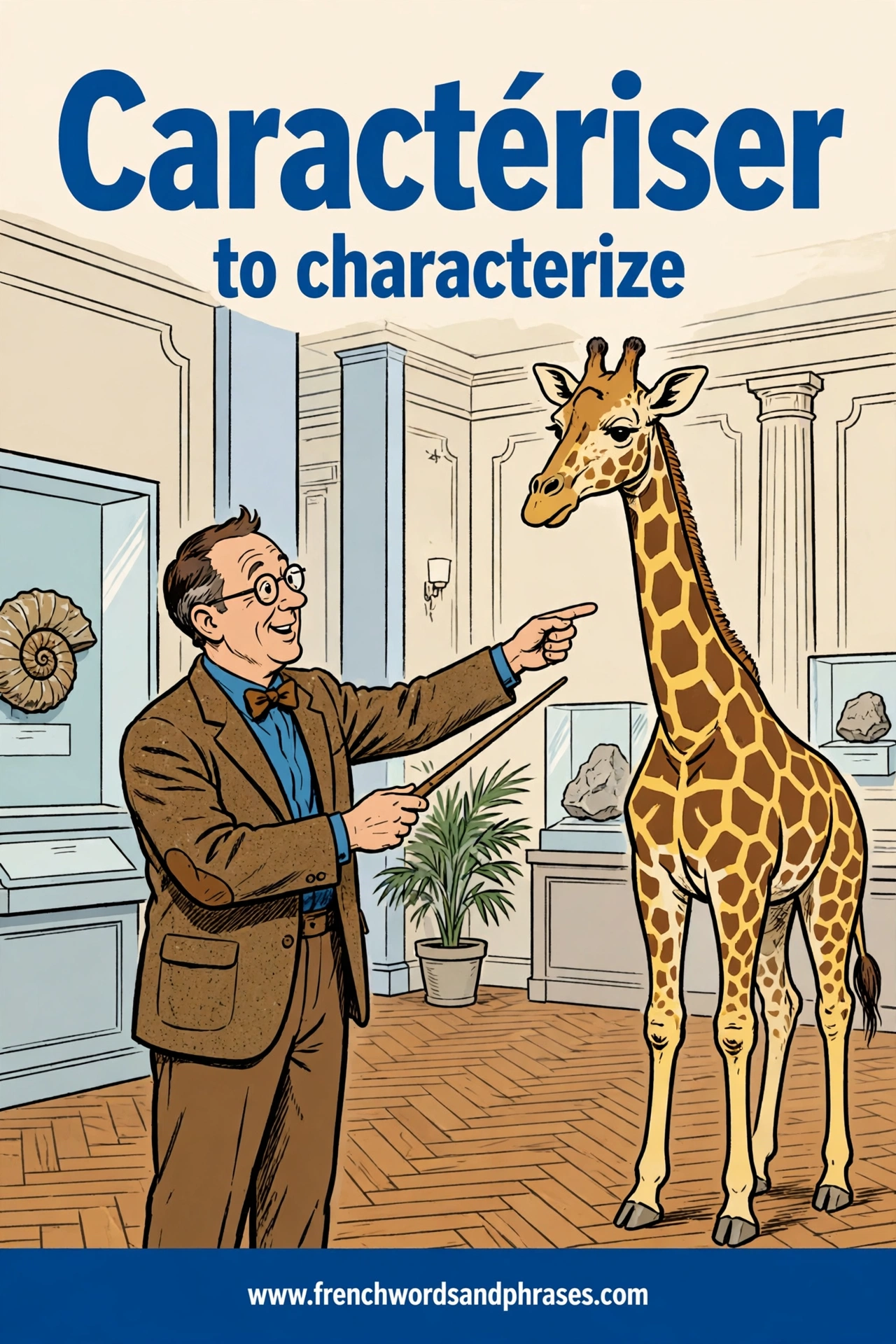
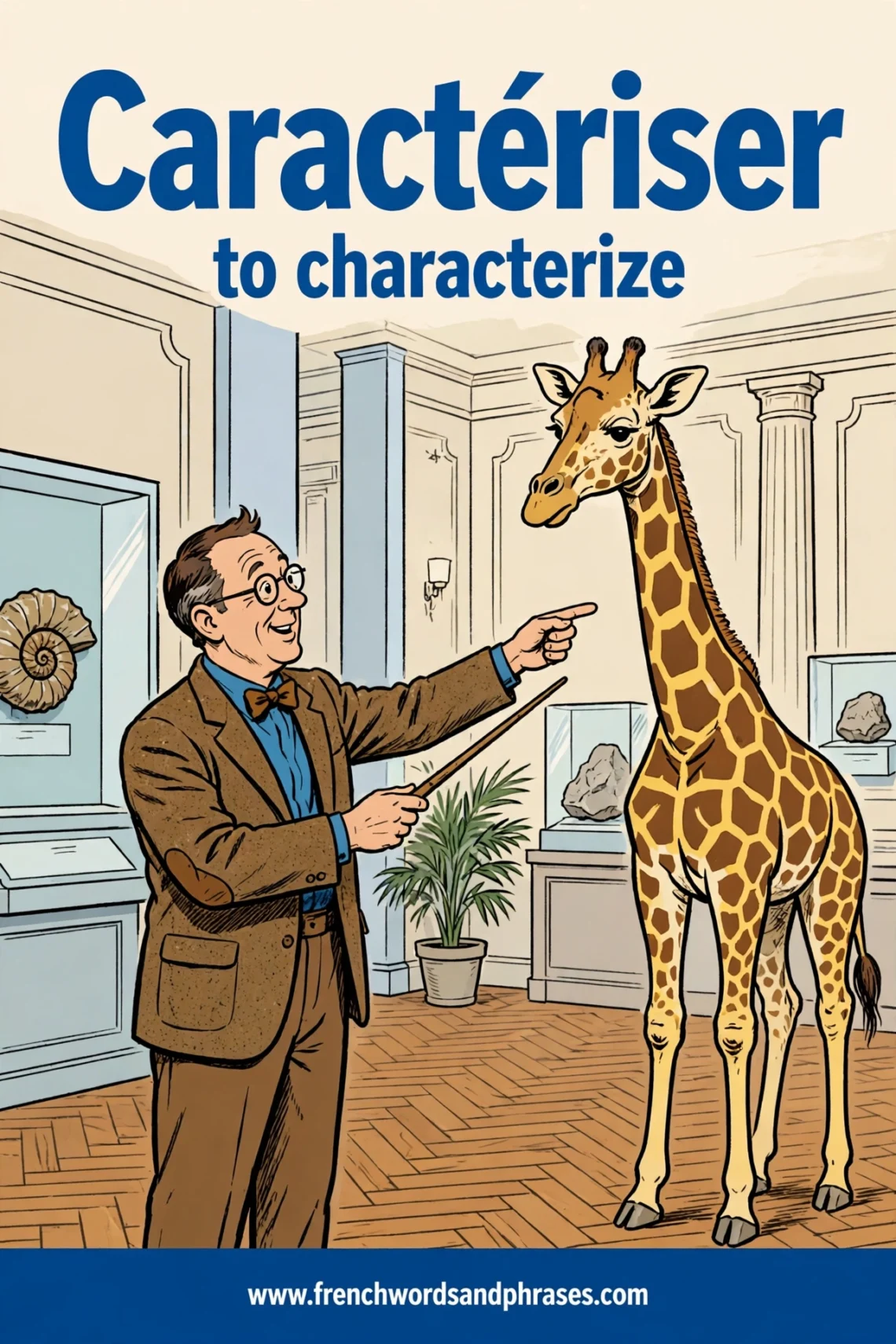
Caractériser means to characterize, to mark — to state the distinctive features that make a person, a period or a style exactly what it is and no other.
A critic sums up a painter in one sentence; a friend describes you so exactly that everyone laughs in recognition — caractériser is the verb of the defining trait: to pick out what marks a person or a thing and sets it apart.
In this guide, you’ll learn how to conjugate caractériser in all the major French tenses and moods. Explore complete conjugation tables, French examples, English translations, and practice quizzes.
Understanding the French Verb Caractériser
Caractériser is a regular French verb belonging to the first group of verbs, those ending in-er.
It means to characterize, to mark. It ranges from literary criticism (caractériser un personnage) to science and everyday description — anything that identifies the distinctive marks of something. Its noun, le caractère, explains the family: a trait, a character, a letter of the alphabet.
Verb classification: First group (-er)
Auxiliary verb: Avoir
Past participle: caractérisé
Present participle: caractérisant
English equivalents: To characterize, to describe, to mark; caractériser un personnage — to characterize a character; caractériser une époque — to define an era; ce qui caractérise ce style — what characterizes this style; caractériser quelqu’un en quelques mots — to sum someone up in a few words.
One important detail: caractériser keeps its é in every form — the accent belongs to the stem and never changes: je caractérise, nous caractérisons, ils caractérisent, past participle caractérisé. Do not confuse it with the reflexive se caractériser par, which names the feature itself (le style se caractérise par sa simplicité). The plain verb takes a direct object: you caractérisez a person, a work, an era.
Experience the Word
Caractériser is the verb of the exact portrait — find the two or three traits that could belong to no one else.
Imagine a novelist at her desk, stuck on chapter one. Her hero is still a shadow — until she writes one line: « Il ne rit jamais avant les autres. » Soudain, la phrase le caractérise, and the shadow becomes a man.
One well-chosen trait does all the work. That is caractériser — to mark a thing by what defines it.
How to Conjugate Caractériser: Complete French Conjugation Guide
Let’s explore every major conjugation of caractériser, beginning with the indicative mood.
How to Conjugate Caractériser in the Indicative Mood
The indicative mood is used to express facts, observations, actions, and events.
How to Conjugate Caractériser in the Present Tense (Présent)
Used for actions happening now, habitual actions, and general truths.
| Subject | Conjugation |
|---|---|
| je | caractérise |
| tu | caractérises |
| il / elle | caractérise |
| nous | caractérisons |
| vous | caractérisez |
| ils / elles | caractérisent |
Example
L’humour caractérise les romans de cet auteur.
Humour characterizes this author’s novels.
Quick Quiz 1
Complete the sentence:
Nous cherchons le trait qui ______ ce style.
Reveal the answer
caractérise
Nous cherchons le trait qui caractérise ce style.
We are looking for the trait that characterizes this style.
How to Conjugate Caractériser in the Passé Composé
Used for completed actions in the past. Caractériser takes the auxiliary verb avoir.
| Subject | Conjugation |
|---|---|
| j’ | ai caractérisé |
| tu | as caractérisé |
| il / elle | a caractérisé |
| nous | avons caractérisé |
| vous | avez caractérisé |
| ils / elles | ont caractérisé |
Example
Le critique a caractérisé le personnage en une phrase.
The critic characterized the character in one sentence.
How to Conjugate Caractériser in the Imparfait (Imperfect Tense)
Used for habitual past actions, descriptions, and ongoing situations in the past.
| Subject | Conjugation |
|---|---|
| je | caractérisais |
| tu | caractérisais |
| il / elle | caractérisait |
| nous | caractérisions |
| vous | caractérisiez |
| ils / elles | caractérisaient |
Example
Une grande simplicité caractérisait son style.
Great simplicity marked his style.
Quick Quiz 2
Choose the correct form:
The critic characterized the film in one word.
Le critique ______ le film en un mot. (a caractérisé / a caractériser)
Reveal the answer
a caractérisé
Le critique a caractérisé le film en un mot.
The past participle of an -er verb ends in -é.
How to Conjugate Caractériser in the Plus-que-parfait
Used to describe an action that had already been completed before another past event.
| Subject | Conjugation |
|---|---|
| j’ | avais caractérisé |
| tu | avais caractérisé |
| il / elle | avait caractérisé |
| nous | avions caractérisé |
| vous | aviez caractérisé |
| ils / elles | avaient caractérisé |
Example
L’historien avait caractérisé l’époque par ses contrastes.
The historian had characterized the era by its contrasts.
How to Conjugate Caractériser in the Passé Simple
Primarily used in formal writing, literature, and historical narratives. It is rarely used in everyday conversation.
| Subject | Conjugation |
|---|---|
| je | caractérisai |
| tu | caractérisas |
| il / elle | caractérisa |
| nous | caractérisâmes |
| vous | caractérisâtes |
| ils / elles | caractérisèrent |
Example
Ce seul geste caractérisa le héros du roman.
That single gesture defined the hero of the novel.
How to Conjugate Caractériser in the Passé Antérieur
A literary tense used to express an action completed immediately before another past action, generally in the passé simple.
| Subject | Conjugation |
|---|---|
| j’ | eus caractérisé |
| tu | eus caractérisé |
| il / elle | eut caractérisé |
| nous | eûmes caractérisé |
| vous | eûtes caractérisé |
| ils / elles | eurent caractérisé |
Example
Quand elle eut caractérisé tous les personnages, elle commença le récit.
When she had characterized all the characters, she began the story.
How to Conjugate Caractériser in the Future Tense (Futur Simple)
Used to describe actions that will take place in the future.
| Subject | Conjugation |
|---|---|
| je | caractériserai |
| tu | caractériseras |
| il / elle | caractérisera |
| nous | caractériserons |
| vous | caractériserez |
| ils / elles | caractériseront |
Example
Ce mot caractérisera toute sa carrière.
That word will define his whole career.
How to Conjugate Caractériser in the Futur Antérieur (Future Perfect)
Used for an action that will have been completed before a particular point in the future.
| Subject | Conjugation |
|---|---|
| j’ | aurai caractérisé |
| tu | auras caractérisé |
| il / elle | aura caractérisé |
| nous | aurons caractérisé |
| vous | aurez caractérisé |
| ils / elles | auront caractérisé |
Example
À la fin du chapitre, l’auteur aura caractérisé chaque invité.
By the end of the chapter, the author will have characterized every guest.
How to Conjugate Caractériser in the Near Future (Futur Proche)
Used to describe something that is going to happen soon. Formed with aller + infinitive.
| Subject | Conjugation |
|---|---|
| je | vais caractériser |
| tu | vas caractériser |
| il / elle | va caractériser |
| nous | allons caractériser |
| vous | allez caractériser |
| ils / elles | vont caractériser |
Example
Ce détail va caractériser tout le tableau.
This detail is going to define the whole painting.
How to Conjugate Caractériser in the Conditional Mood
The conditional mood expresses what would happen under certain circumstances. It is also frequently used to make polite requests or express wishes.
How to Conjugate Caractériser in the Present Conditional
| Subject | Conjugation |
|---|---|
| je | caractériserais |
| tu | caractériserais |
| il / elle | caractériserait |
| nous | caractériserions |
| vous | caractériseriez |
| ils / elles | caractériseraient |
Example
Un seul trait caractériserait mieux le personnage.
A single trait would characterize the character better.
How to Conjugate Caractériser in the Past Conditional
| Subject | Conjugation |
|---|---|
| j’ | aurais caractérisé |
| tu | aurais caractérisé |
| il / elle | aurait caractérisé |
| nous | aurions caractérisé |
| vous | auriez caractérisé |
| ils / elles | auraient caractérisé |
Example
Sans ce détail, rien n’aurait caractérisé son style.
Without that detail, nothing would have marked his style.
Caractériser in the Literary Past Conditional Form
This less common literary form uses the imperfect subjunctive of avoir.
| Subject | Conjugation |
|---|---|
| j’ | eusse caractérisé |
| tu | eusses caractérisé |
| il / elle | eût caractérisé |
| nous | eussions caractérisé |
| vous | eussiez caractérisé |
| ils / elles | eussent caractérisé |
Example
Ce geste l’eût caractérisé à jamais.
That gesture would have defined him for ever.
How to Conjugate Caractériser in the Subjunctive Mood
The subjunctive is used to express wishes, emotions, doubts, necessity, and uncertainty. It frequently follows expressions such as il faut que (it is necessary that) or bien que (although).
How to Conjugate Caractériser in the Present Subjunctive
| Subject | Conjugation |
|---|---|
| que je | caractérise |
| que tu | caractérises |
| qu’il / qu’elle | caractérise |
| que nous | caractérisions |
| que vous | caractérisiez |
| qu’ils / qu’elles | caractérisent |
Example
Il faut que cette phrase caractérise le héros dès le début.
This sentence must characterize the hero from the very start.
Quick Quiz 3
Complete the sentence using the subjunctive:
Il faut que la couverture ______ bien le contenu du livre.
Reveal the answer
caractérise
Il faut que la couverture caractérise bien le contenu du livre.
The cover must characterize the book’s contents well.
How to Conjugate Caractériser in the Imperfect Subjunctive
A literary tense, rarely encountered in modern spoken French.
| Subject | Conjugation |
|---|---|
| que je | caractérisasse |
| que tu | caractérisasses |
| qu’il / qu’elle | caractérisât |
| que nous | caractérisassions |
| que vous | caractérisassiez |
| qu’ils / qu’elles | caractérisassent |
Example
On eût dit qu’un seul mot caractérisât tout le poème.
You would have said a single word defined the whole poem.
How to Conjugate Caractériser in the Pluperfect Subjunctive
A literary construction used to express an action completed before another past action.
| Subject | Conjugation |
|---|---|
| que j’ | eusse caractérisé |
| que tu | eusses caractérisé |
| qu’il / qu’elle | eût caractérisé |
| que nous | eussions caractérisé |
| que vous | eussiez caractérisé |
| qu’ils / qu’elles | eussent caractérisé |
Example
Les critiques doutaient que ce roman eût caractérisé une génération.
The critics doubted that this novel had defined a generation.
How to Conjugate Caractériser in the Past Subjunctive
| Subject | Conjugation |
|---|---|
| que j’ | aie caractérisé |
| que tu | aies caractérisé |
| qu’il / qu’elle | ait caractérisé |
| que nous | ayons caractérisé |
| que vous | ayez caractérisé |
| qu’ils / qu’elles | aient caractérisé |
Example
Je suis content qu’elle ait caractérisé le personnage avec justesse.
I am glad she characterized the character accurately.
How to Conjugate Caractériser in the Imperative
The imperative is used to give commands, instructions, invitations, or suggestions. Subject pronouns are omitted.
How to Conjugate Caractériser in the Present Imperative
| Person | Conjugation |
|---|---|
| (tu) | caractérise |
| (nous) | caractérisons |
| (vous) | caractérisez |
Example
Caractérise ton héros en une phrase, pas en dix pages !
Characterize your hero in one sentence, not in ten pages!
Quick Quiz 4
How would you say Characterize your hero in one sentence (tu form)?
Reveal the answer
Caractérise ton héros en une phrase !
French Participles of Caractériser
Participles are verb forms that can be used in compound tenses and other grammatical constructions.
Present Participle of Caractériser
caractérisant
En caractérisant le style de l’époque, l’historien éclaire tout le siècle.
By characterizing the style of the age, the historian illuminates the whole century.
Past Participle of Caractériser
caractérisé
Caractérisé par sa franchise, il déplaisait parfois.
Marked by his frankness, he was sometimes disliked.
Caractériser in Everyday French: Real-Life Examples
Now that you know the conjugations, let’s see how caractériser appears in everyday French.
Example 1 — Present
La franchise caractérise son écriture.
Frankness characterizes her writing.
Example 2 — Passé composé
Le critique a caractérisé le film en un mot.
The critic characterized the film in one word.
Example 3 — Imparfait
La simplicité caractérisait ses tableaux.
Simplicity marked her paintings.
Example 4 — Future
Ce trait caractérisera le personnage.
This trait will define the character.
Example 5 — Conditional
Un mot de plus caractériserait mieux la scène.
One more word would characterize the scene better.
Example 6 — Imperative
Caractérise le héros dès la première page !
Characterize the hero from the first page!
Beyond Translation: The Meaning of Caractériser
English characterize and French caractériser are the same word twice — both from Greek kharaktêr, an engraved mark, a stamp on a coin.
The image is a mint striking a coin.
To caractériser is to stamp something with the mark that makes it recognisable at a glance — which is why the verb suits critics, scientists and portraitists alike.
How to Remember the French Verb Caractériser
Remember it this way: Caractériser is about a mint stamping a coin with its defining mark.
- The é never changes: je caractérise, nous caractérisons, caractérisé — the accent is part of the stem.
- Direct object: you caractérisez a person, a style, an era — ce qui caractérise X = what defines X.
- For the feature itself, switch to the reflexive: le style se caractérise par sa clarté.
The key idea is a mint stamping a coin with its defining mark.
Test Your Knowledge of Caractériser
Let’s see how much you’ve learned. Try answering these questions before revealing the answers.
Question 1
What is the difference between caractériser and se caractériser par?
Reveal the answer
Caractériser takes a direct object (you describe something); se caractériser par names the defining feature itself.
Question 2
How do you say Humour characterizes his novels in French?
Reveal the answer
L’humour caractérise ses romans.
Question 3
Translate: Simplicity marked her style.
Reveal the answer
La simplicité caractérisait son style.
Question 4
What is the past participle of caractériser?
Reveal the answer
Caractérisé — a regular -er participle.
Question 5
Complete the sentence:
Il faut que ce titre ______ bien le livre.
Reveal the answer
caractérise
Il faut que ce titre caractérise bien le livre.
The title must characterize the book well.
Your Final Challenge
Can You Use It?
How would you say this in French?
A single word, repeated throughout the novel, characterizes the hero better than ten pages of description.
Reveal the answer
Un seul mot, répété partout dans le roman, caractérise mieux le héros que dix pages de description.
A single word, repeated throughout the novel, characterizes the hero better than ten pages of description.
A little French. A little curiosity. A richer everyday life.
LEARN FRENCH ONE WORD AT A TIME