A French Word to Live By
How to Conjugate Canaliser in French
/ka.na.li.ze/
Canaliser means to channel — to give water, traffic, energy or feelings a bed to run in, so that instead of flooding everywhere they flow somewhere useful.
Engineers straightening a wild river into a canal, a teacher turning a class’s restless energy into a game — canaliser is the verb of guiding flow: whatever rushes, spreads or overflows is given banks, a direction and a purpose.
In this guide, you’ll learn how to conjugate canaliser in all the major French tenses and moods. Explore complete conjugation tables, French examples, English translations, and practice quizzes.
Understanding the French Verb Canaliser
Canaliser is a regular French verb belonging to the first group of verbs, those ending in-er.
It means to channel. It is used literally for rivers, streams and drainage, and constantly in the figurative language of work and education — canaliser les efforts de l’équipe, canaliser l’attention des élèves — wherever scattered force needs a single direction.
Verb classification: First group (-er)
Auxiliary verb: Avoir
Past participle: canalisé
Present participle: canalisant
English equivalents: To channel, to canalise, to pipe; canaliser un fleuve — to channel a river; canaliser les eaux — to channel the waters; canaliser son énergie — to channel one’s energy; canaliser les efforts — to channel efforts; canaliser la colère — to channel anger.
One important detail: canaliser is built on le canal, the canal — to canaliser anything is to dig it a canal to run in. It is perfectly regular: je canalise, nous canalisons, ils canalisent, past participle canalisé. The same verb serves engineers (canaliser un cours d’eau) and psychologists (canaliser un enfant, canaliser son agressivité), and in both worlds the picture is identical: flow, given banks.
Experience the Word
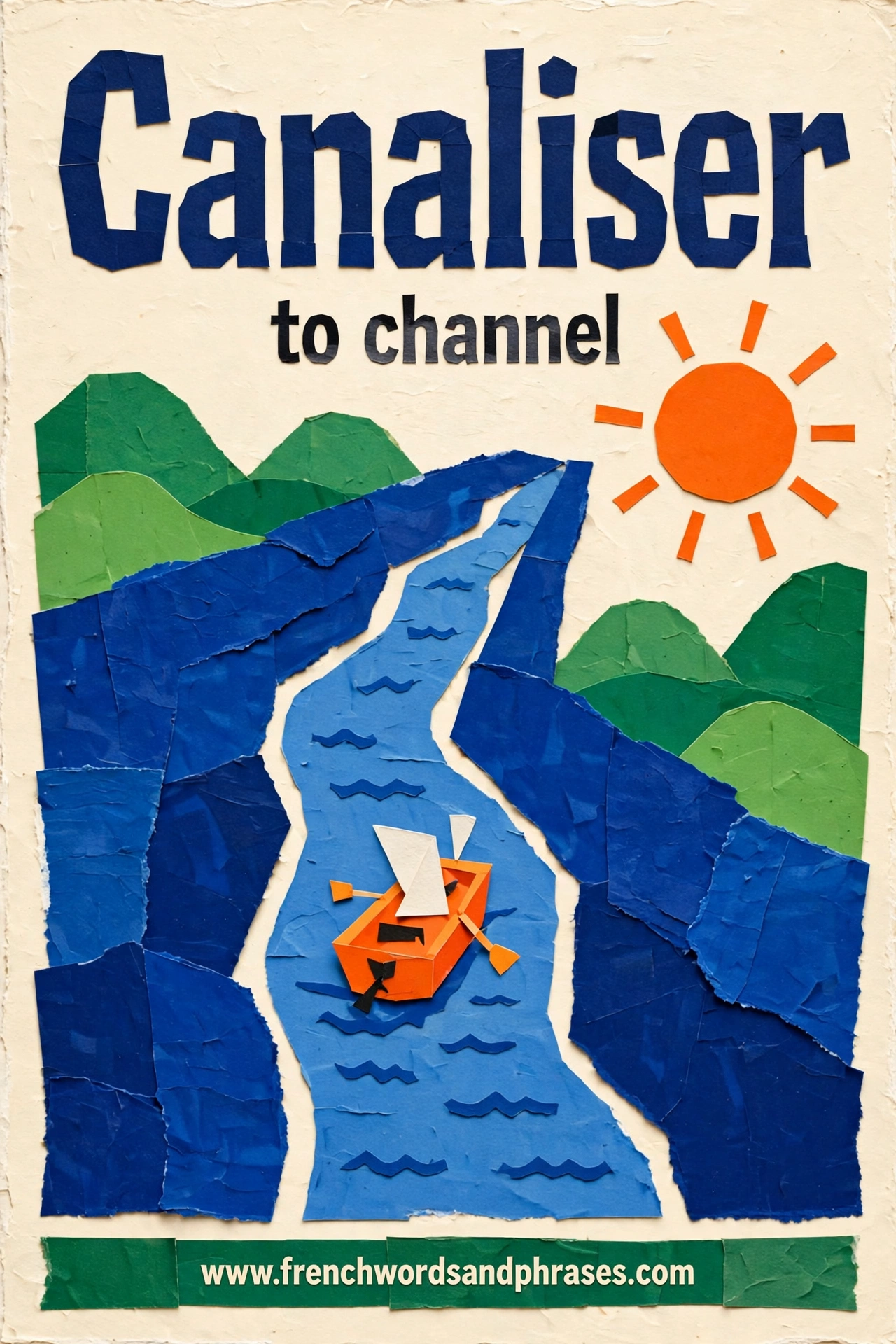
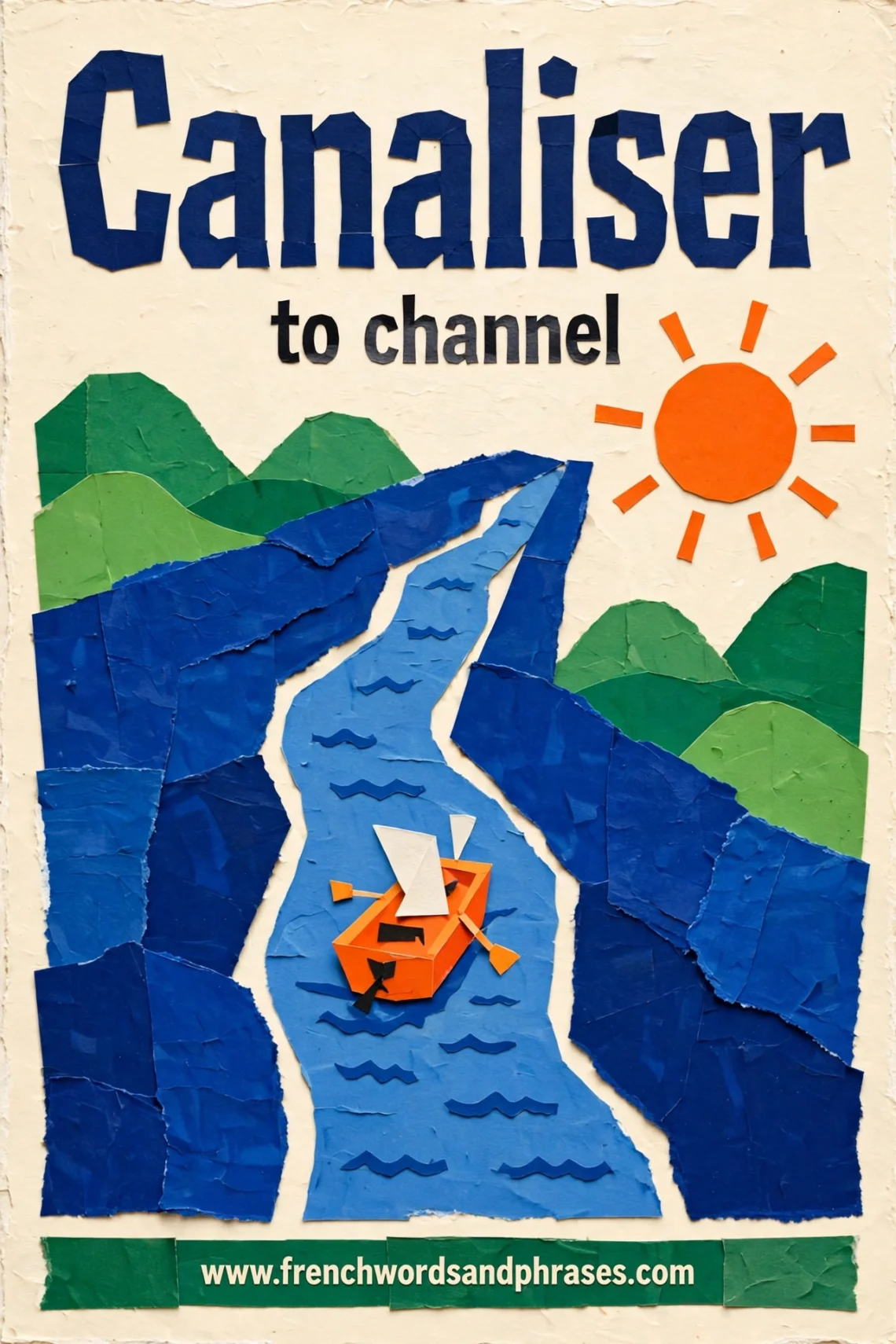
Canaliser is the verb of the river given banks — the water keeps its strength, but it stops flooding the fields.
Imagine a mountain stream after the spring rains, spreading brown water over the whole meadow. The engineers arrive with their plans, and by autumn the stream runs straight and calm between stone banks — on a canalisé le ruisseau, and the meadow is dry, green and walkable again.
The water has not been stopped or weakened. It has been channelled — canalisé, given a bed and a direction.
How to Conjugate Canaliser: Complete French Conjugation Guide
Let’s explore every major conjugation of canaliser, beginning with the indicative mood.
How to Conjugate Canaliser in the Indicative Mood
The indicative mood is used to express facts, observations, actions, and events.
How to Conjugate Canaliser in the Present Tense (Présent)
Used for actions happening now, habitual actions, and general truths.
| Subject | Conjugation |
|---|---|
| je | canalise |
| tu | canalises |
| il / elle | canalise |
| nous | canalisons |
| vous | canalisez |
| ils / elles | canalisent |
Example
Les ingénieurs canalisent le fleuve pour éviter les inondations.
The engineers are channelling the river to prevent flooding.
Quick Quiz 1
Complete the sentence:
Nous ______ les eaux de pluie vers le jardin.
Reveal the answer
canalisons
Nous canalisons les eaux de pluie vers le jardin.
We channel the rainwater towards the garden.
How to Conjugate Canaliser in the Passé Composé
Used for completed actions in the past. Canaliser takes the auxiliary verb avoir.
| Subject | Conjugation |
|---|---|
| j’ | ai canalisé |
| tu | as canalisé |
| il / elle | a canalisé |
| nous | avons canalisé |
| vous | avez canalisé |
| ils / elles | ont canalisé |
Example
Elle a canalisé toute son énergie dans ce projet.
She channelled all her energy into this project.
How to Conjugate Canaliser in the Imparfait (Imperfect Tense)
Used for habitual past actions, descriptions, and ongoing situations in the past.
| Subject | Conjugation |
|---|---|
| je | canalisais |
| tu | canalisais |
| il / elle | canalisait |
| nous | canalisions |
| vous | canalisiez |
| ils / elles | canalisaient |
Example
Autrefois, ce canal canalisait les eaux de la montagne.
In the old days, this canal channelled the waters from the mountain.
Quick Quiz 2
Choose the correct form:
She channelled her energy into music.
Elle ______ son énergie dans la musique. (a canalisé / est canalisé)
Reveal the answer
a canalisé
Elle a canalisé son énergie dans la musique.
Canaliser takes avoir.
How to Conjugate Canaliser in the Plus-que-parfait
Used to describe an action that had already been completed before another past event.
| Subject | Conjugation |
|---|---|
| j’ | avais canalisé |
| tu | avais canalisé |
| il / elle | avait canalisé |
| nous | avions canalisé |
| vous | aviez canalisé |
| ils / elles | avaient canalisé |
Example
Ils avaient canalisé le ruisseau avant de construire la route.
They had channelled the stream before building the road.
How to Conjugate Canaliser in the Passé Simple
Primarily used in formal writing, literature, and historical narratives. It is rarely used in everyday conversation.
| Subject | Conjugation |
|---|---|
| je | canalisai |
| tu | canalisas |
| il / elle | canalisa |
| nous | canalisâmes |
| vous | canalisâtes |
| ils / elles | canalisèrent |
Example
La ville canalisa les eaux usées vers la station d’épuration.
The town channelled the waste water towards the treatment plant.
How to Conjugate Canaliser in the Passé Antérieur
A literary tense used to express an action completed immediately before another past action, generally in the passé simple.
| Subject | Conjugation |
|---|---|
| j’ | eus canalisé |
| tu | eus canalisé |
| il / elle | eut canalisé |
| nous | eûmes canalisé |
| vous | eûtes canalisé |
| ils / elles | eurent canalisé |
Example
Quand ils eurent canalisé le torrent, le village respira enfin.
When they had channelled the torrent, the village could breathe at last.
How to Conjugate Canaliser in the Future Tense (Futur Simple)
Used to describe actions that will take place in the future.
| Subject | Conjugation |
|---|---|
| je | canaliserai |
| tu | canaliseras |
| il / elle | canalisera |
| nous | canaliserons |
| vous | canaliserez |
| ils / elles | canaliseront |
Example
Ce nouveau canal canalisera les pluies d’hiver.
This new canal will channel the winter rains.
How to Conjugate Canaliser in the Futur Antérieur (Future Perfect)
Used for an action that will have been completed before a particular point in the future.
| Subject | Conjugation |
|---|---|
| j’ | aurai canalisé |
| tu | auras canalisé |
| il / elle | aura canalisé |
| nous | aurons canalisé |
| vous | aurez canalisé |
| ils / elles | auront canalisé |
Example
À la fin des travaux, on aura canalisé tout le cours d’eau.
By the end of the works, they will have channelled the whole watercourse.
How to Conjugate Canaliser in the Near Future (Futur Proche)
Used to describe something that is going to happen soon. Formed with aller + infinitive.
| Subject | Conjugation |
|---|---|
| je | vais canaliser |
| tu | vas canaliser |
| il / elle | va canaliser |
| nous | allons canaliser |
| vous | allez canaliser |
| ils / elles | vont canaliser |
Example
Le professeur va canaliser l’énergie des élèves avec un jeu.
The teacher is going to channel the pupils’ energy with a game.
How to Conjugate Canaliser in the Conditional Mood
The conditional mood expresses what would happen under certain circumstances. It is also frequently used to make polite requests or express wishes.
How to Conjugate Canaliser in the Present Conditional
| Subject | Conjugation |
|---|---|
| je | canaliserais |
| tu | canaliserais |
| il / elle | canaliserait |
| nous | canaliserions |
| vous | canaliseriez |
| ils / elles | canaliseraient |
Example
Un bon entraîneur canaliserait la colère de ses joueurs.
A good coach would channel his players’ anger.
How to Conjugate Canaliser in the Past Conditional
| Subject | Conjugation |
|---|---|
| j’ | aurais canalisé |
| tu | aurais canalisé |
| il / elle | aurait canalisé |
| nous | aurions canalisé |
| vous | auriez canalisé |
| ils / elles | auraient canalisé |
Example
Sans les ingénieurs, personne n’aurait canalisé ce fleuve sauvage.
Without the engineers, nobody would have channelled this wild river.
Canaliser in the Literary Past Conditional Form
This less common literary form uses the imperfect subjunctive of avoir.
| Subject | Conjugation |
|---|---|
| j’ | eusse canalisé |
| tu | eusses canalisé |
| il / elle | eût canalisé |
| nous | eussions canalisé |
| vous | eussiez canalisé |
| ils / elles | eussent canalisé |
Example
Le fleuve eût canalisé ses eaux entre des quais de pierre.
The river would have channelled its waters between stone quays.
How to Conjugate Canaliser in the Subjunctive Mood
The subjunctive is used to express wishes, emotions, doubts, necessity, and uncertainty. It frequently follows expressions such as il faut que (it is necessary that) or bien que (although).
How to Conjugate Canaliser in the Present Subjunctive
| Subject | Conjugation |
|---|---|
| que je | canalise |
| que tu | canalises |
| qu’il / qu’elle | canalise |
| que nous | canalisions |
| que vous | canalisiez |
| qu’ils / qu’elles | canalisent |
Example
Il faut que l’on canalise ce ruisseau avant l’hiver.
This stream must be channelled before winter.
Quick Quiz 3
Complete the sentence using the subjunctive:
Il faut que vous ______ ce torrent avant la fonte des neiges.
Reveal the answer
canalisiez
Il faut que vous canalisiez ce torrent avant la fonte des neiges.
You must channel this torrent before the snow melts.
How to Conjugate Canaliser in the Imperfect Subjunctive
A literary tense, rarely encountered in modern spoken French.
| Subject | Conjugation |
|---|---|
| que je | canalisasse |
| que tu | canalisasses |
| qu’il / qu’elle | canalisât |
| que nous | canalisassions |
| que vous | canalisassiez |
| qu’ils / qu’elles | canalisassent |
Example
Je souhaitais que la mairie canalisât les eaux de pluie.
I hoped the town hall would channel the rainwater.
How to Conjugate Canaliser in the Pluperfect Subjunctive
A literary construction used to express an action completed before another past action.
| Subject | Conjugation |
|---|---|
| que j’ | eusse canalisé |
| que tu | eusses canalisé |
| qu’il / qu’elle | eût canalisé |
| que nous | eussions canalisé |
| que vous | eussiez canalisé |
| qu’ils / qu’elles | eussent canalisé |
Example
On racontait que les Romains eussent canalisé la source dès l’Antiquité.
People said the Romans had channelled the spring as early as Antiquity.
How to Conjugate Canaliser in the Past Subjunctive
| Subject | Conjugation |
|---|---|
| que j’ | aie canalisé |
| que tu | aies canalisé |
| qu’il / qu’elle | ait canalisé |
| que nous | ayons canalisé |
| que vous | ayez canalisé |
| qu’ils / qu’elles | aient canalisé |
Example
Je suis content qu’elle ait canalisé son talent vers la musique.
I am glad she channelled her talent into music.
How to Conjugate Canaliser in the Imperative
The imperative is used to give commands, instructions, invitations, or suggestions. Subject pronouns are omitted.
How to Conjugate Canaliser in the Present Imperative
| Person | Conjugation |
|---|---|
| (tu) | canalise |
| (nous) | canalisons |
| (vous) | canalisez |
Example
Canalise ton énergie, ne la gaspille pas !
Channel your energy, do not waste it!
Quick Quiz 4
How would you say Channel your energy (tu form)?
Reveal the answer
Canalise ton énergie !
French Participles of Canaliser
Participles are verb forms that can be used in compound tenses and other grammatical constructions.
Present Participle of Canaliser
canalisant
En canalisant le torrent, les ouvriers ont sauvé le pont.
By channelling the torrent, the workmen saved the bridge.
Past Participle of Canaliser
canalisé
Canalisées entre deux berges, les eaux coulent calmement.
Channelled between two banks, the waters flow calmly.
Canaliser in Everyday French: Real-Life Examples
Now that you know the conjugations, let’s see how canaliser appears in everyday French.
Example 1 — Present
Les ingénieurs canalisent le fleuve.
The engineers are channelling the river.
Example 2 — Passé composé
Elle a canalisé son énergie dans ce projet.
She channelled her energy into this project.
Example 3 — Imparfait
Le canal canalisait les eaux de la montagne.
The canal channelled the waters from the mountain.
Example 4 — Future
Ce fossé canalisera les pluies d’hiver.
This ditch will channel the winter rains.
Example 5 — Conditional
Un bon coach canaliserait leur colère.
A good coach would channel their anger.
Example 6 — Imperative
Canalise ton énergie !
Channel your energy!
Beyond Translation: The Meaning of Canaliser
English channel and French canaliser are cousins — both descend from Latin canalis, a pipe or groove.
French keeps the canal in full view.
To canaliser a river is to make it a canal; to canaliser a child is to do the same job with banks of routine and attention — which is why French teachers and sports coaches reach for this verb every day.
How to Remember the French Verb Canaliser
Remember it this way: Canaliser is about the wild river given stone banks.
- Le canal is the canal: canaliser is to dig something a canal to run in — water, energy or anger.
- Two everyday scenes: canaliser un fleuve, canaliser son énergie.
- Regular -er: je canalise, nous canalisons, past participle canalisé.
The key idea is the wild river given stone banks.
Test Your Knowledge of Canaliser
Let’s see how much you’ve learned. Try answering these questions before revealing the answers.
Question 1
What noun is canaliser built on?
Reveal the answer
Le canal — the canal: to canaliser is to give something a channel to run in.
Question 2
How do you say She channelled all her energy into this project in French?
Reveal the answer
Elle a canalisé toute son énergie dans ce projet.
Question 3
Translate: The engineers are channelling the river.
Reveal the answer
Les ingénieurs canalisent le fleuve.
Question 4
What is the past participle of canaliser?
Reveal the answer
Canalisé.
Question 5
Complete the sentence:
Il faut que l’on ______ ce ruisseau avant l’hiver.
Reveal the answer
canalise
Il faut que l’on canalise ce ruisseau avant l’hiver.
This stream must be channelled before winter.
Your Final Challenge
Can You Use It?
How would you say this in French?
Whoever channels the river does not remove its strength: he simply gives it a path.
Reveal the answer
Qui canalise le fleuve ne supprime pas sa force : il lui donne simplement un chemin.
Whoever channels the river does not remove its strength: he simply gives it a path.
A little French. A little curiosity. A richer everyday life.
LEARN FRENCH ONE WORD AT A TIME