A French Word to Live By
How to Conjugate Se cambrer in French
/sə kɑ̃.bʁe/
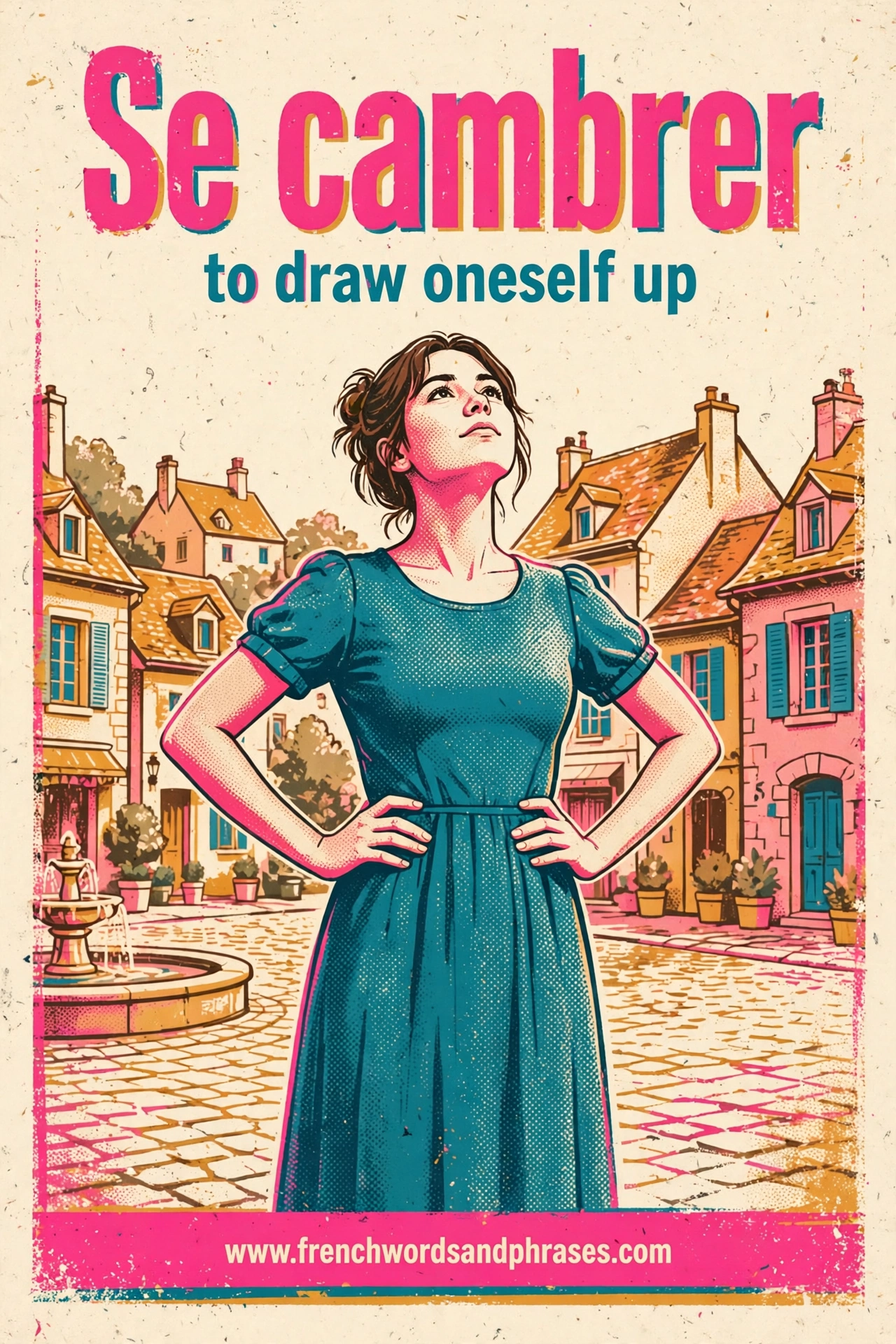
Se cambrer means to draw oneself up — to arch your back and stand tall, chest out, often in pride or defiance.
A small soldier before a tall general, a cat facing a bigger dog, a schoolgirl refusing to apologise — se cambrer is the reflexive verb of drawing yourself up to your full height, back arched and chin high.
In this guide, you’ll learn how to conjugate se cambrer in all the major French tenses and moods. Explore complete conjugation tables, French examples, English translations, and practice quizzes.
Understanding the French Verb Se cambrer
Se cambrer is a regular French verb belonging to the first group of verbs, those ending in-er.
It means to draw oneself up. The posture says it all: back arched, chest out, chin up — pride, defiance or self-importance. Cats se cambrent too, arching their backs to look bigger; in people the verb often carries a smile, for the little person making themselves as tall as they possibly can.
Verb classification: First group (-er), reflexive
Auxiliary verb: Être
Past participle: cambré
Present participle: cambrant
English equivalents: To draw oneself up, to arch one’s back proudly; se cambrer devant quelqu’un — to draw oneself up in front of someone; se cambrer de fierté — to swell with pride; le chat se cambre — the cat arches its back; elle s’est cambrée, les poings sur les hanches — she drew herself up, fists on hips.
One important detail: se cambrer is the reflexive partner of cambrer — where cambrer bends something (le dos, une planche), se cambrer is the whole person arching and rising. Being reflexive, it takes être in every compound tense and the past participle agrees with the subject: elle s’est cambrée, ils se sont cambrés. The tu imperative tucks the pronoun behind the verb: cambre-toi et tiens tête !
Experience the Word
Se cambrer is the verb of sudden height — the moment a small person becomes, by posture alone, a large one.
Imagine a tiny first-year pupil summoned by the headmaster, a man twice her height. She knocks, enters, and — rather than shrinking — elle se cambre, shoulders back, chin up, ready to defend her stolen pencil case to the end.
She is still the smallest person in the room. But she has drawn herself up — cambrée, at her full height, and the headmaster hides a smile.
How to Conjugate Se cambrer: Complete French Conjugation Guide
Let’s explore every major conjugation of se cambrer, beginning with the indicative mood.
How to Conjugate Se cambrer in the Indicative Mood
The indicative mood is used to express facts, observations, actions, and events.
How to Conjugate Se cambrer in the Present Tense (Présent)
Used for actions happening now, habitual actions, and general truths.
| Subject | Conjugation |
|---|---|
| je | me cambre |
| tu | te cambres |
| il / elle | se cambre |
| nous | nous cambrons |
| vous | vous cambrez |
| ils / elles | se cambrent |
Example
Le chat se cambre quand il voit le chien du voisin.
The cat arches its back when it sees the neighbour’s dog.
Quick Quiz 1
Complete the sentence:
Nous nous ______ devant le général, au garde-à-vous.
Reveal the answer
cambrons
Nous nous cambrons devant le général, au garde-à-vous.
We draw ourselves up before the general, at attention.
How to Conjugate Se cambrer in the Passé Composé
Used for completed actions in the past. Se cambrer takes the auxiliary verb être.
| Subject | Conjugation |
|---|---|
| je | me suis cambré / me suis cambrée |
| tu | t’es cambré / t’es cambrée |
| il / elle | s’est cambré / s’est cambrée |
| nous | nous sommes cambrés / nous sommes cambrées |
| vous | vous êtes cambrés / vous êtes cambrées / vous êtes cambré / vous êtes cambrée |
| ils / elles | se sont cambrés / se sont cambrées |
Example
Elle s’est cambrée devant le jury, prête à répondre.
She drew herself up before the panel, ready to answer.
How to Conjugate Se cambrer in the Imparfait (Imperfect Tense)
Used for habitual past actions, descriptions, and ongoing situations in the past.
| Subject | Conjugation |
|---|---|
| je | me cambrais |
| tu | te cambrais |
| il / elle | se cambrait |
| nous | nous cambrions |
| vous | vous cambriez |
| ils / elles | se cambraient |
Example
Le petit soldat se cambrait toujours devant son général.
The little soldier always drew himself up before his general.
Quick Quiz 2
Choose the correct form:
She drew herself up with pride.
Elle ______ de fierté. (s’est cambrée / a cambré)
Reveal the answer
s’est cambrée
Elle s’est cambrée de fierté.
Se cambrer is reflexive, takes être, and the participle agrees: cambrée.
How to Conjugate Se cambrer in the Plus-que-parfait
Used to describe an action that had already been completed before another past event.
| Subject | Conjugation |
|---|---|
| je | m’étais cambré / m’étais cambrée |
| tu | t’étais cambré / t’étais cambrée |
| il / elle | s’était cambré / s’était cambrée |
| nous | nous étions cambrés / nous étions cambrées |
| vous | vous étiez cambrés / vous étiez cambrées / vous étiez cambré / vous étiez cambrée |
| ils / elles | s’étaient cambrés / s’étaient cambrées |
Example
Il s’était cambré avant même qu’on l’accuse.
He had drawn himself up even before anyone accused him.
How to Conjugate Se cambrer in the Passé Simple
Primarily used in formal writing, literature, and historical narratives. It is rarely used in everyday conversation.
| Subject | Conjugation |
|---|---|
| je | me cambrai |
| tu | te cambras |
| il / elle | se cambra |
| nous | nous cambrâmes |
| vous | vous cambrâtes |
| ils / elles | se cambrèrent |
Example
La fillette se cambra et refusa de s’excuser.
The little girl drew herself up and refused to apologise.
How to Conjugate Se cambrer in the Passé Antérieur
A literary tense used to express an action completed immediately before another past action, generally in the passé simple.
| Subject | Conjugation |
|---|---|
| je | me fus cambré / me fus cambrée |
| tu | te fus cambré / te fus cambrée |
| il / elle | se fut cambré / se fut cambrée |
| nous | nous fûmes cambrés / nous fûmes cambrées |
| vous | vous fûtes cambrés / vous fûtes cambrées / vous fûtes cambré / vous fûtes cambrée |
| ils / elles | se furent cambrés / se furent cambrées |
Example
Dès qu’il se fut cambré, tout le monde comprit qu’il ne céderait pas.
As soon as he had drawn himself up, everyone understood he would not give in.
How to Conjugate Se cambrer in the Future Tense (Futur Simple)
Used to describe actions that will take place in the future.
| Subject | Conjugation |
|---|---|
| je | me cambrerai |
| tu | te cambreras |
| il / elle | se cambrera |
| nous | nous cambrerons |
| vous | vous cambrerez |
| ils / elles | se cambreront |
Example
Demain, tu te cambreras devant le directeur, j’en suis sûr.
Tomorrow, you will draw yourself up before the headmaster, I am sure of it.
How to Conjugate Se cambrer in the Futur Antérieur (Future Perfect)
Used for an action that will have been completed before a particular point in the future.
| Subject | Conjugation |
|---|---|
| je | me serai cambré / me serai cambrée |
| tu | te seras cambré / te seras cambrée |
| il / elle | se sera cambré / se sera cambrée |
| nous | nous serons cambrés / nous serons cambrées |
| vous | vous serez cambrés / vous serez cambrées / vous serez cambré / vous serez cambrée |
| ils / elles | se seront cambrés / se seront cambrées |
Example
À la fin de l’audition, elle se sera cambrée trois fois de fierté.
By the end of the audition, she will have drawn herself up with pride three times.
How to Conjugate Se cambrer in the Near Future (Futur Proche)
Used to describe something that is going to happen soon. Formed with aller + infinitive.
| Subject | Conjugation |
|---|---|
| je | vais me cambrer |
| tu | vas te cambrer |
| il / elle | va se cambrer |
| nous | allons nous cambrer |
| vous | allez vous cambrer |
| ils / elles | vont se cambrer |
Example
Attention, le chat va se cambrer, il a peur.
Careful, the cat is going to arch its back, it is frightened.
How to Conjugate Se cambrer in the Conditional Mood
The conditional mood expresses what would happen under certain circumstances. It is also frequently used to make polite requests or express wishes.
How to Conjugate Se cambrer in the Present Conditional
| Subject | Conjugation |
|---|---|
| je | me cambrerais |
| tu | te cambrerais |
| il / elle | se cambrerait |
| nous | nous cambrerions |
| vous | vous cambreriez |
| ils / elles | se cambreraient |
Example
À ta place, je me cambrerais et je dirais non.
If I were you, I would draw myself up and say no.
How to Conjugate Se cambrer in the Past Conditional
| Subject | Conjugation |
|---|---|
| je | me serais cambré / me serais cambrée |
| tu | te serais cambré / te serais cambrée |
| il / elle | se serait cambré / se serait cambrée |
| nous | nous serions cambrés / nous serions cambrées |
| vous | vous seriez cambrés / vous seriez cambrées / vous seriez cambré / vous seriez cambrée |
| ils / elles | se seraient cambrés / se seraient cambrées |
Example
Elle se serait cambrée si on l’avait insultée.
She would have drawn herself up if anyone had insulted her.
Se cambrer in the Literary Past Conditional Form
This less common literary form uses the imperfect subjunctive of être.
| Subject | Conjugation |
|---|---|
| je | me fusse cambré / me fusse cambrée |
| tu | te fusses cambré / te fusses cambrée |
| il / elle | se fût cambré / se fût cambrée |
| nous | nous fussions cambrés / nous fussions cambrées |
| vous | vous fussiez cambrés / vous fussiez cambrées / vous fussiez cambré / vous fussiez cambrée |
| ils / elles | se fussent cambrés / se fussent cambrées |
Example
Il se fût cambré devant le roi lui-même.
He would have drawn himself up before the king himself.
How to Conjugate Se cambrer in the Subjunctive Mood
The subjunctive is used to express wishes, emotions, doubts, necessity, and uncertainty. It frequently follows expressions such as il faut que (it is necessary that) or bien que (although).
How to Conjugate Se cambrer in the Present Subjunctive
| Subject | Conjugation |
|---|---|
| que je | me cambre |
| que tu | te cambres |
| qu’il / qu’elle | se cambre |
| que nous | nous cambrions |
| que vous | vous cambriez |
| qu’ils / qu’elles | se cambrent |
Example
Je ne veux pas que tu te cambres devant ton chef.
I do not want you drawing yourself up in front of your boss.
Quick Quiz 3
Complete the sentence using the subjunctive:
Je ne veux pas que les enfants se ______ pour si peu.
Reveal the answer
cambrent
Je ne veux pas que les enfants se cambrent pour si peu.
I do not want the children drawing themselves up over so little.
How to Conjugate Se cambrer in the Imperfect Subjunctive
A literary tense, rarely encountered in modern spoken French.
| Subject | Conjugation |
|---|---|
| que je | me cambrasse |
| que tu | te cambrasses |
| qu’il / qu’elle | se cambrât |
| que nous | nous cambrassions |
| que vous | vous cambrassiez |
| qu’ils / qu’elles | se cambrassent |
Example
Il était amusant qu’elle se cambrât ainsi pour si peu.
It was funny that she drew herself up like that over so little.
How to Conjugate Se cambrer in the Pluperfect Subjunctive
A literary construction used to express an action completed before another past action.
| Subject | Conjugation |
|---|---|
| que je | me fusse cambré / me fusse cambrée |
| que tu | te fusses cambré / te fusses cambrée |
| qu’il / qu’elle | se fût cambré / se fût cambrée |
| que nous | nous fussions cambrés / nous fussions cambrées |
| que vous | vous fussiez cambrés / vous fussiez cambrées / vous fussiez cambré / vous fussiez cambrée |
| qu’ils / qu’elles | se fussent cambrés / se fussent cambrées |
Example
On racontait qu’il se fût cambré devant tout le village.
People said he had drawn himself up in front of the whole village.
How to Conjugate Se cambrer in the Past Subjunctive
| Subject | Conjugation |
|---|---|
| que je | me sois cambré / me sois cambrée |
| que tu | te sois cambré / te sois cambrée |
| qu’il / qu’elle | se soit cambré / se soit cambrée |
| que nous | nous soyons cambrés / nous soyons cambrées |
| que vous | vous soyez cambrés / vous soyez cambrées / vous soyez cambré / vous soyez cambrée |
| qu’ils / qu’elles | se soient cambrés / se soient cambrées |
Example
Je suis fier qu’elle se soit cambrée au bon moment.
I am proud that she drew herself up at the right moment.
How to Conjugate Se cambrer in the Imperative
The imperative is used to give commands, instructions, invitations, or suggestions. Subject pronouns are omitted.
How to Conjugate Se cambrer in the Present Imperative
| Person | Conjugation |
|---|---|
| (tu) | cambre-toi |
| (nous) | cambrons-nous |
| (vous) | cambrez-vous |
Example
Cambre-toi et réponds sans trembler !
Draw yourself up and answer without trembling!
Quick Quiz 4
How would you say Draw yourself up and answer (tu form)?
Reveal the answer
Cambre-toi et réponds !
French Participles of Se cambrer
Participles are verb forms that can be used in compound tenses and other grammatical constructions.
Present Participle of Se cambrer
cambrant
En se cambrant, le chat paraît deux fois plus gros.
By arching its back, the cat looks twice as big.
Past Participle of Se cambrer
cambré
Cambrée de fierté, la petite chanteuse salua le public.
Drawn up with pride, the little singer bowed to the audience.
Se cambrer in Everyday French: Real-Life Examples
Now that you know the conjugations, let’s see how se cambrer appears in everyday French.
Example 1 — Present
Le chat se cambre devant le chien.
The cat arches its back in front of the dog.
Example 2 — Passé composé
Elle s’est cambrée devant le jury.
She drew herself up before the panel.
Example 3 — Imparfait
Le soldat se cambrait devant son général.
The soldier drew himself up before his general.
Example 4 — Future
Tu te cambreras devant le directeur.
You will draw yourself up before the headmaster.
Example 5 — Conditional
Je me cambrerais et je dirais non.
I would draw myself up and say no.
Example 6 — Imperative
Cambre-toi et tiens tête !
Draw yourself up and stand your ground!
Beyond Translation: The Meaning of Se cambrer
The plain verb cambrer arches a back or bends a board; the reflexive se cambrer turns the arch into an attitude.
It is pride made visible in the spine.
French reaches for it whenever someone small — a child, a cat, a young recruit — refuses to be small: the back bends the proud way, backwards, and the whole body grows an inch of courage.
How to Remember the French Verb Se cambrer
Remember it this way: Se cambrer is about the cat arching its back to look twice as big.
- Reflexive rules: être auxiliary, participle agrees — elle s’est cambrée.
- Cambrer bends a thing; se cambrer is the whole person drawing themselves up.
- Picture the cat: back arched, looking twice its size — pride and defiance.
The key idea is the cat arching its back to look twice as big.
Test Your Knowledge of Se cambrer
Let’s see how much you’ve learned. Try answering these questions before revealing the answers.
Question 1
Which auxiliary does se cambrer use, and why?
Reveal the answer
Être — it is a reflexive verb: elle s’est cambrée devant le jury.
Question 2
How do you say The cat arches its back in French?
Reveal the answer
Le chat se cambre.
Question 3
Translate: She drew herself up before the panel.
Reveal the answer
Elle s’est cambrée devant le jury.
Question 4
What is the past participle of se cambrer?
Reveal the answer
Cambré — agreeing: cambrée, cambrés, cambrées.
Question 5
Complete the sentence:
Je ne veux pas que tu te ______ devant ton chef.
Reveal the answer
cambres
Je ne veux pas que tu te cambres devant ton chef.
I do not want you drawing yourself up in front of your boss.
Your Final Challenge
Can You Use It?
How would you say this in French?
Drawing herself up to her full small height, the little girl looked the headmaster in the eyes and told the truth.
Reveal the answer
Se cambrant de toute sa petite hauteur, la fillette regarda le directeur dans les yeux et dit la vérité.
Drawing herself up to her full small height, the little girl looked the headmaster in the eyes and told the truth.
A little French. A little curiosity. A richer everyday life.
LEARN FRENCH ONE WORD AT A TIME