
A French Word to Live By
How to Conjugate Incarner in French
/ɛ̃.kaʁ.ne/
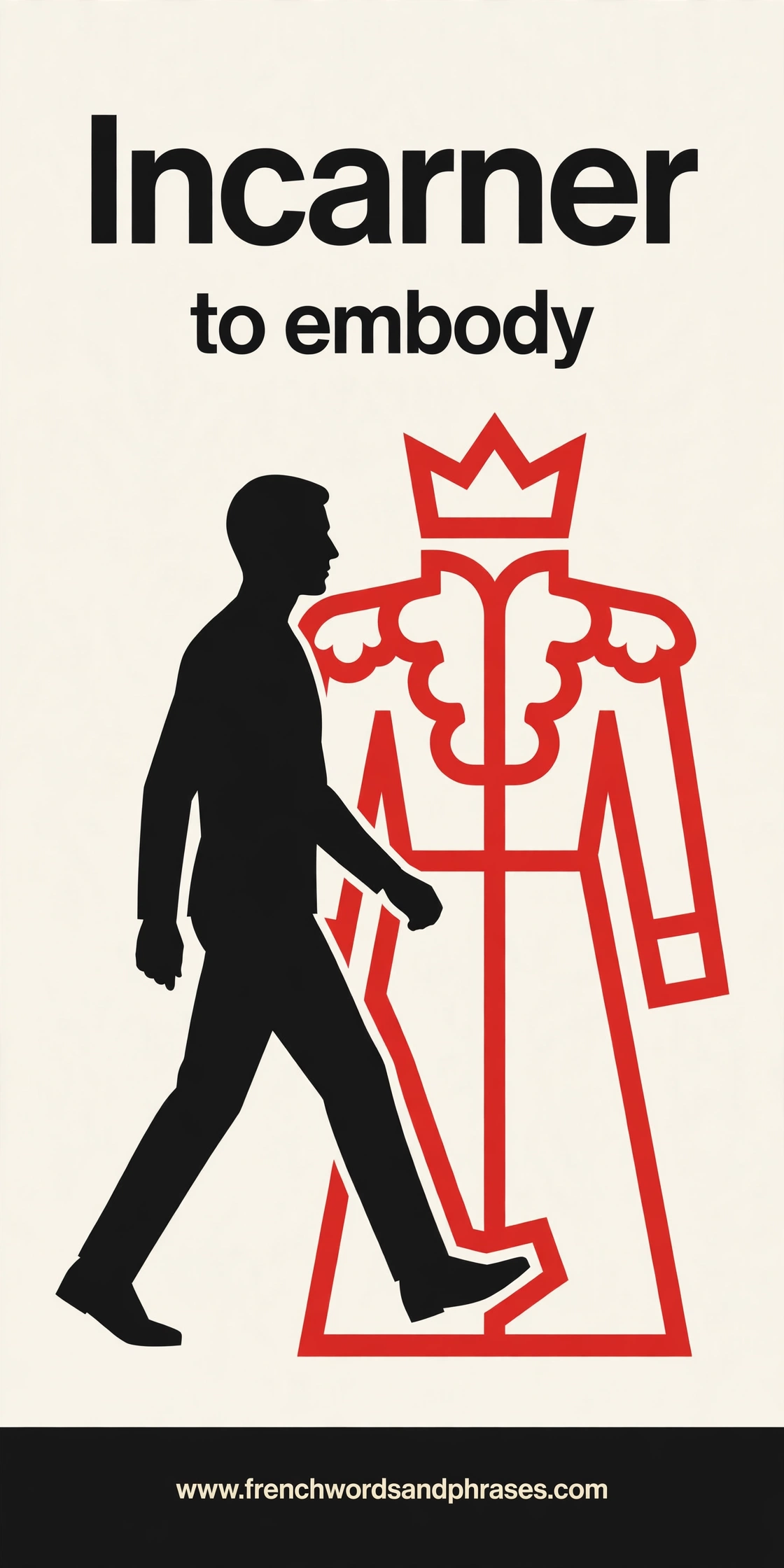
Incarner means to embody, to incarnate — to give a body to an idea: an actor becoming a king, a woman becoming the very picture of courage.
An actress who does not play Joan of Arc but becomes her, a lighthouse keeper who is patience itself after forty years of storms — incarner is the verb of ideas taking flesh: when an abstraction walks into the room in a body.
In this guide, you’ll learn how to conjugate incarner in all the major French tenses and moods. Explore complete conjugation tables, French examples, English translations, and practice quizzes.
Understanding the French Verb Incarner
Incarner is a regular French verb belonging to the first group of verbs, those ending in-er.
It means to embody, to incarnate. Actors incarner un rôle or un personnage — the great compliment is il incarne le roi, he does not act the king, he is him. Beyond the stage, people incarnent des valeurs: elle incarne la justice, il incarne une génération. The word always praises or accuses a perfect fit between a body and an idea: l’incarnation du mal is the devil’s own compliment in reverse.
Verb classification: First group (-er)
Auxiliary verb: Avoir
Past participle: incarné
Present participle: incarnant
English equivalents: To embody, to incarnate, to personify; incarner un personnage — to play, to embody a character; incarner l’espoir — to embody hope; incarner une valeur — to embody a value; s’incarner dans un rôle — to become one with a role; l’incarnation du courage — the embodiment of courage.
One important detail: incarner is built on Latin caro, carnis, flesh — the same root as incarnation — and flesh is exactly what it gives: an idea, a value or a character receives a body. It is perfectly regular: j’incarne, nous incarnons, ils incarnent, past participle incarné. Its reflexive twin s’incarner dans turns the picture around: the idea itself climbs into a body — l’espoir s’incarne dans cette jeune femme, hope is embodied in this young woman; le héros s’incarne dans l’acteur.
Experience the Word
Incarner is the verb of the perfect fit — when you can no longer see where the person ends and the idea begins.
Imagine a small theatre on the last night of a long run. The actress playing Joan of Arc takes off her armour for the hundredth time, and the stagehands are quiet, almost reverent: for three months she has not performed Joan — elle l’a incarnée. Tomorrow she will be herself again, and something in the building will feel strangely empty.
Costume, lines and body were hers. For a season, the idea had flesh — incarnée — and the whole town came to see it.
How to Conjugate Incarner: Complete French Conjugation Guide
Let’s explore every major conjugation of incarner, beginning with the indicative mood.
How to Conjugate Incarner in the Indicative Mood
The indicative mood is used to express facts, observations, actions, and events.
How to Conjugate Incarner in the Present Tense (Présent)
Used for actions happening now, habitual actions, and general truths.
| Subject | Conjugation |
|---|---|
| je | incarne |
| tu | incarnes |
| il / elle | incarne |
| nous | incarnons |
| vous | incarnez |
| ils / elles | incarnent |
Example
Cette actrice incarne la reine avec une force rare.
This actress embodies the queen with rare power.
Quick Quiz 1
Complete the sentence:
Nous ______ les valeurs de notre village.
Reveal the answer
incarnons
Nous incarnons les valeurs de notre village.
We embody the values of our village.
How to Conjugate Incarner in the Passé Composé
Used for completed actions in the past. Incarner takes the auxiliary verb avoir.
| Subject | Conjugation |
|---|---|
| j’ | ai incarné |
| tu | as incarné |
| il / elle | a incarné |
| nous | avons incarné |
| vous | avez incarné |
| ils / elles | ont incarné |
Example
Il a incarné le héros dans trois films célèbres.
He played the hero in three famous films.
How to Conjugate Incarner in the Imparfait (Imperfect Tense)
Used for habitual past actions, descriptions, and ongoing situations in the past.
| Subject | Conjugation |
|---|---|
| je | incarnais |
| tu | incarnais |
| il / elle | incarnait |
| nous | incarnions |
| vous | incarniez |
| ils / elles | incarnaient |
Example
Pour le village, le vieux maire incarnait la sagesse.
For the village, the old mayor embodied wisdom.
Quick Quiz 2
Choose the correct form:
He played the hero in three films.
Il ______ le héros dans trois films. (a incarné / est incarné)
Reveal the answer
a incarné
Il a incarné le héros dans trois films.
Incarner takes avoir.
How to Conjugate Incarner in the Plus-que-parfait
Used to describe an action that had already been completed before another past event.
| Subject | Conjugation |
|---|---|
| j’ | avais incarné |
| tu | avais incarné |
| il / elle | avait incarné |
| nous | avions incarné |
| vous | aviez incarné |
| ils / elles | avaient incarné |
Example
Elle avait incarné ce rôle pendant dix ans avant de le quitter.
She had embodied this role for ten years before leaving it.
How to Conjugate Incarner in the Passé Simple
Primarily used in formal writing, literature, and historical narratives. It is rarely used in everyday conversation.
| Subject | Conjugation |
|---|---|
| je | incarnai |
| tu | incarnas |
| il / elle | incarna |
| nous | incarnâmes |
| vous | incarnâtes |
| ils / elles | incarnèrent |
Example
L’acteur incarna le roi dès la première scène.
The actor embodied the king from the very first scene.
How to Conjugate Incarner in the Passé Antérieur
A literary tense used to express an action completed immediately before another past action, generally in the passé simple.
| Subject | Conjugation |
|---|---|
| j’ | eus incarné |
| tu | eus incarné |
| il / elle | eut incarné |
| nous | eûmes incarné |
| vous | eûtes incarné |
| ils / elles | eurent incarné |
Example
Quand elle eut incarné la reine, le public se leva.
When she had embodied the queen, the audience rose to its feet.
How to Conjugate Incarner in the Future Tense (Futur Simple)
Used to describe actions that will take place in the future.
| Subject | Conjugation |
|---|---|
| je | incarnerai |
| tu | incarneras |
| il / elle | incarnera |
| nous | incarnerons |
| vous | incarnerez |
| ils / elles | incarneront |
Example
Ce jeune comédien incarnera Hamlet au printemps.
This young actor will play Hamlet in the spring.
How to Conjugate Incarner in the Futur Antérieur (Future Perfect)
Used for an action that will have been completed before a particular point in the future.
| Subject | Conjugation |
|---|---|
| j’ | aurai incarné |
| tu | auras incarné |
| il / elle | aura incarné |
| nous | aurons incarné |
| vous | aurez incarné |
| ils / elles | auront incarné |
Example
À la fin de la tournée, elle aura incarné vingt héroïnes.
By the end of the tour, she will have embodied twenty heroines.
How to Conjugate Incarner in the Near Future (Futur Proche)
Used to describe something that is going to happen soon. Formed with aller + infinitive.
| Subject | Conjugation |
|---|---|
| je | vais incarner |
| tu | vas incarner |
| il / elle | va incarner |
| nous | allons incarner |
| vous | allez incarner |
| ils / elles | vont incarner |
Example
Tu vas incarner le méchant dans la pièce de l’école.
You are going to play the villain in the school play.
How to Conjugate Incarner in the Conditional Mood
The conditional mood expresses what would happen under certain circumstances. It is also frequently used to make polite requests or express wishes.
How to Conjugate Incarner in the Present Conditional
| Subject | Conjugation |
|---|---|
| je | incarnerais |
| tu | incarnerais |
| il / elle | incarnerait |
| nous | incarnerions |
| vous | incarneriez |
| ils / elles | incarneraient |
Example
Avec sa voix grave, il incarnerait parfaitement le juge.
With his deep voice, he would embody the judge perfectly.
How to Conjugate Incarner in the Past Conditional
| Subject | Conjugation |
|---|---|
| j’ | aurais incarné |
| tu | aurais incarné |
| il / elle | aurait incarné |
| nous | aurions incarné |
| vous | auriez incarné |
| ils / elles | auraient incarné |
Example
Elle aurait incarné la reine si le rôle ne lui avait pas échappé.
She would have embodied the queen if the role had not slipped away from her.
Incarner in the Literary Past Conditional Form
This less common literary form uses the imperfect subjunctive of avoir.
| Subject | Conjugation |
|---|---|
| j’ | eusse incarné |
| tu | eusses incarné |
| il / elle | eût incarné |
| nous | eussions incarné |
| vous | eussiez incarné |
| ils / elles | eussent incarné |
Example
L’acteur eût incarné le roi mieux que personne.
The actor would have embodied the king better than anyone.
How to Conjugate Incarner in the Subjunctive Mood
The subjunctive is used to express wishes, emotions, doubts, necessity, and uncertainty. It frequently follows expressions such as il faut que (it is necessary that) or bien que (although).
How to Conjugate Incarner in the Present Subjunctive
| Subject | Conjugation |
|---|---|
| que je | incarne |
| que tu | incarnes |
| qu’il / qu’elle | incarne |
| que nous | incarnions |
| que vous | incarniez |
| qu’ils / qu’elles | incarnent |
Example
Il faut que tu incarnes ton personnage, pas que tu le récites.
You must embody your character, not recite him.
Quick Quiz 3
Complete the sentence using the subjunctive:
Il faut que vous ______ vos personnages dès la première scène.
Reveal the answer
incarniez
Il faut que vous incarniez vos personnages dès la première scène.
You must embody your characters from the very first scene.
How to Conjugate Incarner in the Imperfect Subjunctive
A literary tense, rarely encountered in modern spoken French.
| Subject | Conjugation |
|---|---|
| que je | incarnasse |
| que tu | incarnasses |
| qu’il / qu’elle | incarnât |
| que nous | incarnassions |
| que vous | incarnassiez |
| qu’ils / qu’elles | incarnassent |
Example
On voulait qu’elle incarnât la liberté sur l’affiche.
They wanted her to embody liberty on the poster.
How to Conjugate Incarner in the Pluperfect Subjunctive
A literary construction used to express an action completed before another past action.
| Subject | Conjugation |
|---|---|
| que j’ | eusse incarné |
| que tu | eusses incarné |
| qu’il / qu’elle | eût incarné |
| que nous | eussions incarné |
| que vous | eussiez incarné |
| qu’ils / qu’elles | eussent incarné |
Example
On racontait qu’il eût incarné le héros mieux que l’original.
People said he had embodied the hero better than the original.
How to Conjugate Incarner in the Past Subjunctive
| Subject | Conjugation |
|---|---|
| que j’ | aie incarné |
| que tu | aies incarné |
| qu’il / qu’elle | ait incarné |
| que nous | ayons incarné |
| que vous | ayez incarné |
| qu’ils / qu’elles | aient incarné |
Example
Je suis content qu’elle ait incarné ce rôle difficile.
I am glad she embodied this difficult role.
How to Conjugate Incarner in the Imperative
The imperative is used to give commands, instructions, invitations, or suggestions. Subject pronouns are omitted.
How to Conjugate Incarner in the Present Imperative
| Person | Conjugation |
|---|---|
| (tu) | incarne |
| (nous) | incarnons |
| (vous) | incarnez |
Example
Incarne ton personnage dès la première réplique !
Embody your character from the very first line!
Quick Quiz 4
How would you say Embody your character (tu form)?
Reveal the answer
Incarne ton personnage !
French Participles of Incarner
Participles are verb forms that can be used in compound tenses and other grammatical constructions.
Present Participle of Incarner
incarnant
En incarnant la reine, elle a gagné le respect de la troupe.
By embodying the queen, she won the company’s respect.
Past Participle of Incarner
incarné
Incarné par une grande actrice, le personnage devient inoubliable.
Embodied by a great actress, the character becomes unforgettable.
Incarner in Everyday French: Real-Life Examples
Now that you know the conjugations, let’s see how incarner appears in everyday French.
Example 1 — Present
Cette actrice incarne la reine.
This actress embodies the queen.
Example 2 — Passé composé
Il a incarné le héros au cinéma.
He played the hero in films.
Example 3 — Imparfait
Le vieux maire incarnait la sagesse.
The old mayor embodied wisdom.
Example 4 — Future
Il incarnera Hamlet au printemps.
He will play Hamlet in the spring.
Example 5 — Conditional
Il incarnerait parfaitement le juge.
He would embody the judge perfectly.
Example 6 — Imperative
Incarne ton personnage !
Embody your character!
Beyond Translation: The Meaning of Incarner
English incarnate is mostly theology — the Word made flesh — but French incarner walks onto the stage every night of the week.
Every great performance is a small incarnation.
And French uses the same verb for the compliment paid to living people: elle incarne la générosité — she is generosity with a face and a name. When an abstraction needs a body, incarner supplies it.
How to Remember the French Verb Incarner
Remember it this way: Incarner is about the actress taking off the armour — the idea had flesh.
- Incarner gives an idea a body: actors incarnent un rôle, people incarnent une valeur — elle incarne le courage.
- S’incarner dans turns it around: l’espoir s’incarne dans cette femme — the idea climbs into the body.
- Regular -er: j’incarne, nous incarnons, past participle incarné; root caro, flesh — same family as incarnation.
The key idea is the actress taking off the armour — the idea had flesh.
Test Your Knowledge of Incarner
Let’s see how much you’ve learned. Try answering these questions before revealing the answers.
Question 1
How do you say This actress embodies the queen in French?
Reveal the answer
Cette actrice incarne la reine.
Question 2
What is the difference between incarner and s’incarner?
Reveal the answer
Incarner is what the person does (she embodies the queen); s’incarner dans is what the idea does (hope is embodied in her).
Question 3
Translate: He played the hero in three famous films.
Reveal the answer
Il a incarné le héros dans trois films célèbres.
Question 4
What is the past participle of incarner?
Reveal the answer
Incarné.
Question 5
Complete the sentence:
Il faut que tu ______ ton personnage, pas que tu le récites.
Reveal the answer
incarnes
Il faut que tu incarnes ton personnage, pas que tu le récites.
You must embody your character, not recite him.
Your Final Challenge
Can You Use It?
How would you say this in French?
She embodies the queen every evening, and every evening the whole hall believes it.
Reveal the answer
Elle incarne la reine chaque soir, et chaque soir, la salle entière y croit.
She embodies the queen every evening, and every evening the whole hall believes it.
A little French. A little curiosity. A richer everyday life.
LEARN FRENCH ONE WORD AT A TIME




