How to Conjugate Paraffiner in French
/pa.ʁa.fi.ne/
Paraffiner means to paraffin — to coat or treat something with paraffin wax so that air and damp cannot reach it.
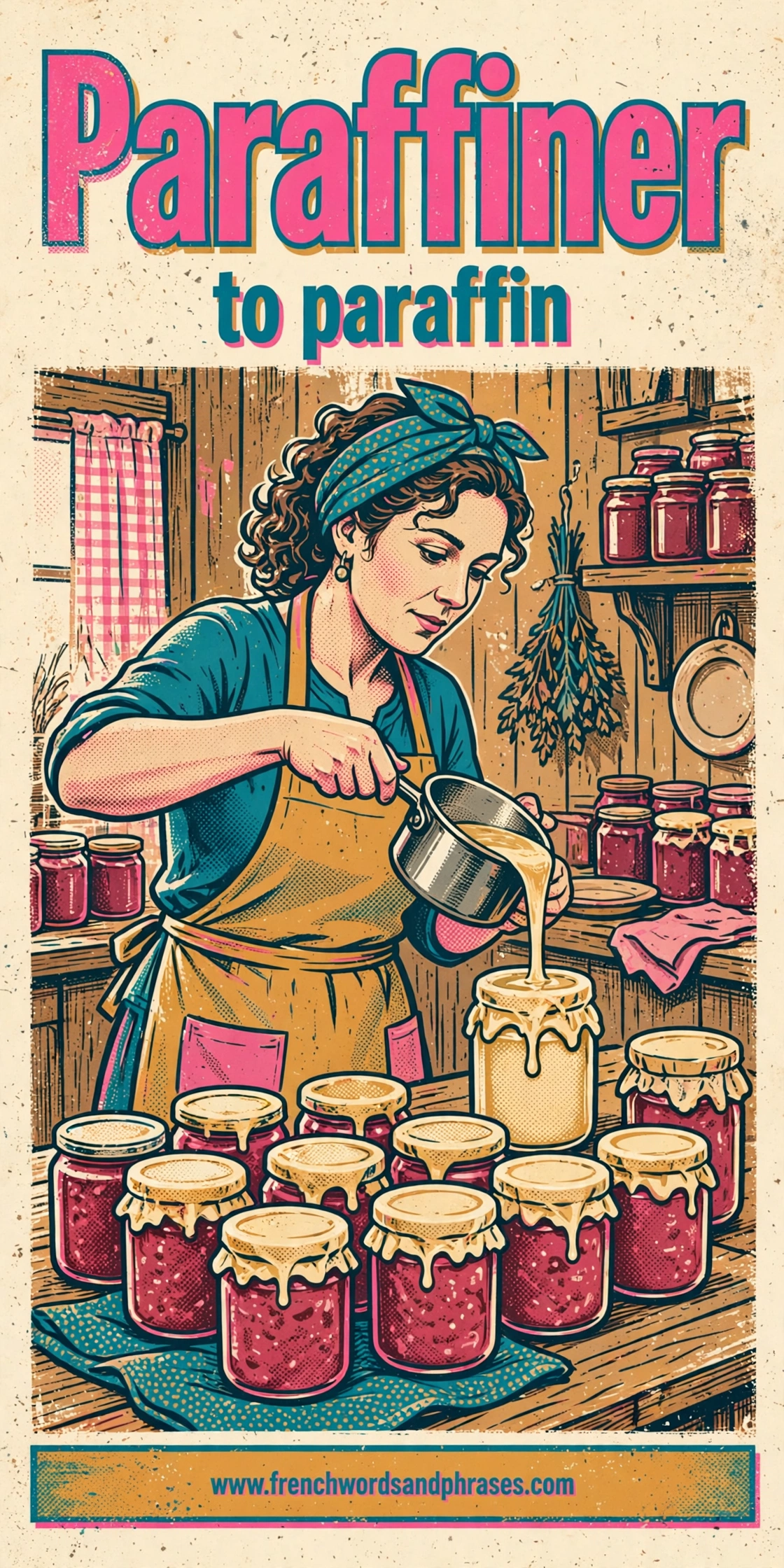
A grandmother pouring melted wax over her jam pots, a cheesemonger sealing a rind, a candle-maker at his bench — paraffiner is the verb of the protective wax skin: coating food, corks and cloth with paraffin so that time cannot touch them.
In this guide, you’ll learn how to conjugate paraffiner in all the major French tenses and moods. Explore complete conjugation tables, French examples, English translations, and practice quizzes.
Understanding the French Verb Paraffiner
Paraffiner is a regular French verb belonging to the first group of verbs, those ending in -er.
It means to paraffin. It is a domestic and workshop verb rather than an everyday one: sealing preserves and cheese rinds at home, waxing and waterproofing in crafts, and preparing specimens in laboratories. Most learners will meet it in recipes and grandmothers’ kitchens before anywhere else.
Verb classification: First group (-er)
Auxiliary verb: Avoir
Past participle: paraffiné
Present participle: paraffinant
English equivalents: To paraffin, to coat with paraffin wax; paraffiner des pots de confiture — to seal jam jars with wax; paraffiner un fromage — to wax a cheese; de la paraffine — paraffin wax; une bougie de paraffine — a paraffin candle.
One important detail: paraffiner keeps its double f everywhere — je paraffine, nous paraffinons, ils paraffinent — and the noun la paraffine is feminine. Grandmothers paraffinaient their jam: a thin disc of melted paraffin poured over the surface sealed the pot for the winter without any modern lid. The verb also appears in workshops, for waxing cloth, paper and corks, and in chemistry, where samples are set in paraffin blocks.
Experience the Word
Paraffiner is the verb of sealing things away from the air — a skin of wax between good food and the spoiling world.
Imagine a farmhouse kitchen in September. Rows of plum jam stand cooling on the table, and the grandmother moves along them with a small pan, paraffinant each pot with a white disc of wax, so that in February the jam will taste of September sunshine.
No lids, no machines, just wax. Each pot has been sealed — paraffiné — against the winter.
How to Conjugate Paraffiner: Complete French Conjugation Guide
Let’s explore every major conjugation of paraffiner, beginning with the indicative mood.
How to Conjugate Paraffiner in the Indicative Mood
The indicative mood is used to express facts, observations, actions, and events.
How to Conjugate Paraffiner in the Present Tense (Présent)
Used for actions happening now, habitual actions, and general truths.
| Subject | Conjugation |
|---|---|
| je | paraffine |
| tu | paraffines |
| il / elle | paraffine |
| nous | paraffinons |
| vous | paraffinez |
| ils / elles | paraffinent |
Elle paraffine les pots de confiture avant l’hiver.
She seals the jam jars with paraffin before the winter.
Complete the sentence:
Nous ______ les pots de confiture.
Reveal the answer
paraffinons
Nous paraffinons les pots de confiture.
We are sealing the jam jars with paraffin.
How to Conjugate Paraffiner in the Passé Composé
Used for completed actions in the past. Paraffiner takes the auxiliary verb avoir.
| Subject | Conjugation |
|---|---|
| j’ | ai paraffiné |
| tu | as paraffiné |
| il / elle | a paraffiné |
| nous | avons paraffiné |
| vous | avez paraffiné |
| ils / elles | ont paraffiné |
Le fromager a paraffiné les meules ce matin.
The cheesemaker waxed the cheese wheels this morning.
How to Conjugate Paraffiner in the Imparfait (Imperfect Tense)
Used for habitual past actions, descriptions, and ongoing situations in the past.
| Subject | Conjugation |
|---|---|
| je | paraffinais |
| tu | paraffinais |
| il / elle | paraffinait |
| nous | paraffinions |
| vous | paraffiniez |
| ils / elles | paraffinaient |
Ma grand-mère paraffinait toutes ses confitures.
My grandmother used to seal all her jams with paraffin.
Choose the correct form:
The cheesemaker waxed the wheels.
Le fromager ______ les meules. (a paraffiné / est paraffiné)
Reveal the answer
a paraffiné
Le fromager a paraffiné les meules.
Paraffiner takes avoir.
How to Conjugate Paraffiner in the Plus-que-parfait
Used to describe an action that had already been completed before another past event.
| Subject | Conjugation |
|---|---|
| j’ | avais paraffiné |
| tu | avais paraffiné |
| il / elle | avait paraffiné |
| nous | avions paraffiné |
| vous | aviez paraffiné |
| ils / elles | avaient paraffiné |
Ils avaient paraffiné les bouchons avant l’expédition.
They had waxed the corks before shipping.
How to Conjugate Paraffiner in the Passé Simple
Primarily used in formal writing, literature, and historical narratives. It is rarely used in everyday conversation.
| Subject | Conjugation |
|---|---|
| je | paraffinai |
| tu | paraffinas |
| il / elle | paraffina |
| nous | paraffinâmes |
| vous | paraffinâtes |
| ils / elles | paraffinèrent |
Le pharmacien paraffina l’échantillon pour le conserver.
The pharmacist set the sample in paraffin to preserve it.
How to Conjugate Paraffiner in the Passé Antérieur
A literary tense used to express an action completed immediately before another past action, generally in the passé simple.
| Subject | Conjugation |
|---|---|
| j’ | eus paraffiné |
| tu | eus paraffiné |
| il / elle | eut paraffiné |
| nous | eûmes paraffiné |
| vous | eûtes paraffiné |
| ils / elles | eurent paraffiné |
Quand elle eut paraffiné le dernier pot, elle rangea la cuisine.
When she had sealed the last jar, she tidied the kitchen.
How to Conjugate Paraffiner in the Future Tense (Futur Simple)
Used to describe actions that will take place in the future.
| Subject | Conjugation |
|---|---|
| je | paraffinerai |
| tu | paraffineras |
| il / elle | paraffinera |
| nous | paraffinerons |
| vous | paraffinerez |
| ils / elles | paraffineront |
Demain, nous paraffinerons le fromage de chèvre.
Tomorrow, we will wax the goat’s cheese.
How to Conjugate Paraffiner in the Futur Antérieur (Future Perfect)
Used for an action that will have been completed before a particular point in the future.
| Subject | Conjugation |
|---|---|
| j’ | aurai paraffiné |
| tu | auras paraffiné |
| il / elle | aura paraffiné |
| nous | aurons paraffiné |
| vous | aurez paraffiné |
| ils / elles | auront paraffiné |
À midi, tu auras paraffiné tous les pots.
By noon, you will have sealed all the jars.
How to Conjugate Paraffiner in the Near Future (Futur Proche)
Used to describe something that is going to happen soon. Formed with aller + infinitive.
| Subject | Conjugation |
|---|---|
| je | vais paraffiner |
| tu | vas paraffiner |
| il / elle | va paraffiner |
| nous | allons paraffiner |
| vous | allez paraffiner |
| ils / elles | vont paraffiner |
Je vais paraffiner la confiture de prunes.
I am going to seal the plum jam with paraffin.
How to Conjugate Paraffiner in the Conditional Mood
The conditional mood expresses what would happen under certain circumstances. It is also frequently used to make polite requests or express wishes.
How to Conjugate Paraffiner in the Present Conditional
| Subject | Conjugation |
|---|---|
| je | paraffinerais |
| tu | paraffinerais |
| il / elle | paraffinerait |
| nous | paraffinerions |
| vous | paraffineriez |
| ils / elles | paraffineraient |
Avec plus de cire, on paraffinerait mieux les bouchons.
With more wax, we would seal the corks better.
How to Conjugate Paraffiner in the Past Conditional
| Subject | Conjugation |
|---|---|
| j’ | aurais paraffiné |
| tu | aurais paraffiné |
| il / elle | aurait paraffiné |
| nous | aurions paraffiné |
| vous | auriez paraffiné |
| ils / elles | auraient paraffiné |
Elle aurait paraffiné les pots si elle avait eu de la paraffine.
She would have sealed the jars if she had had some paraffin.
Paraffiner in the Literary Past Conditional Form
This less common literary form uses the imperfect subjunctive of avoir.
| Subject | Conjugation |
|---|---|
| j’ | eusse paraffiné |
| tu | eusses paraffiné |
| il / elle | eût paraffiné |
| nous | eussions paraffiné |
| vous | eussiez paraffiné |
| ils / elles | eussent paraffiné |
La fermière eût paraffiné ses confitures avant les gelées.
The farmer’s wife would have sealed her jams before the frosts.
How to Conjugate Paraffiner in the Subjunctive Mood
The subjunctive is used to express wishes, emotions, doubts, necessity, and uncertainty. It frequently follows expressions such as il faut que (it is necessary that) or bien que (although).
How to Conjugate Paraffiner in the Present Subjunctive
| Subject | Conjugation |
|---|---|
| que je | paraffine |
| que tu | paraffines |
| qu’il / qu’elle | paraffine |
| que nous | paraffinions |
| que vous | paraffiniez |
| qu’ils / qu’elles | paraffinent |
Il faut que tu paraffines les pots encore chauds.
You must seal the jars while they are still warm.
Complete the sentence using the subjunctive:
Il faut que vous ______ le fromage avant l’envoi.
Reveal the answer
paraffiniez
Il faut que vous paraffiniez le fromage avant l’envoi.
You must wax the cheese before dispatch.
How to Conjugate Paraffiner in the Imperfect Subjunctive
A literary tense, rarely encountered in modern spoken French.
| Subject | Conjugation |
|---|---|
| que je | paraffinasse |
| que tu | paraffinasses |
| qu’il / qu’elle | paraffinât |
| que nous | paraffinassions |
| que vous | paraffinassiez |
| qu’ils / qu’elles | paraffinassent |
Elle voulait qu’on paraffinât le fromage avant l’envoi.
She wanted the cheese waxed before dispatch.
How to Conjugate Paraffiner in the Pluperfect Subjunctive
A literary construction used to express an action completed before another past action.
| Subject | Conjugation |
|---|---|
| que j’ | eusse paraffiné |
| que tu | eusses paraffiné |
| qu’il / qu’elle | eût paraffiné |
| que nous | eussions paraffiné |
| que vous | eussiez paraffiné |
| qu’ils / qu’elles | eussent paraffiné |
On nota qu’ils eussent paraffiné chaque échantillon.
It was noted that they had set every sample in paraffin.
How to Conjugate Paraffiner in the Past Subjunctive
| Subject | Conjugation |
|---|---|
| que j’ | aie paraffiné |
| que tu | aies paraffiné |
| qu’il / qu’elle | ait paraffiné |
| que nous | ayons paraffiné |
| que vous | ayez paraffiné |
| qu’ils / qu’elles | aient paraffiné |
Je suis content qu’elle ait paraffiné la confiture.
I am glad she sealed the jam with paraffin.
How to Conjugate Paraffiner in the Imperative
The imperative is used to give commands, instructions, invitations, or suggestions. Subject pronouns are omitted.
How to Conjugate Paraffiner in the Present Imperative
| Person | Conjugation |
|---|---|
| (tu) | paraffine |
| (nous) | paraffinons |
| (vous) | paraffinez |
Paraffine les pots avant qu’ils refroidissent !
Seal the jars before they cool down!
How would you say Seal the jars (tu form)?
Reveal the answer
Paraffine les pots !
French Participles of Paraffiner
Participles are verb forms that can be used in compound tenses and other grammatical constructions.
Present Participle of Paraffiner
paraffinant
En paraffinant les meules, il les protège de l’air.
By waxing the cheese wheels, he protects them from the air.
Past Participle of Paraffiner
paraffiné
Paraffinés avec soin, les fromages se gardent des mois.
Carefully waxed, the cheeses keep for months.
Paraffiner in Everyday French: Real-Life Examples
Now that you know the conjugations, let’s see how paraffiner appears in everyday French.
Elle paraffine les pots de confiture.
She seals the jam jars with paraffin.
Le fromager a paraffiné les meules.
The cheesemaker waxed the cheese wheels.
Ma grand-mère paraffinait ses confitures.
My grandmother used to seal her jams.
Nous paraffinerons le fromage demain.
We will wax the cheese tomorrow.
On paraffinerait mieux avec plus de cire.
We would seal better with more wax.
Paraffine les pots encore chauds !
Seal the jars while they are still warm!
Beyond Translation: The Meaning of Paraffiner
Paraffin is a Latin traveller — parum affinis, ‘having little affinity’ — because the wax reacts with almost nothing, which is exactly why it protects so well.
The wax that wants nothing to do with the world.
That indifference made paraffin the preserver’s friend: jam, cheese, corks, candles and laboratory specimens all sleep safely inside it, untouched by air, water and time.
How to Remember the French Verb Paraffiner
Remember it this way: Paraffiner is about grandmother’s jam pots under their white wax seals.
- Double f, always: paraffiner, la paraffine — the wax and the verb share the spelling.
- Picture the jam pot: a white disc of wax poured on top seals it for the winter.
- Regular -er: je paraffine, nous paraffinons, past participle paraffiné.
The key idea is grandmother’s jam pots under their white wax seals.
Test Your Knowledge of Paraffiner
Let’s see how much you’ve learned. Try answering these questions before revealing the answers.
Why did grandmothers paraffiner their jam pots?
Reveal the answer
To seal them — a disc of melted paraffin kept the air out and the jam fresh all winter.
How do you say She seals the jam jars with paraffin in French?
Reveal the answer
Elle paraffine les pots de confiture.
Translate: The cheesemaker waxed the cheese wheels.
Reveal the answer
Le fromager a paraffiné les meules.
What is the past participle of paraffiner?
Reveal the answer
Paraffiné.
Complete the sentence:
Il faut que tu ______ les pots encore chauds.
Reveal the answer
paraffines
Il faut que tu paraffines les pots encore chauds.
You must seal the jars while they are still warm.
Can You Use It?
How would you say this in French?
She seals the last jar of jam with paraffin, and summer will sleep until February.
Reveal the answer
Elle paraffine le dernier pot de confiture, et l’été dormira jusqu’en février.
She seals the last jar of jam with paraffin, and summer will sleep until February.
LEARN FRENCH ONE WORD AT A TIME