A French Word to Live By
How to Conjugate Efflanquer in French
/e.flɑ̃.ke/
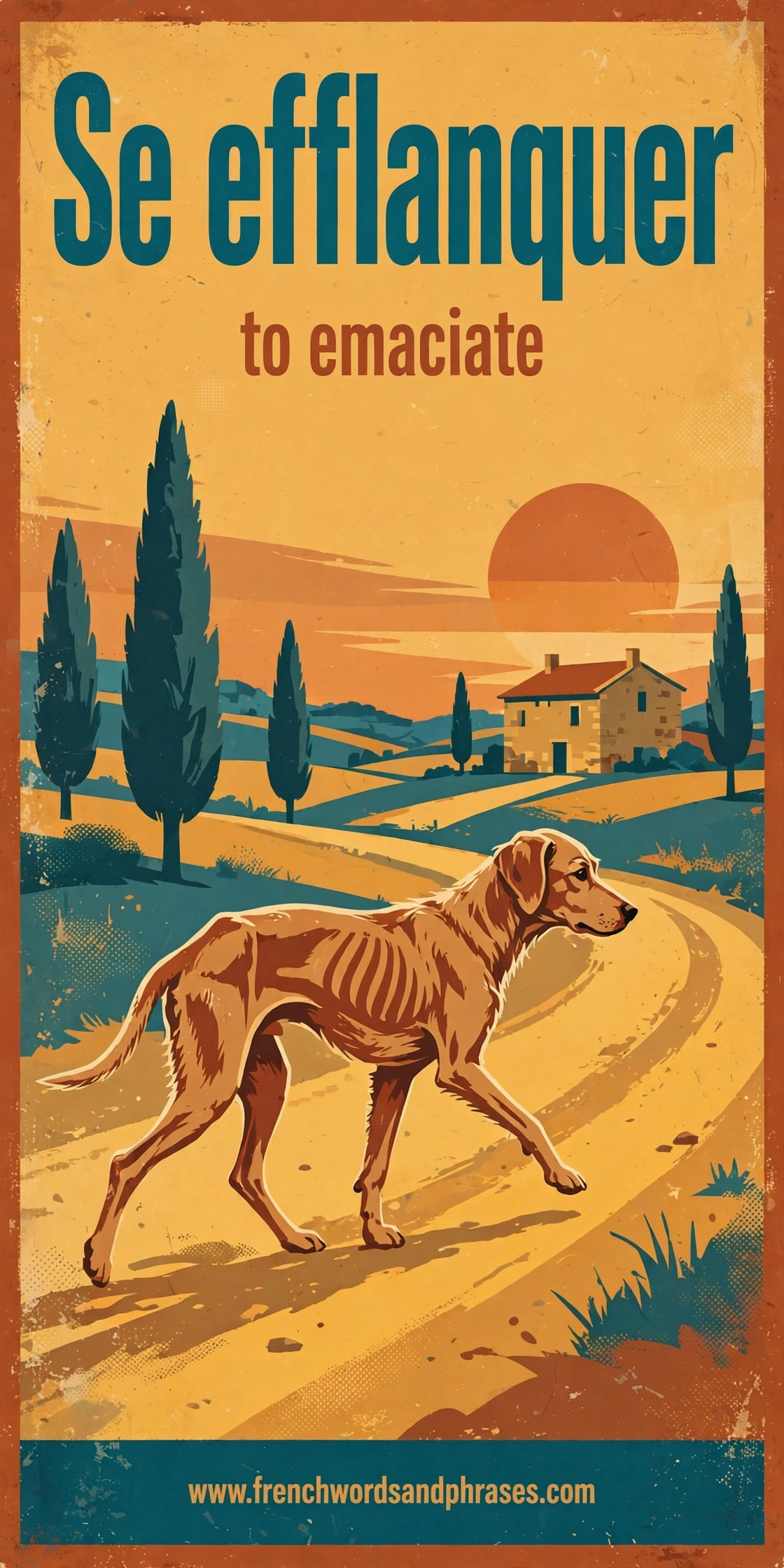
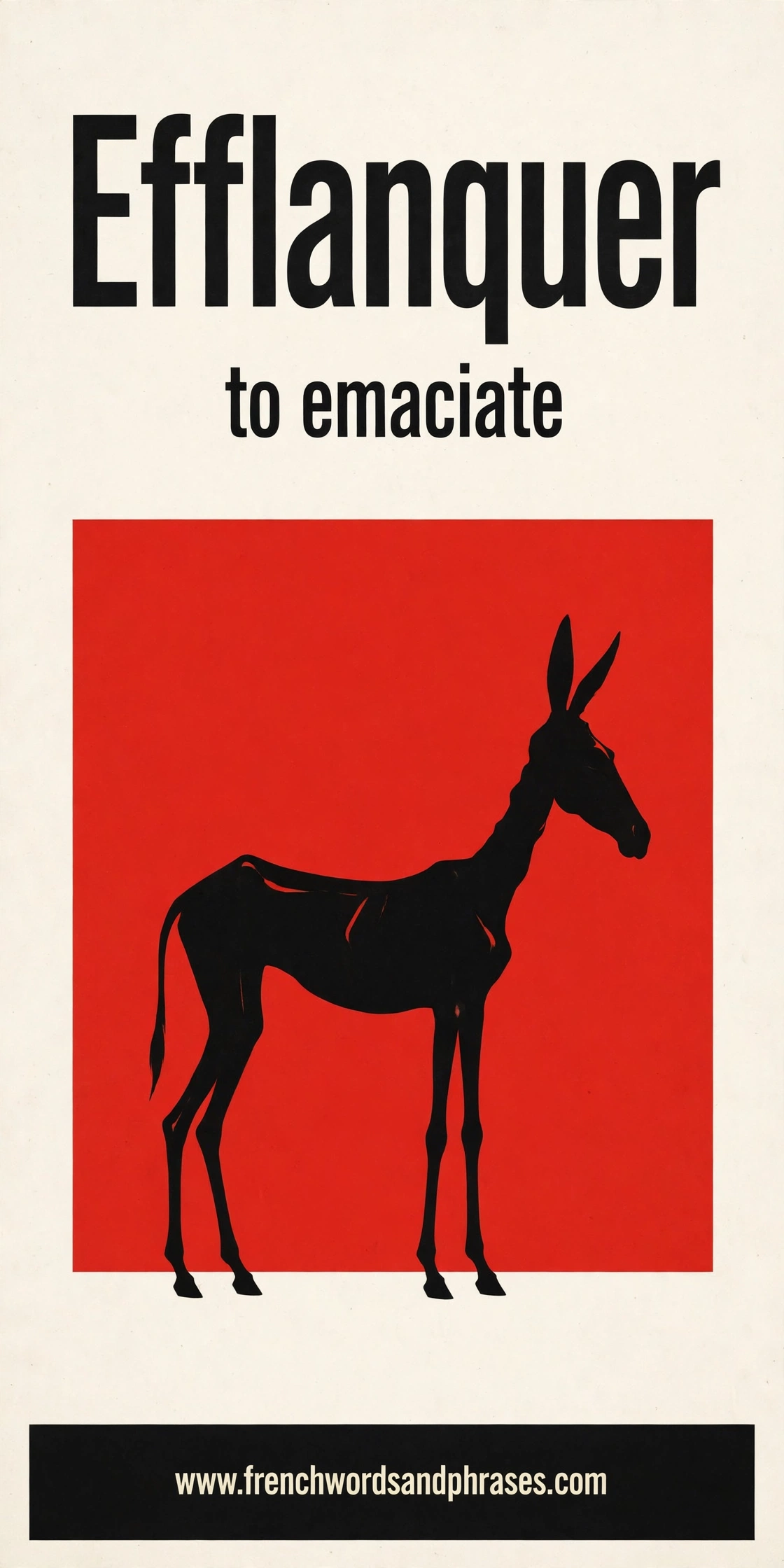
Efflanquer means to emaciate — to hollow out the flanks of an animal or a person until the ribs show and the body is all angles.
A horse after a winter of short fodder, its flanks caved in and its ribs counting themselves; a hunting dog run too hard for too long — efflanquer is the hard, physical verb of flesh falling away from the flanks until only the frame remains.
In this guide, you’ll learn how to conjugate efflanquer in all the major French tenses and moods. Explore complete conjugation tables, French examples, English translations, and practice quizzes.
Understanding the French Verb Efflanquer
Efflanquer is a regular French verb belonging to the first group of verbs, those ending in-er.
It means to emaciate. It is commonly used of horses and dogs — work, hunger or illness hollowing their flanks — and, by extension, of people made gaunt by hardship; the adjective efflanqué also describes anything long and hollow-sided, from a starved hunting dog to a greyhound’s natural racing build.
Verb classification: First group (-er)
Auxiliary verb: Avoir
Past participle: efflanqué
Present participle: efflanquant
English equivalents: To emaciate, to make gaunt; un cheval efflanqué — a gaunt, hollow-flanked horse; un chien efflanqué — an emaciated dog; la maladie l’a efflanqué — illness has wasted him; des flancs efflanqués — sunken flanks.
One important detail: efflanquer is built on flanc, the flank or side of an animal — to efflanquer is to empty the flanks, and the verb lives almost entirely in its past participle, the adjective efflanqué: un cheval efflanqué, un lévrier efflanqué. The spelling guards its c: before a and o the qu keeps the hard k sound — j’efflanque, nous efflanquons, ils efflanquent — and the verb conjugates as a regular -er throughout.
Experience the Word
Efflanquer is the verb of the caved-in flank — flesh retreating until the ribs draw the body’s map.
Imagine the farm horse at the end of a hard winter. The hay ran short in February; now, in the April light, his flanks have fallen in like two hands pressed into dough — la faim l’a efflanqué, and every rib can be counted.
He is still strong, still willing. He is emaciated — efflanqué — hollowed by the hungry season.
How to Conjugate Efflanquer: Complete French Conjugation Guide
Let’s explore every major conjugation of efflanquer, beginning with the indicative mood.
How to Conjugate Efflanquer in the Indicative Mood
The indicative mood is used to express facts, observations, actions, and events.
How to Conjugate Efflanquer in the Present Tense (Présent)
Used for actions happening now, habitual actions, and general truths.
| Subject | Conjugation |
|---|---|
| je | efflanque |
| tu | efflanques |
| il / elle | efflanque |
| nous | efflanquons |
| vous | efflanquez |
| ils / elles | efflanquent |
Example
La disette efflanque les chevaux de la ferme.
The shortage is emaciating the farm’s horses.
Quick Quiz 1
Complete the sentence:
Nous n’______ pas nos bêtes avec un tel travail.
Reveal the answer
efflanquons
Nous n’efflanquons pas nos bêtes avec un tel travail.
We do not waste our animals with such work.
How to Conjugate Efflanquer in the Passé Composé
Used for completed actions in the past. Efflanquer takes the auxiliary verb avoir.
| Subject | Conjugation |
|---|---|
| j’ | ai efflanqué |
| tu | as efflanqué |
| il / elle | a efflanqué |
| nous | avons efflanqué |
| vous | avez efflanqué |
| ils / elles | ont efflanqué |
Example
La maladie a efflanqué le vieux chien en un mois.
Illness emaciated the old dog in a month.
How to Conjugate Efflanquer in the Imparfait (Imperfect Tense)
Used for habitual past actions, descriptions, and ongoing situations in the past.
| Subject | Conjugation |
|---|---|
| je | efflanquais |
| tu | efflanquais |
| il / elle | efflanquait |
| nous | efflanquions |
| vous | efflanquiez |
| ils / elles | efflanquaient |
Example
Le travail excessif efflanquait les bêtes de somme.
Excessive work used to waste the beasts of burden.
Quick Quiz 2
Choose the correct form:
Illness emaciated the dog.
La maladie ______ le chien. (a efflanqué / est efflanqué)
Reveal the answer
a efflanqué
La maladie a efflanqué le chien.
Efflanquer takes avoir.
How to Conjugate Efflanquer in the Plus-que-parfait
Used to describe an action that had already been completed before another past event.
| Subject | Conjugation |
|---|---|
| j’ | avais efflanqué |
| tu | avais efflanqué |
| il / elle | avait efflanqué |
| nous | avions efflanqué |
| vous | aviez efflanqué |
| ils / elles | avaient efflanqué |
Example
La famine avait efflanqué tout le bétail du village.
The famine had emaciated all the village’s livestock.
How to Conjugate Efflanquer in the Passé Simple
Primarily used in formal writing, literature, and historical narratives. It is rarely used in everyday conversation.
| Subject | Conjugation |
|---|---|
| je | efflanquai |
| tu | efflanquas |
| il / elle | efflanqua |
| nous | efflanquâmes |
| vous | efflanquâtes |
| ils / elles | efflanquèrent |
Example
L’hiver efflanqua les chevaux faute de fourrage.
Winter wasted the horses for lack of fodder.
How to Conjugate Efflanquer in the Passé Antérieur
A literary tense used to express an action completed immediately before another past action, generally in the passé simple.
| Subject | Conjugation |
|---|---|
| j’ | eus efflanqué |
| tu | eus efflanqué |
| il / elle | eut efflanqué |
| nous | eûmes efflanqué |
| vous | eûtes efflanqué |
| ils / elles | eurent efflanqué |
Example
Quand la maladie eut efflanqué le chien, le vétérinaire le nourrit lui-même.
When illness had emaciated the dog, the vet fed it himself.
How to Conjugate Efflanquer in the Future Tense (Futur Simple)
Used to describe actions that will take place in the future.
| Subject | Conjugation |
|---|---|
| je | efflanquerai |
| tu | efflanqueras |
| il / elle | efflanquera |
| nous | efflanquerons |
| vous | efflanquerez |
| ils / elles | efflanqueront |
Example
Un tel régime efflanquera ce cheval en quelques semaines.
Such a diet will emaciate this horse in a few weeks.
How to Conjugate Efflanquer in the Futur Antérieur (Future Perfect)
Used for an action that will have been completed before a particular point in the future.
| Subject | Conjugation |
|---|---|
| j’ | aurai efflanqué |
| tu | auras efflanqué |
| il / elle | aura efflanqué |
| nous | aurons efflanqué |
| vous | aurez efflanqué |
| ils / elles | auront efflanqué |
Example
À la fin de l’hiver, la disette aura efflanqué la moitié des bêtes.
By the end of winter, the shortage will have wasted half the animals.
How to Conjugate Efflanquer in the Near Future (Futur Proche)
Used to describe something that is going to happen soon. Formed with aller + infinitive.
| Subject | Conjugation |
|---|---|
| je | vais efflanquer |
| tu | vas efflanquer |
| il / elle | va efflanquer |
| nous | allons efflanquer |
| vous | allez efflanquer |
| ils / elles | vont efflanquer |
Example
Attention, ce travail va efflanquer tes chiens.
Careful, this work is going to waste your dogs.
How to Conjugate Efflanquer in the Conditional Mood
The conditional mood expresses what would happen under certain circumstances. It is also frequently used to make polite requests or express wishes.
How to Conjugate Efflanquer in the Present Conditional
| Subject | Conjugation |
|---|---|
| je | efflanquerais |
| tu | efflanquerais |
| il / elle | efflanquerait |
| nous | efflanquerions |
| vous | efflanqueriez |
| ils / elles | efflanqueraient |
Example
Moins de travail efflanquerait moins les chevaux.
Less work would waste the horses less.
How to Conjugate Efflanquer in the Past Conditional
| Subject | Conjugation |
|---|---|
| j’ | aurais efflanqué |
| tu | aurais efflanqué |
| il / elle | aurait efflanqué |
| nous | aurions efflanqué |
| vous | auriez efflanqué |
| ils / elles | auraient efflanqué |
Example
Un meilleur fourrage n’aurait pas efflanqué les bêtes ainsi.
Better fodder would not have emaciated the animals like that.
Efflanquer in the Literary Past Conditional Form
This less common literary form uses the imperfect subjunctive of avoir.
| Subject | Conjugation |
|---|---|
| j’ | eusse efflanqué |
| tu | eusses efflanqué |
| il / elle | eût efflanqué |
| nous | eussions efflanqué |
| vous | eussiez efflanqué |
| ils / elles | eussent efflanqué |
Example
La famine eût efflanqué le troupeau entier sans les réserves.
The famine would have wasted the whole herd without the reserves.
How to Conjugate Efflanquer in the Subjunctive Mood
The subjunctive is used to express wishes, emotions, doubts, necessity, and uncertainty. It frequently follows expressions such as il faut que (it is necessary that) or bien que (although).
How to Conjugate Efflanquer in the Present Subjunctive
| Subject | Conjugation |
|---|---|
| que je | efflanque |
| que tu | efflanques |
| qu’il / qu’elle | efflanque |
| que nous | efflanquions |
| que vous | efflanquiez |
| qu’ils / qu’elles | efflanquent |
Example
Je crains que ce régime efflanque le cheval.
I fear this diet is emaciating the horse.
Quick Quiz 3
Complete the sentence using the subjunctive:
Je crains que la disette ______ les troupeaux.
Reveal the answer
efflanque
Je crains que la disette efflanque les troupeaux.
I fear the shortage is wasting the herds.
How to Conjugate Efflanquer in the Imperfect Subjunctive
A literary tense, rarely encountered in modern spoken French.
| Subject | Conjugation |
|---|---|
| que je | efflanquasse |
| que tu | efflanquasses |
| qu’il / qu’elle | efflanquât |
| que nous | efflanquassions |
| que vous | efflanquassiez |
| qu’ils / qu’elles | efflanquassent |
Example
Il fallait nourrir les bêtes avant que la faim les efflanquât.
The animals had to be fed before hunger wasted them.
How to Conjugate Efflanquer in the Pluperfect Subjunctive
A literary construction used to express an action completed before another past action.
| Subject | Conjugation |
|---|---|
| que j’ | eusse efflanqué |
| que tu | eusses efflanqué |
| qu’il / qu’elle | eût efflanqué |
| que nous | eussions efflanqué |
| que vous | eussiez efflanqué |
| qu’ils / qu’elles | eussent efflanqué |
Example
On racontait que la disette eût efflanqué des troupeaux entiers.
People said the shortage had emaciated whole herds.
How to Conjugate Efflanquer in the Past Subjunctive
| Subject | Conjugation |
|---|---|
| que j’ | aie efflanqué |
| que tu | aies efflanqué |
| qu’il / qu’elle | ait efflanqué |
| que nous | ayons efflanqué |
| que vous | ayez efflanqué |
| qu’ils / qu’elles | aient efflanqué |
Example
Je suis triste que la maladie ait efflanqué ce beau chien.
I am sad illness has wasted this fine dog.
How to Conjugate Efflanquer in the Imperative
The imperative is used to give commands, instructions, invitations, or suggestions. Subject pronouns are omitted.
How to Conjugate Efflanquer in the Present Imperative
| Person | Conjugation |
|---|---|
| (tu) | efflanque |
| (nous) | efflanquons |
| (vous) | efflanquez |
Example
N’efflanque pas tes chevaux avec un tel travail !
Do not waste your horses with such work!
Quick Quiz 4
How would you say Do not waste your horse (tu form)?
Reveal the answer
N’efflanque pas ton cheval !
French Participles of Efflanquer
Participles are verb forms that can be used in compound tenses and other grammatical constructions.
Present Participle of Efflanquer
efflanquant
En efflanquant ses bêtes, le fermier perd son capital.
By wasting his animals, the farmer is losing his capital.
Past Participle of Efflanquer
efflanqué
Efflanqué par l’hiver, le cheval peine à tirer la charrue.
Emaciated by winter, the horse struggles to pull the plough.
Efflanquer in Everyday French: Real-Life Examples
Now that you know the conjugations, let’s see how efflanquer appears in everyday French.
Example 1 — Present
La disette efflanque les chevaux.
The shortage is emaciating the horses.
Example 2 — Passé composé
La maladie a efflanqué le vieux chien.
Illness emaciated the old dog.
Example 3 — Imparfait
Le travail efflanquait les bêtes de somme.
Work used to waste the beasts of burden.
Example 4 — Future
Ce régime efflanquera ce cheval en quelques semaines.
This diet will emaciate this horse in a few weeks.
Example 5 — Conditional
Moins de travail efflanquerait moins les bêtes.
Less work would waste the animals less.
Example 6 — Imperative
N’efflanquez pas vos chevaux ainsi !
Do not waste your horses like that!
Beyond Translation: The Meaning of Efflanquer
The word is a small anatomy lesson: ef- (out) plus flanc, the flank — flesh taken out of the flanks.
Its adjective leads a double life.
Efflanqué is an insult for a starved animal but almost a compliment for a greyhound or a racing cyclist — long, hollow-flanked and built for speed; context decides whether the ribs are a shame or a design.
How to Remember the French Verb Efflanquer
Remember it this way: Efflanquer is about the farm horse after the hungry winter, flanks caved in like pressed dough.
- Flanc is inside it: to efflanquer is to empty the flanks until the ribs show.
- The adjective does most of the work: un cheval efflanqué, un chien efflanqué.
- Regular -er with a hard c: j’efflanque, nous efflanquons, past participle efflanqué.
The key idea is the farm horse after the hungry winter, flanks caved in like pressed dough.
Test Your Knowledge of Efflanquer
Let’s see how much you’ve learned. Try answering these questions before revealing the answers.
Question 1
What body part hides inside efflanquer?
Reveal the answer
Le flanc — the flank: to efflanquer is to hollow out the flanks until the ribs show.
Question 2
How do you say Illness emaciated the old dog in French?
Reveal the answer
La maladie a efflanqué le vieux chien.
Question 3
Translate: The shortage is emaciating the farm’s horses.
Reveal the answer
La disette efflanque les chevaux de la ferme.
Question 4
What is the past participle of efflanquer?
Reveal the answer
Efflanqué — the famous form: un cheval efflanqué.
Question 5
Complete the sentence:
Je crains que ce régime ______ le cheval.
Reveal the answer
efflanque
Je crains que ce régime efflanque le cheval.
I fear this diet is emaciating the horse.
Your Final Challenge
Can You Use It?
How would you say this in French?
The winter was long, hunger wasted the horses, but spring brings back the grass.
Reveal the answer
L’hiver fut long, la faim efflanqua les chevaux, mais le printemps ramène l’herbe.
The winter was long, hunger wasted the horses, but spring brings back the grass.
A little French. A little curiosity. A richer everyday life.
LEARN FRENCH ONE WORD AT A TIME