A French Word to Live By
How to Conjugate Se efflanquer in French
/se.flɑ̃.ke/
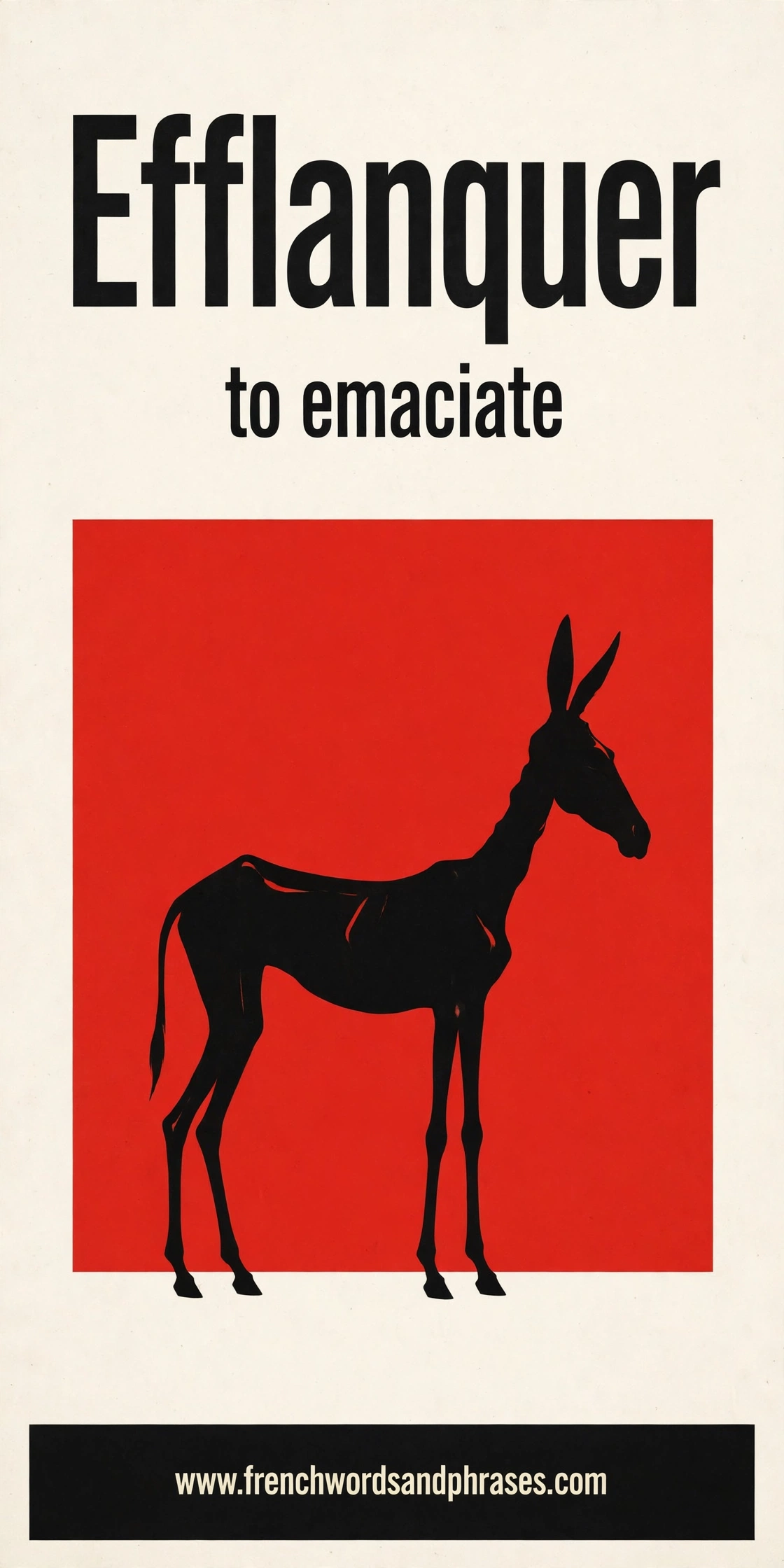
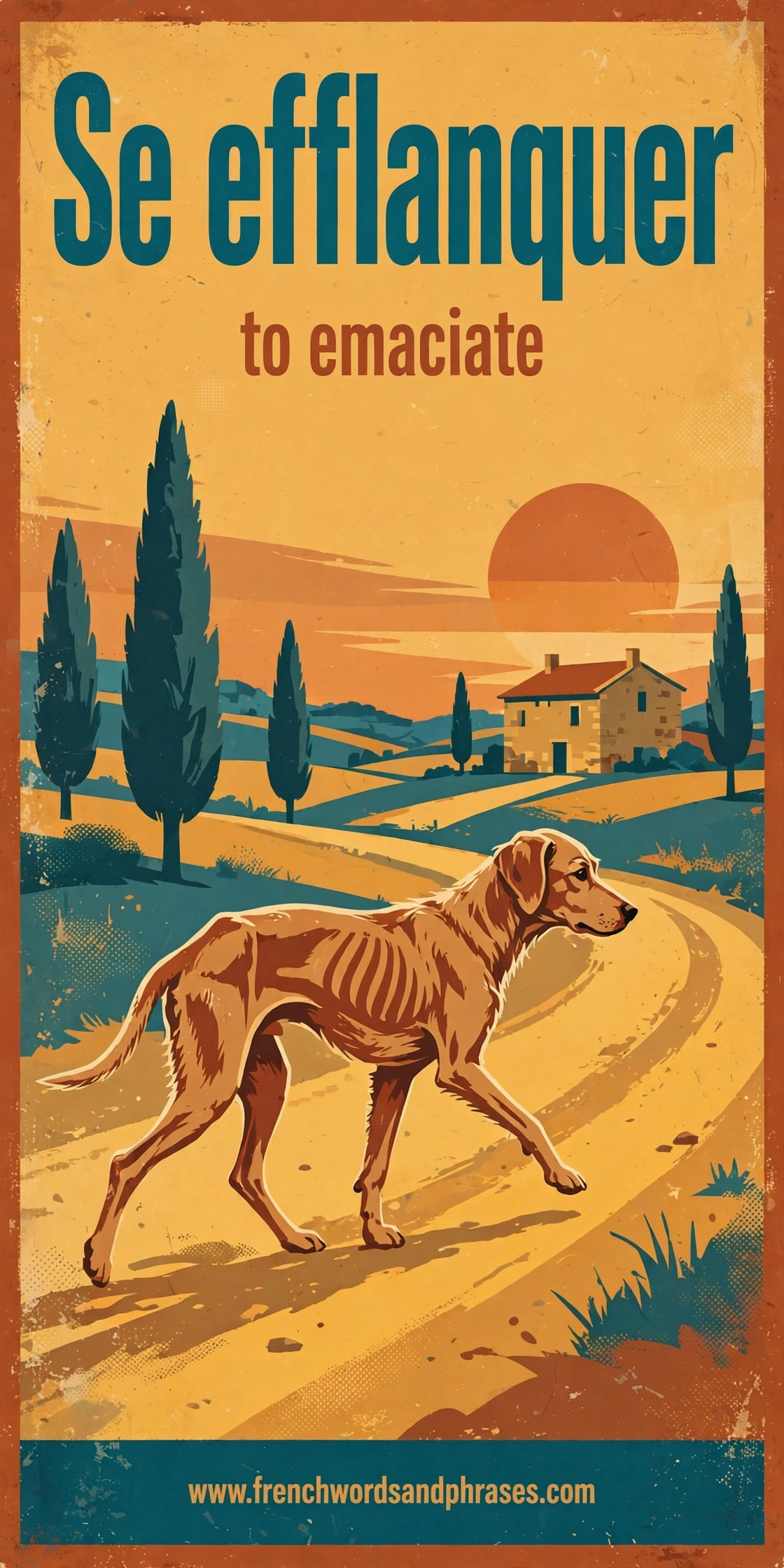
Se efflanquer means to emaciate — to waste away oneself, the flanks hollowing and the flesh retreating until the frame shows through.
A greyhound of a man who forgets to eat through a summer of grief; a horse turned out on poor pasture, thinning week by week — se efflanquer is the wasting done from within: the body consuming its own flesh until the flanks cave in.
In this guide, you’ll learn how to conjugate se efflanquer in all the major French tenses and moods. Explore complete conjugation tables, French examples, English translations, and practice quizzes.
Understanding the French Verb Se efflanquer
Se efflanquer is a regular French verb belonging to the first group of verbs, those ending in-er.
It means to emaciate. It is commonly used of animals losing condition on poor feed or through sickness, and of people growing gaunt through grief, illness or overwork — a slow, visible thinning where the flanks and cheeks hollow together.
Verb classification: First group (-er), reflexive
Auxiliary verb: Être
Past participle: efflanqué
Present participle: efflanquant
English equivalents: To waste away, to grow gaunt; le cheval s’efflanque — the horse is wasting away; s’efflanquer de chagrin — to waste away with grief; il s’est efflanqué en un hiver — he grew gaunt in one winter; un corps qui s’efflanque — a body growing hollow-flanked.
One important detail: se efflanquer is the wasting suffered, where plain efflanquer is the wasting inflicted by hunger, work or illness — the same hollowing of the flancs, seen from inside the body. Being reflexive, it takes être and the participle agrees: le cheval s’est efflanqué, la jument s’est efflanquée. In practice the reflexive form is rarer than the adjective efflanqué, which does most of the everyday describing.
Experience the Word
Se efflanquer is the verb of the body eating itself — week by week, the flanks remember hunger.
Imagine the old shepherd who loses his wife in November. He still walks the hills, still works — but he forgets the soup, forgets the bread. By March his neighbours cross themselves: il s’est efflanqué, there is nothing left of him but coat and bones.
No one has starved him. He has wasted away — efflanqué, hollowed from within.
How to Conjugate Se efflanquer: Complete French Conjugation Guide
Let’s explore every major conjugation of se efflanquer, beginning with the indicative mood.
How to Conjugate Se efflanquer in the Indicative Mood
The indicative mood is used to express facts, observations, actions, and events.
How to Conjugate Se efflanquer in the Present Tense (Présent)
Used for actions happening now, habitual actions, and general truths.
| Subject | Conjugation |
|---|---|
| je | m’efflanque |
| tu | t’efflanques |
| il / elle | s’efflanque |
| nous | nous efflanquons |
| vous | vous efflanquez |
| ils / elles | s’efflanquent |
Example
Le vieux cheval s’efflanque sur ce pauvre pâturage.
The old horse is wasting away on this poor pasture.
Quick Quiz 1
Complete the sentence:
Les chevaux ______ sur ce pâturage maigre.
Reveal the answer
s’efflanquent
Les chevaux s’efflanquent sur ce pâturage maigre.
The horses are wasting away on this thin pasture.
How to Conjugate Se efflanquer in the Passé Composé
Used for completed actions in the past. Se efflanquer takes the auxiliary verb être.
| Subject | Conjugation |
|---|---|
| je | me suis efflanqué / me suis efflanquée |
| tu | t’es efflanqué / t’es efflanquée |
| il / elle | s’est efflanqué / s’est efflanquée |
| nous | nous sommes efflanqués / nous sommes efflanquées |
| vous | vous êtes efflanqués / vous êtes efflanquées / vous êtes efflanqué / vous êtes efflanquée |
| ils / elles | se sont efflanqués / se sont efflanquées |
Example
Il s’est efflanqué en un hiver de chagrin.
He grew gaunt in one winter of grief.
How to Conjugate Se efflanquer in the Imparfait (Imperfect Tense)
Used for habitual past actions, descriptions, and ongoing situations in the past.
| Subject | Conjugation |
|---|---|
| je | m’efflanquais |
| tu | t’efflanquais |
| il / elle | s’efflanquait |
| nous | nous efflanquions |
| vous | vous efflanquiez |
| ils / elles | s’efflanquaient |
Example
La jument s’efflanquait malgré le foin qu’on lui donnait.
The mare was wasting away despite the hay she was given.
Quick Quiz 2
Choose the correct form:
He grew gaunt in one winter.
Il ______ en un hiver. (s’est efflanqué / a efflanqué)
Reveal the answer
s’est efflanqué
Il s’est efflanqué en un hiver.
Se efflanquer is reflexive and takes être.
How to Conjugate Se efflanquer in the Plus-que-parfait
Used to describe an action that had already been completed before another past event.
| Subject | Conjugation |
|---|---|
| je | m’étais efflanqué / m’étais efflanquée |
| tu | t’étais efflanqué / t’étais efflanquée |
| il / elle | s’était efflanqué / s’était efflanquée |
| nous | nous étions efflanqués / nous étions efflanquées |
| vous | vous étiez efflanqués / vous étiez efflanquées / vous étiez efflanqué / vous étiez efflanquée |
| ils / elles | s’étaient efflanqués / s’étaient efflanquées |
Example
Le chien s’était efflanqué avant qu’on le recueille.
The dog had wasted away before it was taken in.
How to Conjugate Se efflanquer in the Passé Simple
Primarily used in formal writing, literature, and historical narratives. It is rarely used in everyday conversation.
| Subject | Conjugation |
|---|---|
| je | m’efflanquai |
| tu | t’efflanquas |
| il / elle | s’efflanqua |
| nous | nous efflanquâmes |
| vous | vous efflanquâtes |
| ils / elles | s’efflanquèrent |
Example
Le troupeau s’efflanqua pendant la sécheresse.
The herd wasted away during the drought.
How to Conjugate Se efflanquer in the Passé Antérieur
A literary tense used to express an action completed immediately before another past action, generally in the passé simple.
| Subject | Conjugation |
|---|---|
| je | me fus efflanqué / me fus efflanquée |
| tu | te fus efflanqué / te fus efflanquée |
| il / elle | se fut efflanqué / se fut efflanquée |
| nous | nous fûmes efflanqués / nous fûmes efflanquées |
| vous | vous fûtes efflanqués / vous fûtes efflanquées / vous fûtes efflanqué / vous fûtes efflanquée |
| ils / elles | se furent efflanqués / se furent efflanquées |
Example
Quand le cheval se fut efflanqué, le fermier le mit au repos.
When the horse had wasted away, the farmer put it out to rest.
How to Conjugate Se efflanquer in the Future Tense (Futur Simple)
Used to describe actions that will take place in the future.
| Subject | Conjugation |
|---|---|
| je | m’efflanquerai |
| tu | t’efflanqueras |
| il / elle | s’efflanquera |
| nous | nous efflanquerons |
| vous | vous efflanquerez |
| ils / elles | s’efflanqueront |
Example
Ce cheval s’efflanquera si l’herbe ne revient pas.
This horse will waste away if the grass does not come back.
How to Conjugate Se efflanquer in the Futur Antérieur (Future Perfect)
Used for an action that will have been completed before a particular point in the future.
| Subject | Conjugation |
|---|---|
| je | me serai efflanqué / me serai efflanquée |
| tu | te seras efflanqué / te seras efflanquée |
| il / elle | se sera efflanqué / se sera efflanquée |
| nous | nous serons efflanqués / nous serons efflanquées |
| vous | vous serez efflanqués / vous serez efflanquées / vous serez efflanqué / vous serez efflanquée |
| ils / elles | se seront efflanqués / se seront efflanquées |
Example
À la fin de l’hiver, la moitié du troupeau se sera efflanquée.
By the end of winter, half the herd will have wasted away.
How to Conjugate Se efflanquer in the Near Future (Futur Proche)
Used to describe something that is going to happen soon. Formed with aller + infinitive.
| Subject | Conjugation |
|---|---|
| je | vais m’efflanquer |
| tu | vas t’efflanquer |
| il / elle | va s’efflanquer |
| nous | allons nous efflanquer |
| vous | allez vous efflanquer |
| ils / elles | vont s’efflanquer |
Example
Regarde-le, il va s’efflanquer s’il ne mange pas.
Look at him, he is going to waste away if he does not eat.
How to Conjugate Se efflanquer in the Conditional Mood
The conditional mood expresses what would happen under certain circumstances. It is also frequently used to make polite requests or express wishes.
How to Conjugate Se efflanquer in the Present Conditional
| Subject | Conjugation |
|---|---|
| je | m’efflanquerais |
| tu | t’efflanquerais |
| il / elle | s’efflanquerait |
| nous | nous efflanquerions |
| vous | vous efflanqueriez |
| ils / elles | s’efflanqueraient |
Example
Il s’efflanquerait moins avec de vrais repas.
He would waste away less with proper meals.
How to Conjugate Se efflanquer in the Past Conditional
| Subject | Conjugation |
|---|---|
| je | me serais efflanqué / me serais efflanquée |
| tu | te serais efflanqué / te serais efflanquée |
| il / elle | se serait efflanqué / se serait efflanquée |
| nous | nous serions efflanqués / nous serions efflanquées |
| vous | vous seriez efflanqués / vous seriez efflanquées / vous seriez efflanqué / vous seriez efflanquée |
| ils / elles | se seraient efflanqués / se seraient efflanquées |
Example
Le cheval ne se serait pas efflanqué avec un meilleur pâturage.
The horse would not have wasted away with better pasture.
Se efflanquer in the Literary Past Conditional Form
This less common literary form uses the imperfect subjunctive of être.
| Subject | Conjugation |
|---|---|
| je | me fusse efflanqué / me fusse efflanquée |
| tu | te fusses efflanqué / te fusses efflanquée |
| il / elle | se fût efflanqué / se fût efflanquée |
| nous | nous fussions efflanqués / nous fussions efflanquées |
| vous | vous fussiez efflanqués / vous fussiez efflanquées / vous fussiez efflanqué / vous fussiez efflanquée |
| ils / elles | se fussent efflanqués / se fussent efflanquées |
Example
Le troupeau se fût efflanqué sans les pluies d’automne.
The herd would have wasted away without the autumn rains.
How to Conjugate Se efflanquer in the Subjunctive Mood
The subjunctive is used to express wishes, emotions, doubts, necessity, and uncertainty. It frequently follows expressions such as il faut que (it is necessary that) or bien que (although).
How to Conjugate Se efflanquer in the Present Subjunctive
| Subject | Conjugation |
|---|---|
| que je | m’efflanque |
| que tu | t’efflanques |
| qu’il / qu’elle | s’efflanque |
| que nous | nous efflanquions |
| que vous | vous efflanquiez |
| qu’ils / qu’elles | s’efflanquent |
Example
Je crains que le vieux chien s’efflanque.
I fear the old dog is wasting away.
Quick Quiz 3
Complete the sentence using the subjunctive:
Je crains que tu ______ si tu ne manges pas.
Reveal the answer
t’efflanques
Je crains que tu t’efflanques si tu ne manges pas.
I fear you are wasting away if you do not eat.
How to Conjugate Se efflanquer in the Imperfect Subjunctive
A literary tense, rarely encountered in modern spoken French.
| Subject | Conjugation |
|---|---|
| que je | m’efflanquasse |
| que tu | t’efflanquasses |
| qu’il / qu’elle | s’efflanquât |
| que nous | nous efflanquassions |
| que vous | vous efflanquassiez |
| qu’ils / qu’elles | s’efflanquassent |
Example
Il fallait le nourrir avant qu’il s’efflanquât davantage.
He had to be fed before he wasted away further.
How to Conjugate Se efflanquer in the Pluperfect Subjunctive
A literary construction used to express an action completed before another past action.
| Subject | Conjugation |
|---|---|
| que je | me fusse efflanqué / me fusse efflanquée |
| que tu | te fusses efflanqué / te fusses efflanquée |
| qu’il / qu’elle | se fût efflanqué / se fût efflanquée |
| que nous | nous fussions efflanqués / nous fussions efflanquées |
| que vous | vous fussiez efflanqués / vous fussiez efflanquées / vous fussiez efflanqué / vous fussiez efflanquée |
| qu’ils / qu’elles | se fussent efflanqués / se fussent efflanquées |
Example
On racontait que les chevaux se fussent efflanqués pendant le siège.
People said the horses had wasted away during the siege.
How to Conjugate Se efflanquer in the Past Subjunctive
| Subject | Conjugation |
|---|---|
| que je | me sois efflanqué / me sois efflanquée |
| que tu | te sois efflanqué / te sois efflanquée |
| qu’il / qu’elle | se soit efflanqué / se soit efflanquée |
| que nous | nous soyons efflanqués / nous soyons efflanquées |
| que vous | vous soyez efflanqués / vous soyez efflanquées / vous soyez efflanqué / vous soyez efflanquée |
| qu’ils / qu’elles | se soient efflanqués / se soient efflanquées |
Example
Je suis triste qu’il se soit efflanqué si vite.
I am sad he grew gaunt so quickly.
How to Conjugate Se efflanquer in the Imperative
The imperative is used to give commands, instructions, invitations, or suggestions. Subject pronouns are omitted.
How to Conjugate Se efflanquer in the Present Imperative
| Person | Conjugation |
|---|---|
| (tu) | efflanque-toi |
| (nous) | efflanquons-nous |
| (vous) | efflanquez-vous |
Example
Ne t’efflanque pas ainsi, mange quelque chose !
Do not waste away like this, eat something!
Quick Quiz 4
How would you say Do not waste away (tu form)?
Reveal the answer
Ne t’efflanque pas !
French Participles of Se efflanquer
Participles are verb forms that can be used in compound tenses and other grammatical constructions.
Present Participle of Se efflanquer
efflanquant
En s’efflanquant, le cheval perd ses forces peu à peu.
As it wastes away, the horse slowly loses its strength.
Past Participle of Se efflanquer
efflanqué
Efflanquée par la sécheresse, la jument cherche l’ombre.
Wasted away by the drought, the mare seeks the shade.
Se efflanquer in Everyday French: Real-Life Examples
Now that you know the conjugations, let’s see how se efflanquer appears in everyday French.
Example 1 — Present
Le vieux cheval s’efflanque sur ce pâturage pauvre.
The old horse is wasting away on this poor pasture.
Example 2 — Passé composé
Il s’est efflanqué en un hiver de chagrin.
He grew gaunt in one winter of grief.
Example 3 — Imparfait
La jument s’efflanquait malgré le foin.
The mare was wasting away despite the hay.
Example 4 — Future
Ce cheval s’efflanquera sans herbe fraîche.
This horse will waste away without fresh grass.
Example 5 — Conditional
Il s’efflanquerait moins avec de vrais repas.
He would waste away less with proper meals.
Example 6 — Imperative
Ne t’efflanque pas, mange quelque chose !
Do not waste away, eat something!
Beyond Translation: The Meaning of Se efflanquer
Built like its twin on flanc, the flank, se efflanquer turns the camera around: not the hunger that hollows, but the body being hollowed.
Grief is its classic cause in literature.
French novels are full of widowers and abandoned lovers who s’efflanquent de chagrin — the body keeping the accounts of the heart, one forgotten meal at a time.
How to Remember the French Verb Se efflanquer
Remember it this way: Se efflanquer is about the widowed shepherd by March — nothing left of him but coat and bones.
- The wasting from inside: le cheval s’efflanque — être, and the participle agrees (la jument s’est efflanquée).
- Flanc again: what caves in is the flank; grief and hunger are the usual sculptors.
- Regular -er underneath: je m’efflanque, nous nous efflanquons, past participle efflanqué.
The key idea is the widowed shepherd by March — nothing left of him but coat and bones.
Test Your Knowledge of Se efflanquer
Let’s see how much you’ve learned. Try answering these questions before revealing the answers.
Question 1
Which auxiliary does se efflanquer use, and why?
Reveal the answer
Être — it is a reflexive verb: le cheval s’est efflanqué pendant la sécheresse.
Question 2
How do you say He grew gaunt in one winter of grief in French?
Reveal the answer
Il s’est efflanqué en un hiver de chagrin.
Question 3
Translate: The mare was wasting away despite the hay.
Reveal the answer
La jument s’efflanquait malgré le foin.
Question 4
What is the past participle of se efflanquer?
Reveal the answer
Efflanqué — agreeing: efflanquée, efflanqués, efflanquées.
Question 5
Complete the sentence:
Je crains que le vieux chien ______.
Reveal the answer
s’efflanque
Je crains que le vieux chien s’efflanque.
I fear the old dog is wasting away.
Your Final Challenge
Can You Use It?
How would you say this in French?
He wasted away all winter, but spring and a good soup will set him back on his feet.
Reveal the answer
Il s’est efflanqué tout l’hiver, mais le printemps et une bonne soupe le remettront debout.
He wasted away all winter, but spring and a good soup will set him back on his feet.
A little French. A little curiosity. A richer everyday life.
LEARN FRENCH ONE WORD AT A TIME