A French Word to Live By
How to Conjugate Abouler in French
/a.bu.le/
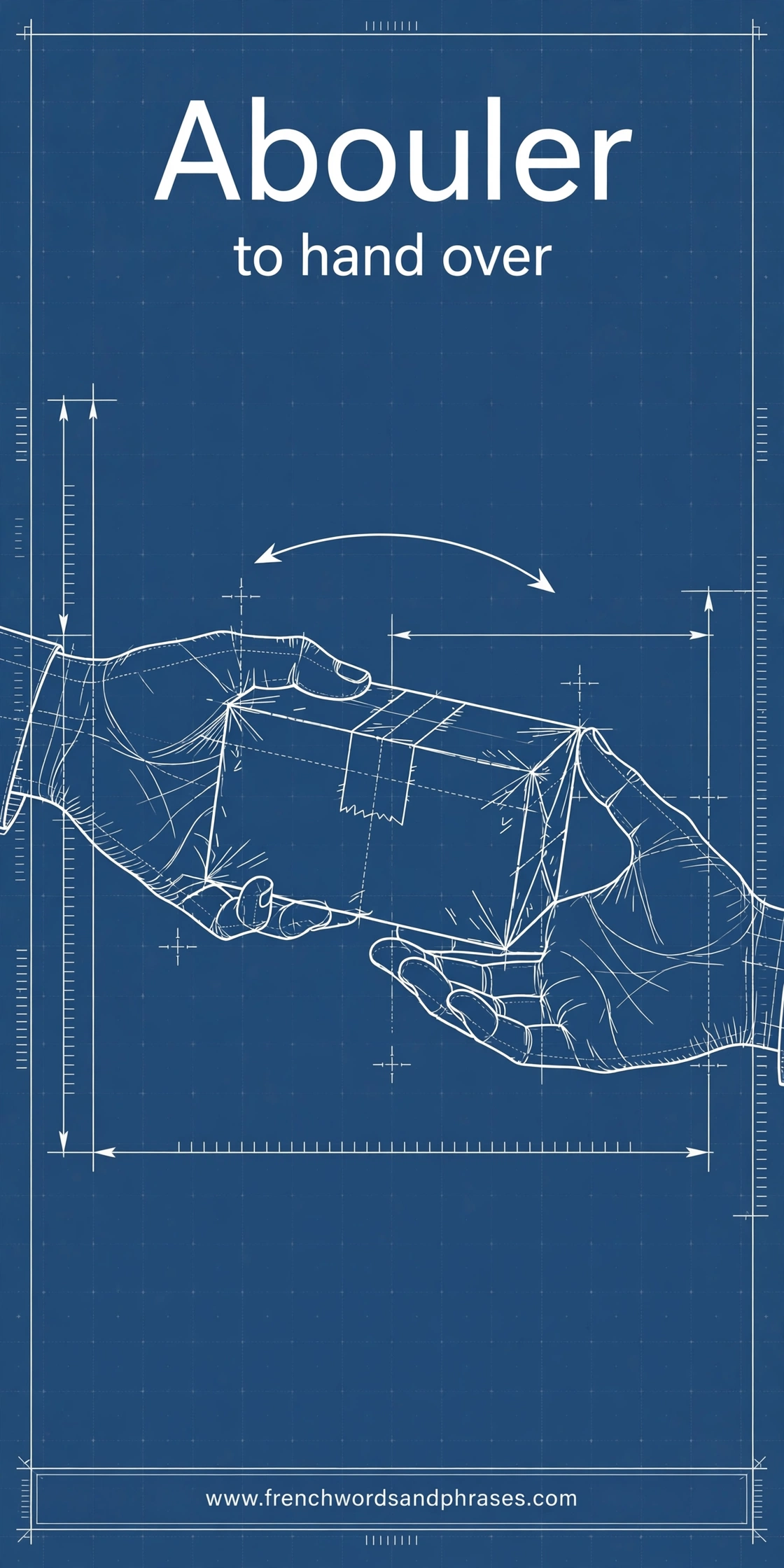
Abouler means to hand over — in familiar French, to pass something over, to cough it up, to bring it here.
A hand held out at the café table, a wallet demanded with a grin, a ball tossed across the playground — abouler is the slang verb of handing over: aboule ! — hand it over, cough it up, let’s have it.
In this guide, you’ll learn how to conjugate abouler in all the major French tenses and moods. Explore complete conjugation tables, French examples, English translations, and practice quizzes.
Understanding the French Verb Abouler
Abouler is a regular French verb belonging to the first group of verbs, those ending in-er.
It means to hand over. It is commonly used between friends, in games, in films and in crime stories told with a wink — a detective in a novel says aboule les billets, a child says aboule la balle. In polite company French hands things over with donner or passer; abouler is for people who know each other well enough to be robbed politely.
Verb classification: First group (-er)
Auxiliary verb: Avoir
Past participle: aboulé
Present participle: aboulant
English equivalents: To hand over, to cough up (informal); aboule ! — hand it over!, come on, out with it!; abouler l’argent — to cough up the money; abouler quelque chose à quelqu’un — to pass something to someone.
One important detail: abouler is familiar, spoken French — the verb of playgrounds, market stalls and friendly blackmail, never of contracts or ceremonies. Its great moment is the imperative: aboule ! — hand it over! — and its favourite cargo is money: abouler l’argent, abouler les sous. Grammatically it is a docile regular -er verb with avoir; socially, it must always be said with a smile, or not at all.
Experience the Word
Abouler is handing over, French-playground style — the word itself holds out an open palm.
Imagine a card game on a summer terrace. The winner leans back, grins at his oldest friend and taps the table: aboule ! — and the loser, laughing, counts out the coins he swore he would win back by midnight.
Nothing has been stolen. It has been handed over — aboulé — with a grin, between friends.
How to Conjugate Abouler: Complete French Conjugation Guide
Let’s explore every major conjugation of abouler, beginning with the indicative mood.
How to Conjugate Abouler in the Indicative Mood
The indicative mood is used to express facts, observations, actions, and events.
How to Conjugate Abouler in the Present Tense (Présent)
Used for actions happening now, habitual actions, and general truths.
| Subject | Conjugation |
|---|---|
| je | aboule |
| tu | aboules |
| il / elle | aboule |
| nous | aboulons |
| vous | aboulez |
| ils / elles | aboulent |
Example
Il aboule toujours l’argent sans discuter.
He always coughs up the money without arguing.
Quick Quiz 1
Complete the sentence:
Nous ______ notre part sans discuter.
Reveal the answer
aboulons
Nous aboulons notre part sans discuter.
We cough up our share without arguing.
How to Conjugate Abouler in the Passé Composé
Used for completed actions in the past. Abouler takes the auxiliary verb avoir.
| Subject | Conjugation |
|---|---|
| j’ | ai aboulé |
| tu | as aboulé |
| il / elle | a aboulé |
| nous | avons aboulé |
| vous | avez aboulé |
| ils / elles | ont aboulé |
Example
Elle a aboulé les billets au gagnant.
She handed the notes over to the winner.
How to Conjugate Abouler in the Imparfait (Imperfect Tense)
Used for habitual past actions, descriptions, and ongoing situations in the past.
| Subject | Conjugation |
|---|---|
| je | aboulais |
| tu | aboulais |
| il / elle | aboulait |
| nous | aboulions |
| vous | abouliez |
| ils / elles | aboulaient |
Example
À l’école, il aboulait ses billes à chaque récréation.
At school, he used to hand over his marbles at every break.
Quick Quiz 2
Choose the correct form:
The cashier handed over the takings.
Le caissier ______ la recette. (a aboulé / est aboulé)
Reveal the answer
a aboulé
Le caissier a aboulé la recette.
Abouler takes avoir.
How to Conjugate Abouler in the Plus-que-parfait
Used to describe an action that had already been completed before another past event.
| Subject | Conjugation |
|---|---|
| j’ | avais aboulé |
| tu | avais aboulé |
| il / elle | avait aboulé |
| nous | avions aboulé |
| vous | aviez aboulé |
| ils / elles | avaient aboulé |
Example
Le caissier avait aboulé la recette au braqueur.
The cashier had handed the takings over to the robber.
How to Conjugate Abouler in the Passé Simple
Primarily used in formal writing, literature, and historical narratives. It is rarely used in everyday conversation.
| Subject | Conjugation |
|---|---|
| je | aboulai |
| tu | aboulas |
| il / elle | aboula |
| nous | aboulâmes |
| vous | aboulâtes |
| ils / elles | aboulèrent |
Example
Le perdant aboula ses dernières pièces en soupirant.
The loser handed over his last coins with a sigh.
How to Conjugate Abouler in the Passé Antérieur
A literary tense used to express an action completed immediately before another past action, generally in the passé simple.
| Subject | Conjugation |
|---|---|
| j’ | eus aboulé |
| tu | eus aboulé |
| il / elle | eut aboulé |
| nous | eûmes aboulé |
| vous | eûtes aboulé |
| ils / elles | eurent aboulé |
Example
Quand il eut aboulé l’enveloppe, l’homme disparut.
When he had handed over the envelope, the man disappeared.
How to Conjugate Abouler in the Future Tense (Futur Simple)
Used to describe actions that will take place in the future.
| Subject | Conjugation |
|---|---|
| je | aboulerai |
| tu | abouleras |
| il / elle | aboulera |
| nous | aboulerons |
| vous | aboulerez |
| ils / elles | abouleront |
Example
Tu abouleras ta part comme tout le monde.
You will cough up your share like everyone else.
How to Conjugate Abouler in the Futur Antérieur (Future Perfect)
Used for an action that will have been completed before a particular point in the future.
| Subject | Conjugation |
|---|---|
| j’ | aurai aboulé |
| tu | auras aboulé |
| il / elle | aura aboulé |
| nous | aurons aboulé |
| vous | aurez aboulé |
| ils / elles | auront aboulé |
Example
À la fin de la partie, il aura aboulé cent euros.
By the end of the game, he will have handed over a hundred euros.
How to Conjugate Abouler in the Near Future (Futur Proche)
Used to describe something that is going to happen soon. Formed with aller + infinitive.
| Subject | Conjugation |
|---|---|
| je | vais abouler |
| tu | vas abouler |
| il / elle | va abouler |
| nous | allons abouler |
| vous | allez abouler |
| ils / elles | vont abouler |
Example
Allez, tu vas abouler la balle, oui ?
Come on, are you going to hand over the ball, then?
How to Conjugate Abouler in the Conditional Mood
The conditional mood expresses what would happen under certain circumstances. It is also frequently used to make polite requests or express wishes.
How to Conjugate Abouler in the Present Conditional
| Subject | Conjugation |
|---|---|
| je | aboulerais |
| tu | aboulerais |
| il / elle | aboulerait |
| nous | aboulerions |
| vous | abouleriez |
| ils / elles | abouleraient |
Example
J’aboulerais bien dix euros pour voir ça.
I would happily cough up ten euros to see that.
How to Conjugate Abouler in the Past Conditional
| Subject | Conjugation |
|---|---|
| j’ | aurais aboulé |
| tu | aurais aboulé |
| il / elle | aurait aboulé |
| nous | aurions aboulé |
| vous | auriez aboulé |
| ils / elles | auraient aboulé |
Example
Elle aurait aboulé l’argent sans l’appel de la banque.
She would have handed over the money without the bank’s call.
Abouler in the Literary Past Conditional Form
This less common literary form uses the imperfect subjunctive of avoir.
| Subject | Conjugation |
|---|---|
| j’ | eusse aboulé |
| tu | eusses aboulé |
| il / elle | eût aboulé |
| nous | eussions aboulé |
| vous | eussiez aboulé |
| ils / elles | eussent aboulé |
Example
Il eût aboulé sa bourse entière pour un sourire.
He would have handed over his whole purse for a smile.
How to Conjugate Abouler in the Subjunctive Mood
The subjunctive is used to express wishes, emotions, doubts, necessity, and uncertainty. It frequently follows expressions such as il faut que (it is necessary that) or bien que (although).
How to Conjugate Abouler in the Present Subjunctive
| Subject | Conjugation |
|---|---|
| que je | aboule |
| que tu | aboules |
| qu’il / qu’elle | aboule |
| que nous | aboulions |
| que vous | abouliez |
| qu’ils / qu’elles | aboulent |
Example
Il faut que tu aboules ta part ce soir.
You must cough up your share tonight.
Quick Quiz 3
Complete the sentence using the subjunctive:
Le gagnant veut que vous ______ les billets.
Reveal the answer
abouliez
Le gagnant veut que vous abouliez les billets.
The winner wants you to hand over the notes.
How to Conjugate Abouler in the Imperfect Subjunctive
A literary tense, rarely encountered in modern spoken French.
| Subject | Conjugation |
|---|---|
| que je | aboulasse |
| que tu | aboulasses |
| qu’il / qu’elle | aboulât |
| que nous | aboulassions |
| que vous | aboulassiez |
| qu’ils / qu’elles | aboulassent |
Example
Le patron exigeait qu’il aboulât la caisse.
The boss demanded that he hand over the till.
How to Conjugate Abouler in the Pluperfect Subjunctive
A literary construction used to express an action completed before another past action.
| Subject | Conjugation |
|---|---|
| que j’ | eusse aboulé |
| que tu | eusses aboulé |
| qu’il / qu’elle | eût aboulé |
| que nous | eussions aboulé |
| que vous | eussiez aboulé |
| qu’ils / qu’elles | eussent aboulé |
Example
On racontait qu’il eût aboulé une fortune aux cartes.
People said he had handed over a fortune at cards.
How to Conjugate Abouler in the Past Subjunctive
| Subject | Conjugation |
|---|---|
| que j’ | aie aboulé |
| que tu | aies aboulé |
| qu’il / qu’elle | ait aboulé |
| que nous | ayons aboulé |
| que vous | ayez aboulé |
| qu’ils / qu’elles | aient aboulé |
Example
Je suis étonné qu’elle ait aboulé sans protester.
I am amazed she handed it over without protesting.
How to Conjugate Abouler in the Imperative
The imperative is used to give commands, instructions, invitations, or suggestions. Subject pronouns are omitted.
How to Conjugate Abouler in the Present Imperative
| Person | Conjugation |
|---|---|
| (tu) | aboule |
| (nous) | aboulons |
| (vous) | aboulez |
Example
Aboule l’argent, on n’a pas toute la journée !
Hand over the money, we have not got all day!
Quick Quiz 4
How would you say Hand over the money (tu form)?
Reveal the answer
Aboule l’argent !
French Participles of Abouler
Participles are verb forms that can be used in compound tenses and other grammatical constructions.
Present Participle of Abouler
aboulant
En aboulant ses pièces, il riait de sa défaite.
As he handed over his coins, he laughed at his defeat.
Past Participle of Abouler
aboulé
L’argent, aboulé à regret, changea de poche.
The money, handed over reluctantly, changed pockets.
Abouler in Everyday French: Real-Life Examples
Now that you know the conjugations, let’s see how abouler appears in everyday French.
Example 1 — Present
Il aboule l’argent sans discuter.
He coughs up the money without arguing.
Example 2 — Passé composé
Elle a aboulé les billets au gagnant.
She handed the notes to the winner.
Example 3 — Imparfait
Il aboulait ses billes à chaque récréation.
He used to hand over his marbles at every break.
Example 4 — Future
Tu abouleras ta part comme tout le monde.
You will cough up your share like everyone else.
Example 5 — Conditional
J’aboulerais dix euros pour voir ça.
I would cough up ten euros to see that.
Example 6 — Imperative
Aboule la balle !
Hand over the ball!
Beyond Translation: The Meaning of Abouler
English cough it up is the true cousin of abouler — the same grin, the same open palm.
It is the politest form of robbery.
Born in slang, the verb never puts on a tie: it lives in films, novels and playgrounds, and its imperative aboule ! may be the most cheerful order in French — a demand that expects laughter, not fear.
How to Remember the French Verb Abouler
Remember it this way: Abouler is about the open palm at the card table — aboule !, hand it over.
- Familiar register only: aboule ! = hand it over! — said with a grin, between friends.
- Its favourite cargo is money: abouler l’argent, abouler les sous.
- Regular -er with avoir: j’aboule, nous aboulons, past participle aboulé.
The key idea is the open palm at the card table — aboule !, hand it over.
Test Your Knowledge of Abouler
Let’s see how much you’ve learned. Try answering these questions before revealing the answers.
Question 1
What register is abouler, and where would you hear it?
Reveal the answer
Familiar, spoken French — playgrounds, card games, films and between friends; never in a contract.
Question 2
How do you say Hand over the ball! in French?
Reveal the answer
Aboule la balle !
Question 3
Translate: She handed the notes over to the winner.
Reveal the answer
Elle a aboulé les billets au gagnant.
Question 4
What is the past participle of abouler?
Reveal the answer
Aboulé.
Question 5
Complete the sentence:
Il faut que tu ______ ta part ce soir.
Reveal the answer
aboules
Il faut que tu aboules ta part ce soir.
You must cough up your share tonight.
Your Final Challenge
Can You Use It?
How would you say this in French?
The loser handed over his last coins, laughing.
Reveal the answer
Le perdant a aboulé ses dernières pièces en riant.
The loser handed over his last coins, laughing.
A little French. A little curiosity. A richer everyday life.
LEARN FRENCH ONE WORD AT A TIME