
A French Word to Live By
How to Conjugate Zézayer in French
/ze.zɛ.je/
Zézayer means to lisp.
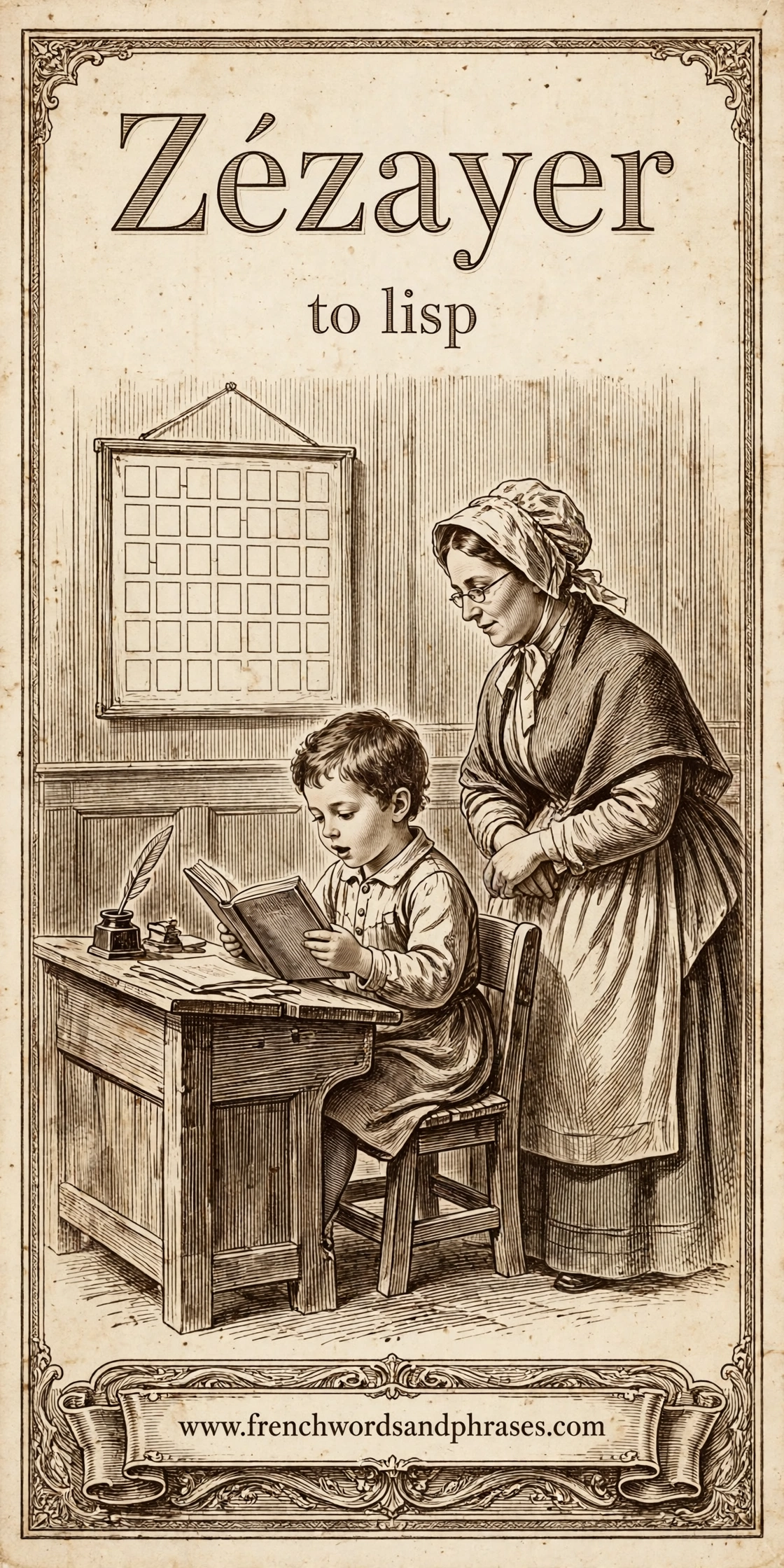
A little boy reads aloud in class, and his s sounds come out soft and thick: the sun, le soleil, sounds almost like le choleil. He is not doing it on purpose — he zézaye, he lisps. For most children it is a passing stage, and a few sessions with the speech therapist, l’orthophoniste, are enough to set the sounds straight.
In this guide, you’ll learn how to conjugate zézayer in all the major French tenses and moods. Explore complete conjugation tables, French examples, English translations, and practice quizzes.
Understanding the French Verb Zézayer
Zézayer is a regular French verb belonging to the first group of verbs, those ending in -er.
It means to lisp. It is commonly used for young children whose s and z sounds come out lispy, for the work of the orthophoniste, the speech therapist who corrects it, and sometimes, affectionately, for a slight lisp that an adult has kept.
Verb classification: First group (-er)
Auxiliary verb: Avoir
Past participle: zézayé
Present participle: zézayant
English equivalents: To lisp, to speak with a lisp.
One important detail: zézayer belongs to the -ayer family, where the y may change to i before a mute syllable. Both spellings are correct: je zézaie and je zézaye, je zézaierai and je zézayerai — exactly as with payer (je paie / je paye). The tables on this page use the i forms — je zézaie, tu zézaies, il zézaie, ils zézaient — but the y always stays where the ending is pronounced: nous zézayons, vous zézayez. It takes avoir as its auxiliary verb in compound tenses: il a zézayé (he lisped).
Experience the Word
Zézayer is more than a slip of the tongue. It is the sound of childhood itself — the soft, serious s of a five-year-old telling you a very important story.
Imagine a little girl reading her first book aloud, concentrating hard on every word. Her tongue sits a fraction too far forward, her s sounds slip sideways, and the whole room smiles without laughing.
You have not just misspoken. You have lisped — and charmed everyone listening.
How to Conjugate Zézayer: Complete French Conjugation Guide
Let’s explore every major conjugation of zézayer, beginning with the indicative mood.
How to Conjugate Zézayer in the Indicative Mood
The indicative mood is used to express facts, observations, actions, and events.
How to Conjugate Zézayer in the Present Tense (Présent)
Used for actions happening now, habitual actions, and general truths.
| Subject | Conjugation |
|---|---|
| je | zézaie |
| tu | zézaies |
| il / elle | zézaie |
| nous | zézayons |
| vous | zézayez |
| ils / elles | zézaient |
Example
Mon petit frère zézaie quand il prononce les s.
My little brother lisps when he pronounces the letter s.
Quick Quiz 1
Complete the sentence:
Nous ______ pendant la lecture.
Reveal the answer
zézayons
Nous zézayons pendant la lecture.
We are lisping during the reading.
How to Conjugate Zézayer in the Passé Composé
Used for completed actions in the past. Zézayer takes the auxiliary verb avoir.
| Subject | Conjugation |
|---|---|
| j’ | ai zézayé |
| tu | as zézayé |
| il / elle | a zézayé |
| nous | avons zézayé |
| vous | avez zézayé |
| ils / elles | ont zézayé |
Example
Elle a zézayé pendant toute son enfance.
She lisped throughout her childhood.
How to Conjugate Zézayer in the Imparfait (Imperfect Tense)
Used for habitual past actions, descriptions, and ongoing situations in the past.
| Subject | Conjugation |
|---|---|
| je | zézayais |
| tu | zézayais |
| il / elle | zézayait |
| nous | zézayions |
| vous | zézayiez |
| ils / elles | zézayaient |
Example
Quand il était petit, il zézayait sur les s et les z.
When he was little, he used to lisp on the s and z sounds.
Quick Quiz 2
Choose the correct form:
When we were little, we used to lisp at nursery school.
Quand nous étions petits, nous ______ à la maternelle.
Reveal the answer
zézayions
Quand nous étions petits, nous zézayions à la maternelle.
How to Conjugate Zézayer in the Plus-que-parfait
Used to describe an action that had already been completed before another past event.
| Subject | Conjugation |
|---|---|
| j’ | avais zézayé |
| tu | avais zézayé |
| il / elle | avait zézayé |
| nous | avions zézayé |
| vous | aviez zézayé |
| ils / elles | avaient zézayé |
Example
Il avait zézayé à l’école primaire, mais cela avait disparu au collège.
He had lisped at primary school, but it had disappeared by secondary school.
How to Conjugate Zézayer in the Passé Simple
Primarily used in formal writing, literature, and historical narratives. It is rarely used in everyday conversation.
| Subject | Conjugation |
|---|---|
| je | zézayai |
| tu | zézayas |
| il / elle | zézaya |
| nous | zézayâmes |
| vous | zézayâtes |
| ils / elles | zézayèrent |
Example
L’enfant zézaya pendant toute la lecture, sans se troubler.
The child lisped through the whole reading, without getting flustered.
How to Conjugate Zézayer in the Passé Antérieur
A literary tense used to express an action completed immediately before another past action, generally in the passé simple.
| Subject | Conjugation |
|---|---|
| j’ | eus zézayé |
| tu | eus zézayé |
| il / elle | eut zézayé |
| nous | eûmes zézayé |
| vous | eûtes zézayé |
| ils / elles | eurent zézayé |
Example
Dès qu’elle eut zézayé sa première phrase, la classe sourit.
As soon as she had lisped her first sentence, the class smiled.
How to Conjugate Zézayer in the Future Tense (Futur Simple)
Used to describe actions that will take place in the future.
| Subject | Conjugation |
|---|---|
| je | zézaierai |
| tu | zézaieras |
| il / elle | zézaiera |
| nous | zézaierons |
| vous | zézaierez |
| ils / elles | zézaieront |
Example
Avec quelques séances, tu ne zézaieras plus du tout.
With a few sessions, you will not lisp at all any more.
How to Conjugate Zézayer in the Futur Antérieur (Future Perfect)
Used for an action that will have been completed before a particular point in the future.
| Subject | Conjugation |
|---|---|
| j’ | aurai zézayé |
| tu | auras zézayé |
| il / elle | aura zézayé |
| nous | aurons zézayé |
| vous | aurez zézayé |
| ils / elles | auront zézayé |
Example
Bientôt, tu auras zézayé pour la dernière fois.
Soon, you will have lisped for the last time.
How to Conjugate Zézayer in the Near Future (Futur Proche)
Used to describe something that is going to happen soon. Formed with aller + infinitive.
| Subject | Conjugation |
|---|---|
| je | vais zézayer |
| tu | vas zézayer |
| il / elle | va zézayer |
| nous | allons zézayer |
| vous | allez zézayer |
| ils / elles | vont zézayer |
Example
Regarde, il va zézayer sur le mot saucisson.
Look, he is going to lisp on the word saucisson.
How to Conjugate Zézayer in the Conditional Mood
The conditional mood expresses what would happen under certain circumstances. It is also frequently used to make polite requests or express wishes.
How to Conjugate Zézayer in the Present Conditional
| Subject | Conjugation |
|---|---|
| je | zézaierais |
| tu | zézaierais |
| il / elle | zézaierait |
| nous | zézaierions |
| vous | zézaieriez |
| ils / elles | zézaieraient |
Example
Je zézaierais moins si je parlais plus lentement.
I would lisp less if I spoke more slowly.
How to Conjugate Zézayer in the Past Conditional
| Subject | Conjugation |
|---|---|
| j’ | aurais zézayé |
| tu | aurais zézayé |
| il / elle | aurait zézayé |
| nous | aurions zézayé |
| vous | auriez zézayé |
| ils / elles | auraient zézayé |
Example
Il aurait zézayé davantage s’il avait été fatigué.
He would have lisped more if he had been tired.
Zézayer in the Literary Past Conditional Form
This less common literary form uses the imperfect subjunctive of avoir.
| Subject | Conjugation |
|---|---|
| j’ | eusse zézayé |
| tu | eusses zézayé |
| il / elle | eût zézayé |
| nous | eussions zézayé |
| vous | eussiez zézayé |
| ils / elles | eussent zézayé |
Example
Elle eût zézayé devant la classe si on l’avait forcée à lire.
She would have lisped in front of the class if she had been forced to read.
How to Conjugate Zézayer in the Subjunctive Mood
The subjunctive is used to express wishes, emotions, doubts, necessity, and uncertainty. It frequently follows expressions such as il faut que (it is necessary that) or bien que (although).
How to Conjugate Zézayer in the Present Subjunctive
| Subject | Conjugation |
|---|---|
| que je | zézaie |
| que tu | zézaies |
| qu’il / qu’elle | zézaie |
| que nous | zézayions |
| que vous | zézayiez |
| qu’ils / qu’elles | zézaient |
Example
Il faut que tu zézaies moins fort pendant la pièce de théâtre.
You need to lisp less strongly during the school play.
Quick Quiz 3
Complete the sentence using the subjunctive:
Il faut que vous ______ moins fort.
Reveal the answer
zézayiez
Il faut que vous zézayiez moins fort.
You need to lisp less strongly.
How to Conjugate Zézayer in the Imperfect Subjunctive
A literary tense, rarely encountered in modern spoken French.
| Subject | Conjugation |
|---|---|
| que je | zézayasse |
| que tu | zézayasses |
| qu’il / qu’elle | zézayât |
| que nous | zézayassions |
| que vous | zézayassiez |
| qu’ils / qu’elles | zézayassent |
Example
La maîtresse ne voulait pas qu’il zézayât devant les parents.
The teacher did not want him to lisp in front of the parents.
How to Conjugate Zézayer in the Pluperfect Subjunctive
A literary construction used to express an action completed before another past action.
| Subject | Conjugation |
|---|---|
| que j’ | eusse zézayé |
| que tu | eusses zézayé |
| qu’il / qu’elle | eût zézayé |
| que nous | eussions zézayé |
| que vous | eussiez zézayé |
| qu’ils / qu’elles | eussent zézayé |
Example
Elle regrettait que nous eussions zézayé pendant le spectacle.
She regretted that we had lisped during the show.
How to Conjugate Zézayer in the Past Subjunctive
| Subject | Conjugation |
|---|---|
| que j’ | aie zézayé |
| que tu | aies zézayé |
| qu’il / qu’elle | ait zézayé |
| que nous | ayons zézayé |
| que vous | ayez zézayé |
| qu’ils / qu’elles | aient zézayé |
Example
Je suis content que tu aies zézayé de moins en moins ce mois-ci.
I am glad you have lisped less and less this month.
How to Conjugate Zézayer in the Imperative
The imperative is used to give commands, instructions, invitations, or suggestions. Subject pronouns are omitted.
How to Conjugate Zézayer in the Present Imperative
| Person | Conjugation |
|---|---|
| (tu) | zézaie |
| (nous) | zézayons |
| (vous) | zézayez |
Example
Zézaie un peu, pour nous faire rire !
Lisp a little, to make us laugh!
Quick Quiz 4
How would you say Lisp a little, using the tu form?
Reveal the answer
Zézaie un peu !
French Participles of Zézayer
Participles are verb forms that can be used in compound tenses and other grammatical constructions.
Present Participle of Zézayer
zézayant
En zézayant, il fait sourire toute la famille.
By lisping, he makes the whole family smile.
Past Participle of Zézayer
zézayé
L’acteur a zézayé exprès pour son rôle d’enfant.
The actor lisped on purpose for his role as a child.
Zézayer in Everyday French: Real-Life Examples
Now that you know the conjugations, let’s see how zézayer appears in everyday French.
Example 1 — Present
Mon fils zézaie sur les s.
My son lisps on the letter s.
Example 2 — Passé composé
Elle a zézayé jusqu’à l’âge de sept ans.
She lisped until the age of seven.
Example 3 — Imparfait
Nous zézayions tous un peu à la maternelle.
We all lisped a little at nursery school.
Example 4 — Future
Il zézaiera moins après les séances.
He will lisp less after the sessions.
Example 5 — Conditional
Tu zézaierais si tu étais fatigué ?
Would you lisp if you were tired?
Example 6 — Subjunctive
Bien qu’elle zézaie encore, elle lit très bien.
Although she still lisps, she reads very well.
Beyond Translation: The Meaning of Zézayer
Some French verbs are built out of the sound they name, and zézayer is one of them: say it slowly and you can hear the soft, buzzing z that replaces a clean s. The noun is le zézaiement, the lisp itself.
A verb that imitates its own meaning.
French keeps a small family of these speech words: zézayer for the lisp, bégayer for the stammer. To zézayer is rarely a fault in French ears — it is childhood speaking, and most children leave it behind with nothing more than time and a patient orthophoniste.
How to Remember the French Verb Zézayer
Remember it this way: Zézayer is about pronouncing s sounds with a lisp — with two correct spellings, zézaie or zézaye.
- You hear a small child say his s sounds softly — il zézaie.
- You visit the orthophoniste to practise your s and your z — tu zézaies de moins en moins.
- You read aloud and your tongue slips on a word — vous zézayez.
The key idea is pronouncing s sounds with a lisp — with two correct spellings, zézaie or zézaye.
Test Your Knowledge of Zézayer
Let’s see how much you’ve learned. Try answering these questions before revealing the answers.
Question 1
What auxiliary verb is used with zézayer in compound tenses?
Reveal the answer
Avoir
Question 2
How do you say I will lisp in French?
Reveal the answer
Je zézaierai.
Question 3
Translate: My son lisps on the letter s.
Reveal the answer
Mon fils zézaie sur les s.
Question 4
What is the past participle of zézayer?
Reveal the answer
Zézayé.
Question 5
Complete the sentence:
Si je parlais plus lentement, je ______ moins.
Reveal the answer
zézaierais
Si je parlais plus lentement, je zézaierais moins.
If I spoke more slowly, I would lisp less.
Your Final Challenge
Can You Use It?
How would you say this in French?
With the speech therapist, I will soon not lisp any more.
Reveal the answer
Avec l’orthophoniste, je ne zézaierai bientôt plus.
With the speech therapist, I will soon not lisp any more.
A little French. A little curiosity. A richer everyday life.
LEARN FRENCH ONE WORD AT A TIME




