A French Word to Live By
How to Conjugate Tronçonner in French
/tʁɔ̃.sɔ.ne/
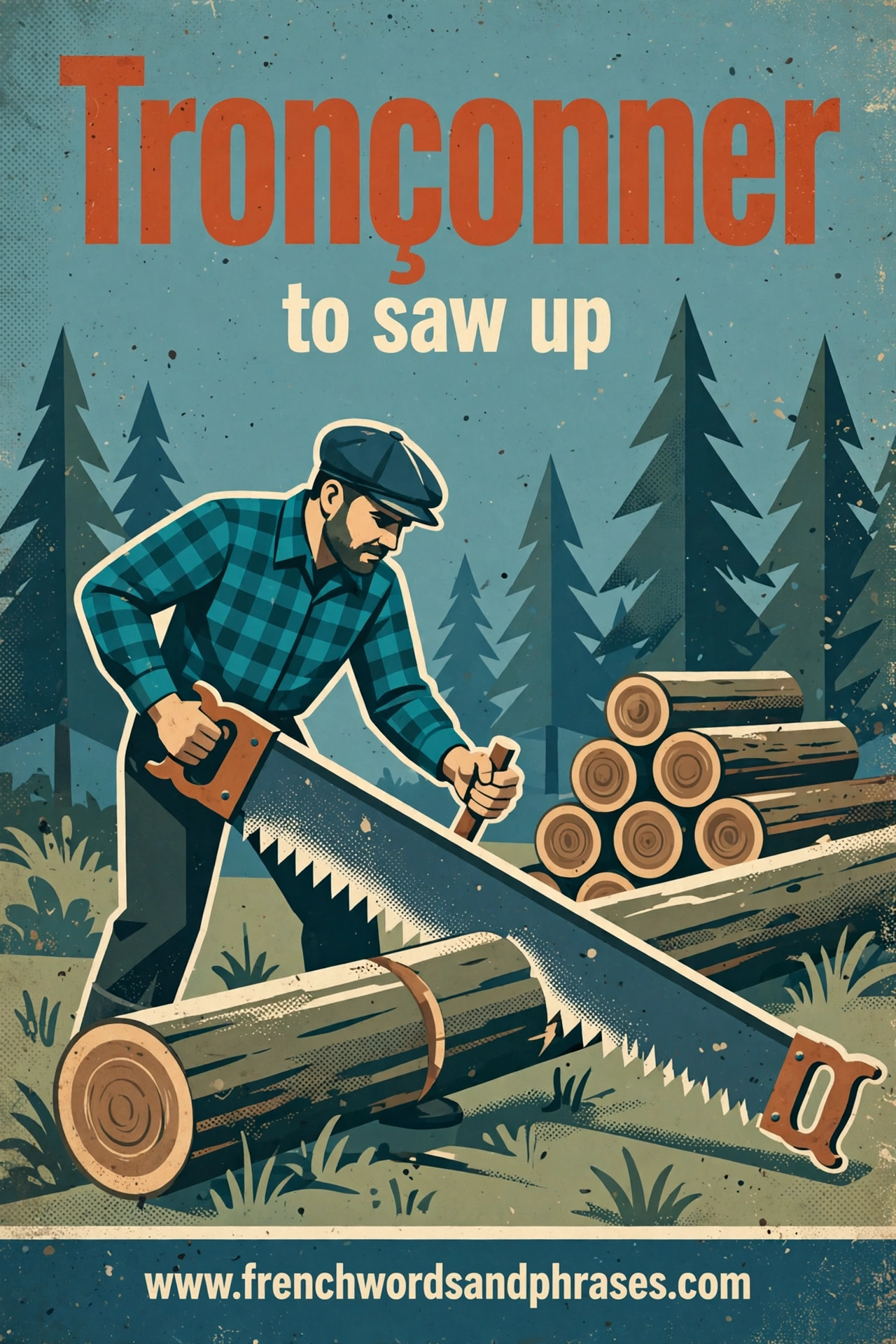
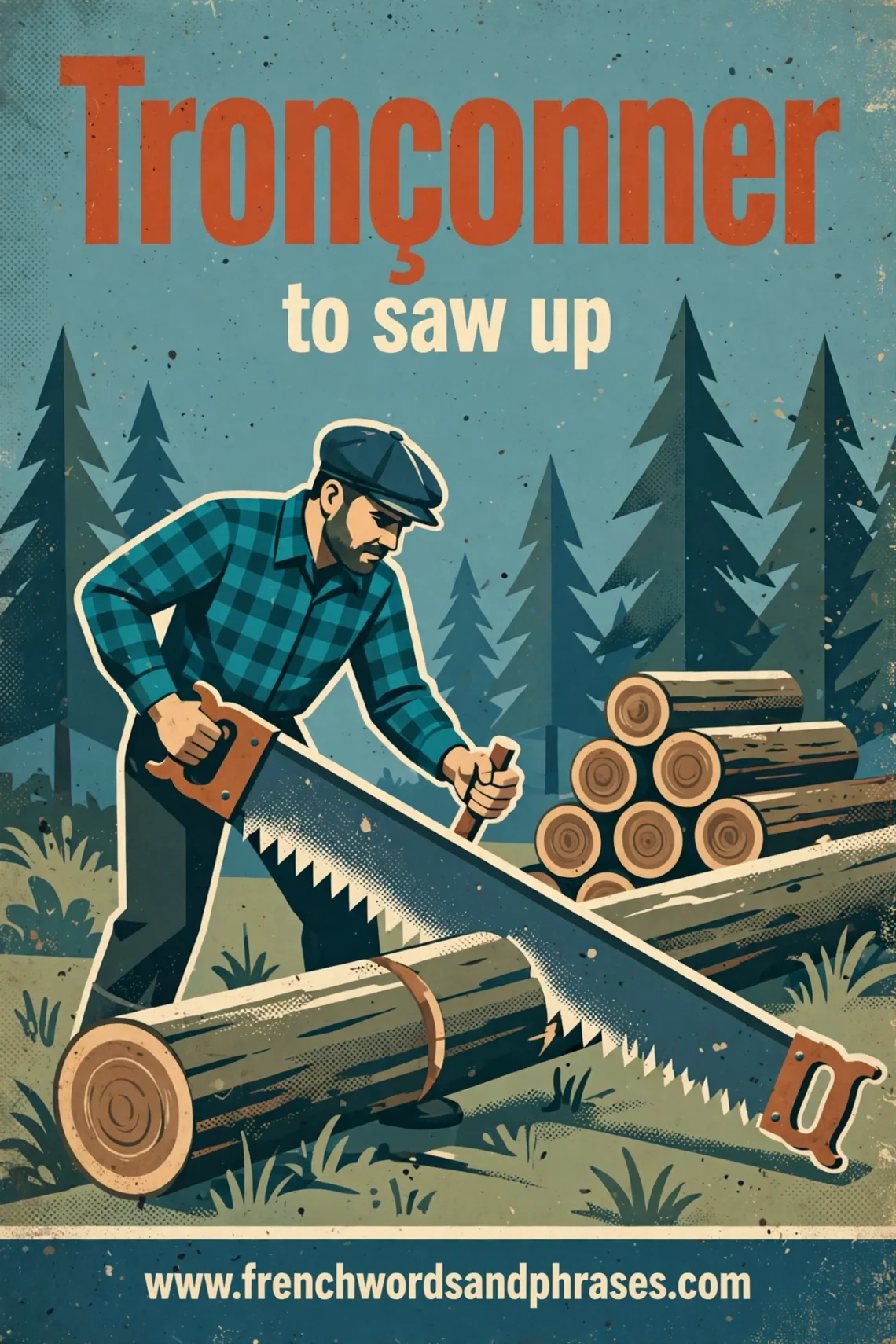
Tronçonner means to saw up — to cut a tree trunk or a log into sections, usually with a chainsaw.
The storm has thrown a great oak across the forest track, and the forester pulls the cord of his chainsaw: the engine snarls, sawdust flies, and tronçonner begins — the verb of cutting wood into honest lengths, ring by ring, log by log.
In this guide, you’ll learn how to conjugate tronçonner in all the major French tenses and moods. Explore complete conjugation tables, French examples, English translations, and practice quizzes.
Understanding the French Verb Tronçonner
Tronçonner is a regular French verb belonging to the first group of verbs, those ending in -er.
It means to saw up. It is commonly used by foresters, tree surgeons and anyone cutting firewood: sawing fallen trees into logs, cutting trunks into rounds for splitting, and clearing storm damage in woods, gardens and along country roads.
Verb classification: First group (-er)
Auxiliary verb: Avoir
Past participle: tronçonné
Present participle: tronçonnant
English equivalents: To saw up, to cut up into sections; tronçonner un tronc — to saw a trunk into logs; une tronçonneuse — a chainsaw; un tronçon — a section, a length, a stretch (of road or text).
One important detail: the cedilla never leaves. Tronçonner is built on un tronçon, a cut section, and the ç stays in every single form — je tronçonne, nous tronçonnons, je tronçonnais, tronçonnant, past participle tronçonné. The tool that does the work is just as famous: une tronçonneuse, the chainsaw, is the word every French DIY shopper learns first.
Experience the Word
Tronçonner is the verb of wood measured out in sections — a whole tree becoming a winter’s fuel, one cut at a time.
Imagine a farmyard in November. The fallen walnut tree lies where the storm left it, and the farmer works along the trunk with his chainsaw, tronçonnant, while his son stacks the rounds by the barn. By dusk the tree is a neat wall of future fires.
The giant is gone from the path. It has been sawn up — tronçonné — into logs that will warm the house all winter.
How to Conjugate Tronçonner: Complete French Conjugation Guide
Let’s explore every major conjugation of tronçonner, beginning with the indicative mood.
How to Conjugate Tronçonner in the Indicative Mood
The indicative mood is used to express facts, observations, actions, and events.
How to Conjugate Tronçonner in the Present Tense (Présent)
Used for actions happening now, habitual actions, and general truths.
| Subject | Conjugation |
|---|---|
| je | tronçonne |
| tu | tronçonnes |
| il / elle | tronçonne |
| nous | tronçonnons |
| vous | tronçonnez |
| ils / elles | tronçonnent |
Example
Le bûcheron tronçonne le chêne tombé pendant la tempête.
The woodcutter saws up the oak that fell during the storm.
Quick Quiz 1
Complete the sentence:
Nous ______ le tronc en rondins.
Reveal the answer
tronçonnons
Nous tronçonnons le tronc en rondins.
We saw the trunk up into rounds.
How to Conjugate Tronçonner in the Passé Composé
Used for completed actions in the past. Tronçonner takes the auxiliary verb avoir.
| Subject | Conjugation |
|---|---|
| j’ | ai tronçonné |
| tu | as tronçonné |
| il / elle | a tronçonné |
| nous | avons tronçonné |
| vous | avez tronçonné |
| ils / elles | ont tronçonné |
Example
Nous avons tronçonné le tronc en bûches de quarante centimètres.
We sawed the trunk up into forty-centimetre logs.
How to Conjugate Tronçonner in the Imparfait (Imperfect Tense)
Used for habitual past actions, descriptions, and ongoing situations in the past.
| Subject | Conjugation |
|---|---|
| je | tronçonnais |
| tu | tronçonnais |
| il / elle | tronçonnait |
| nous | tronçonnions |
| vous | tronçonniez |
| ils / elles | tronçonnaient |
Example
Chaque automne, il tronçonnait le bois de chauffage dans la cour de la ferme.
Every autumn, he used to saw up the firewood in the farmyard.
Quick Quiz 2
Choose the correct form:
He sawed up the branches this morning.
Il ______ les branches ce matin. (a tronçonné / est tronçonné)
Reveal the answer
a tronçonné
Il a tronçonné les branches ce matin.
Tronçonner takes avoir.
How to Conjugate Tronçonner in the Plus-que-parfait
Used to describe an action that had already been completed before another past event.
| Subject | Conjugation |
|---|---|
| j’ | avais tronçonné |
| tu | avais tronçonné |
| il / elle | avait tronçonné |
| nous | avions tronçonné |
| vous | aviez tronçonné |
| ils / elles | avaient tronçonné |
Example
Ils avaient tronçonné les grosses branches avant l’arrivée du camion.
They had sawn up the big branches before the lorry arrived.
How to Conjugate Tronçonner in the Passé Simple
Primarily used in formal writing, literature, and historical narratives. It is rarely used in everyday conversation.
| Subject | Conjugation |
|---|---|
| je | tronçonnai |
| tu | tronçonnas |
| il / elle | tronçonna |
| nous | tronçonnâmes |
| vous | tronçonnâtes |
| ils / elles | tronçonnèrent |
Example
Le forestier tronçonna trois pins avant la nuit.
The forester sawed up three pines before nightfall.
How to Conjugate Tronçonner in the Passé Antérieur
A literary tense used to express an action completed immediately before another past action, generally in the passé simple.
| Subject | Conjugation |
|---|---|
| j’ | eus tronçonné |
| tu | eus tronçonné |
| il / elle | eut tronçonné |
| nous | eûmes tronçonné |
| vous | eûtes tronçonné |
| ils / elles | eurent tronçonné |
Example
Quand il eut tronçonné le dernier tronc, il rangea sa tronçonneuse.
When he had sawn up the last trunk, he put his chainsaw away.
How to Conjugate Tronçonner in the Future Tense (Futur Simple)
Used to describe actions that will take place in the future.
| Subject | Conjugation |
|---|---|
| je | tronçonnerai |
| tu | tronçonneras |
| il / elle | tronçonnera |
| nous | tronçonnerons |
| vous | tronçonnerez |
| ils / elles | tronçonneront |
Example
Demain, nous tronçonnerons cet arbre mort avant qu’il ne tombe.
Tomorrow, we will saw up this dead tree before it falls.
How to Conjugate Tronçonner in the Futur Antérieur (Future Perfect)
Used for an action that will have been completed before a particular point in the future.
| Subject | Conjugation |
|---|---|
| j’ | aurai tronçonné |
| tu | auras tronçonné |
| il / elle | aura tronçonné |
| nous | aurons tronçonné |
| vous | aurez tronçonné |
| ils / elles | auront tronçonné |
Example
À midi, ils auront tronçonné tout le bois de la parcelle.
By noon, they will have sawn up all the wood on the plot.
How to Conjugate Tronçonner in the Near Future (Futur Proche)
Used to describe something that is going to happen soon. Formed with aller + infinitive.
| Subject | Conjugation |
|---|---|
| je | vais tronçonner |
| tu | vas tronçonner |
| il / elle | va tronçonner |
| nous | allons tronçonner |
| vous | allez tronçonner |
| ils / elles | vont tronçonner |
Example
Je vais tronçonner cette souche, écarte-toi un peu.
I am going to saw up this stump, stand back a little.
How to Conjugate Tronçonner in the Conditional Mood
The conditional mood expresses what would happen under certain circumstances. It is also frequently used to make polite requests or express wishes.
How to Conjugate Tronçonner in the Present Conditional
| Subject | Conjugation |
|---|---|
| je | tronçonnerais |
| tu | tronçonnerais |
| il / elle | tronçonnerait |
| nous | tronçonnerions |
| vous | tronçonneriez |
| ils / elles | tronçonneraient |
Example
Avec une tronçonneuse plus puissante, tu tronçonnerais ce tronc en dix minutes.
With a more powerful chainsaw, you would saw this trunk up in ten minutes.
How to Conjugate Tronçonner in the Past Conditional
| Subject | Conjugation |
|---|---|
| j’ | aurais tronçonné |
| tu | aurais tronçonné |
| il / elle | aurait tronçonné |
| nous | aurions tronçonné |
| vous | auriez tronçonné |
| ils / elles | auraient tronçonné |
Example
Il aurait tronçonné le bois si la chaîne n’avait pas cassé.
He would have sawn up the wood if the chain had not snapped.
Tronçonner in the Literary Past Conditional Form
This less common literary form uses the imperfect subjunctive of avoir.
| Subject | Conjugation |
|---|---|
| j’ | eusse tronçonné |
| tu | eusses tronçonné |
| il / elle | eût tronçonné |
| nous | eussions tronçonné |
| vous | eussiez tronçonné |
| ils / elles | eussent tronçonné |
Example
Le bûcheron eût tronçonné l’arbre avant l’orage.
The woodcutter would have sawn up the tree before the storm.
How to Conjugate Tronçonner in the Subjunctive Mood
The subjunctive is used to express wishes, emotions, doubts, necessity, and uncertainty. It frequently follows expressions such as il faut que (it is necessary that) or bien que (although).
How to Conjugate Tronçonner in the Present Subjunctive
| Subject | Conjugation |
|---|---|
| que je | tronçonne |
| que tu | tronçonnes |
| qu’il / qu’elle | tronçonne |
| que nous | tronçonnions |
| que vous | tronçonniez |
| qu’ils / qu’elles | tronçonnent |
Example
Il faut que vous tronçonniez ces branches avant le printemps.
You must saw up these branches before spring.
Quick Quiz 3
Complete the sentence using the subjunctive:
Il faut que tu ______ ce tronc avant la nuit.
Reveal the answer
tronçonnes
Il faut que tu tronçonnes ce tronc avant la nuit.
You must saw this trunk up before nightfall.
How to Conjugate Tronçonner in the Imperfect Subjunctive
A literary tense, rarely encountered in modern spoken French.
| Subject | Conjugation |
|---|---|
| que je | tronçonnasse |
| que tu | tronçonnasses |
| qu’il / qu’elle | tronçonnât |
| que nous | tronçonnassions |
| que vous | tronçonnassiez |
| qu’ils / qu’elles | tronçonnassent |
Example
Le garde forestier voulait que l’équipe tronçonnât les arbres malades.
The forest ranger wanted the team to saw up the diseased trees.
How to Conjugate Tronçonner in the Pluperfect Subjunctive
A literary construction used to express an action completed before another past action.
| Subject | Conjugation |
|---|---|
| que j’ | eusse tronçonné |
| que tu | eusses tronçonné |
| qu’il / qu’elle | eût tronçonné |
| que nous | eussions tronçonné |
| que vous | eussiez tronçonné |
| qu’ils / qu’elles | eussent tronçonné |
Example
On disait qu’ils eussent tronçonné le plus vieil arbre du parc.
People said they had sawn up the oldest tree in the park.
How to Conjugate Tronçonner in the Past Subjunctive
| Subject | Conjugation |
|---|---|
| que j’ | aie tronçonné |
| que tu | aies tronçonné |
| qu’il / qu’elle | ait tronçonné |
| que nous | ayons tronçonné |
| que vous | ayez tronçonné |
| qu’ils / qu’elles | aient tronçonné |
Example
Je suis content que tu aies tronçonné le bois avant l’hiver.
I am glad you sawed up the wood before winter.
How to Conjugate Tronçonner in the Imperative
The imperative is used to give commands, instructions, invitations, or suggestions. Subject pronouns are omitted.
How to Conjugate Tronçonner in the Present Imperative
| Person | Conjugation |
|---|---|
| (tu) | tronçonne |
| (nous) | tronçonnons |
| (vous) | tronçonnez |
Example
Tronçonne ce tronc en morceaux, mais attention à la chaîne !
Saw this trunk up into pieces, but mind the chain!
Quick Quiz 4
How would you say Saw this trunk up (tu form)?
Reveal the answer
Tronçonne ce tronc !
French Participles of Tronçonner
Participles are verb forms that can be used in compound tenses and other grammatical constructions.
Present Participle of Tronçonner
tronçonnant
En tronçonnant le chêne, il a découvert un nid dans le creux du tronc.
While sawing up the oak, he discovered a nest in the hollow of the trunk.
Past Participle of Tronçonner
tronçonné
Tronçonné en rondins, le bois séchera près de la grange.
Sawn up into rounds, the wood will dry near the barn.
Tronçonner in Everyday French: Real-Life Examples
Now that you know the conjugations, let’s see how tronçonner appears in everyday French.
Example 1 — Present
Le bûcheron tronçonne un vieux chêne.
The woodcutter saws up an old oak.
Example 2 — Passé composé
J’ai tronçonné les branches ce matin.
I sawed up the branches this morning.
Example 3 — Imparfait
Il tronçonnait le bois de chauffage chaque automne.
He used to saw up the firewood every autumn.
Example 4 — Future
Nous tronçonnerons l’arbre mort samedi.
We will saw up the dead tree on Saturday.
Example 5 — Conditional
Tu tronçonnerais plus vite avec une meilleure chaîne.
You would saw up faster with a better chain.
Example 6 — Imperative
Tronçonnez ce tronc en bûches !
Saw this trunk up into logs!
Beyond Translation: The Meaning of Tronçonner
English saws up and moves on; French tronçonner names the unit it produces — un tronçon, one cut section.
The word travels far beyond the forest.
A stretch of motorway is un tronçon d’autoroute, a section of a report is un tronçon du texte — French sees the world as long things cut into lengths, and this verb is the cutting.
How to Remember the French Verb Tronçonner
Remember it this way: Tronçonner is about the chainsaw biting along the trunk, turning one tree into a stack of winter logs.
- Un tronçon is one cut section; tronçonner is to cut a trunk into tronçons.
- The ç never leaves: je tronçonne, nous tronçonnons, tronçonné.
- The tool is une tronçonneuse — the chainsaw; regular -er with avoir: j’ai tronçonné le tronc.
The key idea is the chainsaw biting along the trunk, turning one tree into a stack of winter logs.
Test Your Knowledge of Tronçonner
Let’s see how much you’ve learned. Try answering these questions before revealing the answers.
Question 1
How do you say to saw a trunk up into logs in French?
Reveal the answer
Tronçonner un tronc en bûches.
Question 2
How do you say The woodcutter saws up the oak in French?
Reveal the answer
Le bûcheron tronçonne le chêne.
Question 3
Translate: We sawed the trunk up into logs.
Reveal the answer
Nous avons tronçonné le tronc en bûches.
Question 4
What is a chainsaw in French?
Reveal the answer
Une tronçonneuse.
Question 5
Complete the sentence:
Il faut que vous ______ ces branches avant le printemps.
Reveal the answer
tronçonniez
Il faut que vous tronçonniez ces branches avant le printemps.
You must saw up these branches before spring.
Your Final Challenge
Can You Use It?
How would you say this in French?
The woodcutter saws up the old oak, and the logs pile up for winter.
Reveal the answer
Le bûcheron tronçonne le vieux chêne, et les bûches s’empilent pour l’hiver.
The woodcutter saws up the old oak, and the logs pile up for winter.
A little French. A little curiosity. A richer everyday life.
LEARN FRENCH ONE WORD AT A TIME