A French Word to Live By
How to Conjugate Tracter in French
/tʁak.te/
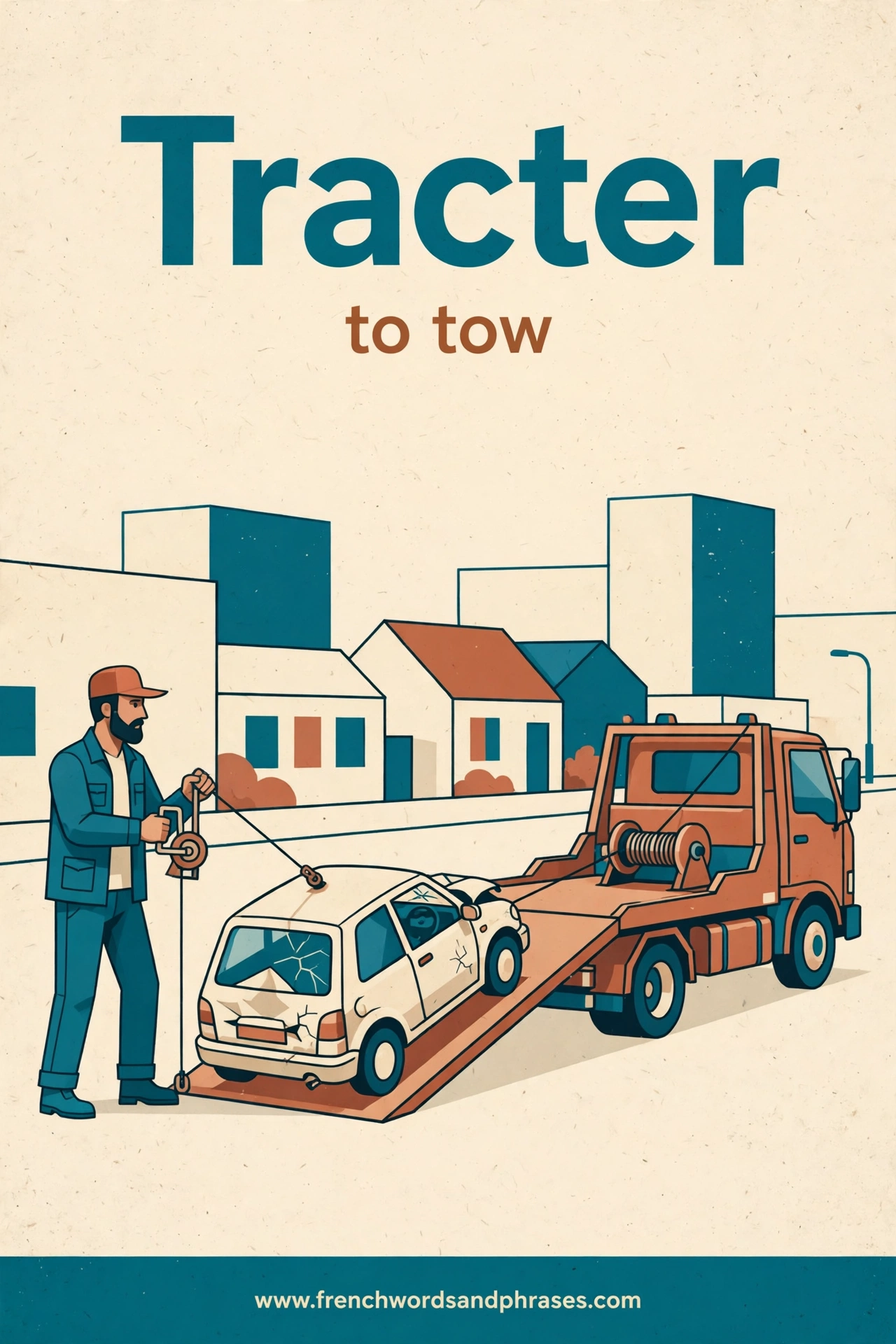
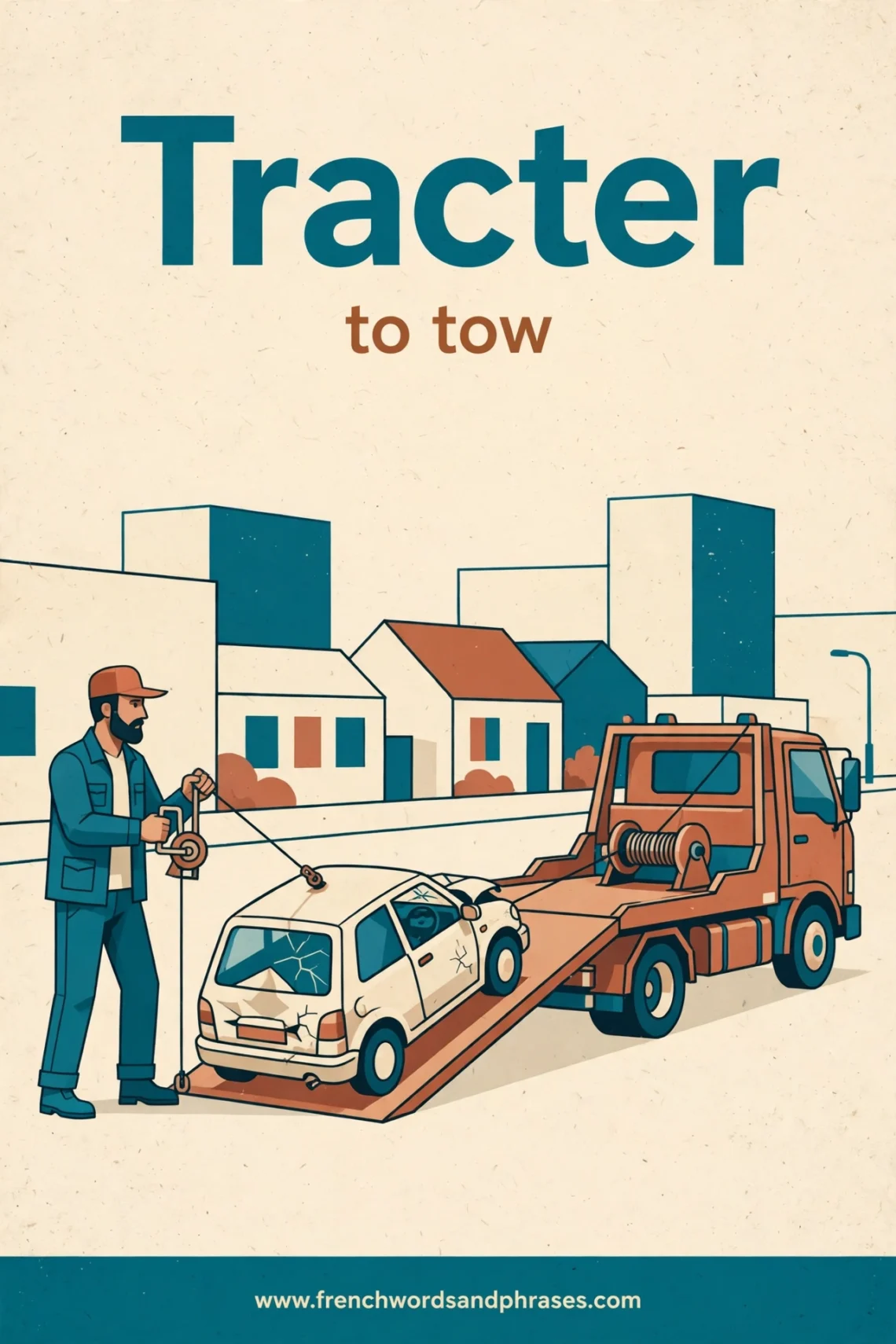
Tracter means to tow — to pull a trailer, a caravan or another load along behind a vehicle.
The tow hitch clicks, the safety chain goes on, and the little caravan sways gently into line behind the car: tracter is the verb of the summer departure, of tractors in fields and locomotives at the head of long trains — power in front, load behind.
In this guide, you’ll learn how to conjugate tracter in all the major French tenses and moods. Explore complete conjugation tables, French examples, English translations, and practice quizzes.
Understanding the French Verb Tracter
Tracter is a regular French verb belonging to the first group of verbs, those ending in -er.
It means to tow. It is commonly used for towing trailers, caravans and agricultural machinery, for locomotives and tractors hauling their loads, in driving-test questions about towing weights, and — in election season — for volunteers leafleting in the street.
Verb classification: First group (-er)
Auxiliary verb: Avoir
Past participle: tracté
Present participle: tractant
English equivalents: To tow, to haul; tracter une remorque — to tow a trailer; tracter une caravane — to tow a caravan; un tracteur — a tractor; une traction — traction; also, in politics, tracter — to hand out leaflets.
One important detail: tracter comes from the Latin trahere, to pull, and the whole family still pulls together — un tracteur (a tractor), la traction (traction, pulling power), even English tractor and traction. For a broken-down car, everyday French usually reaches for remorquer and its dépanneuse (tow truck); tracter is the word for trailers and caravans, and the technical word everywhere else. Surprise second sense: in French politics, tracter means to hand out des tracts — leaflets — at markets and station exits.
Experience the Word
Tracter is the verb of honest pulling — engine in front, burden behind, everything connected.
Imagine the first Saturday of the summer holidays. The caravan is loaded, the mirrors are fitted, and the family car tracte its little house on wheels down the motorway, slowly, in the right-hand lane, towards the sea.
The load does not disappear; it follows, swaying gently. That is tracter — taking your burdens with you.
How to Conjugate Tracter: Complete French Conjugation Guide
Let’s explore every major conjugation of tracter, beginning with the indicative mood.
How to Conjugate Tracter in the Indicative Mood
The indicative mood is used to express facts, observations, actions, and events.
How to Conjugate Tracter in the Present Tense (Présent)
Used for actions happening now, habitual actions, and general truths.
| Subject | Conjugation |
|---|---|
| je | tracte |
| tu | tractes |
| il / elle | tracte |
| nous | tractons |
| vous | tractez |
| ils / elles | tractent |
Example
Le tracteur tracte une lourde remorque.
The tractor tows a heavy trailer.
Quick Quiz 1
Complete the sentence:
Nous ______ la remorque samedi. (tracter, future)
Reveal the answer
tracterons
Nous tracterons la remorque samedi.
We will tow the trailer on Saturday.
How to Conjugate Tracter in the Passé Composé
Used for completed actions in the past. Tracter takes the auxiliary verb avoir.
| Subject | Conjugation |
|---|---|
| j’ | ai tracté |
| tu | as tracté |
| il / elle | a tracté |
| nous | avons tracté |
| vous | avez tracté |
| ils / elles | ont tracté |
Example
Nous avons tracté la caravane jusqu’au camping.
We towed the caravan to the campsite.
How to Conjugate Tracter in the Imparfait (Imperfect Tense)
Used for habitual past actions, descriptions, and ongoing situations in the past.
| Subject | Conjugation |
|---|---|
| je | tractais |
| tu | tractais |
| il / elle | tractait |
| nous | tractions |
| vous | tractiez |
| ils / elles | tractaient |
Example
Autrefois, les chevaux tractaient les péniches le long du canal.
In the old days, horses used to tow the barges along the canal.
Quick Quiz 2
Choose the correct form:
They towed the caravan to Brittany.
Ils ______ la caravane jusqu’en Bretagne. (ont tracté / sont tractés)
Reveal the answer
ont tracté
Ils ont tracté la caravane jusqu’en Bretagne.
Tracter takes avoir.
How to Conjugate Tracter in the Plus-que-parfait
Used to describe an action that had already been completed before another past event.
| Subject | Conjugation |
|---|---|
| j’ | avais tracté |
| tu | avais tracté |
| il / elle | avait tracté |
| nous | avions tracté |
| vous | aviez tracté |
| ils / elles | avaient tracté |
Example
Il avait tracté la remorque jusqu’à la ferme.
He had towed the trailer to the farm.
How to Conjugate Tracter in the Passé Simple
Primarily used in formal writing, literature, and historical narratives. It is rarely used in everyday conversation.
| Subject | Conjugation |
|---|---|
| je | tractai |
| tu | tractas |
| il / elle | tracta |
| nous | tractâmes |
| vous | tractâtes |
| ils / elles | tractèrent |
Example
La locomotive tracta le train de marchandises.
The locomotive hauled the freight train.
How to Conjugate Tracter in the Passé Antérieur
A literary tense used to express an action completed immediately before another past action, generally in the passé simple.
| Subject | Conjugation |
|---|---|
| j’ | eus tracté |
| tu | eus tracté |
| il / elle | eut tracté |
| nous | eûmes tracté |
| vous | eûtes tracté |
| ils / elles | eurent tracté |
Example
Quand il eut tracté la caravane en haut de la côte, il souffla enfin.
When he had towed the caravan to the top of the hill, he finally caught his breath.
How to Conjugate Tracter in the Future Tense (Futur Simple)
Used to describe actions that will take place in the future.
| Subject | Conjugation |
|---|---|
| je | tracterai |
| tu | tracteras |
| il / elle | tractera |
| nous | tracterons |
| vous | tracterez |
| ils / elles | tracteront |
Example
Demain, je tracterai la remorque de déménagement.
Tomorrow, I will tow the moving trailer.
How to Conjugate Tracter in the Futur Antérieur (Future Perfect)
Used for an action that will have been completed before a particular point in the future.
| Subject | Conjugation |
|---|---|
| j’ | aurai tracté |
| tu | auras tracté |
| il / elle | aura tracté |
| nous | aurons tracté |
| vous | aurez tracté |
| ils / elles | auront tracté |
Example
À midi, ils auront tracté toutes les caravanes sur le terrain.
By noon, they will have towed all the caravans onto the field.
How to Conjugate Tracter in the Near Future (Futur Proche)
Used to describe something that is going to happen soon. Formed with aller + infinitive.
| Subject | Conjugation |
|---|---|
| je | vais tracter |
| tu | vas tracter |
| il / elle | va tracter |
| nous | allons tracter |
| vous | allez tracter |
| ils / elles | vont tracter |
Example
Attention, le camion va tracter la voiture en panne.
Careful, the truck is going to tow the broken-down car.
How to Conjugate Tracter in the Conditional Mood
The conditional mood expresses what would happen under certain circumstances. It is also frequently used to make polite requests or express wishes.
How to Conjugate Tracter in the Present Conditional
| Subject | Conjugation |
|---|---|
| je | tracterais |
| tu | tracterais |
| il / elle | tracterait |
| nous | tracterions |
| vous | tracteriez |
| ils / elles | tracteraient |
Example
Avec un moteur plus puissant, tu tracterais cette remorque facilement.
With a more powerful engine, you would tow this trailer easily.
How to Conjugate Tracter in the Past Conditional
| Subject | Conjugation |
|---|---|
| j’ | aurais tracté |
| tu | aurais tracté |
| il / elle | aurait tracté |
| nous | aurions tracté |
| vous | auriez tracté |
| ils / elles | auraient tracté |
Example
Il aurait tracté la caravane si la route avait été moins raide.
He would have towed the caravan if the road had been less steep.
Tracter in the Literary Past Conditional Form
This less common literary form uses the imperfect subjunctive of avoir.
| Subject | Conjugation |
|---|---|
| j’ | eusse tracté |
| tu | eusses tracté |
| il / elle | eût tracté |
| nous | eussions tracté |
| vous | eussiez tracté |
| ils / elles | eussent tracté |
Example
Le cheval eût tracté la charrette jusqu’au village.
The horse would have hauled the cart to the village.
How to Conjugate Tracter in the Subjunctive Mood
The subjunctive is used to express wishes, emotions, doubts, necessity, and uncertainty. It frequently follows expressions such as il faut que (it is necessary that) or bien que (although).
How to Conjugate Tracter in the Present Subjunctive
| Subject | Conjugation |
|---|---|
| que je | tracte |
| que tu | tractes |
| qu’il / qu’elle | tracte |
| que nous | tractions |
| que vous | tractiez |
| qu’ils / qu’elles | tractent |
Example
Il faut que vous tractiez la remorque lentement.
You must tow the trailer slowly.
Quick Quiz 3
Complete the sentence using the subjunctive:
Je doutais qu’il ______ une si lourde charge.
Reveal the answer
tractât
Je doutais qu’il tractât une si lourde charge.
I doubted he could tow such a heavy load.
How to Conjugate Tracter in the Imperfect Subjunctive
A literary tense, rarely encountered in modern spoken French.
| Subject | Conjugation |
|---|---|
| que je | tractasse |
| que tu | tractasses |
| qu’il / qu’elle | tractât |
| que nous | tractassions |
| que vous | tractassiez |
| qu’ils / qu’elles | tractassent |
Example
Je doutais qu’il tractât une si lourde charge.
I doubted he could tow such a heavy load.
How to Conjugate Tracter in the Pluperfect Subjunctive
A literary construction used to express an action completed before another past action.
| Subject | Conjugation |
|---|---|
| que j’ | eusse tracté |
| que tu | eusses tracté |
| qu’il / qu’elle | eût tracté |
| que nous | eussions tracté |
| que vous | eussiez tracté |
| qu’ils / qu’elles | eussent tracté |
Example
On s’étonnait qu’ils eussent tracté la péniche à la force des bras.
People were amazed that they had hauled the barge by sheer strength of arm.
How to Conjugate Tracter in the Past Subjunctive
| Subject | Conjugation |
|---|---|
| que j’ | aie tracté |
| que tu | aies tracté |
| qu’il / qu’elle | ait tracté |
| que nous | ayons tracté |
| que vous | ayez tracté |
| qu’ils / qu’elles | aient tracté |
Example
Je suis content que tu aies tracté la remorque sans incident.
I am glad you towed the trailer without incident.
How to Conjugate Tracter in the Imperative
The imperative is used to give commands, instructions, invitations, or suggestions. Subject pronouns are omitted.
How to Conjugate Tracter in the Present Imperative
| Person | Conjugation |
|---|---|
| (tu) | tracte |
| (nous) | tractons |
| (vous) | tractez |
Example
Tracte la remorque doucement, la route est étroite !
Tow the trailer gently, the road is narrow!
Quick Quiz 4
How would you say Tow slowly on the bends (vous form)?
Reveal the answer
Tractez lentement dans les virages !
French Participles of Tracter
Participles are verb forms that can be used in compound tenses and other grammatical constructions.
Present Participle of Tracter
tractant
En tractant sa caravane, il chantait à tue-tête.
While towing his caravan, he was singing at the top of his voice.
Past Participle of Tracter
tracté
Tractée par un vieux tracteur, la remorque a traversé tout le village.
Towed by an old tractor, the trailer crossed the whole village.
Tracter in Everyday French: Real-Life Examples
Now that you know the conjugations, let’s see how tracter appears in everyday French.
Example 1 — Present
Notre voiture tracte une petite remorque.
Our car tows a small trailer.
Example 2 — Passé composé
Ils ont tracté la caravane jusqu’en Bretagne.
They towed the caravan all the way to Brittany.
Example 3 — Imparfait
Les bœufs tractaient la charrue.
The oxen used to pull the plough.
Example 4 — Future
Nous tracterons la remorque samedi.
We will tow the trailer on Saturday.
Example 5 — Conditional
Je tracterais bien une caravane, mais je n’ai pas d’attelage.
I would gladly tow a caravan, but I have no tow hitch.
Example 6 — Imperative
Tractez lentement dans les virages !
Tow slowly on the bends!
Beyond Translation: The Meaning of Tracter
English tow and French tracter overlap, but French splits the work: remorquer rescues the broken-down car, while tracter is the planned, hitched-up pulling of trailers and loads.
And then there are the leaflets.
Come election time, the same verb sends volunteers into the streets: tracter, to hand out des tracts. Pulling a caravan or pushing a leaflet — in French, both are tracter, and context does the rest.
How to Remember the French Verb Tracter
Remember it this way: Tracter is about power at the front, load at the back — the caravan behind the car.
- Tracter — to tow a trailer or caravan; remorquer — to tow away a broken-down car.
- Family of pulling: un tracteur (a tractor), la traction (traction) — and a leaflet is un tract.
- Regular -er: je tracte, nous tractons, past participle tracté.
The key idea is power at the front, load at the back — the caravan behind the car.
Test Your Knowledge of Tracter
Let’s see how much you’ve learned. Try answering these questions before revealing the answers.
Question 1
How do you say to tow a caravan in French?
Reveal the answer
Tracter une caravane.
Question 2
How do you say We towed the trailer to the farm in French?
Reveal the answer
Nous avons tracté la remorque jusqu’à la ferme.
Question 3
Translate: The tractor tows a heavy trailer.
Reveal the answer
Le tracteur tracte une lourde remorque.
Question 4
What is the past participle of tracter?
Reveal the answer
Tracté.
Question 5
Complete the sentence:
Il faut que vous ______ la remorque lentement.
Reveal the answer
tractiez
Il faut que vous tractiez la remorque lentement.
You must tow the trailer slowly.
Your Final Challenge
Can You Use It?
How would you say this in French?
Every summer, they tow their caravan down to the sea, slowly and singing.
Reveal the answer
Chaque été, ils tractent leur caravane jusqu’à la mer, lentement et en chantant.
Every summer, they tow their caravan down to the sea, slowly and singing.
A little French. A little curiosity. A richer everyday life.
LEARN FRENCH ONE WORD AT A TIME