How to Conjugate Se parler in French
/sə paʁ.le/
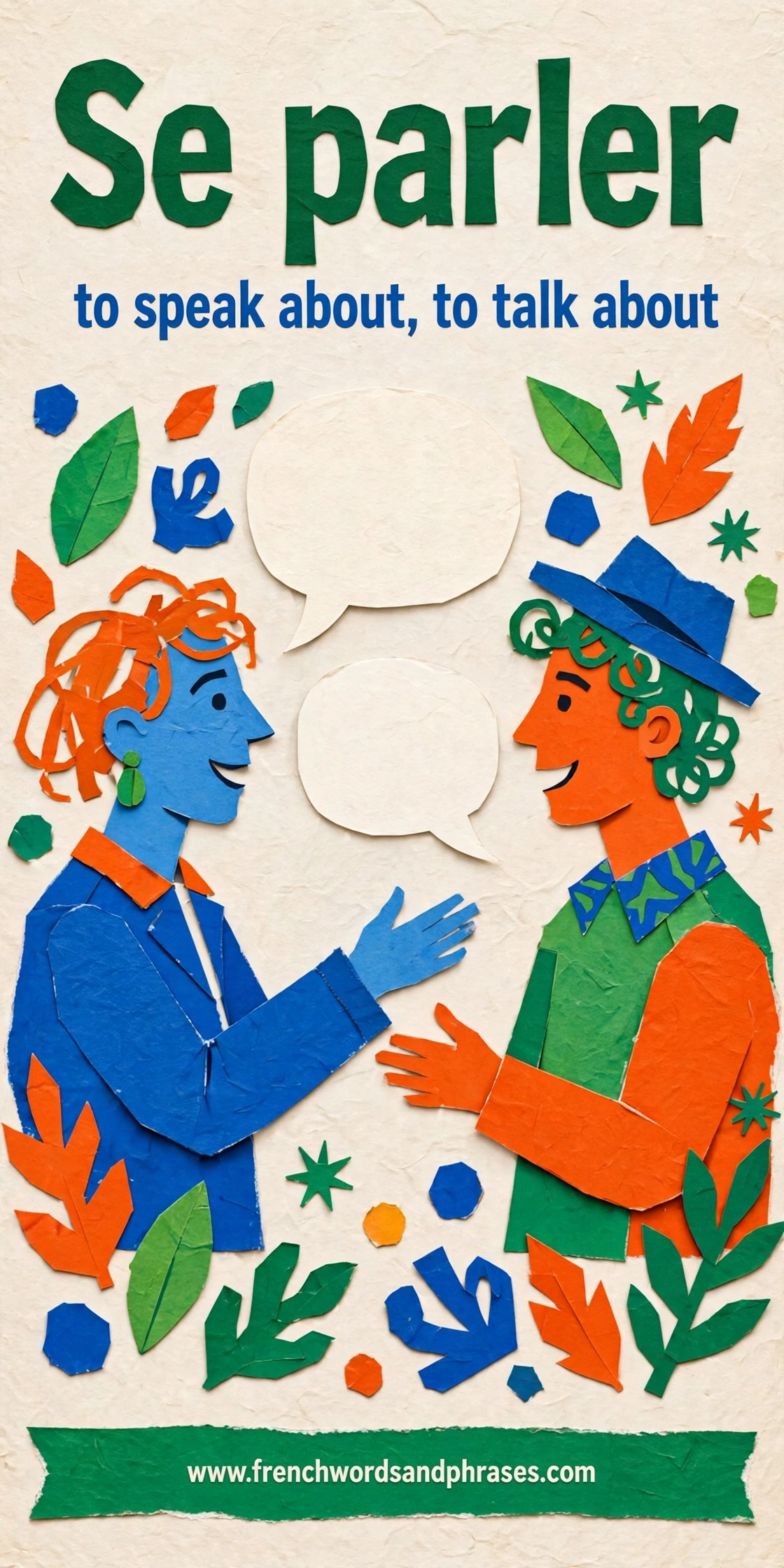
Se parler means to speak about, to talk about — two people talking to each other, the words flowing in both directions.
Two brothers who have not exchanged a word since a family quarrel, two neighbours leaning on the garden fence, two delegates in a corridor — se parler is the verb of conversation between people: speaking to each other, about something, face to face or down a wire.
In this guide, you’ll learn how to conjugate se parler in all the major French tenses and moods. Explore complete conjugation tables, French examples, English translations, and practice quizzes.
Understanding the French Verb Se parler
Se parler is a regular French verb belonging to the first group of verbs, those ending in -er.
It means to speak about, to talk about. It covers every kind of mutual talk, from the warm (se parler chaque jour, to talk every day) to the frozen (se parler à peine, to barely be speaking), and it is the standard verb for reconciliation scenes: after a quarrel, the moment people se parlent again, the story can move on.
Verb classification: First group (-er), reflexive
Auxiliary verb: Être
Past participle: parlé
Present participle: parlant
English equivalents: To speak to each other, to talk to one another; se parler de quelque chose — to talk to each other about something; se parler au téléphone — to speak on the phone; ne plus se parler — to no longer be on speaking terms; se parler à peine — to barely speak to each other.
One important detail: se parler is the reciprocal use of parler — to speak to each other — and because parler takes an indirect object (parler à quelqu’un), the reflexive pronoun is indirect too. The result surprises learners: in compound tenses the past participle does not agree — elles se sont parlé, never parlées. The topic of the conversation is introduced by de: ils se sont parlé de leurs projets. And when the talking stops for good, French says it with a negation: ils ne se parlent plus — they are not on speaking terms.
Experience the Word
Se parler is the verb of the two-way street — one voice is only half of it.
Imagine two brothers at a family wedding, seated at opposite ends of the table. They have not spoken since the inheritance. By dessert, an uncle has manoeuvred them side by side; by coffee, ils se parlent — stiffly at first, then about the harvest, then, quietly, about everything.
Nothing has been settled, not yet. But they are speaking to each other — ils se parlent — and that is where settlements begin.
How to Conjugate Se parler: Complete French Conjugation Guide
Let’s explore every major conjugation of se parler, beginning with the indicative mood.
How to Conjugate Se parler in the Indicative Mood
The indicative mood is used to express facts, observations, actions, and events.
How to Conjugate Se parler in the Present Tense (Présent)
Used for actions happening now, habitual actions, and general truths.
| Subject | Conjugation |
|---|---|
| je | me parle |
| tu | te parles |
| il / elle | se parle |
| nous | nous parlons |
| vous | vous parlez |
| ils / elles | se parlent |
Depuis leur dispute, les deux frères se parlent à peine.
Since their argument, the two brothers barely speak to each other.
Complete the sentence:
Nous nous ______ chaque matin au bureau.
Reveal the answer
parlons
Nous nous parlons chaque matin au bureau.
We speak to each other every morning at the office.
How to Conjugate Se parler in the Passé Composé
Used for completed actions in the past. Se parler takes the auxiliary verb être.
| Subject | Conjugation |
|---|---|
| je | me suis parlé / me suis parlée |
| tu | t’es parlé / t’es parlée |
| il / elle | s’est parlé / s’est parlée |
| nous | nous sommes parlés / nous sommes parlées |
| vous | vous êtes parlés / vous êtes parlées / vous êtes parlé / vous êtes parlée |
| ils / elles | se sont parlés / se sont parlées |
Après des mois de silence, elles se sont parlé au téléphone.
After months of silence, they spoke to each other on the phone.
How to Conjugate Se parler in the Imparfait (Imperfect Tense)
Used for habitual past actions, descriptions, and ongoing situations in the past.
| Subject | Conjugation |
|---|---|
| je | me parlais |
| tu | te parlais |
| il / elle | se parlait |
| nous | nous parlions |
| vous | vous parliez |
| ils / elles | se parlaient |
Autrefois, les voisins se parlaient par-dessus la haie.
In the old days, the neighbours used to talk to each other over the hedge.
Choose the correct form:
They spoke to each other on the phone.
Elles ______ au téléphone. (se sont parlé / se sont parlées)
Reveal the answer
se sont parlé
Elles se sont parlé au téléphone.
Parler takes an indirect object (parler à), so the participle does not agree.
How to Conjugate Se parler in the Plus-que-parfait
Used to describe an action that had already been completed before another past event.
| Subject | Conjugation |
|---|---|
| je | m’étais parlé / m’étais parlée |
| tu | t’étais parlé / t’étais parlée |
| il / elle | s’était parlé / s’était parlée |
| nous | nous étions parlés / nous étions parlées |
| vous | vous étiez parlés / vous étiez parlées / vous étiez parlé / vous étiez parlée |
| ils / elles | s’étaient parlés / s’étaient parlées |
Ils s’étaient parlé la veille pour préparer la réunion.
They had spoken to each other the day before to prepare the meeting.
How to Conjugate Se parler in the Passé Simple
Primarily used in formal writing, literature, and historical narratives. It is rarely used in everyday conversation.
| Subject | Conjugation |
|---|---|
| je | me parlai |
| tu | te parlas |
| il / elle | se parla |
| nous | nous parlâmes |
| vous | vous parlâtes |
| ils / elles | se parlèrent |
À la fin du banquet, les deux rivaux se parlèrent enfin calmement.
At the end of the banquet, the two rivals finally spoke to each other calmly.
How to Conjugate Se parler in the Passé Antérieur
A literary tense used to express an action completed immediately before another past action, generally in the passé simple.
| Subject | Conjugation |
|---|---|
| je | me fus parlé / me fus parlée |
| tu | te fus parlé / te fus parlée |
| il / elle | se fut parlé / se fut parlée |
| nous | nous fûmes parlés / nous fûmes parlées |
| vous | vous fûtes parlés / vous fûtes parlées / vous fûtes parlé / vous fûtes parlée |
| ils / elles | se furent parlés / se furent parlées |
Quand ils se furent parlé, la tension tomba aussitôt.
When they had spoken to each other, the tension dropped at once.
How to Conjugate Se parler in the Future Tense (Futur Simple)
Used to describe actions that will take place in the future.
| Subject | Conjugation |
|---|---|
| je | me parlerai |
| tu | te parleras |
| il / elle | se parlera |
| nous | nous parlerons |
| vous | vous parlerez |
| ils / elles | se parleront |
Demain, les délégués se parleront en tête-à-tête.
Tomorrow, the delegates will speak to each other in private.
How to Conjugate Se parler in the Futur Antérieur (Future Perfect)
Used for an action that will have been completed before a particular point in the future.
| Subject | Conjugation |
|---|---|
| je | me serai parlé / me serai parlée |
| tu | te seras parlé / te seras parlée |
| il / elle | se sera parlé / se sera parlée |
| nous | nous serons parlés / nous serons parlées |
| vous | vous serez parlés / vous serez parlées / vous serez parlé / vous serez parlée |
| ils / elles | se seront parlés / se seront parlées |
À midi, les deux associés se seront déjà parlé deux fois.
By noon, the two partners will already have spoken to each other twice.
How to Conjugate Se parler in the Near Future (Futur Proche)
Used to describe something that is going to happen soon. Formed with aller + infinitive.
| Subject | Conjugation |
|---|---|
| je | vais me parler |
| tu | vas te parler |
| il / elle | va se parler |
| nous | allons nous parler |
| vous | allez vous parler |
| ils / elles | vont se parler |
Regarde-les : ils vont enfin se parler.
Look at them: they are finally going to speak to each other.
How to Conjugate Se parler in the Conditional Mood
The conditional mood expresses what would happen under certain circumstances. It is also frequently used to make polite requests or express wishes.
How to Conjugate Se parler in the Present Conditional
| Subject | Conjugation |
|---|---|
| je | me parlerais |
| tu | te parlerais |
| il / elle | se parlerait |
| nous | nous parlerions |
| vous | vous parleriez |
| ils / elles | se parleraient |
Sans ce malentendu, ils se parleraient encore tous les jours.
Without this misunderstanding, they would still speak to each other every day.
How to Conjugate Se parler in the Past Conditional
| Subject | Conjugation |
|---|---|
| je | me serais parlé / me serais parlée |
| tu | te serais parlé / te serais parlée |
| il / elle | se serait parlé / se serait parlée |
| nous | nous serions parlés / nous serions parlées |
| vous | vous seriez parlés / vous seriez parlées / vous seriez parlé / vous seriez parlée |
| ils / elles | se seraient parlés / se seraient parlées |
Ils se seraient parlé plus tôt si le courrier était arrivé.
They would have spoken to each other sooner if the letter had arrived.
Se parler in the Literary Past Conditional Form
This less common literary form uses the imperfect subjunctive of être.
| Subject | Conjugation |
|---|---|
| je | me fusse parlé / me fusse parlée |
| tu | te fusses parlé / te fusses parlée |
| il / elle | se fût parlé / se fût parlée |
| nous | nous fussions parlés / nous fussions parlées |
| vous | vous fussiez parlés / vous fussiez parlées / vous fussiez parlé / vous fussiez parlée |
| ils / elles | se fussent parlés / se fussent parlées |
Elles se fussent parlé dès le premier jour sans cette vieille rancune.
They would have spoken to each other from the first day, without that old grudge.
How to Conjugate Se parler in the Subjunctive Mood
The subjunctive is used to express wishes, emotions, doubts, necessity, and uncertainty. It frequently follows expressions such as il faut que (it is necessary that) or bien que (although).
How to Conjugate Se parler in the Present Subjunctive
| Subject | Conjugation |
|---|---|
| que je | me parle |
| que tu | te parles |
| qu’il / qu’elle | se parle |
| que nous | nous parlions |
| que vous | vous parliez |
| qu’ils / qu’elles | se parlent |
Il faut que les deux parties se parlent directement.
The two sides must speak to each other directly.
Complete the sentence using the subjunctive:
Il faut que vous vous ______ avant de décider.
Reveal the answer
parliez
Il faut que vous vous parliez avant de décider.
You must speak to each other before deciding.
How to Conjugate Se parler in the Imperfect Subjunctive
A literary tense, rarely encountered in modern spoken French.
| Subject | Conjugation |
|---|---|
| que je | me parlasse |
| que tu | te parlasses |
| qu’il / qu’elle | se parlât |
| que nous | nous parlassions |
| que vous | vous parlassiez |
| qu’ils / qu’elles | se parlassent |
Il était important que les frères se parlassent avant l’héritage.
It was important that the brothers speak to each other before the inheritance.
How to Conjugate Se parler in the Pluperfect Subjunctive
A literary construction used to express an action completed before another past action.
| Subject | Conjugation |
|---|---|
| que je | me fusse parlé / me fusse parlée |
| que tu | te fusses parlé / te fusses parlée |
| qu’il / qu’elle | se fût parlé / se fût parlée |
| que nous | nous fussions parlés / nous fussions parlées |
| que vous | vous fussiez parlés / vous fussiez parlées / vous fussiez parlé / vous fussiez parlée |
| qu’ils / qu’elles | se fussent parlés / se fussent parlées |
On doutait qu’ils se fussent parlé depuis l’accident.
People doubted that they had spoken to each other since the accident.
How to Conjugate Se parler in the Past Subjunctive
| Subject | Conjugation |
|---|---|
| que je | me sois parlé / me sois parlée |
| que tu | te sois parlé / te sois parlée |
| qu’il / qu’elle | se soit parlé / se soit parlée |
| que nous | nous soyons parlés / nous soyons parlées |
| que vous | vous soyez parlés / vous soyez parlées / vous soyez parlé / vous soyez parlée |
| qu’ils / qu’elles | se soient parlés / se soient parlées |
Je suis heureux que vous vous soyez parlé franchement.
I am glad you spoke to each other frankly.
How to Conjugate Se parler in the Imperative
The imperative is used to give commands, instructions, invitations, or suggestions. Subject pronouns are omitted.
How to Conjugate Se parler in the Present Imperative
| Person | Conjugation |
|---|---|
| (tu) | parle-toi |
| (nous) | parlons-nous |
| (vous) | parlez-vous |
Parlez-vous franchement, une bonne fois !
Speak to each other frankly, once and for all!
How would you say Speak to each other frankly (tu form)?
Reveal the answer
Parlez-vous franchement !
French Participles of Se parler
Participles are verb forms that can be used in compound tenses and other grammatical constructions.
Present Participle of Se parler
parlant
En se parlant chaque matin, les collègues évitent les malentendus.
By speaking to each other every morning, the colleagues avoid misunderstandings.
Past Participle of Se parler
parlé
S’étant parlé toute la soirée, les deux frères sont partis apaisés.
Having spoken to each other all evening, the two brothers left feeling calmer.
Se parler in Everyday French: Real-Life Examples
Now that you know the conjugations, let’s see how se parler appears in everyday French.
Les deux frères se parlent à peine.
The two brothers barely speak to each other.
Elles se sont parlé au téléphone hier soir.
They spoke to each other on the phone last night.
Les voisins se parlaient par-dessus la haie.
The neighbours used to talk over the hedge.
Les délégués se parleront demain.
The delegates will speak to each other tomorrow.
Sans ce malentendu, ils se parleraient encore.
Without this misunderstanding, they would still be speaking to each other.
Parlez-vous franchement !
Speak to each other frankly!
Beyond Translation: The Meaning of Se parler
French marks the difference between talking and talking to each other with two small words: se turns parler into a bridge.
And the bridge can be cut.
Ils ne se parlent plus — they no longer speak to each other — is one of the saddest sentences in the language, and se reparler, to start speaking again, one of the most hopeful: half of French family drama lives between those two phrases.
How to Remember the French Verb Se parler
Remember it this way: Se parler is about two brothers at the wedding table, talking again at last.
- Reciprocal: se parler = to speak to EACH OTHER — je me parle would be talking to yourself, which is a different joke.
- No agreement in the passé composé: elles se sont parlé — the pronoun is indirect (parler à quelqu’un).
- Not on speaking terms: ils ne se parlent plus; the topic takes de: se parler de leurs projets.
The key idea is two brothers at the wedding table, talking again at last.
Test Your Knowledge of Se parler
Let’s see how much you’ve learned. Try answering these questions before revealing the answers.
Why does the participle stay parlé in Elles se sont parlé ?
Reveal the answer
Because the reflexive pronoun is indirect — one speaks à someone (parler à quelqu’un), so there is no agreement: elles se sont parlé.
How do you say The two brothers barely speak to each other in French?
Reveal the answer
Les deux frères se parlent à peine.
Translate: They are no longer on speaking terms.
Reveal the answer
Ils ne se parlent plus.
What is the past participle of se parler?
Reveal the answer
Parlé — and it never agrees in this reciprocal use: ils se sont parlé.
Complete the sentence:
Il faut que les deux parties se ______ directement.
Reveal the answer
parlent
Il faut que les deux parties se parlent directement.
The two sides must speak to each other directly.
Can You Use It?
How would you say this in French?
After ten years of silence, the two brothers are finally speaking to each other — first about the weather, then about everything else.
Reveal the answer
Après dix ans de silence, les deux frères se parlent enfin — d’abord du temps, puis de tout le reste.
After ten years of silence, the two brothers are finally speaking to each other — first about the weather, then about everything else.
LEARN FRENCH ONE WORD AT A TIME