How to Conjugate Se paillarder in French
/sə pa.jaʁ.de/
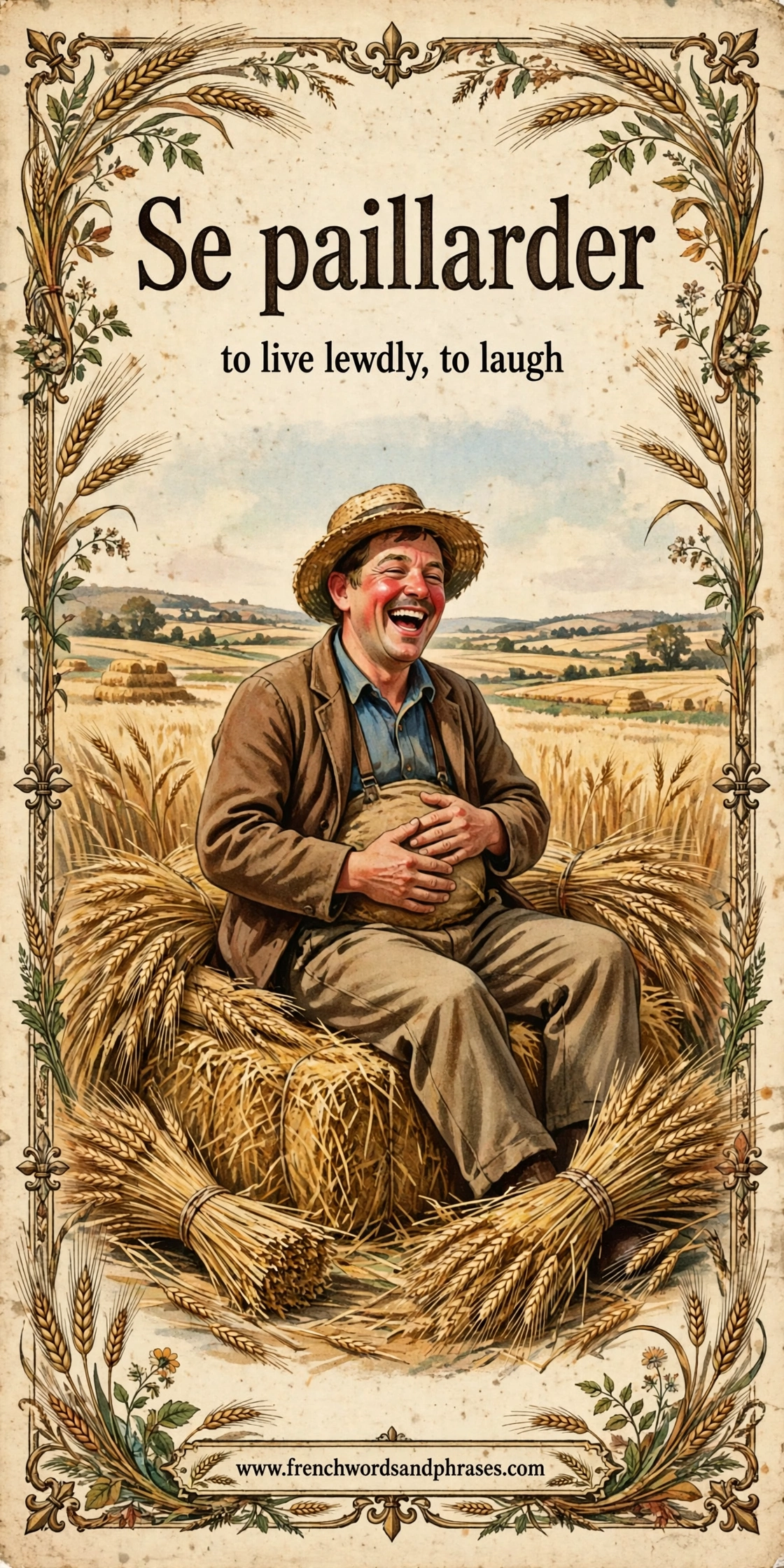
Se paillarder means to live lewdly, to laugh — to abandon yourself to bawdy merrymaking, body and soul in the revel.
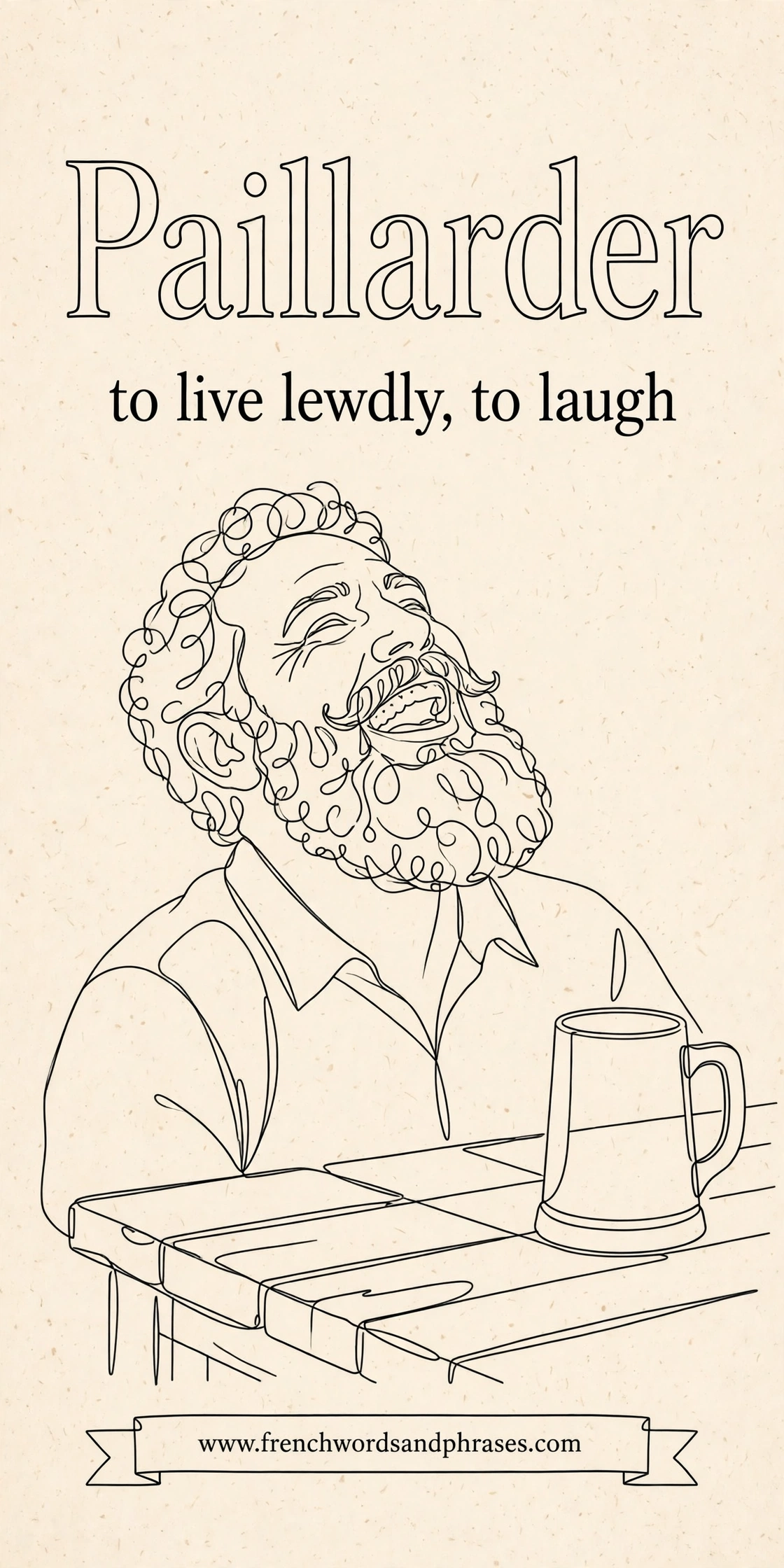
The same tavern, seen from inside the crowd: nobody here is watching the party, everybody is the party. Se paillarder is the reflexive twin of paillarder — the revellers do not just make the noise, they throw themselves into it, roistering together until the candles drown.
In this guide, you’ll learn how to conjugate se paillarder in all the major French tenses and moods. Explore complete conjugation tables, French examples, English translations, and practice quizzes.
Understanding the French Verb Se paillarder
Se paillarder is a regular French verb belonging to the first group of verbs, those ending in -er.
It means to live lewdly, to laugh. The reflexive turns the scene inward: paillarder describes the dissolute life from outside, se paillarder puts the subject in the middle of the revel, enjoying it. Both are vieilli and jocular today — you will find them in Rabelais-flavoured prose, historical novels and playful exaggeration rather than in a police report.
Verb classification: First group (-er), reflexive
Auxiliary verb: Être
Past participle: paillardé
Present participle: paillardant
English equivalents: To abandon oneself to lewd merrymaking, to roister together; se paillarder au cabaret — to carouse together in the tavern; se paillarder toute la nuit — to revel all night long; une chanson paillarde — a bawdy song; un rire paillard — a lewd, roaring laugh.
One important detail: se paillarder shares the old, familiar register of paillarder — a word of taverns and period novels, while its adjective (paillard, paillarde) is still everyday French. Being reflexive, it takes être in compound tenses and the participle agrees with the revellers: ils se sont paillardés, elles se sont paillardées. Underneath, a perfectly regular -er: je me paillarde, nous nous paillardons, with the pronoun tucked behind in the imperative: paillarde-toi !
Experience the Word
Se paillarder is the verb of the reveller, not the spectator — you do not watch this party, you are in it up to the elbows.
Imagine the harvest festival in a village of old France. The tables are cleared, the fiddler climbs onto a barrel, and the whole square — grandfathers included — se paillarde in songs and dances that the curé pretends not to hear.
Dignity will return on Monday. Tonight they are revelling — paillardés ensemble — and the whole village is in it.
How to Conjugate Se paillarder: Complete French Conjugation Guide
Let’s explore every major conjugation of se paillarder, beginning with the indicative mood.
How to Conjugate Se paillarder in the Indicative Mood
The indicative mood is used to express facts, observations, actions, and events.
How to Conjugate Se paillarder in the Present Tense (Présent)
Used for actions happening now, habitual actions, and general truths.
| Subject | Conjugation |
|---|---|
| je | me paillarde |
| tu | te paillardes |
| il / elle | se paillarde |
| nous | nous paillardons |
| vous | vous paillardez |
| ils / elles | se paillardent |
Les étudiants se paillardent dans les tavernes du vieux quartier.
The students revel in the taverns of the old quarter.
Complete the sentence:
Nous nous ______ dans les tavernes du vieux quartier.
Reveal the answer
paillardons
Nous nous paillardons dans les tavernes du vieux quartier.
We revel in the taverns of the old quarter.
How to Conjugate Se paillarder in the Passé Composé
Used for completed actions in the past. Se paillarder takes the auxiliary verb être.
| Subject | Conjugation |
|---|---|
| je | me suis paillardé / me suis paillardée |
| tu | t’es paillardé / t’es paillardée |
| il / elle | s’est paillardé / s’est paillardée |
| nous | nous sommes paillardés / nous sommes paillardées |
| vous | vous êtes paillardés / vous êtes paillardées / vous êtes paillardé / vous êtes paillardée |
| ils / elles | se sont paillardés / se sont paillardées |
Ils se sont paillardés toute la nuit après l’examen.
They revelled all night after the exam.
How to Conjugate Se paillarder in the Imparfait (Imperfect Tense)
Used for habitual past actions, descriptions, and ongoing situations in the past.
| Subject | Conjugation |
|---|---|
| je | me paillardais |
| tu | te paillardais |
| il / elle | se paillardait |
| nous | nous paillardions |
| vous | vous paillardiez |
| ils / elles | se paillardaient |
Autrefois, les marins se paillardaient à chaque escale.
In the old days, sailors used to carouse at every port of call.
Choose the correct form:
They revelled all night.
Ils ______ toute la nuit. (se sont paillardés / ont paillardé)
Reveal the answer
se sont paillardés
Ils se sont paillardés toute la nuit.
Se paillarder is reflexive and takes être.
How to Conjugate Se paillarder in the Plus-que-parfait
Used to describe an action that had already been completed before another past event.
| Subject | Conjugation |
|---|---|
| je | m’étais paillardé / m’étais paillardée |
| tu | t’étais paillardé / t’étais paillardée |
| il / elle | s’était paillardé / s’était paillardée |
| nous | nous étions paillardés / nous étions paillardées |
| vous | vous étiez paillardés / vous étiez paillardées / vous étiez paillardé / vous étiez paillardée |
| ils / elles | s’étaient paillardés / s’étaient paillardées |
Ils s’étaient paillardés jusqu’à l’aube avant de reprendre la mer.
They had revelled until dawn before putting back to sea.
How to Conjugate Se paillarder in the Passé Simple
Primarily used in formal writing, literature, and historical narratives. It is rarely used in everyday conversation.
| Subject | Conjugation |
|---|---|
| je | me paillardai |
| tu | te paillardas |
| il / elle | se paillarda |
| nous | nous paillardâmes |
| vous | vous paillardâtes |
| ils / elles | se paillardèrent |
La bande se paillarda bruyamment au cabaret.
The gang revelled noisily in the tavern.
How to Conjugate Se paillarder in the Passé Antérieur
A literary tense used to express an action completed immediately before another past action, generally in the passé simple.
| Subject | Conjugation |
|---|---|
| je | me fus paillardé / me fus paillardée |
| tu | te fus paillardé / te fus paillardée |
| il / elle | se fut paillardé / se fut paillardée |
| nous | nous fûmes paillardés / nous fûmes paillardées |
| vous | vous fûtes paillardés / vous fûtes paillardées / vous fûtes paillardé / vous fûtes paillardée |
| ils / elles | se furent paillardés / se furent paillardées |
Quand la troupe se fut paillardée toute la nuit, elle rentra au camp.
When the troop had revelled all night, it went back to camp.
How to Conjugate Se paillarder in the Future Tense (Futur Simple)
Used to describe actions that will take place in the future.
| Subject | Conjugation |
|---|---|
| je | me paillarderai |
| tu | te paillarderas |
| il / elle | se paillardera |
| nous | nous paillarderons |
| vous | vous paillarderez |
| ils / elles | se paillarderont |
Ce soir, ils se paillarderont comme au bon vieux temps.
Tonight, they will revel as in the good old days.
How to Conjugate Se paillarder in the Futur Antérieur (Future Perfect)
Used for an action that will have been completed before a particular point in the future.
| Subject | Conjugation |
|---|---|
| je | me serai paillardé / me serai paillardée |
| tu | te seras paillardé / te seras paillardée |
| il / elle | se sera paillardé / se sera paillardée |
| nous | nous serons paillardés / nous serons paillardées |
| vous | vous serez paillardés / vous serez paillardées / vous serez paillardé / vous serez paillardée |
| ils / elles | se seront paillardés / se seront paillardées |
Au matin, ils se seront paillardés toute la nuit.
By morning, they will have revelled all night.
How to Conjugate Se paillarder in the Near Future (Futur Proche)
Used to describe something that is going to happen soon. Formed with aller + infinitive.
| Subject | Conjugation |
|---|---|
| je | vais me paillarder |
| tu | vas te paillarder |
| il / elle | va se paillarder |
| nous | allons nous paillarder |
| vous | allez vous paillarder |
| ils / elles | vont se paillarder |
Allez, on va se paillarder un peu pour fêter ça !
Come on, let us go and revel a little to celebrate!
How to Conjugate Se paillarder in the Conditional Mood
The conditional mood expresses what would happen under certain circumstances. It is also frequently used to make polite requests or express wishes.
How to Conjugate Se paillarder in the Present Conditional
| Subject | Conjugation |
|---|---|
| je | me paillarderais |
| tu | te paillarderais |
| il / elle | se paillarderait |
| nous | nous paillarderions |
| vous | vous paillarderiez |
| ils / elles | se paillarderaient |
Ils se paillarderaient chaque soir sans le travail du lendemain.
They would revel every evening if not for work the next day.
How to Conjugate Se paillarder in the Past Conditional
| Subject | Conjugation |
|---|---|
| je | me serais paillardé / me serais paillardée |
| tu | te serais paillardé / te serais paillardée |
| il / elle | se serait paillardé / se serait paillardée |
| nous | nous serions paillardés / nous serions paillardées |
| vous | vous seriez paillardés / vous seriez paillardées / vous seriez paillardé / vous seriez paillardée |
| ils / elles | se seraient paillardés / se seraient paillardées |
Elle se serait paillardée avec la bande sans sa fatigue.
She would have revelled with the gang if she had not been so tired.
Se paillarder in the Literary Past Conditional Form
This less common literary form uses the imperfect subjunctive of être.
| Subject | Conjugation |
|---|---|
| je | me fusse paillardé / me fusse paillardée |
| tu | te fusses paillardé / te fusses paillardée |
| il / elle | se fût paillardé / se fût paillardée |
| nous | nous fussions paillardés / nous fussions paillardées |
| vous | vous fussiez paillardés / vous fussiez paillardées / vous fussiez paillardé / vous fussiez paillardée |
| ils / elles | se fussent paillardés / se fussent paillardées |
Ils se fussent paillardés jusqu’au jour sans la patrouille.
They would have revelled until daylight without the patrol.
How to Conjugate Se paillarder in the Subjunctive Mood
The subjunctive is used to express wishes, emotions, doubts, necessity, and uncertainty. It frequently follows expressions such as il faut que (it is necessary that) or bien que (although).
How to Conjugate Se paillarder in the Present Subjunctive
| Subject | Conjugation |
|---|---|
| que je | me paillarde |
| que tu | te paillardes |
| qu’il / qu’elle | se paillarde |
| que nous | nous paillardions |
| que vous | vous paillardiez |
| qu’ils / qu’elles | se paillardent |
Je préfère que vous ne vous paillardiez pas ici.
I would rather you did not revel here.
Complete the sentence using the subjunctive:
On craint que les soldats se ______ en ville.
Reveal the answer
paillardent
On craint que les soldats se paillardent en ville.
People fear the soldiers might go revelling in town.
How to Conjugate Se paillarder in the Imperfect Subjunctive
A literary tense, rarely encountered in modern spoken French.
| Subject | Conjugation |
|---|---|
| que je | me paillardasse |
| que tu | te paillardasses |
| qu’il / qu’elle | se paillardât |
| que nous | nous paillardassions |
| que vous | vous paillardassiez |
| qu’ils / qu’elles | se paillardassent |
On craignait que les soldats se paillardassent en ville.
People feared the soldiers might go revelling in town.
How to Conjugate Se paillarder in the Pluperfect Subjunctive
A literary construction used to express an action completed before another past action.
| Subject | Conjugation |
|---|---|
| que je | me fusse paillardé / me fusse paillardée |
| que tu | te fusses paillardé / te fusses paillardée |
| qu’il / qu’elle | se fût paillardé / se fût paillardée |
| que nous | nous fussions paillardés / nous fussions paillardées |
| que vous | vous fussiez paillardés / vous fussiez paillardées / vous fussiez paillardé / vous fussiez paillardée |
| qu’ils / qu’elles | se fussent paillardés / se fussent paillardées |
On disait qu’ils se fussent paillardés des nuits entières.
It was said they had revelled for whole nights on end.
How to Conjugate Se paillarder in the Past Subjunctive
| Subject | Conjugation |
|---|---|
| que je | me sois paillardé / me sois paillardée |
| que tu | te sois paillardé / te sois paillardée |
| qu’il / qu’elle | se soit paillardé / se soit paillardée |
| que nous | nous soyons paillardés / nous soyons paillardées |
| que vous | vous soyez paillardés / vous soyez paillardées / vous soyez paillardé / vous soyez paillardée |
| qu’ils / qu’elles | se soient paillardés / se soient paillardées |
Je suis surpris qu’ils se soient paillardés si tard.
I am surprised they revelled so late.
How to Conjugate Se paillarder in the Imperative
The imperative is used to give commands, instructions, invitations, or suggestions. Subject pronouns are omitted.
How to Conjugate Se paillarder in the Present Imperative
| Person | Conjugation |
|---|---|
| (tu) | paillarde-toi |
| (nous) | paillardons-nous |
| (vous) | paillardez-vous |
Ne vous paillardez pas sous mes fenêtres !
Do not go revelling beneath my windows!
How would you say Go and revel a little (tu form)?
Reveal the answer
Paillarde-toi un peu !
French Participles of Se paillarder
Participles are verb forms that can be used in compound tenses and other grammatical constructions.
Present Participle of Se paillarder
paillardant
En se paillardant au cabaret, ils ont manqué le dernier train.
While revelling in the tavern, they missed the last train.
Past Participle of Se paillarder
paillardé
Paillardés jusqu’à l’aube, les compagnons dormaient encore à midi.
After revelling until dawn, the companions were still asleep at noon.
Se paillarder in Everyday French: Real-Life Examples
Now that you know the conjugations, let’s see how se paillarder appears in everyday French.
Les étudiants se paillardent dans les tavernes.
The students revel in the taverns.
Ils se sont paillardés toute la nuit.
They revelled all night.
Les marins se paillardaient à chaque escale.
The sailors used to carouse at every port.
Ils se paillarderont comme au bon vieux temps.
They will revel as in the good old days.
Ils se paillarderaient chaque soir sans le travail.
They would revel every evening if not for work.
Ne vous paillardez pas sous mes fenêtres !
Do not go revelling beneath my windows!
Beyond Translation: The Meaning of Se paillarder
Like its twin paillarder, se paillarder grows out of la paille, straw — the pallet of the poor man’s bed, and the merry, lewd life that was lived around it.
The reflexive adds the grin.
Paillarder can sound like a moralist’s accusation; se paillarder is told from inside the laughter — the revellers’ own word for their night. And when the noise stops, French keeps the evidence in the adjective: une chanson paillarde is still being sung, somewhere, tonight.
How to Remember the French Verb Se paillarder
Remember it this way: Se paillarder is about the whole square in the revel — nobody watching, everybody in it.
- Always reflexive with être: ils se sont paillardés — the participle agrees with the revellers.
- Old, jocular register: a word for period taverns and playful exaggeration; the adjective paillard is the everyday survivor.
- Regular -er underneath: je me paillarde, nous nous paillardons, past participle paillardé.
The key idea is the whole square in the revel — nobody watching, everybody in it.
Test Your Knowledge of Se paillarder
Let’s see how much you’ve learned. Try answering these questions before revealing the answers.
Which auxiliary does se paillarder use, and why?
Reveal the answer
Être — it is a reflexive verb: ils se sont paillardés toute la nuit.
How do you say They revelled all night in French?
Reveal the answer
Ils se sont paillardés toute la nuit.
Translate: The sailors used to carouse at every port of call.
Reveal the answer
Les marins se paillardaient à chaque escale.
What is the past participle of se paillarder?
Reveal the answer
Paillardé — agreeing: paillardés, paillardées.
Complete the sentence:
Je préfère que vous ne vous ______ pas ici.
Reveal the answer
paillardiez
Je préfère que vous ne vous paillardiez pas ici.
I would rather you did not revel here.
Can You Use It?
How would you say this in French?
They have been revelling in the tavern since sunset, and nobody is thinking of going home.
Reveal the answer
Ils se paillardent au cabaret depuis le coucher du soleil, et personne ne songe à rentrer.
They have been revelling in the tavern since sunset, and nobody is thinking of going home.
LEARN FRENCH ONE WORD AT A TIME