How to Conjugate Paillarder in French
/pa.jaʁ.de/
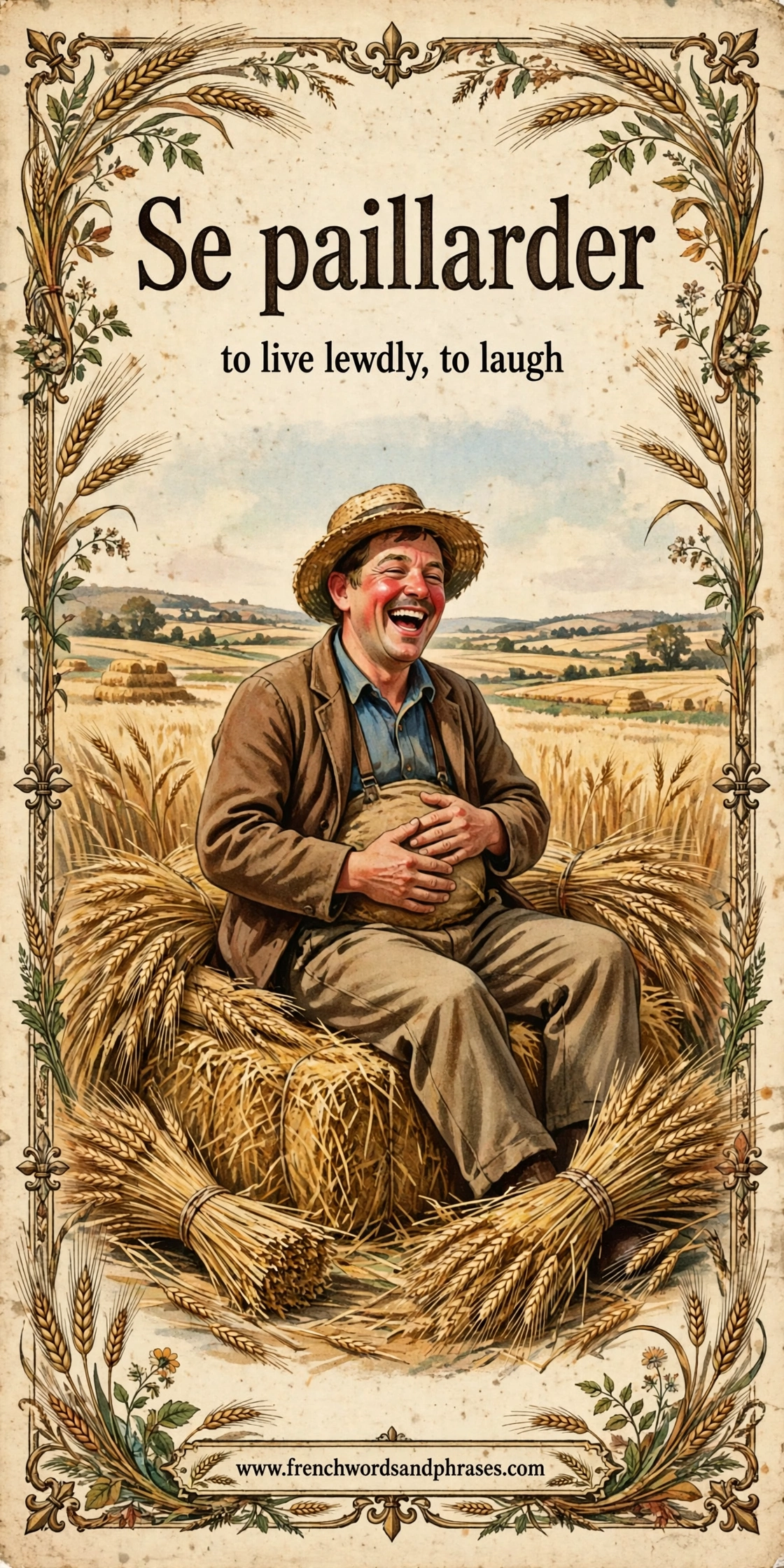
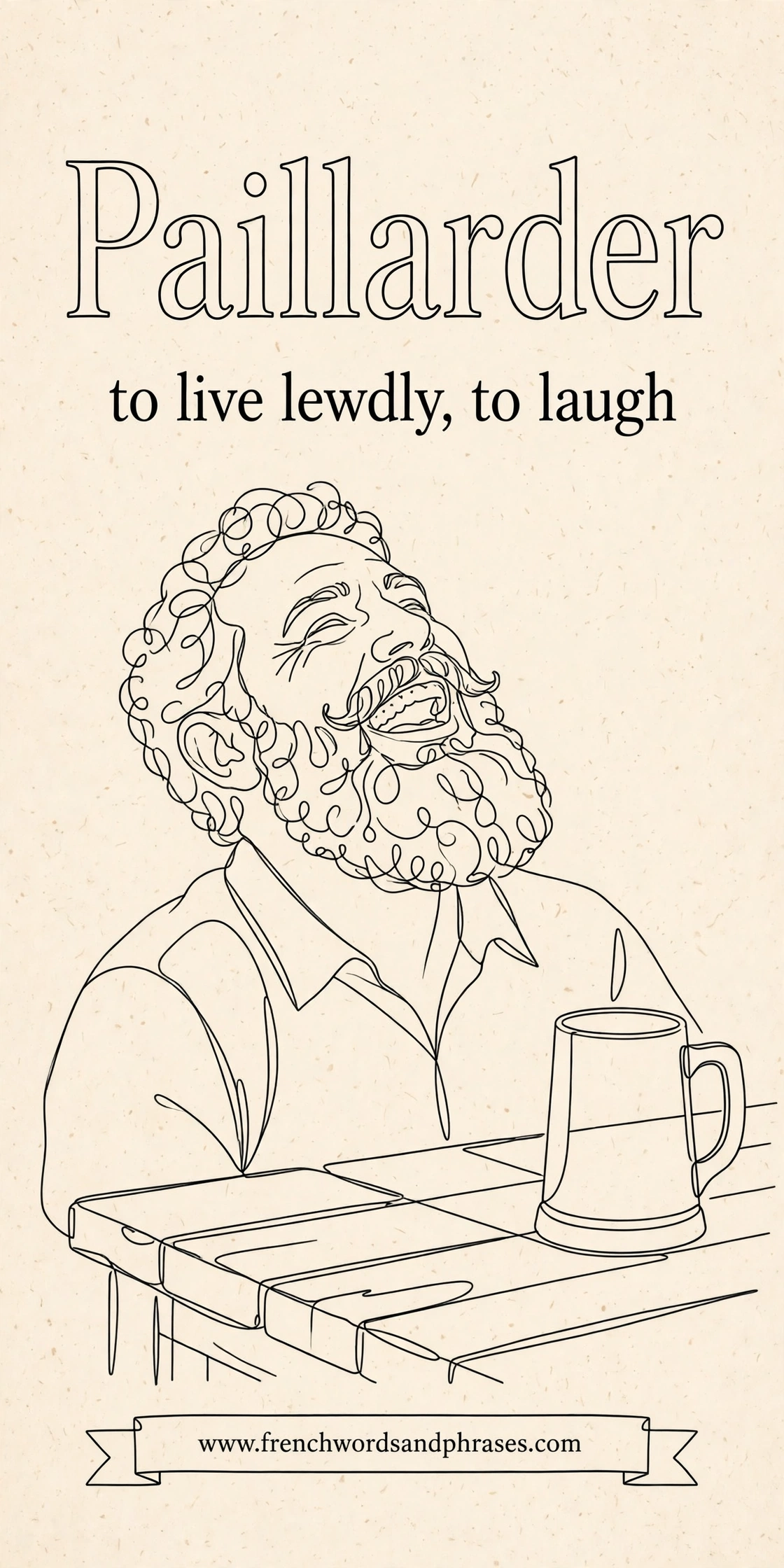
Paillarder means to live lewdly, to laugh — to roister through the night with bawdy songs, rough jokes and no thought of tomorrow.
A smoky tavern in an old novel: soldiers off duty, students with empty pockets and full glasses, songs that would make the landlady blush. Paillarder is the old, familiar verb for that whole scene — dissolute merrymaking, lewd laughter and living it up without a shred of repentance.
In this guide, you’ll learn how to conjugate paillarder in all the major French tenses and moods. Explore complete conjugation tables, French examples, English translations, and practice quizzes.
Understanding the French Verb Paillarder
Paillarder is a regular French verb belonging to the first group of verbs, those ending in -er.
It means to live lewdly, to laugh. In its day it meant living the dissolute life — drinking, wenching and laughing at everything sacred — and it keeps that whiff of scandal. Modern French usually expresses the idea with faire la noce, débaucher or rigoler; paillarder survives as a colourful, slightly literary word for roistering, and its family (paillard, paillardise) names bawdiness itself.
Verb classification: First group (-er)
Auxiliary verb: Avoir
Past participle: paillardé
Present participle: paillardant
English equivalents: To live lewdly, to roister, to laugh bawdily; paillarder au cabaret — to carouse in the tavern; une chanson paillarde — a bawdy song; un rire paillard — a lewd, roaring laugh; un paillard — a lewd fellow, a roisterer.
One important detail: paillarder is an old, familiar word — vieilli in the dictionaries — and today you will meet its adjective far more often than the verb: une chanson paillarde, un rire paillard, une histoire paillarde (a bawdy song, a lewd laugh, a dirty story) are still everyday French. The verb itself is a plain regular -er (je paillarde, nous paillardons, paillardé); keep it for period flavour, taverns and grandfathers, and let the adjective do the modern work.
Experience the Word
Paillarder is the verb of the tavern at midnight — virtue forgotten, glasses raised, and every song a little more scandalous than the last.
Imagine a company of students in Rabelais’ Paris. Books closed since noon, they fill a tavern by the Seine, ordering, singing and roaring at jokes no one will write down — ils paillardent, and the whole street knows it by the noise.
Tomorrow there will be headaches and apologies. Tonight they are roistering — paillardant — as if Lent would never come.
How to Conjugate Paillarder: Complete French Conjugation Guide
Let’s explore every major conjugation of paillarder, beginning with the indicative mood.
How to Conjugate Paillarder in the Indicative Mood
The indicative mood is used to express facts, observations, actions, and events.
How to Conjugate Paillarder in the Present Tense (Présent)
Used for actions happening now, habitual actions, and general truths.
| Subject | Conjugation |
|---|---|
| je | paillarde |
| tu | paillardes |
| il / elle | paillarde |
| nous | paillardons |
| vous | paillardez |
| ils / elles | paillardent |
Les compagnons paillardent au cabaret jusqu’à l’aube.
The companions carouse in the tavern until dawn.
Complete the sentence:
Nous ______ au cabaret jusqu’à l’aube.
Reveal the answer
paillardons
Nous paillardons au cabaret jusqu’à l’aube.
We carouse in the tavern until dawn.
How to Conjugate Paillarder in the Passé Composé
Used for completed actions in the past. Paillarder takes the auxiliary verb avoir.
| Subject | Conjugation |
|---|---|
| j’ | ai paillardé |
| tu | as paillardé |
| il / elle | a paillardé |
| nous | avons paillardé |
| vous | avez paillardé |
| ils / elles | ont paillardé |
Ils ont paillardé toute la nuit après la victoire.
They roistered all night after the victory.
How to Conjugate Paillarder in the Imparfait (Imperfect Tense)
Used for habitual past actions, descriptions, and ongoing situations in the past.
| Subject | Conjugation |
|---|---|
| je | paillardais |
| tu | paillardais |
| il / elle | paillardait |
| nous | paillardions |
| vous | paillardiez |
| ils / elles | paillardaient |
Dans sa jeunesse, il paillardait avec les étudiants du quartier.
In his youth, he used to carouse with the students of the district.
Choose the correct form:
They roistered all night.
Ils ______ toute la nuit. (ont paillardé / sont paillardés)
Reveal the answer
ont paillardé
Ils ont paillardé toute la nuit.
Paillarder takes avoir.
How to Conjugate Paillarder in the Plus-que-parfait
Used to describe an action that had already been completed before another past event.
| Subject | Conjugation |
|---|---|
| j’ | avais paillardé |
| tu | avais paillardé |
| il / elle | avait paillardé |
| nous | avions paillardé |
| vous | aviez paillardé |
| ils / elles | avaient paillardé |
Les soldats avaient paillardé la veille de la bataille.
The soldiers had caroused on the eve of the battle.
How to Conjugate Paillarder in the Passé Simple
Primarily used in formal writing, literature, and historical narratives. It is rarely used in everyday conversation.
| Subject | Conjugation |
|---|---|
| je | paillardai |
| tu | paillardas |
| il / elle | paillarda |
| nous | paillardâmes |
| vous | paillardâtes |
| ils / elles | paillardèrent |
La troupe paillarda bruyamment autour du feu.
The troop roistered noisily around the fire.
How to Conjugate Paillarder in the Passé Antérieur
A literary tense used to express an action completed immediately before another past action, generally in the passé simple.
| Subject | Conjugation |
|---|---|
| j’ | eus paillardé |
| tu | eus paillardé |
| il / elle | eut paillardé |
| nous | eûmes paillardé |
| vous | eûtes paillardé |
| ils / elles | eurent paillardé |
Quand ils eurent paillardé jusqu’au matin, le village se tut.
When they had caroused until morning, the village fell silent.
How to Conjugate Paillarder in the Future Tense (Futur Simple)
Used to describe actions that will take place in the future.
| Subject | Conjugation |
|---|---|
| je | paillarderai |
| tu | paillarderas |
| il / elle | paillardera |
| nous | paillarderons |
| vous | paillarderez |
| ils / elles | paillarderont |
Ce soir, les marins paillarderont au port.
Tonight, the sailors will carouse in the port.
How to Conjugate Paillarder in the Futur Antérieur (Future Perfect)
Used for an action that will have been completed before a particular point in the future.
| Subject | Conjugation |
|---|---|
| j’ | aurai paillardé |
| tu | auras paillardé |
| il / elle | aura paillardé |
| nous | aurons paillardé |
| vous | aurez paillardé |
| ils / elles | auront paillardé |
À l’aube, ils auront paillardé toute la nuit.
By dawn, they will have roistered all night.
How to Conjugate Paillarder in the Near Future (Futur Proche)
Used to describe something that is going to happen soon. Formed with aller + infinitive.
| Subject | Conjugation |
|---|---|
| je | vais paillarder |
| tu | vas paillarder |
| il / elle | va paillarder |
| nous | allons paillarder |
| vous | allez paillarder |
| ils / elles | vont paillarder |
Regarde-les, ils vont paillarder jusqu’au bout de la nuit.
Look at them, they are going to carouse until the end of the night.
How to Conjugate Paillarder in the Conditional Mood
The conditional mood expresses what would happen under certain circumstances. It is also frequently used to make polite requests or express wishes.
How to Conjugate Paillarder in the Present Conditional
| Subject | Conjugation |
|---|---|
| je | paillarderais |
| tu | paillarderais |
| il / elle | paillarderait |
| nous | paillarderions |
| vous | paillarderiez |
| ils / elles | paillarderaient |
Il paillarderait volontiers au lieu de travailler.
He would gladly go roistering instead of working.
How to Conjugate Paillarder in the Past Conditional
| Subject | Conjugation |
|---|---|
| j’ | aurais paillardé |
| tu | aurais paillardé |
| il / elle | aurait paillardé |
| nous | aurions paillardé |
| vous | auriez paillardé |
| ils / elles | auraient paillardé |
Ils auraient paillardé davantage sans la patrouille.
They would have caroused more without the patrol.
Paillarder in the Literary Past Conditional Form
This less common literary form uses the imperfect subjunctive of avoir.
| Subject | Conjugation |
|---|---|
| j’ | eusse paillardé |
| tu | eusses paillardé |
| il / elle | eût paillardé |
| nous | eussions paillardé |
| vous | eussiez paillardé |
| ils / elles | eussent paillardé |
Il eût paillardé sa jeunesse entière sans la maladie.
He would have roistered away his whole youth without the illness.
How to Conjugate Paillarder in the Subjunctive Mood
The subjunctive is used to express wishes, emotions, doubts, necessity, and uncertainty. It frequently follows expressions such as il faut que (it is necessary that) or bien que (although).
How to Conjugate Paillarder in the Present Subjunctive
| Subject | Conjugation |
|---|---|
| que je | paillarde |
| que tu | paillardes |
| qu’il / qu’elle | paillarde |
| que nous | paillardions |
| que vous | paillardiez |
| qu’ils / qu’elles | paillardent |
Je ne veux pas que les garçons paillardent toute la nuit.
I do not want the boys carousing all night.
Complete the sentence using the subjunctive:
On craint que la troupe ______ dans les rues.
Reveal the answer
paillarde
On craint que la troupe paillarde dans les rues.
People fear the troop might roister in the streets.
How to Conjugate Paillarder in the Imperfect Subjunctive
A literary tense, rarely encountered in modern spoken French.
| Subject | Conjugation |
|---|---|
| que je | paillardasse |
| que tu | paillardasses |
| qu’il / qu’elle | paillardât |
| que nous | paillardassions |
| que vous | paillardassiez |
| qu’ils / qu’elles | paillardassent |
On craignait que la troupe paillardât dans les rues.
People feared the troop might roister in the streets.
How to Conjugate Paillarder in the Pluperfect Subjunctive
A literary construction used to express an action completed before another past action.
| Subject | Conjugation |
|---|---|
| que j’ | eusse paillardé |
| que tu | eusses paillardé |
| qu’il / qu’elle | eût paillardé |
| que nous | eussions paillardé |
| que vous | eussiez paillardé |
| qu’ils / qu’elles | eussent paillardé |
On racontait qu’ils eussent paillardé des semaines durant.
It was said they had caroused for weeks on end.
How to Conjugate Paillarder in the Past Subjunctive
| Subject | Conjugation |
|---|---|
| que j’ | aie paillardé |
| que tu | aies paillardé |
| qu’il / qu’elle | ait paillardé |
| que nous | ayons paillardé |
| que vous | ayez paillardé |
| qu’ils / qu’elles | aient paillardé |
Je m’étonne qu’ils aient paillardé si longtemps.
I am surprised they caroused for so long.
How to Conjugate Paillarder in the Imperative
The imperative is used to give commands, instructions, invitations, or suggestions. Subject pronouns are omitted.
How to Conjugate Paillarder in the Present Imperative
| Person | Conjugation |
|---|---|
| (tu) | paillarde |
| (nous) | paillardons |
| (vous) | paillardez |
Ne paillarde pas avec ces gens-là !
Do not go roistering with those people!
How would you say Do not go roistering with those people (tu form)?
Reveal the answer
Ne paillarde pas avec ces gens-là !
French Participles of Paillarder
Participles are verb forms that can be used in compound tenses and other grammatical constructions.
Present Participle of Paillarder
paillardant
En paillardant au cabaret, ils ont oublié l’heure.
While carousing in the tavern, they forgot the time.
Past Participle of Paillarder
paillardé
La nuit, paillardée en chansons et en rires, parut trop courte.
The night, spent roistering in songs and laughter, seemed too short.
Paillarder in Everyday French: Real-Life Examples
Now that you know the conjugations, let’s see how paillarder appears in everyday French.
Les compagnons paillardent au cabaret.
The companions carouse in the tavern.
Ils ont paillardé toute la nuit.
They roistered all night.
Il paillardait avec les étudiants du quartier.
He used to carouse with the students of the district.
Les marins paillarderont au port ce soir.
The sailors will carouse in the port tonight.
Il paillarderait au lieu de travailler.
He would go roistering instead of working.
Ne paillarde pas avec ces gens-là !
Do not go roistering with those people!
Beyond Translation: The Meaning of Paillarder
The word is built on la paille, straw — the straw pallet, la paillasse, was the bed of the poor, and paillarder began as the verb of low, straw-bed pleasures.
Its adjective outlived it.
Modern French may rarely say il paillarde, but everyone knows une chanson paillarde — the bawdy drinking song, sung louder with every verse — and un rire paillard, the laugh that tells you the joke was not for children.
How to Remember the French Verb Paillarder
Remember it this way: Paillarder is about the smoky tavern — bawdy songs, roaring laughs, no repentance.
- Old and familiar register: the verb is vieilli, but its adjective is alive — une chanson paillarde, un rire paillard.
- It comes from la paille, straw — the straw pallet of low pleasures gave French its word for bawdiness.
- Regular -er: je paillarde, nous paillardons, past participle paillardé.
The key idea is the smoky tavern — bawdy songs, roaring laughs, no repentance.
Test Your Knowledge of Paillarder
Let’s see how much you’ve learned. Try answering these questions before revealing the answers.
Which form of this word family is commonest in modern French?
Reveal the answer
The adjective — une chanson paillarde, un rire paillard; the verb paillarder is old-fashioned.
How do you say They roistered all night in French?
Reveal the answer
Ils ont paillardé toute la nuit.
Translate: The companions carouse in the tavern until dawn.
Reveal the answer
Les compagnons paillardent au cabaret jusqu’à l’aube.
What is the past participle of paillarder?
Reveal the answer
Paillardé.
Complete the sentence:
Je ne veux pas que les garçons ______ toute la nuit.
Reveal the answer
paillardent
Je ne veux pas que les garçons paillardent toute la nuit.
I do not want the boys carousing all night.
Can You Use It?
How would you say this in French?
They carouse in the tavern as in Rabelais’ day, and the whole night smells of wine and straw.
Reveal the answer
Ils paillardent au cabaret comme au temps de Rabelais, et la nuit entière sent le vin et la paille.
They carouse in the tavern as in Rabelais’ day, and the whole night smells of wine and straw.
LEARN FRENCH ONE WORD AT A TIME