A French Word to Live By
How to Conjugate Se adonner in French
/sə a.dɔ.ne/
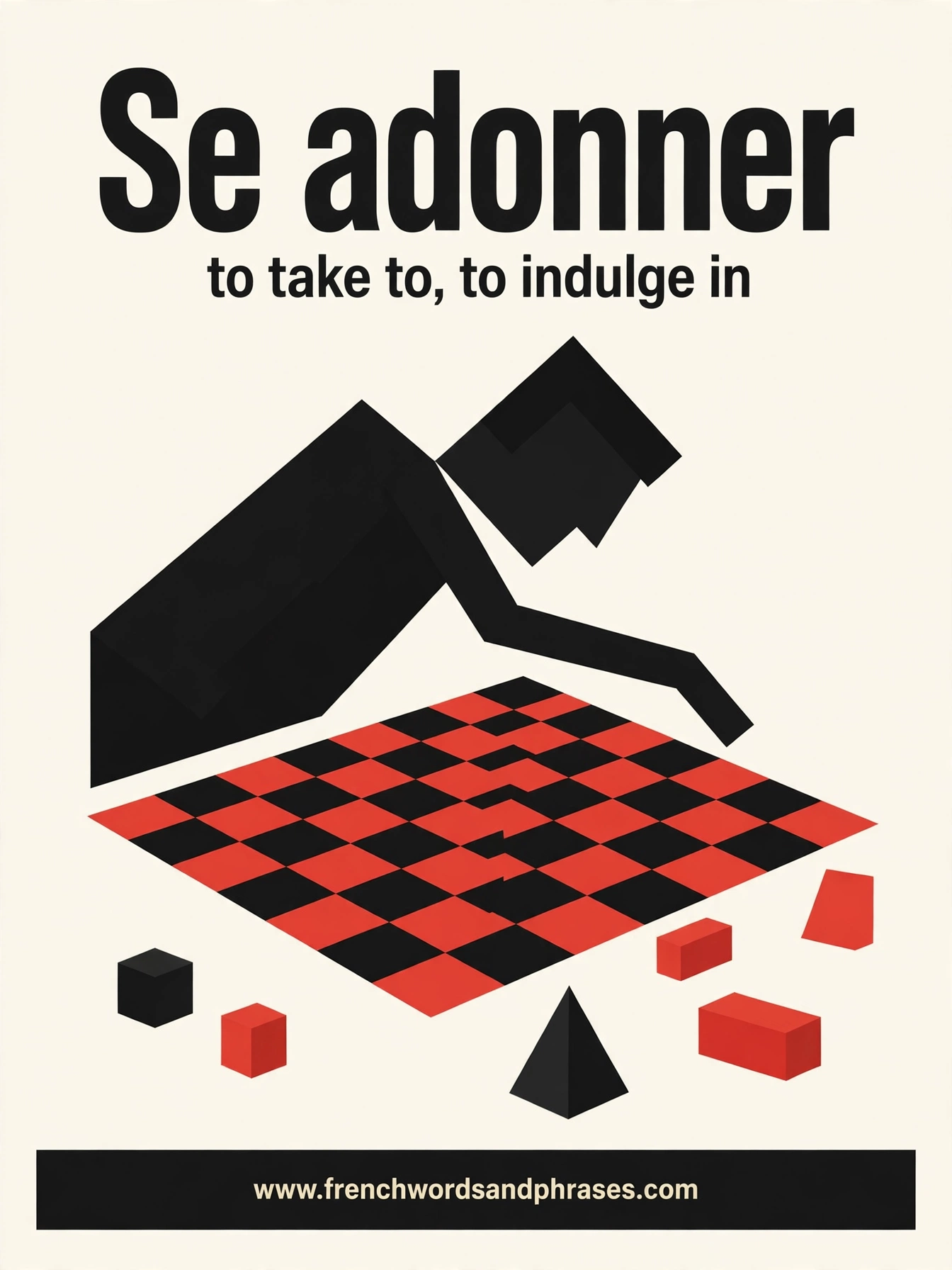
Se adonner means to take to, to indulge in — to give oneself over to a pastime or a habit, body and soul, for better or for worse.
A retired postman who takes to painting at seventy, a student who gives himself wholly to chess, a sailor who, alas, takes to drink — se adonner is the verb of surrendering to a pursuit: whatever you hand your hours to, you vous adonnez to it.
In this guide, you’ll learn how to conjugate se adonner in all the major French tenses and moods. Explore complete conjugation tables, French examples, English translations, and practice quizzes.
Understanding the French Verb Se adonner
Se adonner is a regular French verb belonging to the first group of verbs, those ending in-er.
It means to take to, to indulge in. It is commonly used for the happy surrenders of retirement and leisure — painting, sailing, gardening, study — and, with a darker object, for habits that take a person over: s’adonner à la boisson, au jeu, to take to drink, to gambling. The tone depends entirely on what stands after the à.
Verb classification: First group (-er), reflexive
Auxiliary verb: Être
Past participle: adonné
Present participle: adonnant
English equivalents: To take to, to indulge in, to devote oneself to; s’adonner à la peinture — to take up painting; s’adonner au jardinage — to devote oneself to gardening; s’adonner à la boisson — to take to drink; s’adonner à un passe-temps — to indulge in a hobby.
One important detail: se adonner never travels without its à — one is always adonné à something: s’adonner à la voile, s’adonner aux échecs, s’adonner à la lecture. Being reflexive, it takes être in every compound tense and the participle agrees: elle s’est adonnée à la danse, ils se sont adonnés à la pêche. The plain adonner is a nautical rarity (a wind that adonne, freshening favourably) — in everyday French the verb lives only in its reflexive form, giving itself to something.
Experience the Word
Se adonner is the verb of handing over your hours — choose the object well, because the verb keeps its promises.
Imagine a retired lighthouse keeper in Brittany. For forty years the sea owned his nights; now, at last, the days are his. He buys brushes, then canvases, then an easel too grand for the cottage — il s’adonne à la peinture, morning after morning, and the light he watched for ships now ends up, stroke by stroke, on canvas.
He has not filled his time. He has given himself to something — il s’est adonné — and it gives back.
How to Conjugate Se adonner: Complete French Conjugation Guide
Let’s explore every major conjugation of se adonner, beginning with the indicative mood.
How to Conjugate Se adonner in the Indicative Mood
The indicative mood is used to express facts, observations, actions, and events.
How to Conjugate Se adonner in the Present Tense (Présent)
Used for actions happening now, habitual actions, and general truths.
| Subject | Conjugation |
|---|---|
| je | m’adonne |
| tu | t’adonnes |
| il / elle | s’adonne |
| nous | nous adonnons |
| vous | vous adonnez |
| ils / elles | s’adonnent |
Example
Depuis sa retraite, il s’adonne à la peinture.
Since his retirement, he has taken to painting.
Quick Quiz 1
Complete the sentence:
Nous nous ______ aux échecs tous les dimanches.
Reveal the answer
adonnons
Nous nous adonnons aux échecs tous les dimanches.
We devote ourselves to chess every Sunday.
How to Conjugate Se adonner in the Passé Composé
Used for completed actions in the past. Se adonner takes the auxiliary verb être.
| Subject | Conjugation |
|---|---|
| je | me suis adonné / me suis adonnée |
| tu | t’es adonné / t’es adonnée |
| il / elle | s’est adonné / s’est adonnée |
| nous | nous sommes adonnés / nous sommes adonnées |
| vous | vous êtes adonnés / vous êtes adonnées / vous êtes adonné / vous êtes adonnée |
| ils / elles | se sont adonnés / se sont adonnées |
Example
Elle s’est adonnée au jardinage avec passion.
She has devoted herself to gardening with passion.
How to Conjugate Se adonner in the Imparfait (Imperfect Tense)
Used for habitual past actions, descriptions, and ongoing situations in the past.
| Subject | Conjugation |
|---|---|
| je | m’adonnais |
| tu | t’adonnais |
| il / elle | s’adonnait |
| nous | nous adonnions |
| vous | vous adonniez |
| ils / elles | s’adonnaient |
Example
Nous nous adonnions aux échecs tous les dimanches.
We used to devote ourselves to chess every Sunday.
Quick Quiz 2
Choose the correct form:
She took to gardening.
Elle ______ au jardinage. (s’est adonnée / a adonné)
Reveal the answer
s’est adonnée
Elle s’est adonnée au jardinage.
Se adonner is reflexive, takes être, and the participle agrees: adonnée.
How to Conjugate Se adonner in the Plus-que-parfait
Used to describe an action that had already been completed before another past event.
| Subject | Conjugation |
|---|---|
| je | m’étais adonné / m’étais adonnée |
| tu | t’étais adonné / t’étais adonnée |
| il / elle | s’était adonné / s’était adonnée |
| nous | nous étions adonnés / nous étions adonnées |
| vous | vous étiez adonnés / vous étiez adonnées / vous étiez adonné / vous étiez adonnée |
| ils / elles | s’étaient adonnés / s’étaient adonnées |
Example
Il s’était adonné à l’étude du latin avant ses examens.
He had given himself over to the study of Latin before his exams.
How to Conjugate Se adonner in the Passé Simple
Primarily used in formal writing, literature, and historical narratives. It is rarely used in everyday conversation.
| Subject | Conjugation |
|---|---|
| je | m’adonnai |
| tu | t’adonnas |
| il / elle | s’adonna |
| nous | nous adonnâmes |
| vous | vous adonnâtes |
| ils / elles | s’adonnèrent |
Example
Le poète s’adonna entièrement à son art.
The poet gave himself entirely to his art.
How to Conjugate Se adonner in the Passé Antérieur
A literary tense used to express an action completed immediately before another past action, generally in the passé simple.
| Subject | Conjugation |
|---|---|
| je | me fus adonné / me fus adonnée |
| tu | te fus adonné / te fus adonnée |
| il / elle | se fut adonné / se fut adonnée |
| nous | nous fûmes adonnés / nous fûmes adonnées |
| vous | vous fûtes adonnés / vous fûtes adonnées / vous fûtes adonné / vous fûtes adonnée |
| ils / elles | se furent adonnés / se furent adonnées |
Example
Dès qu’elle se fut adonnée à la danse, elle ne pensa plus qu’à elle.
As soon as she had taken to dancing, she thought of nothing else.
How to Conjugate Se adonner in the Future Tense (Futur Simple)
Used to describe actions that will take place in the future.
| Subject | Conjugation |
|---|---|
| je | m’adonnerai |
| tu | t’adonneras |
| il / elle | s’adonnera |
| nous | nous adonnerons |
| vous | vous adonnerez |
| ils / elles | s’adonneront |
Example
À la retraite, je m’adonnerai à la voile.
In retirement, I will take to sailing.
How to Conjugate Se adonner in the Futur Antérieur (Future Perfect)
Used for an action that will have been completed before a particular point in the future.
| Subject | Conjugation |
|---|---|
| je | me serai adonné / me serai adonnée |
| tu | te seras adonné / te seras adonnée |
| il / elle | se sera adonné / se sera adonnée |
| nous | nous serons adonnés / nous serons adonnées |
| vous | vous serez adonnés / vous serez adonnées / vous serez adonné / vous serez adonnée |
| ils / elles | se seront adonnés / se seront adonnées |
Example
Dans dix ans, il se sera adonné à cent passions différentes.
In ten years, he will have given himself to a hundred different passions.
How to Conjugate Se adonner in the Near Future (Futur Proche)
Used to describe something that is going to happen soon. Formed with aller + infinitive.
| Subject | Conjugation |
|---|---|
| je | vais m’adonner |
| tu | vas t’adonner |
| il / elle | va s’adonner |
| nous | allons nous adonner |
| vous | allez vous adonner |
| ils / elles | vont s’adonner |
Example
Elle va s’adonner au piano dès la rentrée.
She is going to take up the piano as soon as term starts.
How to Conjugate Se adonner in the Conditional Mood
The conditional mood expresses what would happen under certain circumstances. It is also frequently used to make polite requests or express wishes.
How to Conjugate Se adonner in the Present Conditional
| Subject | Conjugation |
|---|---|
| je | m’adonnerais |
| tu | t’adonnerais |
| il / elle | s’adonnerait |
| nous | nous adonnerions |
| vous | vous adonneriez |
| ils / elles | s’adonneraient |
Example
Sans son travail, il s’adonnerait à la pêche toute la semaine.
Without his job, he would devote himself to fishing all week.
How to Conjugate Se adonner in the Past Conditional
| Subject | Conjugation |
|---|---|
| je | me serais adonné / me serais adonnée |
| tu | te serais adonné / te serais adonnée |
| il / elle | se serait adonné / se serait adonnée |
| nous | nous serions adonnés / nous serions adonnées |
| vous | vous seriez adonnés / vous seriez adonnées / vous seriez adonné / vous seriez adonnée |
| ils / elles | se seraient adonnés / se seraient adonnées |
Example
Elle se serait adonnée au théâtre si ses parents l’avaient permis.
She would have taken to the theatre if her parents had allowed it.
Se adonner in the Literary Past Conditional Form
This less common literary form uses the imperfect subjunctive of être.
| Subject | Conjugation |
|---|---|
| je | me fusse adonné / me fusse adonnée |
| tu | te fusses adonné / te fusses adonnée |
| il / elle | se fût adonné / se fût adonnée |
| nous | nous fussions adonnés / nous fussions adonnées |
| vous | vous fussiez adonnés / vous fussiez adonnées / vous fussiez adonné / vous fussiez adonnée |
| ils / elles | se fussent adonnés / se fussent adonnées |
Example
Il se fût adonné aux lettres sans la guerre.
He would have devoted himself to literature without the war.
How to Conjugate Se adonner in the Subjunctive Mood
The subjunctive is used to express wishes, emotions, doubts, necessity, and uncertainty. It frequently follows expressions such as il faut que (it is necessary that) or bien que (although).
How to Conjugate Se adonner in the Present Subjunctive
| Subject | Conjugation |
|---|---|
| que je | m’adonne |
| que tu | t’adonnes |
| qu’il / qu’elle | s’adonne |
| que nous | nous adonnions |
| que vous | vous adonniez |
| qu’ils / qu’elles | s’adonnent |
Example
Je suis content qu’elle s’adonne à la sculpture.
I am glad she is taking to sculpture.
Quick Quiz 3
Complete the sentence using the subjunctive:
Je suis content que tu ______ à la sculpture.
Reveal the answer
t’adonnes
Je suis content que tu t’adonnes à la sculpture.
I am glad you are taking to sculpture.
How to Conjugate Se adonner in the Imperfect Subjunctive
A literary tense, rarely encountered in modern spoken French.
| Subject | Conjugation |
|---|---|
| que je | m’adonnasse |
| que tu | t’adonnasses |
| qu’il / qu’elle | s’adonnât |
| que nous | nous adonnassions |
| que vous | vous adonnassiez |
| qu’ils / qu’elles | s’adonnassent |
Example
On craignait qu’il s’adonnât à la paresse.
People feared he might give himself over to idleness.
How to Conjugate Se adonner in the Pluperfect Subjunctive
A literary construction used to express an action completed before another past action.
| Subject | Conjugation |
|---|---|
| que je | me fusse adonné / me fusse adonnée |
| que tu | te fusses adonné / te fusses adonnée |
| qu’il / qu’elle | se fût adonné / se fût adonnée |
| que nous | nous fussions adonnés / nous fussions adonnées |
| que vous | vous fussiez adonnés / vous fussiez adonnées / vous fussiez adonné / vous fussiez adonnée |
| qu’ils / qu’elles | se fussent adonnés / se fussent adonnées |
Example
On racontait qu’ils se fussent adonnés à la boisson dans leur jeunesse.
People said they had taken to drink in their youth.
How to Conjugate Se adonner in the Past Subjunctive
| Subject | Conjugation |
|---|---|
| que je | me sois adonné / me sois adonnée |
| que tu | te sois adonné / te sois adonnée |
| qu’il / qu’elle | se soit adonné / se soit adonnée |
| que nous | nous soyons adonnés / nous soyons adonnées |
| que vous | vous soyez adonnés / vous soyez adonnées / vous soyez adonné / vous soyez adonnée |
| qu’ils / qu’elles | se soient adonnés / se soient adonnées |
Example
Je suis surpris qu’il se soit adonné si tard à la poésie.
I am surprised he took to poetry so late.
How to Conjugate Se adonner in the Imperative
The imperative is used to give commands, instructions, invitations, or suggestions. Subject pronouns are omitted.
How to Conjugate Se adonner in the Present Imperative
| Person | Conjugation |
|---|---|
| (tu) | adonne-toi |
| (nous) | adonnons-nous |
| (vous) | adonnez-vous |
Example
Adonne-toi à la musique, tu as du talent !
Give yourself to music, you have talent!
Quick Quiz 4
How would you say Give yourself to music (tu form)?
Reveal the answer
Adonne-toi à la musique !
French Participles of Se adonner
Participles are verb forms that can be used in compound tenses and other grammatical constructions.
Present Participle of Se adonner
adonnant
En s’adonnant à la voile, il a trouvé la liberté.
By devoting himself to sailing, he found freedom.
Past Participle of Se adonner
adonné
Adonnée au jardinage, elle oublie le temps qui passe.
Given over to gardening, she forgets the time passing.
Se adonner in Everyday French: Real-Life Examples
Now that you know the conjugations, let’s see how se adonner appears in everyday French.
Example 1 — Present
Depuis sa retraite, il s’adonne à la peinture.
Since his retirement, he has taken to painting.
Example 2 — Passé composé
Elle s’est adonnée au jardinage avec passion.
She has devoted herself to gardening with passion.
Example 3 — Imparfait
Nous nous adonnions aux échecs tous les dimanches.
We used to devote ourselves to chess every Sunday.
Example 4 — Future
À la retraite, je m’adonnerai à la voile.
In retirement, I will take to sailing.
Example 5 — Conditional
Sans son travail, il s’adonnerait à la pêche toute la semaine.
Without his job, he would devote himself to fishing all week.
Example 6 — Imperative
Adonne-toi à la musique !
Give yourself to music!
Beyond Translation: The Meaning of Se adonner
English says take to — he took to painting, he took to drink — and French se adonner à draws exactly the same map, from the noble passion to the ruinous habit.
The verb itself is a giving.
Inside adonner sleeps donner, to give: to s’adonner is to give oneself away to a pursuit — which is why the word fits both the artist lost in his canvases and the gambler lost at his table. What differs is only the addressee of the gift.
How to Remember the French Verb Se adonner
Remember it this way: Se adonner is about the retired keeper giving his days to painting — donner, giving, inside the verb.
- Always reflexive, always with à: s’adonner à la peinture, s’adonner au jardinage, s’adonner à la boisson.
- Être in compound tenses, participle agreeing: elle s’est adonnée, ils se sont adonnés.
- Two faces, one verb: the happy hobby and the dark habit — the object after à decides.
The key idea is the retired keeper giving his days to painting — donner, giving, inside the verb.
Test Your Knowledge of Se adonner
Let’s see how much you’ve learned. Try answering these questions before revealing the answers.
Question 1
Which preposition always follows se adonner, and what follows it?
Reveal the answer
À — s’adonner à la peinture, s’adonner au jardinage: the pursuit you give yourself to.
Question 2
How do you say She has devoted herself to gardening in French?
Reveal the answer
Elle s’est adonnée au jardinage.
Question 3
Translate: Since his retirement, he has taken to painting.
Reveal the answer
Depuis sa retraite, il s’adonne à la peinture.
Question 4
What is the past participle of se adonner, agreeing with a woman?
Reveal the answer
Adonnée — elle s’est adonnée à la danse.
Question 5
Complete the sentence:
Je suis content qu’elle ______ à la sculpture.
Reveal the answer
s’adonne
Je suis content qu’elle s’adonne à la sculpture.
I am glad she is taking to sculpture.
Your Final Challenge
Can You Use It?
How would you say this in French?
He has given himself to painting since his retirement, and his canvases are starting to resemble his life: full of light.
Reveal the answer
Il s’adonne à la peinture depuis sa retraite, et ses toiles commencent à ressembler à sa vie : lumineuses.
He has given himself to painting since his retirement, and his canvases are starting to resemble his life: full of light.
A little French. A little curiosity. A richer everyday life.
LEARN FRENCH ONE WORD AT A TIME