
A French Word to Live By
How to Conjugate Saupoudrer in French
/so.pu.dʁe/
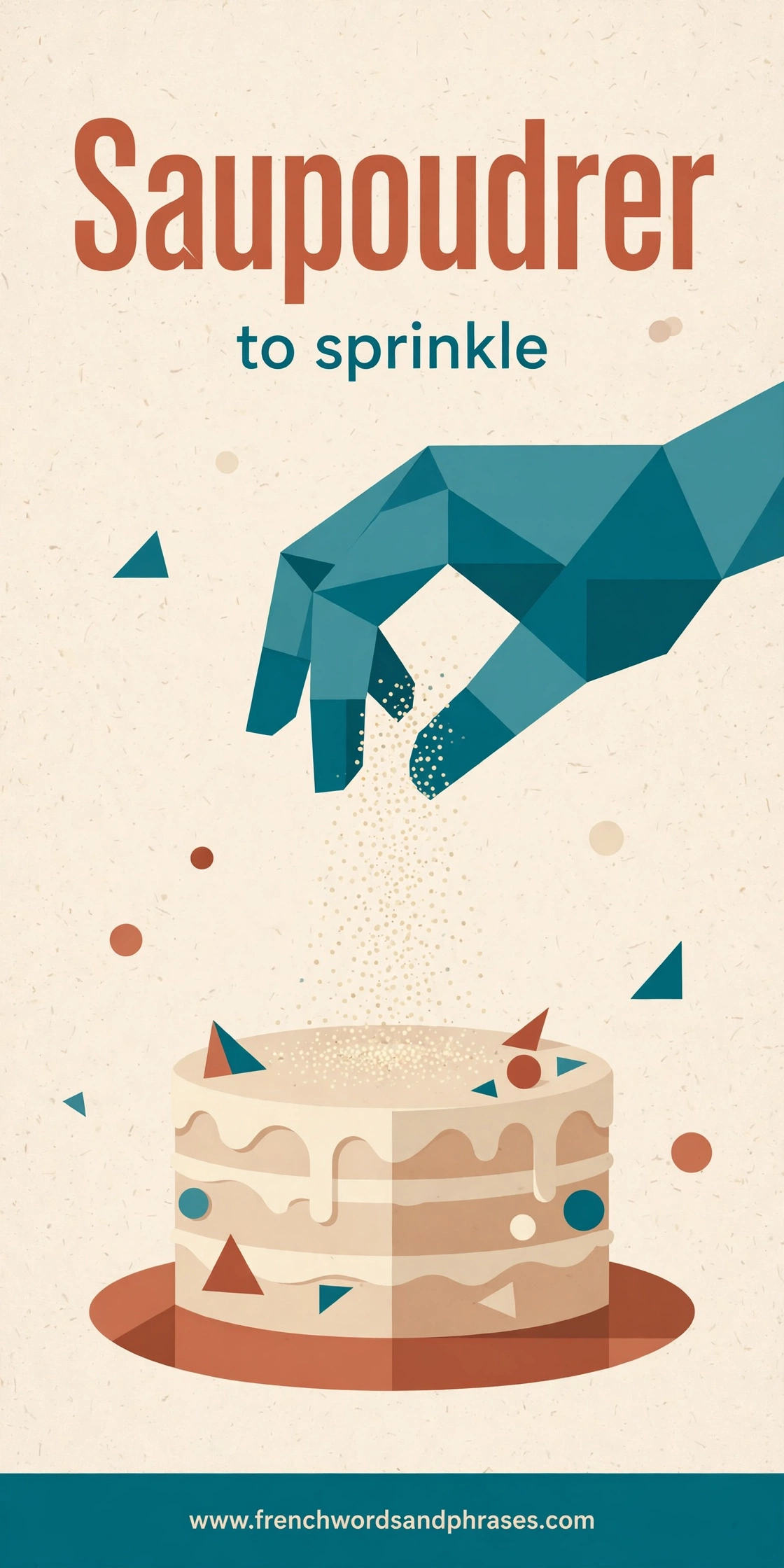
Saupoudrer means to sprinkle — with powder.
Icing sugar drifting over warm crêpes, cocoa settling on a tiramisu, parmesan snowing down on pasta — saupoudrer is the verb of the fine powder, shaken gently over something delicious.
In this guide, you’ll learn how to conjugate saupoudrer in all the major French tenses and moods. Explore complete conjugation tables, French examples, English translations, and practice quizzes.
Understanding the French Verb Saupoudrer
Saupoudrer is a regular French verb belonging to the first group of verbs, those ending in -er.
It means to sprinkle. It is commonly used for dusting cakes and crêpes with icing sugar, flouring the worktop before rolling pastry (saupoudrer le plan de travail de farine), showering pasta with parmesan, and in winter descriptions — la neige saupoudre les toits, the snow dusts the roofs.
Verb classification: First group (-er)
Auxiliary verb: Avoir
Past participle: saupoudré
Present participle: saupoudrant
English equivalents: To sprinkle (with powder), to dust; to dot or scatter (a speech with jokes, a text with quotes).
One important detail: saupoudrer is built on poudre — powder — and it only sprinkles powders: flour, icing sugar, cocoa, grated parmesan. Liquids are never saupoudrés; they are versés or sprinkled with arroser. The verb also leaves the kitchen: you can saupoudrer un discours de citations, sprinkle a speech with quotations, and a light snow saupoudre les toits, dusts the rooftops.
Experience the Word
Saupoudrer is the verb of the finishing touch — a white veil over the dessert that takes two seconds and changes everything.
Imagine a pâtissier at dawn, holding the little sieve high above a row of beignets. One tap, two taps, and the sugar falls like the first snow of winter. The queue outside has no idea how simple the magic is.
The cake has not changed inside. It has been saupoudré — and it looks like a celebration.
How to Conjugate Saupoudrer: Complete French Conjugation Guide
Let’s explore every major conjugation of saupoudrer, beginning with the indicative mood.
How to Conjugate Saupoudrer in the Indicative Mood
The indicative mood is used to express facts, observations, actions, and events.
How to Conjugate Saupoudrer in the Present Tense (Présent)
Used for actions happening now, habitual actions, and general truths.
| Subject | Conjugation |
|---|---|
| je | saupoudre |
| tu | saupoudres |
| il / elle | saupoudre |
| nous | saupoudrons |
| vous | saupoudrez |
| ils / elles | saupoudrent |
Example
Elle saupoudre le gâteau de sucre glace.
She dusts the cake with icing sugar.
Quick Quiz 1
Complete the sentence:
Nous ______ les pâtes de parmesan.
Reveal the answer
saupoudrons
Nous saupoudrons les pâtes de parmesan.
We sprinkle the pasta with parmesan.
How to Conjugate Saupoudrer in the Passé Composé
Used for completed actions in the past. Saupoudrer takes the auxiliary verb avoir.
| Subject | Conjugation |
|---|---|
| j’ | ai saupoudré |
| tu | as saupoudré |
| il / elle | a saupoudré |
| nous | avons saupoudré |
| vous | avez saupoudré |
| ils / elles | ont saupoudré |
Example
Il a saupoudré les pâtes de parmesan râpé.
He sprinkled the pasta with grated parmesan.
How to Conjugate Saupoudrer in the Imparfait (Imperfect Tense)
Used for habitual past actions, descriptions, and ongoing situations in the past.
| Subject | Conjugation |
|---|---|
| je | saupoudrais |
| tu | saupoudrais |
| il / elle | saupoudrait |
| nous | saupoudrions |
| vous | saupoudriez |
| ils / elles | saupoudraient |
Example
Grand-père saupoudrait toujours ses fraises de sucre.
Grandfather always used to sprinkle his strawberries with sugar.
Quick Quiz 2
Choose the correct form:
She dusted the tiramisu with cocoa.
Elle ______ le tiramisu de cacao. (a saupoudré / est saupoudrée)
Reveal the answer
a saupoudré
Elle a saupoudré le tiramisu de cacao.
Saupoudrer takes avoir.
How to Conjugate Saupoudrer in the Plus-que-parfait
Used to describe an action that had already been completed before another past event.
| Subject | Conjugation |
|---|---|
| j’ | avais saupoudré |
| tu | avais saupoudré |
| il / elle | avait saupoudré |
| nous | avions saupoudré |
| vous | aviez saupoudré |
| ils / elles | avaient saupoudré |
Example
Nous avions saupoudré la table de farine avant d’étaler la pâte.
We had sprinkled the table with flour before rolling out the pastry.
How to Conjugate Saupoudrer in the Passé Simple
Primarily used in formal writing, literature, and historical narratives. It is rarely used in everyday conversation.
| Subject | Conjugation |
|---|---|
| je | saupoudrai |
| tu | saupoudras |
| il / elle | saupoudra |
| nous | saupoudrâmes |
| vous | saupoudrâtes |
| ils / elles | saupoudrèrent |
Example
La neige saupoudra les toits du village pendant la nuit.
The snow dusted the roofs of the village during the night.
How to Conjugate Saupoudrer in the Passé Antérieur
A literary tense used to express an action completed immediately before another past action, generally in the passé simple.
| Subject | Conjugation |
|---|---|
| j’ | eus saupoudré |
| tu | eus saupoudré |
| il / elle | eut saupoudré |
| nous | eûmes saupoudré |
| vous | eûtes saupoudré |
| ils / elles | eurent saupoudré |
Example
Quand elle eut saupoudré le tiramisu de cacao, elle le mit au frais.
When she had dusted the tiramisu with cocoa, she put it in the fridge.
How to Conjugate Saupoudrer in the Future Tense (Futur Simple)
Used to describe actions that will take place in the future.
| Subject | Conjugation |
|---|---|
| je | saupoudrerai |
| tu | saupoudreras |
| il / elle | saupoudrera |
| nous | saupoudrerons |
| vous | saupoudrerez |
| ils / elles | saupoudreront |
Example
Tu saupoudreras les pâtes de parmesan au moment de servir.
You will sprinkle the pasta with parmesan at the moment of serving.
How to Conjugate Saupoudrer in the Futur Antérieur (Future Perfect)
Used for an action that will have been completed before a particular point in the future.
| Subject | Conjugation |
|---|---|
| j’ | aurai saupoudré |
| tu | auras saupoudré |
| il / elle | aura saupoudré |
| nous | aurons saupoudré |
| vous | aurez saupoudré |
| ils / elles | auront saupoudré |
Example
À la fin du repas, le chef aura saupoudré chaque assiette d’herbes.
By the end of the meal, the chef will have sprinkled every plate with herbs.
How to Conjugate Saupoudrer in the Near Future (Futur Proche)
Used to describe something that is going to happen soon. Formed with aller + infinitive.
| Subject | Conjugation |
|---|---|
| je | vais saupoudrer |
| tu | vas saupoudrer |
| il / elle | va saupoudrer |
| nous | allons saupoudrer |
| vous | allez saupoudrer |
| ils / elles | vont saupoudrer |
Example
Je vais saupoudrer un peu de farine sur le plan de travail.
I am going to sprinkle a little flour on the worktop.
How to Conjugate Saupoudrer in the Conditional Mood
The conditional mood expresses what would happen under certain circumstances. It is also frequently used to make polite requests or express wishes.
How to Conjugate Saupoudrer in the Present Conditional
| Subject | Conjugation |
|---|---|
| je | saupoudrerais |
| tu | saupoudrerais |
| il / elle | saupoudrerait |
| nous | saupoudrerions |
| vous | saupoudreriez |
| ils / elles | saupoudreraient |
Example
Je saupoudrerais volontiers ce dessert de cacao, mais il n’en reste plus.
I would happily dust this dessert with cocoa, but there is none left.
How to Conjugate Saupoudrer in the Past Conditional
| Subject | Conjugation |
|---|---|
| j’ | aurais saupoudré |
| tu | aurais saupoudré |
| il / elle | aurait saupoudré |
| nous | aurions saupoudré |
| vous | auriez saupoudré |
| ils / elles | auraient saupoudré |
Example
Elle aurait saupoudré les beignets de sucre si elle en avait eu.
She would have dusted the doughnuts with sugar if she had had any.
Saupoudrer in the Literary Past Conditional Form
This less common literary form uses the imperfect subjunctive of avoir.
| Subject | Conjugation |
|---|---|
| j’ | eusse saupoudré |
| tu | eusses saupoudré |
| il / elle | eût saupoudré |
| nous | eussions saupoudré |
| vous | eussiez saupoudré |
| ils / elles | eussent saupoudré |
Example
Il eût saupoudré son discours de mots latins.
He would have sprinkled his speech with Latin words.
How to Conjugate Saupoudrer in the Subjunctive Mood
The subjunctive is used to express wishes, emotions, doubts, necessity, and uncertainty. It frequently follows expressions such as il faut que (it is necessary that) or bien que (although).
How to Conjugate Saupoudrer in the Present Subjunctive
| Subject | Conjugation |
|---|---|
| que je | saupoudre |
| que tu | saupoudres |
| qu’il / qu’elle | saupoudre |
| que nous | saupoudrions |
| que vous | saupoudriez |
| qu’ils / qu’elles | saupoudrent |
Example
Il faut que tu saupoudres la pâte de farine avant de la travailler.
You must dust the pastry with flour before working it.
Quick Quiz 3
Complete the sentence using the subjunctive:
Il faut que vous ______ le plat d’herbes.
Reveal the answer
saupoudriez
Il faut que vous saupoudriez le plat d’herbes.
You must sprinkle the dish with herbs.
How to Conjugate Saupoudrer in the Imperfect Subjunctive
A literary tense, rarely encountered in modern spoken French.
| Subject | Conjugation |
|---|---|
| que je | saupoudrasse |
| que tu | saupoudrasses |
| qu’il / qu’elle | saupoudrât |
| que nous | saupoudrassions |
| que vous | saupoudrassiez |
| qu’ils / qu’elles | saupoudrassent |
Example
Je voulais qu’elle saupoudrât le plat juste avant de servir.
I wanted her to sprinkle the dish just before serving.
How to Conjugate Saupoudrer in the Pluperfect Subjunctive
A literary construction used to express an action completed before another past action.
| Subject | Conjugation |
|---|---|
| que j’ | eusse saupoudré |
| que tu | eusses saupoudré |
| qu’il / qu’elle | eût saupoudré |
| que nous | eussions saupoudré |
| que vous | eussiez saupoudré |
| qu’ils / qu’elles | eussent saupoudré |
Example
Il regrettait que nous eussions saupoudré trop de sucre sur les fraises.
He regretted that we had sprinkled too much sugar on the strawberries.
How to Conjugate Saupoudrer in the Past Subjunctive
| Subject | Conjugation |
|---|---|
| que j’ | aie saupoudré |
| que tu | aies saupoudré |
| qu’il / qu’elle | ait saupoudré |
| que nous | ayons saupoudré |
| que vous | ayez saupoudré |
| qu’ils / qu’elles | aient saupoudré |
Example
Je suis content que tu aies saupoudré le gâteau, il est magnifique.
I am glad you dusted the cake, it looks magnificent.
How to Conjugate Saupoudrer in the Imperative
The imperative is used to give commands, instructions, invitations, or suggestions. Subject pronouns are omitted.
How to Conjugate Saupoudrer in the Present Imperative
| Person | Conjugation |
|---|---|
| (tu) | saupoudre |
| (nous) | saupoudrons |
| (vous) | saupoudrez |
Example
Saupoudre les crêpes de sucre glace !
Dust the crêpes with icing sugar!
Quick Quiz 4
How would you say Dust the crêpes with icing sugar (tu form)?
Reveal the answer
Saupoudre les crêpes de sucre glace !
French Participles of Saupoudrer
Participles are verb forms that can be used in compound tenses and other grammatical constructions.
Present Participle of Saupoudrer
saupoudrant
En saupoudrant le cacao, elle a éternué.
While dusting the cocoa, she sneezed.
Past Participle of Saupoudrer
saupoudré
Saupoudré de sucre glace, le gâteau ressemblait à une montagne de neige.
Dusted with icing sugar, the cake looked like a mountain of snow.
Saupoudrer in Everyday French: Real-Life Examples
Now that you know the conjugations, let’s see how saupoudrer appears in everyday French.
Example 1 — Present
Je saupoudre mes pâtes de parmesan.
I sprinkle my pasta with parmesan.
Example 2 — Passé composé
Elle a saupoudré le tiramisu de cacao.
She dusted the tiramisu with cocoa.
Example 3 — Imparfait
Maman saupoudrait les beignets de sucre.
Mum used to dust the doughnuts with sugar.
Example 4 — Future
Nous saupoudrerons la table de farine.
We will sprinkle the table with flour.
Example 5 — Conditional
Tu saupoudrerais un peu de fromage sur ma soupe ?
Would you sprinkle a little cheese on my soup?
Example 6 — Imperative
Saupoudrez le plat d’herbes fraîches !
Sprinkle the dish with fresh herbs!
Beyond Translation: The Meaning of Saupoudrer
English does this job with two verbs — sprinkle for the shower and dust for the fine powder; French saupoudrer keeps the powder in the word itself, since it is built on poudre.
It is the politest verb in the kitchen.
Nothing is poured, nothing is thrown: a cloud descends, settles, and the dish is dressed. Even winter uses it gently — snow that saupoudre is snow that decorates rather than buries.
How to Remember the French Verb Saupoudrer
Remember it this way: Saupoudrer is about sprinkling powder — icing sugar, flour and parmesan.
- Powder only — flour, icing sugar, cocoa, parmesan: if it pours, use verser instead.
- The frame is saupoudrer quelque chose de quelque chose — saupoudrer le gâteau de sucre glace.
- Regular -er: je saupoudre, nous saupoudrons, past participle saupoudré.
The key idea is sprinkling powder — icing sugar, flour and parmesan.
Test Your Knowledge of Saupoudrer
Let’s see how much you’ve learned. Try answering these questions before revealing the answers.
Question 1
How do you say She dusts the cake with icing sugar in French?
Reveal the answer
Elle saupoudre le gâteau de sucre glace.
Question 2
Why can you not saupoudrer a sauce?
Reveal the answer
Because saupoudrer only sprinkles powders — it is built on poudre. A sauce is versée, poured.
Question 3
Translate: He sprinkled the pasta with grated parmesan.
Reveal the answer
Il a saupoudré les pâtes de parmesan râpé.
Question 4
What is the past participle of saupoudrer?
Reveal the answer
Saupoudré.
Question 5
Complete the sentence:
Il faut que tu ______ la pâte de farine.
Reveal the answer
saupoudres
Il faut que tu saupoudres la pâte de farine.
You must dust the pastry with flour.
Your Final Challenge
Can You Use It?
How would you say this in French?
He dusts the cake with icing sugar, and the dessert becomes a celebration.
Reveal the answer
Il saupoudre le gâteau de sucre glace, et le dessert devient une fête.
He dusts the cake with icing sugar, and the dessert becomes a celebration.
A little French. A little curiosity. A richer everyday life.
LEARN FRENCH ONE WORD AT A TIME




