A French Word to Live By
How to Conjugate Rire in French
/ʁiʁ/
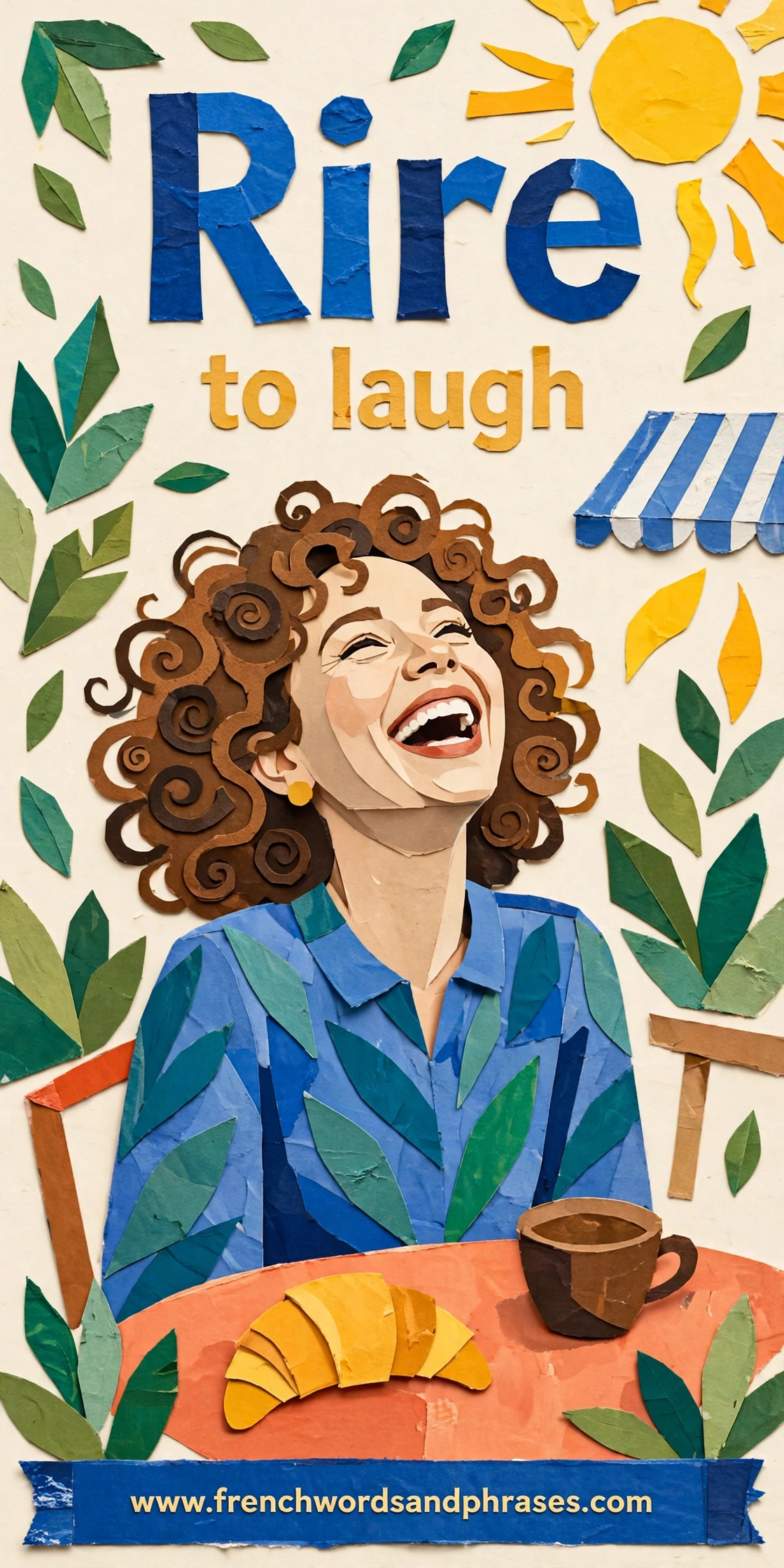
Rire means to laugh — the sound of joy escaping, from a child’s giggle to a whole theatre roaring.
A baby laughing at a hidden face, two old friends helpless over an ancient joke, a theatre erupting at the same second — rire is the verb of laughter in all its forms: the smile that becomes a sound, and the sound that becomes impossible to stop.
In this guide, you’ll learn how to conjugate rire in all the major French tenses and moods. Explore complete conjugation tables, French examples, English translations, and practice quizzes.
Understanding the French Verb Rire
Rire is a short irregular French verb ending in -ire — only two letters in the stem (r-), with doubled i in nous riions / vous riiez in the imperfect and subjunctive.
It means to laugh. It covers the whole scale, from sourire (its table neighbour, the silent smile) to rire aux éclats, roaring with laughter. French grades it finely: un petit rire, a little laugh; un fou rire, uncontrollable giggles; rire jaune, the strained laugh of someone not amused at all. « C’est pour rire » means it is only a joke.
Verb classification: Irregular (-ire)
Auxiliary verb: Avoir
Past participle: ri
Present participle: riant
English equivalents: To laugh; rire aux éclats — to burst out laughing; rire de quelqu’un — to laugh at someone; rire jaune — to laugh uneasily, to force a laugh; un fou rire — a fit of the giggles; pour rire — for a joke, not seriously.
One important detail: rire is built on a stem of a single letter, r-, which produces some doubled i’s that look like spelling mistakes and are not: nous riions, vous riiez in the imperfect and the subjunctive present. And its past participle is unique: ri is invariable — it never agrees, whatever the subject: elle a ri, elles ont ri, nous avons ri. Laughing, in French grammar, leaves no trace on the participle. Note the preposition too: rire de quelque chose is to laugh about it, rire de quelqu’un can turn cruel — to laugh at someone.
Experience the Word
Rire is joy becoming sound — the body’s applause, impossible to fake for long and wonderful to share.
Imagine a family dinner where grandfather begins an old story everyone knows by heart. By the second sentence his grandchildren are shaking, by the third the whole table has given up — on rit, tears and all, at a joke older than the house, and nobody would trade that minute for anything.
No dignity, no control. They laughed — ri, helplessly, together.
How to Conjugate Rire: Complete French Conjugation Guide
Let’s explore every major conjugation of rire, beginning with the indicative mood.
How to Conjugate Rire in the Indicative Mood
The indicative mood is used to express facts, observations, actions, and events.
How to Conjugate Rire in the Present Tense (Présent)
Used for actions happening now, habitual actions, and general truths.
| Subject | Conjugation |
|---|---|
| je | ris |
| tu | ris |
| il / elle | rit |
| nous | rions |
| vous | riez |
| ils / elles | rient |
Example
Les enfants rient pour un rien.
The children laugh at the slightest thing.
Quick Quiz 1
Complete the sentence:
Nous ______ de ses histoires.
Reveal the answer
rions
Nous rions de ses histoires.
We laugh at his stories.
How to Conjugate Rire in the Passé Composé
Used for completed actions in the past. Rire takes the auxiliary verb avoir.
| Subject | Conjugation |
|---|---|
| j’ | ai ri |
| tu | as ri |
| il / elle | a ri |
| nous | avons ri |
| vous | avez ri |
| ils / elles | ont ri |
Example
Elle a ri aux éclats pendant tout le film.
She roared with laughter throughout the film.
How to Conjugate Rire in the Imparfait (Imperfect Tense)
Used for habitual past actions, descriptions, and ongoing situations in the past.
| Subject | Conjugation |
|---|---|
| je | riais |
| tu | riais |
| il / elle | riait |
| nous | riions |
| vous | riiez |
| ils / elles | riaient |
Example
Nous riions souvent de ses histoires.
We often used to laugh at his stories.
Quick Quiz 2
Choose the correct form:
They (f.) laughed all evening.
Elles ______ toute la soirée. (ont ri / ont ries)
Reveal the answer
ont ri
Elles ont ri toute la soirée.
The participle ri is invariable — it never takes agreement.
How to Conjugate Rire in the Plus-que-parfait
Used to describe an action that had already been completed before another past event.
| Subject | Conjugation |
|---|---|
| j’ | avais ri |
| tu | avais ri |
| il / elle | avait ri |
| nous | avions ri |
| vous | aviez ri |
| ils / elles | avaient ri |
Example
Il avait ri avant même de comprendre la blague.
He had laughed before even understanding the joke.
How to Conjugate Rire in the Passé Simple
Primarily used in formal writing, literature, and historical narratives. It is rarely used in everyday conversation.
| Subject | Conjugation |
|---|---|
| je | ris |
| tu | ris |
| il / elle | rit |
| nous | rîmes |
| vous | rîtes |
| ils / elles | rirent |
Example
Le roi rit de bon cœur à cette réponse.
The king laughed heartily at that answer.
How to Conjugate Rire in the Passé Antérieur
A literary tense used to express an action completed immediately before another past action, generally in the passé simple.
| Subject | Conjugation |
|---|---|
| j’ | eus ri |
| tu | eus ri |
| il / elle | eut ri |
| nous | eûmes ri |
| vous | eûtes ri |
| ils / elles | eurent ri |
Example
Quand elle eut ri un bon coup, elle se sentit beaucoup mieux.
When she had had a good laugh, she felt much better.
How to Conjugate Rire in the Future Tense (Futur Simple)
Used to describe actions that will take place in the future.
| Subject | Conjugation |
|---|---|
| je | rirai |
| tu | riras |
| il / elle | rira |
| nous | rirons |
| vous | rirez |
| ils / elles | riront |
Example
Tu riras en lisant cette lettre, je te le promets.
You will laugh when you read this letter, I promise you.
How to Conjugate Rire in the Futur Antérieur (Future Perfect)
Used for an action that will have been completed before a particular point in the future.
| Subject | Conjugation |
|---|---|
| j’ | aurai ri |
| tu | auras ri |
| il / elle | aura ri |
| nous | aurons ri |
| vous | aurez ri |
| ils / elles | auront ri |
Example
À la fin de la pièce, tout le monde aura ri au moins une fois.
By the end of the play, everyone will have laughed at least once.
How to Conjugate Rire in the Near Future (Futur Proche)
Used to describe something that is going to happen soon. Formed with aller + infinitive.
| Subject | Conjugation |
|---|---|
| je | vais rire |
| tu | vas rire |
| il / elle | va rire |
| nous | allons rire |
| vous | allez rire |
| ils / elles | vont rire |
Example
Regarde-la, elle va rire, c’est sûr.
Look at her, she is going to laugh, for sure.
How to Conjugate Rire in the Conditional Mood
The conditional mood expresses what would happen under certain circumstances. It is also frequently used to make polite requests or express wishes.
How to Conjugate Rire in the Present Conditional
| Subject | Conjugation |
|---|---|
| je | rirais |
| tu | rirais |
| il / elle | rirait |
| nous | ririons |
| vous | ririez |
| ils / elles | riraient |
Example
Sans ce chagrin, elle rirait beaucoup plus souvent.
Without this sorrow, she would laugh much more often.
How to Conjugate Rire in the Past Conditional
| Subject | Conjugation |
|---|---|
| j’ | aurais ri |
| tu | aurais ri |
| il / elle | aurait ri |
| nous | aurions ri |
| vous | auriez ri |
| ils / elles | auraient ri |
Example
Il aurait ri s’il avait entendu la blague.
He would have laughed if he had heard the joke.
Rire in the Literary Past Conditional Form
This less common literary form uses the imperfect subjunctive of avoir.
| Subject | Conjugation |
|---|---|
| j’ | eusse ri |
| tu | eusses ri |
| il / elle | eût ri |
| nous | eussions ri |
| vous | eussiez ri |
| ils / elles | eussent ri |
Example
Elle eût ri de cette aventure autrefois.
She would have laughed at this adventure in the old days.
How to Conjugate Rire in the Subjunctive Mood
The subjunctive is used to express wishes, emotions, doubts, necessity, and uncertainty. It frequently follows expressions such as il faut que (it is necessary that) or bien que (although).
How to Conjugate Rire in the Present Subjunctive
| Subject | Conjugation |
|---|---|
| que je | rie |
| que tu | ries |
| qu’il / qu’elle | rie |
| que nous | riions |
| que vous | riiez |
| qu’ils / qu’elles | rient |
Example
Je veux que vous riiez avec nous ce soir.
I want you to laugh with us this evening.
Quick Quiz 3
Complete the sentence using the subjunctive:
Je veux que tu ______ avec nous.
Reveal the answer
ries
Je veux que tu ries avec nous.
I want you to laugh with us.
How to Conjugate Rire in the Imperfect Subjunctive
A literary tense, rarely encountered in modern spoken French.
| Subject | Conjugation |
|---|---|
| que je | risse |
| que tu | risses |
| qu’il / qu’elle | rît |
| que nous | rissions |
| que vous | rissiez |
| qu’ils / qu’elles | rissent |
Example
Il fallait qu’elle rît de sa propre peur.
She needed to laugh at her own fear.
How to Conjugate Rire in the Pluperfect Subjunctive
A literary construction used to express an action completed before another past action.
| Subject | Conjugation |
|---|---|
| que j’ | eusse ri |
| que tu | eusses ri |
| qu’il / qu’elle | eût ri |
| que nous | eussions ri |
| que vous | eussiez ri |
| qu’ils / qu’elles | eussent ri |
Example
On disait qu’ils eussent ri toute la soirée.
People said they had laughed all evening.
How to Conjugate Rire in the Past Subjunctive
| Subject | Conjugation |
|---|---|
| que j’ | aie ri |
| que tu | aies ri |
| qu’il / qu’elle | ait ri |
| que nous | ayons ri |
| que vous | ayez ri |
| qu’ils / qu’elles | aient ri |
Example
Je suis content qu’elle ait ri de ma blague.
I am glad she laughed at my joke.
How to Conjugate Rire in the Imperative
The imperative is used to give commands, instructions, invitations, or suggestions. Subject pronouns are omitted.
How to Conjugate Rire in the Present Imperative
| Person | Conjugation |
|---|---|
| (tu) | ris |
| (nous) | rions |
| (vous) | riez |
Example
Ris un peu, cela te fera du bien !
Laugh a little, it will do you good!
Quick Quiz 4
How would you say Laugh a little (tu form)?
Reveal the answer
Ris un peu !
French Participles of Rire
Participles are verb forms that can be used in compound tenses and other grammatical constructions.
Present Participle of Rire
riant
En riant, elle raconta la fin de l’histoire.
Laughing, she told the end of the story.
Past Participle of Rire
ri
Après avoir ri toute la soirée, elle avait mal aux joues.
After laughing all evening, her cheeks ached.
Rire in Everyday French: Real-Life Examples
Now that you know the conjugations, let’s see how rire appears in everyday French.
Example 1 — Present
Les enfants rient pour un rien.
The children laugh at the slightest thing.
Example 2 — Passé composé
Elle a ri aux éclats.
She roared with laughter.
Example 3 — Imparfait
Nous riions de ses histoires.
We used to laugh at his stories.
Example 4 — Future
Tu riras en lisant cette lettre.
You will laugh reading this letter.
Example 5 — Conditional
Elle rirait plus souvent sans ce chagrin.
She would laugh more often without this sorrow.
Example 6 — Imperative
Ris un peu !
Laugh a little!
Beyond Translation: The Meaning of Rire
English laugh is a Germanic shout of a word; French rire comes from Latin ridere, which also gave ridicule and the smile inside sourire — its table neighbour and closest relative.
French measures laughter like music.
From the silent sourire to the fou rire that leaves a classroom helpless, rire is the scale itself — and its tiny participle, ri, is the sound caught in two letters.
How to Remember the French Verb Rire
Remember it this way: Rire is about the whole table helpless at grandfather’s oldest joke — ri, and no agreement, ever.
- The past participle ri NEVER agrees: elle a ri, elles ont ri — always ri.
- Watch the doubled i: nous riions, vous riiez — imperfect and subjunctive.
- Rire de quelque chose (laugh about it); rire aux éclats (roar); un fou rire (the giggles). Avoir throughout.
The key idea is the whole table helpless at grandfather’s oldest joke — ri, and no agreement, ever.
Test Your Knowledge of Rire
Let’s see how much you’ve learned. Try answering these questions before revealing the answers.
Question 1
What is special about the past participle of rire?
Reveal the answer
It is invariable — ri never agrees: elle a ri, elles ont ri.
Question 2
How do you say The children laugh at the slightest thing in French?
Reveal the answer
Les enfants rient pour un rien.
Question 3
Translate: She roared with laughter.
Reveal the answer
Elle a ri aux éclats.
Question 4
What is the past participle of rire?
Reveal the answer
Ri — invariable, the same for everyone.
Question 5
Complete the sentence:
Je veux que vous ______ avec nous.
Reveal the answer
riiez
Je veux que vous riiez avec nous.
I want you to laugh with us.
Your Final Challenge
Can You Use It?
How would you say this in French?
Laughing together is the shortest road between two hearts.
Reveal the answer
Rire ensemble est le plus court chemin entre deux cœurs.
Laughing together is the shortest road between two hearts.
A little French. A little curiosity. A richer everyday life.
LEARN FRENCH ONE WORD AT A TIME