A French Word to Live By
How to Conjugate Relâcher in French
/ʁə.lɑ.ʃe/
Relâcher means to relax, to slacken off, to release — to loosen what was held tight, whether a rope, a grip, a rule or a prisoner.
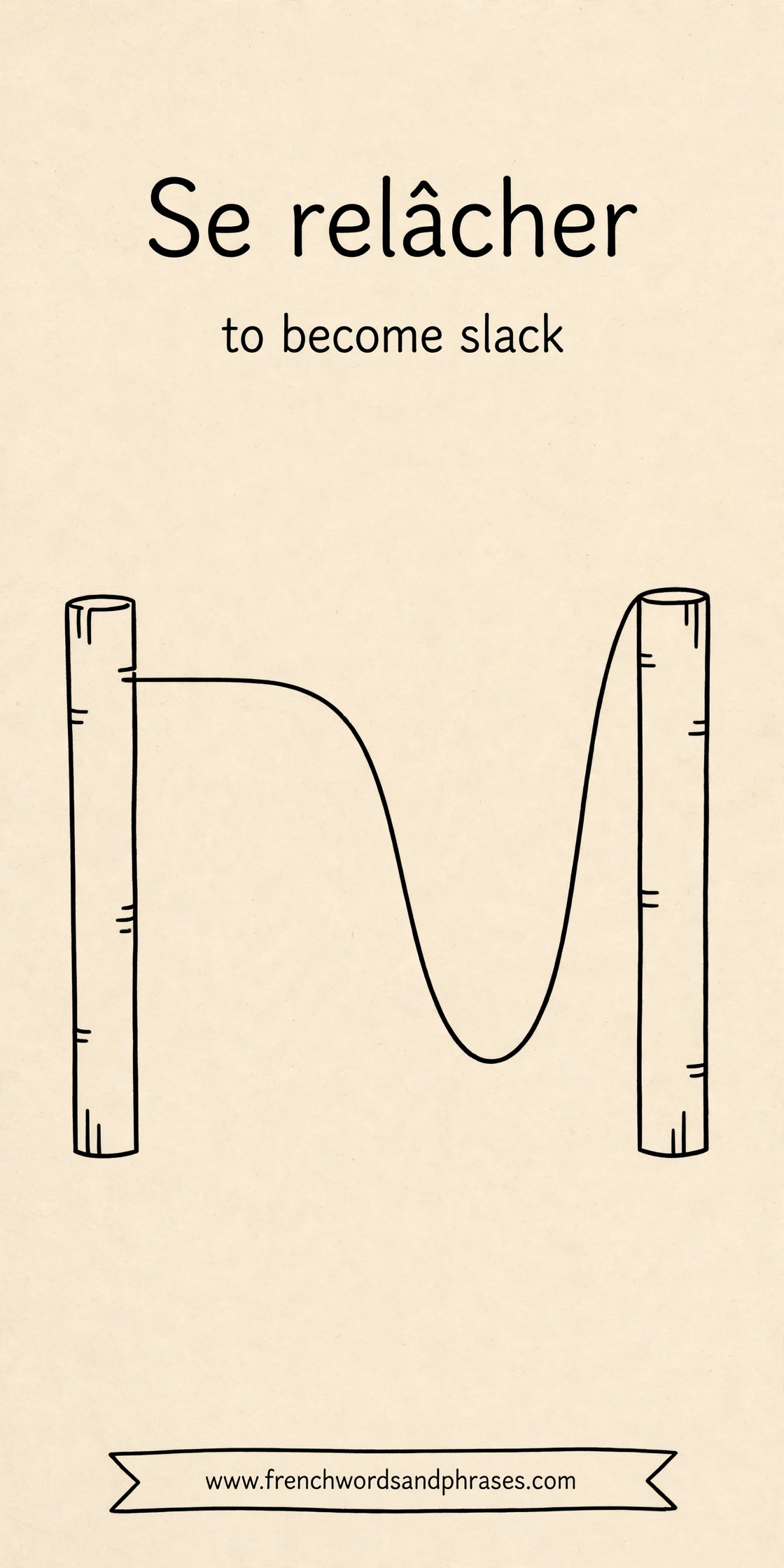
A sailor easing a rope a few centimetres, a mother loosening her grip on a sleeping child, a governor signing a prisoner’s release — relâcher is the verb of controlled loosening: something or someone was held fast, and now, deliberately, the hold gives a little or gives way entirely.
In this guide, you’ll learn how to conjugate relâcher in all the major French tenses and moods. Explore complete conjugation tables, French examples, English translations, and practice quizzes.
Understanding the French Verb Relâcher
Relâcher is a regular French verb belonging to the first group of verbs, those ending in-er.
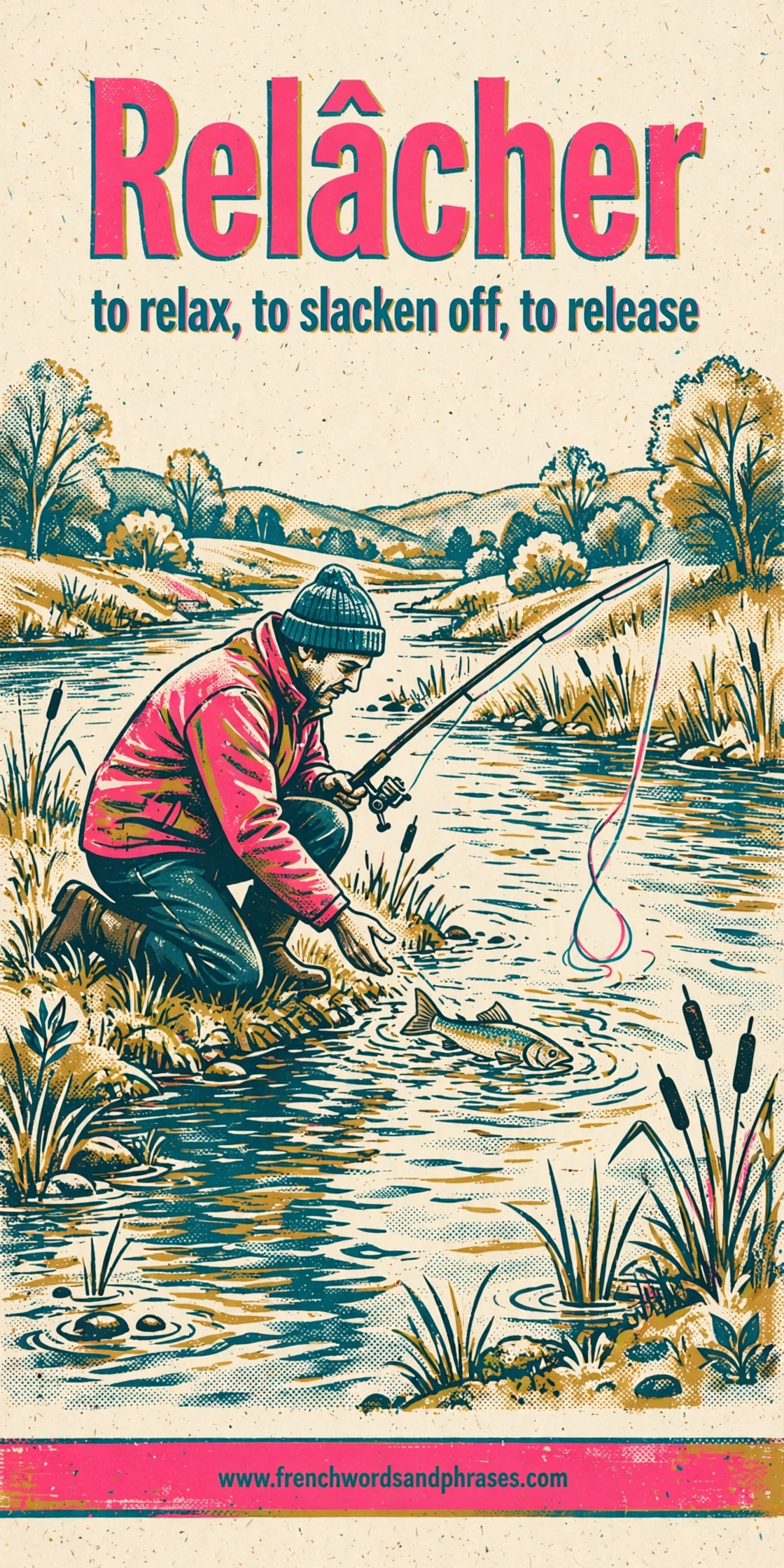
It means to relax, to slacken off, to release. Its range runs from the physical (ropes, reins, clutch pedals, grips) to the institutional: relâcher la discipline, relâcher la surveillance, relâcher ses efforts all describe a hold deliberately loosened. With people and animals as objects it means to set free — relâcher un suspect, relâcher un oiseau — the word used by police reports and nature programmes alike.
Verb classification: First group (-er)
Auxiliary verb: Avoir
Past participle: relâché
Present participle: relâchant
English equivalents: To loosen, to slacken, to release; relâcher une corde — to slacken a rope; relâcher son étreinte — to loosen one’s grip; relâcher la discipline — to let discipline slip; relâcher ses efforts — to ease off one’s efforts; relâcher un prisonnier — to release a prisoner.
One important detail: relâcher keeps the circumflex of lâcher on its â — je relâche, nous relâchons, past participle relâché (the 1990 spelling reform tolerates relacher, but the circumflex remains the standard form). It always takes a direct object: someone relâche something. When the thing loosens by itself, French switches to the reflexive se relâcher — the next page. Beware the noun la relâche: in a theatre it means a day with no performance, and faire relâche is to take a day off.
Experience the Word
Relâcher is letting go by degrees — not dropping, not abandoning, just opening the hand slowly and on purpose.
Imagine a driving lesson on a hill in Marseille. The car rolls back a frightening metre; the instructor’s voice stays calm: relâche l’embrayage, doucement, doucement — and as the pedal rises millimetre by millimetre, the car holds, trembles, and climbs. Everything depends on how slowly the grip is relâché.
Too fast and the engine dies. He has released — relâché — the clutch at exactly the speed the hill demanded.
How to Conjugate Relâcher: Complete French Conjugation Guide
Let’s explore every major conjugation of relâcher, beginning with the indicative mood.
How to Conjugate Relâcher in the Indicative Mood
The indicative mood is used to express facts, observations, actions, and events.
How to Conjugate Relâcher in the Present Tense (Présent)
Used for actions happening now, habitual actions, and general truths.
| Subject | Conjugation |
|---|---|
| je | relâche |
| tu | relâches |
| il / elle | relâche |
| nous | relâchons |
| vous | relâchez |
| ils / elles | relâchent |
Example
Le marin relâche lentement la corde du bateau.
The sailor slowly slackens the boat’s rope.
Quick Quiz 1
Complete the sentence:
Nous ______ la corde petit à petit.
Reveal the answer
relâchons
Nous relâchons la corde petit à petit.
We are slackening the rope little by little.
How to Conjugate Relâcher in the Passé Composé
Used for completed actions in the past. Relâcher takes the auxiliary verb avoir.
| Subject | Conjugation |
|---|---|
| j’ | ai relâché |
| tu | as relâché |
| il / elle | a relâché |
| nous | avons relâché |
| vous | avez relâché |
| ils / elles | ont relâché |
Example
La police a relâché le suspect après l’interrogatoire.
The police released the suspect after questioning.
How to Conjugate Relâcher in the Imparfait (Imperfect Tense)
Used for habitual past actions, descriptions, and ongoing situations in the past.
| Subject | Conjugation |
|---|---|
| je | relâchais |
| tu | relâchais |
| il / elle | relâchait |
| nous | relâchions |
| vous | relâchiez |
| ils / elles | relâchaient |
Example
Vers la fin du trimestre, le professeur relâchait la discipline.
Towards the end of term, the teacher used to let discipline slip.
Quick Quiz 2
Choose the correct form:
The police released the suspect.
La police ______ le suspect. (a relâché / est relâché)
Reveal the answer
a relâché
La police a relâché le suspect.
Relâcher takes avoir.
How to Conjugate Relâcher in the Plus-que-parfait
Used to describe an action that had already been completed before another past event.
| Subject | Conjugation |
|---|---|
| j’ | avais relâché |
| tu | avais relâché |
| il / elle | avait relâché |
| nous | avions relâché |
| vous | aviez relâché |
| ils / elles | avaient relâché |
Example
Elle avait relâché son étreinte avant de s’apercevoir qu’il dormait.
She had loosened her grip before realising that he was asleep.
How to Conjugate Relâcher in the Passé Simple
Primarily used in formal writing, literature, and historical narratives. It is rarely used in everyday conversation.
| Subject | Conjugation |
|---|---|
| je | relâchai |
| tu | relâchas |
| il / elle | relâcha |
| nous | relâchâmes |
| vous | relâchâtes |
| ils / elles | relâchèrent |
Example
Le gardien relâcha les chiens dans la cour.
The keeper let the dogs loose in the yard.
How to Conjugate Relâcher in the Passé Antérieur
A literary tense used to express an action completed immediately before another past action, generally in the passé simple.
| Subject | Conjugation |
|---|---|
| j’ | eus relâché |
| tu | eus relâché |
| il / elle | eut relâché |
| nous | eûmes relâché |
| vous | eûtes relâché |
| ils / elles | eurent relâché |
Example
Quand il eut relâché la bride, le cheval partit au galop.
When he had loosened the reins, the horse set off at a gallop.
How to Conjugate Relâcher in the Future Tense (Futur Simple)
Used to describe actions that will take place in the future.
| Subject | Conjugation |
|---|---|
| je | relâcherai |
| tu | relâcheras |
| il / elle | relâchera |
| nous | relâcherons |
| vous | relâcherez |
| ils / elles | relâcheront |
Example
Nous ne relâcherons pas nos efforts avant la victoire.
We will not ease our efforts before victory.
How to Conjugate Relâcher in the Futur Antérieur (Future Perfect)
Used for an action that will have been completed before a particular point in the future.
| Subject | Conjugation |
|---|---|
| j’ | aurai relâché |
| tu | auras relâché |
| il / elle | aura relâché |
| nous | aurons relâché |
| vous | aurez relâché |
| ils / elles | auront relâché |
Example
À l’aube, les pêcheurs auront relâché les poissons trop petits.
By dawn, the fishermen will have released the fish that are too small.
How to Conjugate Relâcher in the Near Future (Futur Proche)
Used to describe something that is going to happen soon. Formed with aller + infinitive.
| Subject | Conjugation |
|---|---|
| je | vais relâcher |
| tu | vas relâcher |
| il / elle | va relâcher |
| nous | allons relâcher |
| vous | allez relâcher |
| ils / elles | vont relâcher |
Example
Le directeur va relâcher la pression sur les équipes.
The manager is going to ease the pressure on the teams.
How to Conjugate Relâcher in the Conditional Mood
The conditional mood expresses what would happen under certain circumstances. It is also frequently used to make polite requests or express wishes.
How to Conjugate Relâcher in the Present Conditional
| Subject | Conjugation |
|---|---|
| je | relâcherais |
| tu | relâcherais |
| il / elle | relâcherait |
| nous | relâcherions |
| vous | relâcheriez |
| ils / elles | relâcheraient |
Example
À ta place, je relâcherais un peu la corde.
In your place, I would slacken the rope a little.
How to Conjugate Relâcher in the Past Conditional
| Subject | Conjugation |
|---|---|
| j’ | aurais relâché |
| tu | aurais relâché |
| il / elle | aurait relâché |
| nous | aurions relâché |
| vous | auriez relâché |
| ils / elles | auraient relâché |
Example
Ils auraient relâché le prisonnier plus tôt sans la pression des journaux.
They would have released the prisoner earlier without the pressure from the newspapers.
Relâcher in the Literary Past Conditional Form
This less common literary form uses the imperfect subjunctive of avoir.
| Subject | Conjugation |
|---|---|
| j’ | eusse relâché |
| tu | eusses relâché |
| il / elle | eût relâché |
| nous | eussions relâché |
| vous | eussiez relâché |
| ils / elles | eussent relâché |
Example
Le roi eût relâché tous les prisonniers pour son mariage.
The king would have freed all the prisoners for his wedding.
How to Conjugate Relâcher in the Subjunctive Mood
The subjunctive is used to express wishes, emotions, doubts, necessity, and uncertainty. It frequently follows expressions such as il faut que (it is necessary that) or bien que (although).
How to Conjugate Relâcher in the Present Subjunctive
| Subject | Conjugation |
|---|---|
| que je | relâche |
| que tu | relâches |
| qu’il / qu’elle | relâche |
| que nous | relâchions |
| que vous | relâchiez |
| qu’ils / qu’elles | relâchent |
Example
Il faut que tu relâches la pédale d’embrayage doucement.
You must let the clutch pedal out gently.
Quick Quiz 3
Complete the sentence using the subjunctive:
Je crains qu’il ______ son attention.
Reveal the answer
relâche
Je crains qu’il relâche son attention.
I fear he will let his attention wander.
How to Conjugate Relâcher in the Imperfect Subjunctive
A literary tense, rarely encountered in modern spoken French.
| Subject | Conjugation |
|---|---|
| que je | relâchasse |
| que tu | relâchasses |
| qu’il / qu’elle | relâchât |
| que nous | relâchassions |
| que vous | relâchassiez |
| qu’ils / qu’elles | relâchassent |
Example
Je craignais qu’il relâchât son attention au mauvais moment.
I feared he would let his attention wander at the wrong moment.
How to Conjugate Relâcher in the Pluperfect Subjunctive
A literary construction used to express an action completed before another past action.
| Subject | Conjugation |
|---|---|
| que j’ | eusse relâché |
| que tu | eusses relâché |
| qu’il / qu’elle | eût relâché |
| que nous | eussions relâché |
| que vous | eussiez relâché |
| qu’ils / qu’elles | eussent relâché |
Example
On racontait que le geôlier eût relâché les captifs contre de l’or.
People said the jailer had freed the captives in exchange for gold.
How to Conjugate Relâcher in the Past Subjunctive
| Subject | Conjugation |
|---|---|
| que j’ | aie relâché |
| que tu | aies relâché |
| qu’il / qu’elle | ait relâché |
| que nous | ayons relâché |
| que vous | ayez relâché |
| qu’ils / qu’elles | aient relâché |
Example
Je suis soulagé qu’on ait relâché les otages.
I am relieved that the hostages have been released.
How to Conjugate Relâcher in the Imperative
The imperative is used to give commands, instructions, invitations, or suggestions. Subject pronouns are omitted.
How to Conjugate Relâcher in the Present Imperative
| Person | Conjugation |
|---|---|
| (tu) | relâche |
| (nous) | relâchons |
| (vous) | relâchez |
Example
Relâche la corde, elle va casser !
Slack off the rope, it is going to snap!
Quick Quiz 4
How would you say Let the clutch out slowly (tu form)?
Reveal the answer
Relâche l’embrayage lentement !
French Participles of Relâcher
Participles are verb forms that can be used in compound tenses and other grammatical constructions.
Present Participle of Relâcher
relâchant
En relâchant la bride, elle a laissé le cheval choisir le chemin.
By loosening the reins, she let the horse choose the path.
Past Participle of Relâcher
relâché
Relâchés à l’aube, les prisonniers ont retrouvé leurs familles.
Released at dawn, the prisoners were reunited with their families.
Relâcher in Everyday French: Real-Life Examples
Now that you know the conjugations, let’s see how relâcher appears in everyday French.
Example 1 — Present
Il relâche la corde doucement.
He slackens the rope gently.
Example 2 — Passé composé
La police a relâché le suspect.
The police released the suspect.
Example 3 — Imparfait
Elle relâchait son étreinte quand l’enfant s’endormait.
She used to loosen her grip when the child fell asleep.
Example 4 — Future
Nous ne relâcherons pas nos efforts.
We will not ease our efforts.
Example 5 — Conditional
Je relâcherais la pression, à ta place.
I would ease the pressure, in your place.
Example 6 — Imperative
Relâche l’embrayage lentement !
Let the clutch out slowly!
Beyond Translation: The Meaning of Relâcher
English relax and French relâcher share the Latin root laxus, loose — but they have divided the work between them.
Relâcher is about the hold, not the holiday.
It loosens ropes, grips, discipline and prisoners; for a person unwinding on a beach, French prefers se détendre or se relaxer. Its noun le relâchement covers everything from slackening muscles to the moralists’ favourite complaint, le relâchement des mœurs — the loosening of morals.
How to Remember the French Verb Relâcher
Remember it this way: Relâcher is about fingers opening slowly on a tight rope.
- Someone relâche something: a rope, a grip, the discipline, a prisoner — always a direct object.
- The circumflex stays: je relâche, relâché — and la relâche at the theatre means no show today.
- Regular -er with avoir: je relâche, nous relâchons, past participle relâché.
The key idea is fingers opening slowly on a tight rope.
Test Your Knowledge of Relâcher
Let’s see how much you’ve learned. Try answering these questions before revealing the answers.
Question 1
What is the difference between relâcher la corde and la corde se relâche?
Reveal the answer
Relâcher needs a person doing the loosening; se relâcher describes the rope going slack by itself.
Question 2
How do you say The police released the suspect in French?
Reveal the answer
La police a relâché le suspect.
Question 3
Translate: We will not ease our efforts before victory.
Reveal the answer
Nous ne relâcherons pas nos efforts avant la victoire.
Question 4
What is the past participle of relâcher?
Reveal the answer
Relâché — with the circumflex on the a.
Question 5
Complete the sentence:
Il faut que tu ______ l’embrayage doucement.
Reveal the answer
relâches
Il faut que tu relâches l’embrayage doucement.
You must let the clutch out gently.
Your Final Challenge
Can You Use It?
How would you say this in French?
You can only truly release what you first held firmly.
Reveal the answer
On ne relâche bien que ce que l’on a d’abord tenu fermement.
You can only truly release what you first held firmly.
A little French. A little curiosity. A richer everyday life.
LEARN FRENCH ONE WORD AT A TIME