
A French Word to Live By
How to Conjugate Pétrir in French
/pe.tʁiʁ/
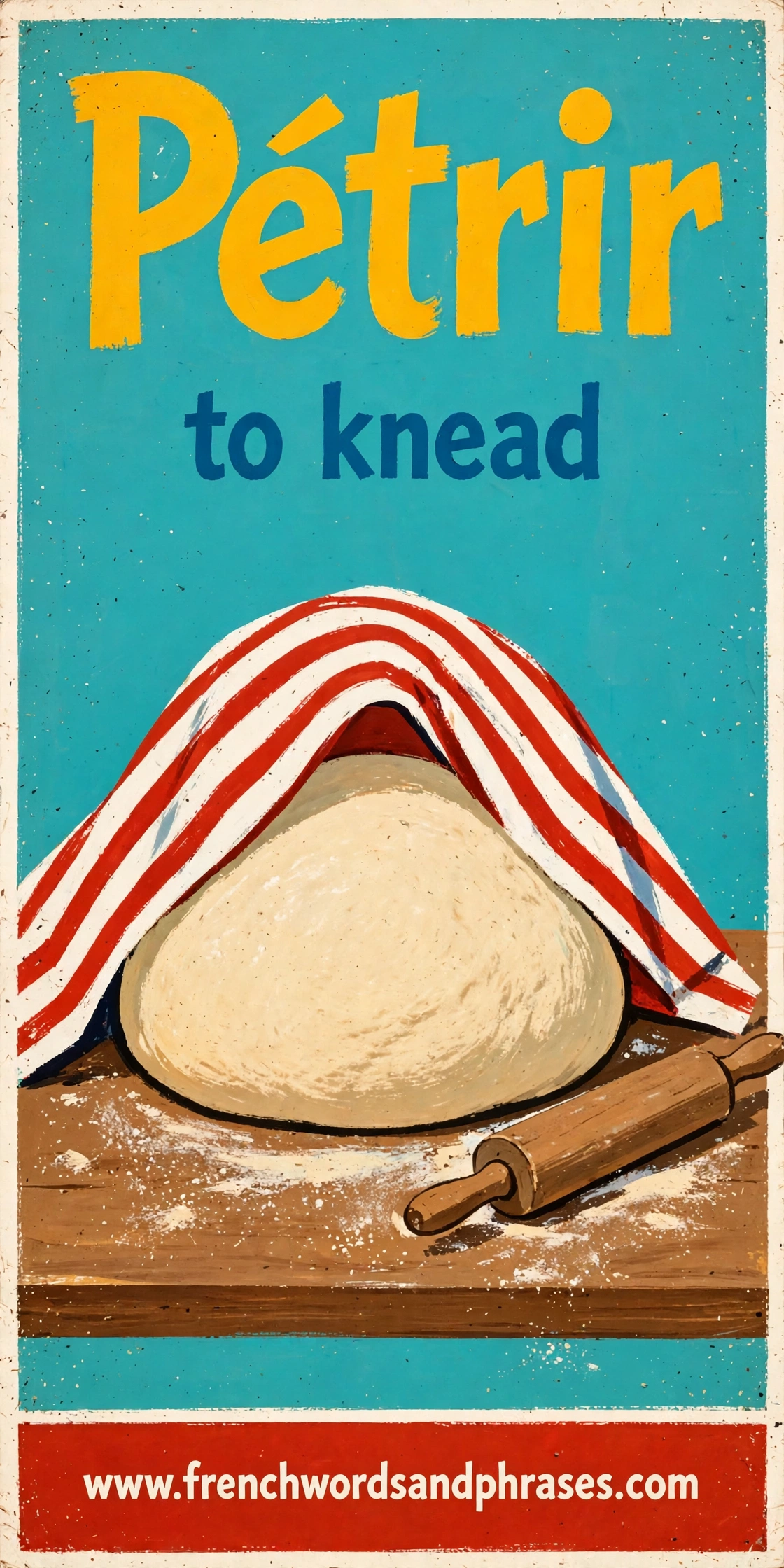
Pétrir means to knead.
Flour, water and two strong hands, a dough that starts shaggy and ends smooth as silk — pétrir is the baker’s founding gesture, the verb that turns powder and water into bread.
In this guide, you’ll learn how to conjugate pétrir in all the major French tenses and moods. Explore complete conjugation tables, French examples, English translations, and practice quizzes.
Understanding the French Verb Pétrir
Pétrir is a regular French verb belonging to the second group of verbs, those ending in -ir.
It means to knead. It is commonly used for kneading bread, pizza and brioche dough by hand or by machine (le pétrin is both the kneading trough and, in slang, a fine mess), for working clay, and figuratively for people steeped in a quality — pétri de talent, pétri de bonnes intentions.
Verb classification: Second group (-ir)
Auxiliary verb: Avoir
Past participle: pétri
Present participle: pétrissant
English equivalents: To knead (dough), to mould, to work (clay); être pétri de — to be steeped in, riddled with (qualities, contradictions).
One important detail: pétrir belongs to the finir family — it conjugates exactly like a regular second-group -ir verb: je pétris, tu pétris, nous pétrissons, past participle pétri. Hands are its first tool: pétrir à la main. And French keeps a fine figurative use: a person pétri de contradictions is kneaded through with contradictions — steeped in them, as if they were worked into the dough.
Experience the Word
Pétrir is the verb of transformation by hand — ten minutes of pushing, folding and turning that no machine has ever quite made romantic.
Imagine a bakery before dawn. The baker leans his weight into the dough, folds it, turns it, folds it again; the rough mass slowly becomes smooth, elastic, alive under his palms.
It is not flour and water any more. It has been kneaded — pétri — and it is on its way to being bread.
How to Conjugate Pétrir: Complete French Conjugation Guide
Let’s explore every major conjugation of pétrir, beginning with the indicative mood.
How to Conjugate Pétrir in the Indicative Mood
The indicative mood is used to express facts, observations, actions, and events.
How to Conjugate Pétrir in the Present Tense (Présent)
Used for actions happening now, habitual actions, and general truths.
| Subject | Conjugation |
|---|---|
| je | pétris |
| tu | pétris |
| il / elle | pétrit |
| nous | pétrissons |
| vous | pétrissez |
| ils / elles | pétrissent |
Example
Le boulanger pétrit la pâte à la main.
The baker kneads the dough by hand.
Quick Quiz 1
Complete the sentence:
Nous ______ la pâte à la main.
Reveal the answer
pétrissons
Nous pétrissons la pâte à la main.
We knead the dough by hand.
How to Conjugate Pétrir in the Passé Composé
Used for completed actions in the past. Pétrir takes the auxiliary verb avoir.
| Subject | Conjugation |
|---|---|
| j’ | ai pétri |
| tu | as pétri |
| il / elle | a pétri |
| nous | avons pétri |
| vous | avez pétri |
| ils / elles | ont pétri |
Example
Elle a pétri la pâte pendant dix minutes.
She kneaded the dough for ten minutes.
How to Conjugate Pétrir in the Imparfait (Imperfect Tense)
Used for habitual past actions, descriptions, and ongoing situations in the past.
| Subject | Conjugation |
|---|---|
| je | pétrissais |
| tu | pétrissais |
| il / elle | pétrissait |
| nous | pétrissions |
| vous | pétrissiez |
| ils / elles | pétrissaient |
Example
Autrefois, on pétrissait la pâte dans un grand pétrin en bois.
In the old days, people used to knead dough in a big wooden trough.
Quick Quiz 2
Choose the correct form:
She kneaded the dough.
Elle ______ la pâte. (a pétri / est pétrie)
Reveal the answer
a pétri
Elle a pétri la pâte.
Pétrir takes avoir.
How to Conjugate Pétrir in the Plus-que-parfait
Used to describe an action that had already been completed before another past event.
| Subject | Conjugation |
|---|---|
| j’ | avais pétri |
| tu | avais pétri |
| il / elle | avait pétri |
| nous | avions pétri |
| vous | aviez pétri |
| ils / elles | avaient pétri |
Example
Nous avions pétri la pâte quand le four fut chaud.
We had kneaded the dough when the oven was hot.
How to Conjugate Pétrir in the Passé Simple
Primarily used in formal writing, literature, and historical narratives. It is rarely used in everyday conversation.
| Subject | Conjugation |
|---|---|
| je | pétris |
| tu | pétris |
| il / elle | pétrit |
| nous | pétrîmes |
| vous | pétrîtes |
| ils / elles | pétrirent |
Example
La boulangère pétrit la pâte dès l’aube.
The baker kneaded the dough from dawn.
How to Conjugate Pétrir in the Passé Antérieur
A literary tense used to express an action completed immediately before another past action, generally in the passé simple.
| Subject | Conjugation |
|---|---|
| j’ | eus pétri |
| tu | eus pétri |
| il / elle | eut pétri |
| nous | eûmes pétri |
| vous | eûtes pétri |
| ils / elles | eurent pétri |
Example
Quand il eut pétri la pâte, il la laissa reposer.
When he had kneaded the dough, he left it to rest.
How to Conjugate Pétrir in the Future Tense (Futur Simple)
Used to describe actions that will take place in the future.
| Subject | Conjugation |
|---|---|
| je | pétrirai |
| tu | pétriras |
| il / elle | pétrira |
| nous | pétrirons |
| vous | pétrirez |
| ils / elles | pétriront |
Example
Demain, tu pétriras la brioche avec les œufs.
Tomorrow, you will knead the brioche with the eggs.
How to Conjugate Pétrir in the Futur Antérieur (Future Perfect)
Used for an action that will have been completed before a particular point in the future.
| Subject | Conjugation |
|---|---|
| j’ | aurai pétri |
| tu | auras pétri |
| il / elle | aura pétri |
| nous | aurons pétri |
| vous | aurez pétri |
| ils / elles | auront pétri |
Example
À six heures, le boulanger aura pétri toutes ses pâtes.
By six o’clock, the baker will have kneaded all his doughs.
How to Conjugate Pétrir in the Near Future (Futur Proche)
Used to describe something that is going to happen soon. Formed with aller + infinitive.
| Subject | Conjugation |
|---|---|
| je | vais pétrir |
| tu | vas pétrir |
| il / elle | va pétrir |
| nous | allons pétrir |
| vous | allez pétrir |
| ils / elles | vont pétrir |
Example
Je vais pétrir la pâte à pizza, farine tes mains.
I am going to knead the pizza dough, flour your hands.
How to Conjugate Pétrir in the Conditional Mood
The conditional mood expresses what would happen under certain circumstances. It is also frequently used to make polite requests or express wishes.
How to Conjugate Pétrir in the Present Conditional
| Subject | Conjugation |
|---|---|
| je | pétrirais |
| tu | pétrirais |
| il / elle | pétrirait |
| nous | pétririons |
| vous | pétririez |
| ils / elles | pétriraient |
Example
Sans robot, je pétrirais la pâte à la main comme autrefois.
Without a mixer, I would knead the dough by hand like in the old days.
How to Conjugate Pétrir in the Past Conditional
| Subject | Conjugation |
|---|---|
| j’ | aurais pétri |
| tu | aurais pétri |
| il / elle | aurait pétri |
| nous | aurions pétri |
| vous | auriez pétri |
| ils / elles | auraient pétri |
Example
Elle aurait pétri plus longtemps pour une mie plus fine.
She would have kneaded longer for a finer crumb.
Pétrir in the Literary Past Conditional Form
This less common literary form uses the imperfect subjunctive of avoir.
| Subject | Conjugation |
|---|---|
| j’ | eusse pétri |
| tu | eusses pétri |
| il / elle | eût pétri |
| nous | eussions pétri |
| vous | eussiez pétri |
| ils / elles | eussent pétri |
Example
Il eût pétri la pâte comme son père le lui avait appris.
He would have kneaded the dough as his father had taught him.
How to Conjugate Pétrir in the Subjunctive Mood
The subjunctive is used to express wishes, emotions, doubts, necessity, and uncertainty. It frequently follows expressions such as il faut que (it is necessary that) or bien que (although).
How to Conjugate Pétrir in the Present Subjunctive
| Subject | Conjugation |
|---|---|
| que je | pétrisse |
| que tu | pétrisses |
| qu’il / qu’elle | pétrisse |
| que nous | pétrissions |
| que vous | pétrissiez |
| qu’ils / qu’elles | pétrissent |
Example
Il faut que tu pétrisses la pâte énergiquement.
You must knead the dough energetically.
Quick Quiz 3
Complete the sentence using the subjunctive:
Il faut que vous ______ la pâte dix minutes.
Reveal the answer
pétrissiez
Il faut que vous pétrissiez la pâte dix minutes.
You must knead the dough for ten minutes.
How to Conjugate Pétrir in the Imperfect Subjunctive
A literary tense, rarely encountered in modern spoken French.
| Subject | Conjugation |
|---|---|
| que je | pétrisse |
| que tu | pétrisses |
| qu’il / qu’elle | pétrît |
| que nous | pétrissions |
| que vous | pétrissiez |
| qu’ils / qu’elles | pétrissent |
Example
Je voulais qu’elle pétrît la pâte à la main.
I wanted her to knead the dough by hand.
How to Conjugate Pétrir in the Pluperfect Subjunctive
A literary construction used to express an action completed before another past action.
| Subject | Conjugation |
|---|---|
| que j’ | eusse pétri |
| que tu | eusses pétri |
| qu’il / qu’elle | eût pétri |
| que nous | eussions pétri |
| que vous | eussiez pétri |
| qu’ils / qu’elles | eussent pétri |
Example
Il regrettait que nous eussions pétri la pâte trop peu.
He regretted that we had kneaded the dough too little.
How to Conjugate Pétrir in the Past Subjunctive
| Subject | Conjugation |
|---|---|
| que j’ | aie pétri |
| que tu | aies pétri |
| qu’il / qu’elle | ait pétri |
| que nous | ayons pétri |
| que vous | ayez pétri |
| qu’ils / qu’elles | aient pétri |
Example
Je suis content que tu aies pétri la pâte à temps.
I am glad you kneaded the dough in time.
How to Conjugate Pétrir in the Imperative
The imperative is used to give commands, instructions, invitations, or suggestions. Subject pronouns are omitted.
How to Conjugate Pétrir in the Present Imperative
| Person | Conjugation |
|---|---|
| (tu) | pétris |
| (nous) | pétrissons |
| (vous) | pétrissez |
Example
Pétris la pâte jusqu’à ce qu’elle soit lisse !
Knead the dough until it is smooth!
Quick Quiz 4
How would you say Knead it (tu form)?
Reveal the answer
Pétris-la !
French Participles of Pétrir
Participles are verb forms that can be used in compound tenses and other grammatical constructions.
Present Participle of Pétrir
pétrissant
En pétrissant la pâte, il pensait à sa journée.
While kneading the dough, he thought about his day.
Past Participle of Pétrir
pétri
Bien pétrie, la pâte devient souple et élastique.
Well kneaded, the dough becomes supple and elastic.
Pétrir in Everyday French: Real-Life Examples
Now that you know the conjugations, let’s see how pétrir appears in everyday French.
Example 1 — Present
Je pétris la pâte à pain le dimanche matin.
I knead the bread dough on Sunday mornings.
Example 2 — Passé composé
Elle a pétri la pâte à brioche.
She kneaded the brioche dough.
Example 3 — Imparfait
Les boulangers pétrissaient tout à la main.
Bakers used to knead everything by hand.
Example 4 — Future
Nous pétrirons la pâte après le petit déjeuner.
We will knead the dough after breakfast.
Example 5 — Conditional
Je pétrirais plus longtemps si j’avais le temps.
I would knead longer if I had the time.
Example 6 — Imperative
Pétrissez la pâte pendant dix minutes !
Knead the dough for ten minutes!
Beyond Translation: The Meaning of Pétrir
English knead stays at the baker’s bench; French pétrir climbs into character — a man pétri de contradictions, a speech pétri de bonnes intentions: qualities worked into a person the way water is worked into flour.
And its trough became a mess.
Le pétrin is the kneading trough — and, in everyday slang, a right mess to be stuck in: être dans le pétrin, to be in trouble, up to your elbows like a baker in his dough.
How to Remember the French Verb Pétrir
Remember it this way: Pétrir is about the baker’s hands — je pétris, nous pétrissons.
- Pétrir conjugates like finir: je pétris, nous pétrissons, past participle pétri.
- Être pétri de — to be steeped in: pétri de talent, pétri de contradictions.
- Le pétrin — the kneading trough, and slang for a fine mess: être dans le pétrin.
The key idea is the baker’s hands — je pétris, nous pétrissons.
Test Your Knowledge of Pétrir
Let’s see how much you’ve learned. Try answering these questions before revealing the answers.
Question 1
How does pétrir conjugate in the present — je ______ ?
Reveal the answer
Je pétris — pétrir follows finir exactly: je pétris, nous pétrissons.
Question 2
How do you say The baker kneads the dough in French?
Reveal the answer
Le boulanger pétrit la pâte.
Question 3
Translate: She kneaded the dough for ten minutes.
Reveal the answer
Elle a pétri la pâte pendant dix minutes.
Question 4
What is the past participle of pétrir?
Reveal the answer
Pétri.
Question 5
Complete the sentence:
Il faut que tu ______ la pâte énergiquement.
Reveal the answer
pétrisses
Il faut que tu pétrisses la pâte énergiquement.
You must knead the dough energetically.
Your Final Challenge
Can You Use It?
How would you say this in French?
Knead the dough with patience, and the bread will repay you.
Reveal the answer
Pétris la pâte avec patience, et le pain te le rendra.
Knead the dough with patience, and the bread will repay you.
A little French. A little curiosity. A richer everyday life.
LEARN FRENCH ONE WORD AT A TIME




