How to Conjugate Papoter in French
/pa.pɔ.te/
Papoter means to gossip — to chat away happily about everything and nothing, usually with people you like.
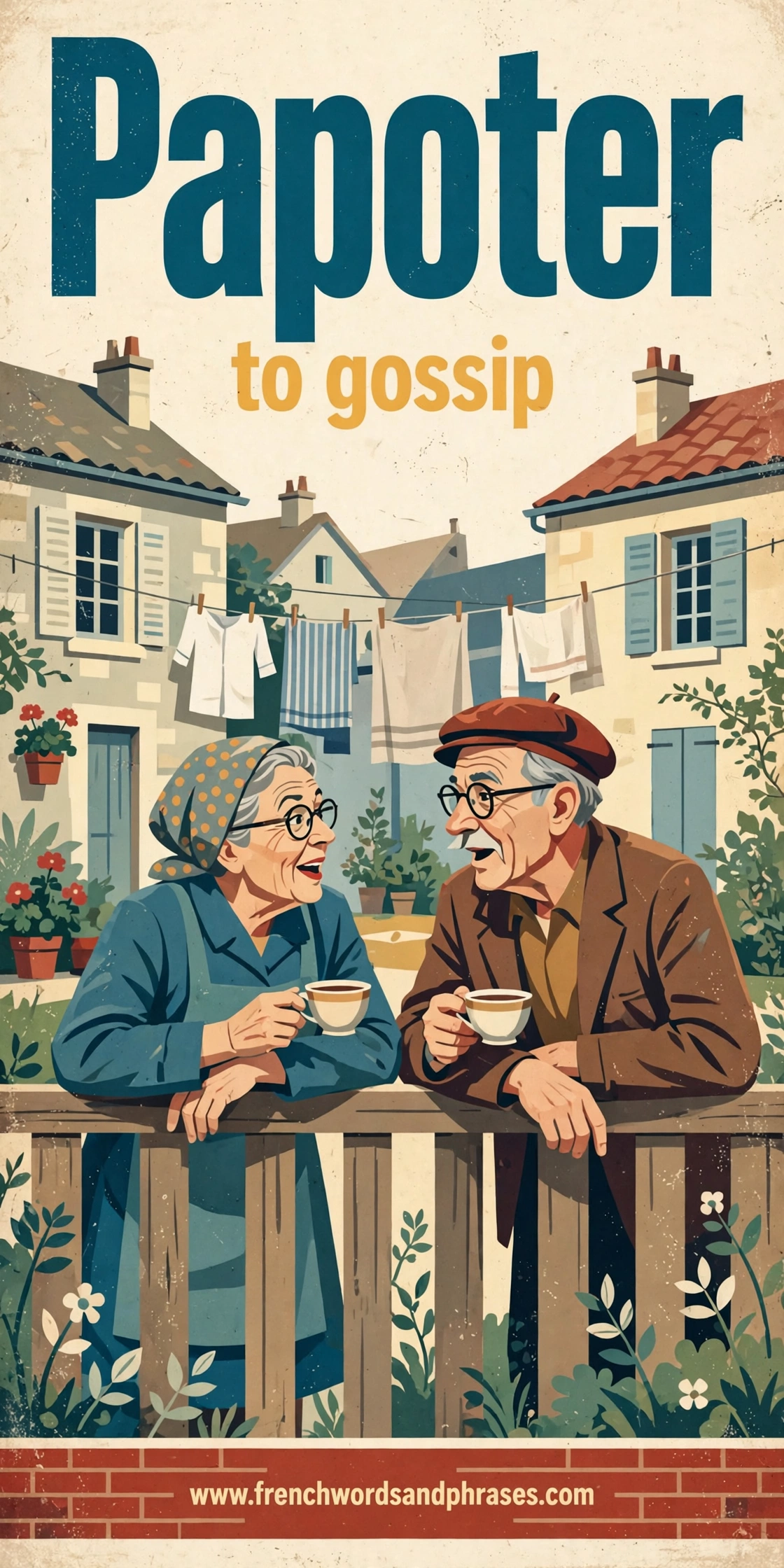
Two neighbours over the garden fence, three friends around a coffee that has long gone cold, colleagues lingering by the machine — papoter is the warm, familiar verb of chatter that is in no hurry to stop.
In this guide, you’ll learn how to conjugate papoter in all the major French tenses and moods. Explore complete conjugation tables, French examples, English translations, and practice quizzes.
Understanding the French Verb Papoter
Papoter is a regular French verb belonging to the first group of verbs, those ending in -er.
It means to gossip. It is the verb of doorsteps, hairdressers, market queues and long phone calls: affectionate, never malicious by itself — papoter is gossiping as a pleasure, not an attack. Groups of friends papotent; whole afternoons disappear into it; and a réunion that achieves nothing is dismissed with on a juste papoté.
Verb classification: First group (-er)
Auxiliary verb: Avoir
Past participle: papoté
Present participle: papotant
English equivalents: To gossip, to chat, to chatter (familiar); papoter entre copines — to have a good gossip among friends; papoter au téléphone — to chat on the phone; papoter de tout et de rien — to chat about everything and nothing; les papotages — chit-chat, gossip.
One important detail: papoter is familier — warm, spoken French, the verb of friends and neighbours, never of official speeches; the neutral verb is bavarder. The conjugation itself is a model regular -er: je papote, nous papotons, j’ai papoté. It is usually intransitive — one papote, papote avec quelqu’un, papote de tout et de rien — and its music gives it away: the word trots along in little syllables, exactly like the chatter it names.
Experience the Word
Papoter is the verb of talk as a treat — no agenda, no minutes, just the pleasure of the voices.
Imagine two old friends who meet ‘for five minutes’ outside the bakery. The bread goes cold in its bag, the street empties and fills again, and still they papotent — children, neighbours, the new baker, the old mayor — until one of them looks at her watch and cries out.
Nothing important was decided or even said. They have gossiped — papoté — and it was the best part of the morning.
How to Conjugate Papoter: Complete French Conjugation Guide
Let’s explore every major conjugation of papoter, beginning with the indicative mood.
How to Conjugate Papoter in the Indicative Mood
The indicative mood is used to express facts, observations, actions, and events.
How to Conjugate Papoter in the Present Tense (Présent)
Used for actions happening now, habitual actions, and general truths.
| Subject | Conjugation |
|---|---|
| je | papote |
| tu | papotes |
| il / elle | papote |
| nous | papotons |
| vous | papotez |
| ils / elles | papotent |
Les voisines papotent sur le pas de la porte.
The neighbours gossip on the doorstep.
Complete the sentence:
Nous ______ de tout et de rien.
Reveal the answer
papotons
Nous papotons de tout et de rien.
We chat about everything and nothing.
How to Conjugate Papoter in the Passé Composé
Used for completed actions in the past. Papoter takes the auxiliary verb avoir.
| Subject | Conjugation |
|---|---|
| j’ | ai papoté |
| tu | as papoté |
| il / elle | a papoté |
| nous | avons papoté |
| vous | avez papoté |
| ils / elles | ont papoté |
Elles ont papoté deux heures au téléphone.
They chatted for two hours on the phone.
How to Conjugate Papoter in the Imparfait (Imperfect Tense)
Used for habitual past actions, descriptions, and ongoing situations in the past.
| Subject | Conjugation |
|---|---|
| je | papotais |
| tu | papotais |
| il / elle | papotait |
| nous | papotions |
| vous | papotiez |
| ils / elles | papotaient |
Nous papotions sur le banc après l’école.
We used to chat on the bench after school.
Choose the correct form:
They chatted for two hours.
Elles ______ deux heures. (ont papoté / sont papotées)
Reveal the answer
ont papoté
Elles ont papoté deux heures.
Papoter takes avoir.
How to Conjugate Papoter in the Plus-que-parfait
Used to describe an action that had already been completed before another past event.
| Subject | Conjugation |
|---|---|
| j’ | avais papoté |
| tu | avais papoté |
| il / elle | avait papoté |
| nous | avions papoté |
| vous | aviez papoté |
| ils / elles | avaient papoté |
Ils avaient papoté si longtemps que le café était froid.
They had chatted so long that the coffee was cold.
How to Conjugate Papoter in the Passé Simple
Primarily used in formal writing, literature, and historical narratives. It is rarely used in everyday conversation.
| Subject | Conjugation |
|---|---|
| je | papotai |
| tu | papotas |
| il / elle | papota |
| nous | papotâmes |
| vous | papotâtes |
| ils / elles | papotèrent |
Les commères papotèrent jusqu’à la tombée de la nuit.
The gossips chattered until nightfall.
How to Conjugate Papoter in the Passé Antérieur
A literary tense used to express an action completed immediately before another past action, generally in the passé simple.
| Subject | Conjugation |
|---|---|
| j’ | eus papoté |
| tu | eus papoté |
| il / elle | eut papoté |
| nous | eûmes papoté |
| vous | eûtes papoté |
| ils / elles | eurent papoté |
Quand elles eurent papoté une heure, elles rentrèrent enfin.
When they had chatted for an hour, they finally went home.
How to Conjugate Papoter in the Future Tense (Futur Simple)
Used to describe actions that will take place in the future.
| Subject | Conjugation |
|---|---|
| je | papoterai |
| tu | papoteras |
| il / elle | papotera |
| nous | papoterons |
| vous | papoterez |
| ils / elles | papoteront |
Ce soir, les copines papoteront autour d’un thé.
This evening, the friends will have a good chat over tea.
How to Conjugate Papoter in the Futur Antérieur (Future Perfect)
Used for an action that will have been completed before a particular point in the future.
| Subject | Conjugation |
|---|---|
| j’ | aurai papoté |
| tu | auras papoté |
| il / elle | aura papoté |
| nous | aurons papoté |
| vous | aurez papoté |
| ils / elles | auront papoté |
À la fin de l’après-midi, elles auront papoté trois heures sans s’en rendre compte.
By the end of the afternoon, they will have chatted for three hours without noticing.
How to Conjugate Papoter in the Near Future (Futur Proche)
Used to describe something that is going to happen soon. Formed with aller + infinitive.
| Subject | Conjugation |
|---|---|
| je | vais papoter |
| tu | vas papoter |
| il / elle | va papoter |
| nous | allons papoter |
| vous | allez papoter |
| ils / elles | vont papoter |
Viens, on va papoter un peu sur la terrasse.
Come on, we are going to have a little chat on the terrace.
How to Conjugate Papoter in the Conditional Mood
The conditional mood expresses what would happen under certain circumstances. It is also frequently used to make polite requests or express wishes.
How to Conjugate Papoter in the Present Conditional
| Subject | Conjugation |
|---|---|
| je | papoterais |
| tu | papoterais |
| il / elle | papoterait |
| nous | papoterions |
| vous | papoteriez |
| ils / elles | papoteraient |
Avec plus de temps, nous papoterions jusqu’à minuit.
With more time, we would chat until midnight.
How to Conjugate Papoter in the Past Conditional
| Subject | Conjugation |
|---|---|
| j’ | aurais papoté |
| tu | aurais papoté |
| il / elle | aurait papoté |
| nous | aurions papoté |
| vous | auriez papoté |
| ils / elles | auraient papoté |
Elles auraient papoté plus longtemps sans la pluie.
They would have chatted longer if not for the rain.
Papoter in the Literary Past Conditional Form
This less common literary form uses the imperfect subjunctive of avoir.
| Subject | Conjugation |
|---|---|
| j’ | eusse papoté |
| tu | eusses papoté |
| il / elle | eût papoté |
| nous | eussions papoté |
| vous | eussiez papoté |
| ils / elles | eussent papoté |
Elles eussent papoté jusqu’à l’aube sans les enfants à coucher.
They would have chatted until dawn but for the children to put to bed.
How to Conjugate Papoter in the Subjunctive Mood
The subjunctive is used to express wishes, emotions, doubts, necessity, and uncertainty. It frequently follows expressions such as il faut que (it is necessary that) or bien que (although).
How to Conjugate Papoter in the Present Subjunctive
| Subject | Conjugation |
|---|---|
| que je | papote |
| que tu | papotes |
| qu’il / qu’elle | papote |
| que nous | papotions |
| que vous | papotiez |
| qu’ils / qu’elles | papotent |
Il est normal que les voisines papotent un peu.
It is normal for the neighbours to have a little gossip.
Complete the sentence using the subjunctive:
Il est normal que vous ______ un peu entre voisines.
Reveal the answer
papotiez
Il est normal que vous papotiez un peu entre voisines.
It is normal for you to have a little gossip as neighbours.
How to Conjugate Papoter in the Imperfect Subjunctive
A literary tense, rarely encountered in modern spoken French.
| Subject | Conjugation |
|---|---|
| que je | papotasse |
| que tu | papotasses |
| qu’il / qu’elle | papotât |
| que nous | papotassions |
| que vous | papotassiez |
| qu’ils / qu’elles | papotassent |
Je doutais qu’elles papotassent encore à cette heure.
I doubted they were still chatting at that hour.
How to Conjugate Papoter in the Pluperfect Subjunctive
A literary construction used to express an action completed before another past action.
| Subject | Conjugation |
|---|---|
| que j’ | eusse papoté |
| que tu | eusses papoté |
| qu’il / qu’elle | eût papoté |
| que nous | eussions papoté |
| que vous | eussiez papoté |
| qu’ils / qu’elles | eussent papoté |
On souriait qu’elles eussent papoté toute la matinée.
People smiled that they had chatted the whole morning away.
How to Conjugate Papoter in the Past Subjunctive
| Subject | Conjugation |
|---|---|
| que j’ | aie papoté |
| que tu | aies papoté |
| qu’il / qu’elle | ait papoté |
| que nous | ayons papoté |
| que vous | ayez papoté |
| qu’ils / qu’elles | aient papoté |
Il est possible qu’elles aient papoté de nous.
It is possible they gossiped about us.
How to Conjugate Papoter in the Imperative
The imperative is used to give commands, instructions, invitations, or suggestions. Subject pronouns are omitted.
How to Conjugate Papoter in the Present Imperative
| Person | Conjugation |
|---|---|
| (tu) | papote |
| (nous) | papotons |
| (vous) | papotez |
Papotez, les filles, le thé est servi !
Have a good chat, girls, the tea is served!
How would you say Have a little chat with me (tu form)?
Reveal the answer
Papote un peu avec moi !
French Participles of Papoter
Participles are verb forms that can be used in compound tenses and other grammatical constructions.
Present Participle of Papoter
papotant
En papotant, elles ont oublié l’heure.
While chatting, they forgot the time.
Past Participle of Papoter
papoté
Papoté entre amies, le secret n’en était plus un.
Chatted about among friends, the secret was no longer one.
Papoter in Everyday French: Real-Life Examples
Now that you know the conjugations, let’s see how papoter appears in everyday French.
Les voisines papotent sur le pas de la porte.
The neighbours gossip on the doorstep.
Elles ont papoté deux heures au téléphone.
They chatted for two hours on the phone.
Nous papotions après l’école.
We used to chat after school.
Les copines papoteront autour d’un thé.
The friends will chat over tea.
Nous papoterions jusqu’à minuit.
We would chat until midnight.
Papote un peu avec moi !
Have a little chat with me!
Beyond Translation: The Meaning of Papoter
The word is built like the sound it names — pa-po-ter, little light syllables trotting along — and French trusts it completely: papoter is the gossip of affection.
Not malice, but music.
Where médire is gossip with a knife in it, papoter is gossip with a coffee in it: the doorstep, the hairdresser’s, the school gate. Its noun le papotage is the chatter itself, and whole friendships are maintained by nothing else.
How to Remember the French Verb Papoter
Remember it this way: Papoter is about two neighbours over the fence, coffee long cold.
- Papoter is familier and friendly — gossip as pleasure; the neutral verb is bavarder, the nasty one médire.
- It loves company: papoter avec quelqu’un, papoter de tout et de rien.
- Regular -er: je papote, nous papotons, past participle papoté.
The key idea is two neighbours over the fence, coffee long cold.
Test Your Knowledge of Papoter
Let’s see how much you’ve learned. Try answering these questions before revealing the answers.
Is papoter formal or familiar French?
Reveal the answer
Familiar — it is the warm, spoken verb of friends and neighbours; the neutral equivalent is bavarder.
How do you say The neighbours gossip on the doorstep in French?
Reveal the answer
Les voisines papotent sur le pas de la porte.
Translate: They chatted for two hours on the phone.
Reveal the answer
Elles ont papoté deux heures au téléphone.
What is the past participle of papoter?
Reveal the answer
Papoté.
Complete the sentence:
Il est normal que les voisines ______ un peu.
Reveal the answer
papotent
Il est normal que les voisines papotent un peu.
It is normal for the neighbours to have a little gossip.
Can You Use It?
How would you say this in French?
They gossip on the doorstep, and the whole neighbourhood parades through their conversation.
Reveal the answer
Elles papotent sur le pas de la porte, et le quartier entier défile dans leur conversation.
They gossip on the doorstep, and the whole neighbourhood parades through their conversation.
LEARN FRENCH ONE WORD AT A TIME