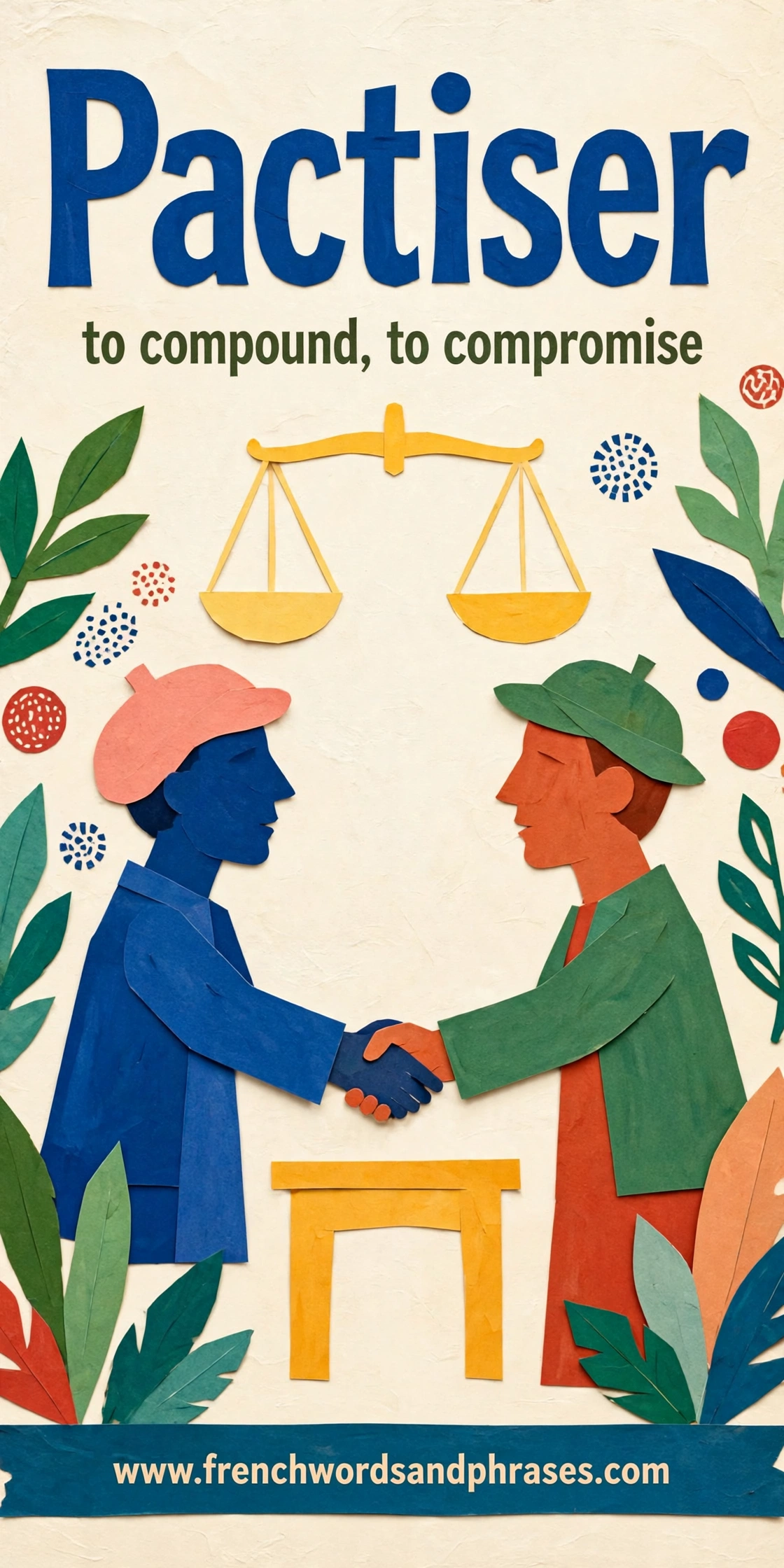
How to Conjugate Pactiser in French
/pak.ti.ze/
Pactiser means to compound, to compromise — to come to terms with an opponent, usually at the price of your principles.
A besieged mayor opens the gates at midnight to talk; a politician shakes the hand he swore he never would. Pactiser is the verb of the deal you make with the other side — and in French it almost always smells of surrender.
In this guide, you’ll learn how to conjugate pactiser in all the major French tenses and moods. Explore complete conjugation tables, French examples, English translations, and practice quizzes.
Understanding the French Verb Pactiser
Pactiser is a regular French verb belonging to the first group of verbs, those ending in -er.
It means to compound, to compromise. It is used in politics, war and moral argument for deals made with an adversary, a temptation or an evil — pactiser avec l’occupant, avec la corruption. A neutral French word for honest compromise would be transiger or trouver un compromis; pactiser is the word the other side uses about you.
Verb classification: First group (-er)
Auxiliary verb: Avoir
Past participle: pactisé
Present participle: pactisant
English equivalents: To come to terms, to compromise, to make a deal; pactiser avec l’ennemi — to come to terms with the enemy; pactiser avec le diable — to make a pact with the devil; refuser de pactiser — to refuse any compromise; pactiser avec sa conscience — to compromise with one’s conscience.
One important detail: pactiser nearly always travels with avec — you do not simply pactiser, you pactisez avec someone: pactiser avec l’ennemi, avec le diable, avec sa conscience. The verb itself is a perfectly regular -er verb (je pactise, nous pactisons, pactisé); the trap is the tone. Where English compromise can be praise, pactiser in French is almost always an accusation — it means selling out, not meeting halfway.
Experience the Word
Pactiser is the verb of the midnight handshake — the deal that ends the fight and stains the hand that made it.
Imagine a small town under pressure from a powerful company. The mayor resists for a year, then one evening the factory gates stay open and the banners come down. Elle a pactisé, say the café terraces — nobody needs to ask with whom, or at what price.
The town has its jobs back. It has compromised — pactisé — and everyone knows exactly what it cost.
How to Conjugate Pactiser: Complete French Conjugation Guide
Let’s explore every major conjugation of pactiser, beginning with the indicative mood.
How to Conjugate Pactiser in the Indicative Mood
The indicative mood is used to express facts, observations, actions, and events.
How to Conjugate Pactiser in the Present Tense (Présent)
Used for actions happening now, habitual actions, and general truths.
| Subject | Conjugation |
|---|---|
| je | pactise |
| tu | pactises |
| il / elle | pactise |
| nous | pactisons |
| vous | pactisez |
| ils / elles | pactisent |
Il refuse de pactiser avec ceux qui l’ont trahi.
He refuses to come to terms with those who betrayed him.
Complete the sentence:
Nous refusons de ______ avec la corruption.
Reveal the answer
pactiser
Nous refusons de pactiser avec la corruption.
We refuse to compromise with corruption.
How to Conjugate Pactiser in the Passé Composé
Used for completed actions in the past. Pactiser takes the auxiliary verb avoir.
| Subject | Conjugation |
|---|---|
| j’ | ai pactisé |
| tu | as pactisé |
| il / elle | a pactisé |
| nous | avons pactisé |
| vous | avez pactisé |
| ils / elles | ont pactisé |
Le gouvernement a pactisé avec les rebelles pour éviter la guerre.
The government came to terms with the rebels to avoid war.
How to Conjugate Pactiser in the Imparfait (Imperfect Tense)
Used for habitual past actions, descriptions, and ongoing situations in the past.
| Subject | Conjugation |
|---|---|
| je | pactisais |
| tu | pactisais |
| il / elle | pactisait |
| nous | pactisions |
| vous | pactisiez |
| ils / elles | pactisaient |
À l’époque, le maire pactisait avec tous les partis.
At the time, the mayor used to deal with every party.
Choose the correct form:
They came to terms with the rebels.
Ils ______ avec les rebelles. (ont pactisé / sont pactisés)
Reveal the answer
ont pactisé
Ils ont pactisé avec les rebelles.
Pactiser takes avoir.
How to Conjugate Pactiser in the Plus-que-parfait
Used to describe an action that had already been completed before another past event.
| Subject | Conjugation |
|---|---|
| j’ | avais pactisé |
| tu | avais pactisé |
| il / elle | avait pactisé |
| nous | avions pactisé |
| vous | aviez pactisé |
| ils / elles | avaient pactisé |
Ils avaient pactisé avec le diable, disait la légende.
They had made a pact with the devil, so the legend said.
How to Conjugate Pactiser in the Passé Simple
Primarily used in formal writing, literature, and historical narratives. It is rarely used in everyday conversation.
| Subject | Conjugation |
|---|---|
| je | pactisai |
| tu | pactisas |
| il / elle | pactisa |
| nous | pactisâmes |
| vous | pactisâtes |
| ils / elles | pactisèrent |
Le chef pactisa avec l’ennemi à la tombée de la nuit.
The chief came to terms with the enemy at nightfall.
How to Conjugate Pactiser in the Passé Antérieur
A literary tense used to express an action completed immediately before another past action, generally in the passé simple.
| Subject | Conjugation |
|---|---|
| j’ | eus pactisé |
| tu | eus pactisé |
| il / elle | eut pactisé |
| nous | eûmes pactisé |
| vous | eûtes pactisé |
| ils / elles | eurent pactisé |
Quand il eut pactisé avec les insurgés, la ville retrouva le calme.
When he had come to terms with the insurgents, the town regained its calm.
How to Conjugate Pactiser in the Future Tense (Futur Simple)
Used to describe actions that will take place in the future.
| Subject | Conjugation |
|---|---|
| je | pactiserai |
| tu | pactiseras |
| il / elle | pactisera |
| nous | pactiserons |
| vous | pactiserez |
| ils / elles | pactiseront |
Jamais je ne pactiserai avec l’injustice.
Never will I compromise with injustice.
How to Conjugate Pactiser in the Futur Antérieur (Future Perfect)
Used for an action that will have been completed before a particular point in the future.
| Subject | Conjugation |
|---|---|
| j’ | aurai pactisé |
| tu | auras pactisé |
| il / elle | aura pactisé |
| nous | aurons pactisé |
| vous | aurez pactisé |
| ils / elles | auront pactisé |
À la fin des pourparlers, ils auront pactisé avec leurs adversaires.
By the end of the talks, they will have come to terms with their opponents.
How to Conjugate Pactiser in the Near Future (Futur Proche)
Used to describe something that is going to happen soon. Formed with aller + infinitive.
| Subject | Conjugation |
|---|---|
| je | vais pactiser |
| tu | vas pactiser |
| il / elle | va pactiser |
| nous | allons pactiser |
| vous | allez pactiser |
| ils / elles | vont pactiser |
Attention, il va pactiser avec nos concurrents.
Careful, he is going to make a deal with our competitors.
How to Conjugate Pactiser in the Conditional Mood
The conditional mood expresses what would happen under certain circumstances. It is also frequently used to make polite requests or express wishes.
How to Conjugate Pactiser in the Present Conditional
| Subject | Conjugation |
|---|---|
| je | pactiserais |
| tu | pactiserais |
| il / elle | pactiserait |
| nous | pactiserions |
| vous | pactiseriez |
| ils / elles | pactiseraient |
Elle pactiserait avec n’importe qui pour garder son poste.
She would compromise with anyone to keep her job.
How to Conjugate Pactiser in the Past Conditional
| Subject | Conjugation |
|---|---|
| j’ | aurais pactisé |
| tu | aurais pactisé |
| il / elle | aurait pactisé |
| nous | aurions pactisé |
| vous | auriez pactisé |
| ils / elles | auraient pactisé |
Il aurait pactisé avec le diable pour réussir.
He would have made a pact with the devil to succeed.
Pactiser in the Literary Past Conditional Form
This less common literary form uses the imperfect subjunctive of avoir.
| Subject | Conjugation |
|---|---|
| j’ | eusse pactisé |
| tu | eusses pactisé |
| il / elle | eût pactisé |
| nous | eussions pactisé |
| vous | eussiez pactisé |
| ils / elles | eussent pactisé |
Il eût pactisé avec l’ennemi plutôt que de perdre son trône.
He would have come to terms with the enemy rather than lose his throne.
How to Conjugate Pactiser in the Subjunctive Mood
The subjunctive is used to express wishes, emotions, doubts, necessity, and uncertainty. It frequently follows expressions such as il faut que (it is necessary that) or bien que (although).
How to Conjugate Pactiser in the Present Subjunctive
| Subject | Conjugation |
|---|---|
| que je | pactise |
| que tu | pactises |
| qu’il / qu’elle | pactise |
| que nous | pactisions |
| que vous | pactisiez |
| qu’ils / qu’elles | pactisent |
Je ne crois pas qu’il pactise avec eux.
I do not believe he will compromise with them.
Complete the sentence using the subjunctive:
Le peuple ne veut pas que le maire ______ avec l’entreprise.
Reveal the answer
pactise
Le peuple ne veut pas que le maire pactise avec l’entreprise.
The people do not want the mayor to make a deal with the company.
How to Conjugate Pactiser in the Imperfect Subjunctive
A literary tense, rarely encountered in modern spoken French.
| Subject | Conjugation |
|---|---|
| que je | pactisasse |
| que tu | pactisasses |
| qu’il / qu’elle | pactisât |
| que nous | pactisassions |
| que vous | pactisassiez |
| qu’ils / qu’elles | pactisassent |
Le peuple ne voulait pas que le roi pactisât avec l’envahisseur.
The people did not want the king to come to terms with the invader.
How to Conjugate Pactiser in the Pluperfect Subjunctive
A literary construction used to express an action completed before another past action.
| Subject | Conjugation |
|---|---|
| que j’ | eusse pactisé |
| que tu | eusses pactisé |
| qu’il / qu’elle | eût pactisé |
| que nous | eussions pactisé |
| que vous | eussiez pactisé |
| qu’ils / qu’elles | eussent pactisé |
On murmurait qu’ils eussent pactisé avec les puissances étrangères.
It was whispered that they had made deals with foreign powers.
How to Conjugate Pactiser in the Past Subjunctive
| Subject | Conjugation |
|---|---|
| que j’ | aie pactisé |
| que tu | aies pactisé |
| qu’il / qu’elle | ait pactisé |
| que nous | ayons pactisé |
| que vous | ayez pactisé |
| qu’ils / qu’elles | aient pactisé |
On lui reproche qu’il ait pactisé avec l’opposition.
He is reproached for having compromised with the opposition.
How to Conjugate Pactiser in the Imperative
The imperative is used to give commands, instructions, invitations, or suggestions. Subject pronouns are omitted.
How to Conjugate Pactiser in the Present Imperative
| Person | Conjugation |
|---|---|
| (tu) | pactise |
| (nous) | pactisons |
| (vous) | pactisez |
Ne pactise jamais avec le mensonge !
Never compromise with lies!
How would you say Never compromise with lies (tu form)?
Reveal the answer
Ne pactise jamais avec le mensonge !
French Participles of Pactiser
Participles are verb forms that can be used in compound tenses and other grammatical constructions.
Present Participle of Pactiser
pactisant
En pactisant avec ses adversaires, il a perdu ses amis.
By compromising with his opponents, he lost his friends.
Past Participle of Pactiser
pactisé
Pactisé dans l’ombre, l’accord ne fut jamais respecté.
Struck in the shadows, the agreement was never honoured.
Pactiser in Everyday French: Real-Life Examples
Now that you know the conjugations, let’s see how pactiser appears in everyday French.
Il refuse de pactiser avec l’ennemi.
He refuses to come to terms with the enemy.
Ils ont pactisé avec les rebelles.
They came to terms with the rebels.
Le maire pactisait avec tous les partis.
The mayor used to deal with every party.
Je ne pactiserai jamais avec l’injustice.
I will never compromise with injustice.
Elle pactiserait avec n’importe qui pour réussir.
She would compromise with anyone to succeed.
Ne pactise pas avec eux !
Do not make a deal with them!
Beyond Translation: The Meaning of Pactiser
The word is built on un pacte, a pact — from the Latin pactum, something agreed — and its darkest French partner is famous: pactiser avec le diable, to make a pact with the devil.
Notice the built-in suspicion.
English can call a compromise wise; French reaches for transiger or un compromis when it approves. Pactiser is saved for the deal you are ashamed of — which is why politicians accuse each other of it and never admit to it themselves.
How to Remember the French Verb Pactiser
Remember it this way: Pactiser is about the midnight handshake with the enemy — a pact at a price.
- Always avec: pactiser avec l’ennemi, avec le diable, avec sa conscience.
- The tone is the trap — pactiser means selling out, not meeting halfway; for honest compromise use transiger.
- Regular -er: je pactise, nous pactisons, past participle pactisé.
The key idea is the midnight handshake with the enemy — a pact at a price.
Test Your Knowledge of Pactiser
Let’s see how much you’ve learned. Try answering these questions before revealing the answers.
Which preposition almost always follows pactiser?
Reveal the answer
Avec — pactiser avec l’ennemi, pactiser avec le diable.
How do you say He refuses to come to terms with the enemy in French?
Reveal the answer
Il refuse de pactiser avec l’ennemi.
Translate: He would have made a pact with the devil to succeed.
Reveal the answer
Il aurait pactisé avec le diable pour réussir.
What is the past participle of pactiser?
Reveal the answer
Pactisé.
Complete the sentence:
Je ne crois pas qu’il ______ avec eux.
Reveal the answer
pactise
Je ne crois pas qu’il pactise avec eux.
I do not believe he will compromise with them.
Can You Use It?
How would you say this in French?
He never compromised with lies, and that is why people still listen to him.
Reveal the answer
Il n’a jamais pactisé avec le mensonge, et c’est pour cela qu’on l’écoute encore.
He never compromised with lies, and that is why people still listen to him.
LEARN FRENCH ONE WORD AT A TIME