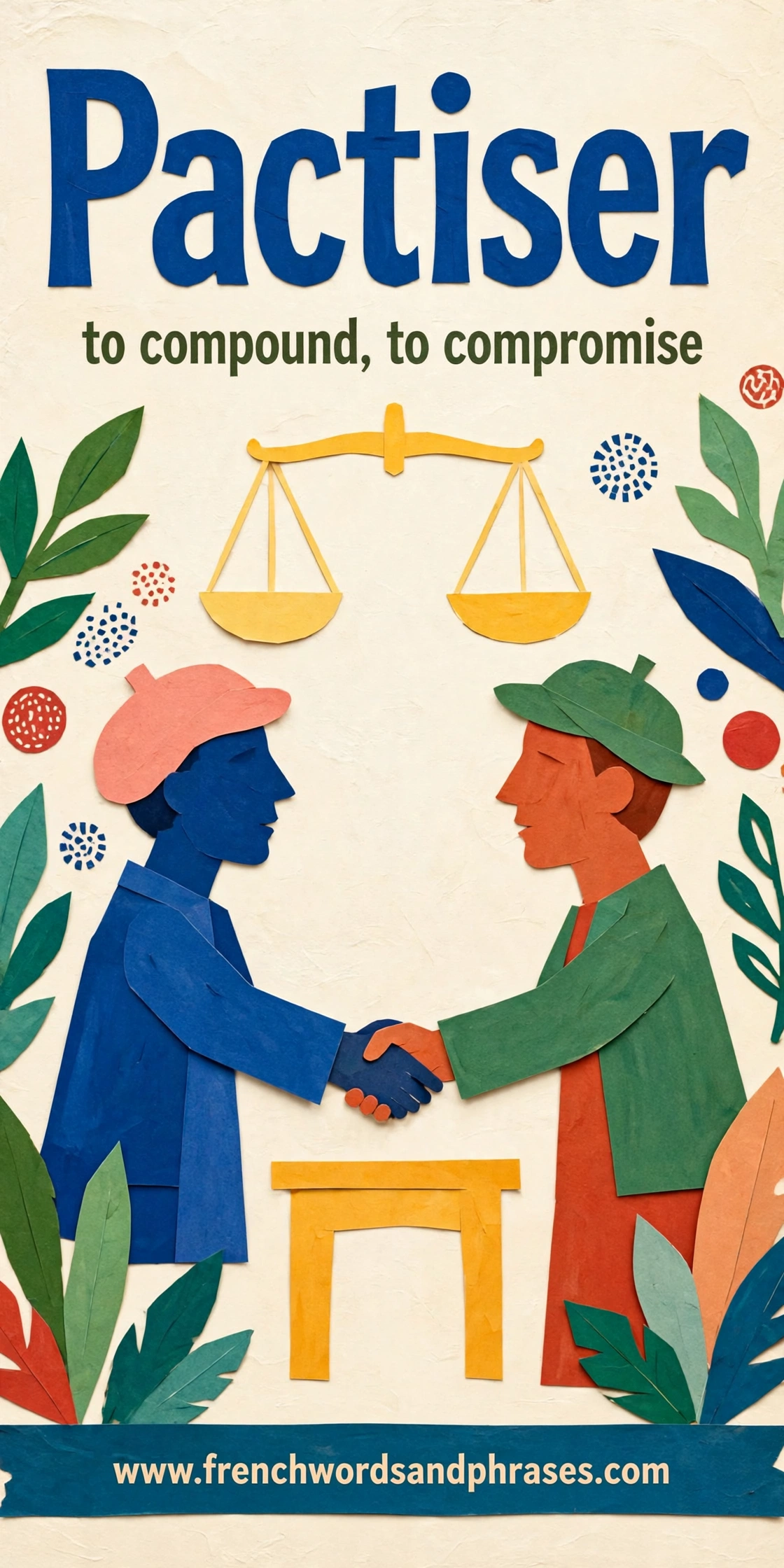
How to Conjugate Pacifier in French
/pa.si.fje/
Pacifier means to pacify — to bring peace back to a place, a crowd or a heart that was at war.
A mediator enters a room where two families have not spoken for years; a treaty is signed in a valley that has heard gunfire for a decade. Pacifier is the verb of peacemaking in action — not just ending a fight, but calming the anger that fed it.
In this guide, you’ll learn how to conjugate pacifier in all the major French tenses and moods. Explore complete conjugation tables, French examples, English translations, and practice quizzes.
Understanding the French Verb Pacifier
Pacifier is a regular French verb belonging to the first group of verbs, those ending in -er.
It means to pacify. It is used of countries and regions after conflict (pacifier une province), of crowds and tempers (pacifier les esprits), and of relationships between people or states. It is stronger than calmer: pacifier means restoring peace where there was real hostility, not just lowering a voice.
Verb classification: First group (-er)
Auxiliary verb: Avoir
Past participle: pacifié
Present participle: pacifiant
English equivalents: To pacify, to calm down, to bring peace to; pacifier une région — to pacify a region; pacifier les esprits — to calm tempers; pacifier les relations — to restore peaceful relations; la pacification — pacification, the peace process.
One important detail: pacifier is a -ier verb, and the stem ends in i, so two i’s meet wherever the ending also begins with i: nous pacifiions, vous pacifiiez in the imperfect, and que nous pacifiions in the subjunctive. It looks like a misprint and it is not: je pacifiais, nous pacifiions. Everywhere else it behaves like the plainest -er verb: je pacifie, nous pacifions, pacifié.
Experience the Word
Pacifier is the verb of the day after the war — weapons down, voices down, and trust slowly rebuilt.
Imagine a valley town after years of feuding families. The new mayor spends her first winter going from door to door, listening more than she talks. By spring the market square is full again — elle a pacifié la vallée, one conversation at a time.
Nobody signed a treaty in the square. The town was pacified — pacifiée — by patience, not by force.
How to Conjugate Pacifier: Complete French Conjugation Guide
Let’s explore every major conjugation of pacifier, beginning with the indicative mood.
How to Conjugate Pacifier in the Indicative Mood
The indicative mood is used to express facts, observations, actions, and events.
How to Conjugate Pacifier in the Present Tense (Présent)
Used for actions happening now, habitual actions, and general truths.
| Subject | Conjugation |
|---|---|
| je | pacifie |
| tu | pacifies |
| il / elle | pacifie |
| nous | pacifions |
| vous | pacifiez |
| ils / elles | pacifient |
Le médiateur pacifie les esprits après des semaines de tension.
The mediator calms tempers after weeks of tension.
Complete the sentence:
Nous ______ les enfants après la dispute.
Reveal the answer
pacifions
Nous pacifions les enfants après la dispute.
We calm the children after the quarrel.
How to Conjugate Pacifier in the Passé Composé
Used for completed actions in the past. Pacifier takes the auxiliary verb avoir.
| Subject | Conjugation |
|---|---|
| j’ | ai pacifié |
| tu | as pacifié |
| il / elle | a pacifié |
| nous | avons pacifié |
| vous | avez pacifié |
| ils / elles | ont pacifié |
Le traité a pacifié la région entière.
The treaty pacified the whole region.
How to Conjugate Pacifier in the Imparfait (Imperfect Tense)
Used for habitual past actions, descriptions, and ongoing situations in the past.
| Subject | Conjugation |
|---|---|
| je | pacifiais |
| tu | pacifiais |
| il / elle | pacifiait |
| nous | pacifiions |
| vous | pacifiiez |
| ils / elles | pacifiaient |
Nous pacifiions les enfants d’une voix douce après la dispute.
We used to calm the children with a gentle voice after the quarrel.
Choose the correct form:
The treaty pacified the region.
Le traité ______ la région. (a pacifié / est pacifié)
Reveal the answer
a pacifié
Le traité a pacifié la région.
Pacifier takes avoir.
How to Conjugate Pacifier in the Plus-que-parfait
Used to describe an action that had already been completed before another past event.
| Subject | Conjugation |
|---|---|
| j’ | avais pacifié |
| tu | avais pacifié |
| il / elle | avait pacifié |
| nous | avions pacifié |
| vous | aviez pacifié |
| ils / elles | avaient pacifié |
Les négociateurs avaient pacifié les deux clans avant l’hiver.
The negotiators had pacified the two clans before winter.
How to Conjugate Pacifier in the Passé Simple
Primarily used in formal writing, literature, and historical narratives. It is rarely used in everyday conversation.
| Subject | Conjugation |
|---|---|
| je | pacifiai |
| tu | pacifias |
| il / elle | pacifia |
| nous | pacifiâmes |
| vous | pacifiâtes |
| ils / elles | pacifièrent |
Le roi pacifia les provinces rebelles en trois ans.
The king pacified the rebel provinces in three years.
How to Conjugate Pacifier in the Passé Antérieur
A literary tense used to express an action completed immediately before another past action, generally in the passé simple.
| Subject | Conjugation |
|---|---|
| j’ | eus pacifié |
| tu | eus pacifié |
| il / elle | eut pacifié |
| nous | eûmes pacifié |
| vous | eûtes pacifié |
| ils / elles | eurent pacifié |
Quand l’armée eut pacifié la vallée, les paysans rentrèrent chez eux.
When the army had pacified the valley, the peasants went back home.
How to Conjugate Pacifier in the Future Tense (Futur Simple)
Used to describe actions that will take place in the future.
| Subject | Conjugation |
|---|---|
| je | pacifierai |
| tu | pacifieras |
| il / elle | pacifiera |
| nous | pacifierons |
| vous | pacifierez |
| ils / elles | pacifieront |
Ce nouvel accord pacifiera les relations entre les deux pays.
This new agreement will pacify relations between the two countries.
How to Conjugate Pacifier in the Futur Antérieur (Future Perfect)
Used for an action that will have been completed before a particular point in the future.
| Subject | Conjugation |
|---|---|
| j’ | aurai pacifié |
| tu | auras pacifié |
| il / elle | aura pacifié |
| nous | aurons pacifié |
| vous | aurez pacifié |
| ils / elles | auront pacifié |
À la fin de l’année, le gouvernement aura pacifié la région.
By the end of the year, the government will have pacified the region.
How to Conjugate Pacifier in the Near Future (Futur Proche)
Used to describe something that is going to happen soon. Formed with aller + infinitive.
| Subject | Conjugation |
|---|---|
| je | vais pacifier |
| tu | vas pacifier |
| il / elle | va pacifier |
| nous | allons pacifier |
| vous | allez pacifier |
| ils / elles | vont pacifier |
Le maire va pacifier le quartier avec ce plan.
The mayor is going to pacify the district with this plan.
How to Conjugate Pacifier in the Conditional Mood
The conditional mood expresses what would happen under certain circumstances. It is also frequently used to make polite requests or express wishes.
How to Conjugate Pacifier in the Present Conditional
| Subject | Conjugation |
|---|---|
| je | pacifierais |
| tu | pacifierais |
| il / elle | pacifierait |
| nous | pacifierions |
| vous | pacifieriez |
| ils / elles | pacifieraient |
Un peu de dialogue pacifierait les esprits.
A little dialogue would calm tempers.
How to Conjugate Pacifier in the Past Conditional
| Subject | Conjugation |
|---|---|
| j’ | aurais pacifié |
| tu | aurais pacifié |
| il / elle | aurait pacifié |
| nous | aurions pacifié |
| vous | auriez pacifié |
| ils / elles | auraient pacifié |
Sans ce médiateur, rien n’aurait pacifié les deux familles.
Without this mediator, nothing would have pacified the two families.
Pacifier in the Literary Past Conditional Form
This less common literary form uses the imperfect subjunctive of avoir.
| Subject | Conjugation |
|---|---|
| j’ | eusse pacifié |
| tu | eusses pacifié |
| il / elle | eût pacifié |
| nous | eussions pacifié |
| vous | eussiez pacifié |
| ils / elles | eussent pacifié |
Il eût pacifié la province entière sans l’ordre de rappel.
He would have pacified the whole province without the recall order.
How to Conjugate Pacifier in the Subjunctive Mood
The subjunctive is used to express wishes, emotions, doubts, necessity, and uncertainty. It frequently follows expressions such as il faut que (it is necessary that) or bien que (although).
How to Conjugate Pacifier in the Present Subjunctive
| Subject | Conjugation |
|---|---|
| que je | pacifie |
| que tu | pacifies |
| qu’il / qu’elle | pacifie |
| que nous | pacifiions |
| que vous | pacifiiez |
| qu’ils / qu’elles | pacifient |
Il faut que ce discours pacifie les esprits.
This speech must calm tempers.
Complete the sentence using the subjunctive:
Il faut que vous ______ les esprits avant la réunion.
Reveal the answer
pacifiiez
Il faut que vous pacifiiez les esprits avant la réunion.
You must calm tempers before the meeting.
How to Conjugate Pacifier in the Imperfect Subjunctive
A literary tense, rarely encountered in modern spoken French.
| Subject | Conjugation |
|---|---|
| que je | pacifiasse |
| que tu | pacifiasses |
| qu’il / qu’elle | pacifiât |
| que nous | pacifiassions |
| que vous | pacifiassiez |
| qu’ils / qu’elles | pacifiassent |
On espérait que le traité pacifiât durablement le pays.
People hoped the treaty would lastingly pacify the country.
How to Conjugate Pacifier in the Pluperfect Subjunctive
A literary construction used to express an action completed before another past action.
| Subject | Conjugation |
|---|---|
| que j’ | eusse pacifié |
| que tu | eusses pacifié |
| qu’il / qu’elle | eût pacifié |
| que nous | eussions pacifié |
| que vous | eussiez pacifié |
| qu’ils / qu’elles | eussent pacifié |
On doutait que les accords eussent pacifié les esprits pour longtemps.
People doubted the agreements had calmed tempers for long.
How to Conjugate Pacifier in the Past Subjunctive
| Subject | Conjugation |
|---|---|
| que j’ | aie pacifié |
| que tu | aies pacifié |
| qu’il / qu’elle | ait pacifié |
| que nous | ayons pacifié |
| que vous | ayez pacifié |
| qu’ils / qu’elles | aient pacifié |
Je suis heureux que la réunion ait pacifié tout le monde.
I am glad the meeting calmed everyone down.
How to Conjugate Pacifier in the Imperative
The imperative is used to give commands, instructions, invitations, or suggestions. Subject pronouns are omitted.
How to Conjugate Pacifier in the Present Imperative
| Person | Conjugation |
|---|---|
| (tu) | pacifie |
| (nous) | pacifions |
| (vous) | pacifiez |
Pacifiez les esprits avant de signer quoi que ce soit !
Calm everyone down before signing anything!
How would you say Calm everyone down (tu form)?
Reveal the answer
Pacifie les esprits !
French Participles of Pacifier
Participles are verb forms that can be used in compound tenses and other grammatical constructions.
Present Participle of Pacifier
pacifiant
En pacifiant les esprits, elle a évité un conflit.
By calming tempers, she avoided a conflict.
Past Participle of Pacifier
pacifié
Pacifiée après des années de troubles, la région attire les visiteurs.
Pacified after years of unrest, the region attracts visitors.
Pacifier in Everyday French: Real-Life Examples
Now that you know the conjugations, let’s see how pacifier appears in everyday French.
Le médiateur pacifie les esprits.
The mediator calms tempers.
Le traité a pacifié la région.
The treaty pacified the region.
Nous pacifiions les enfants après la dispute.
We used to calm the children after the quarrel.
Cet accord pacifiera les deux pays.
This agreement will pacify the two countries.
Un peu de dialogue pacifierait les esprits.
A little dialogue would calm tempers.
Pacifie les esprits, s’il te plaît !
Calm everyone down, please!
Beyond Translation: The Meaning of Pacifier
English pacify is the same word wearing a uniform — both come from the Latin pax, pacis, peace, plus facere, to make: pacifier is literally peace-making.
French keeps the family close.
La paix is peace, pacifique is peaceful — and the Pacific Ocean, l’océan Pacifique, was named for the calm its first European sailors found there. When tempers flare at a family dinner, pacifier les esprits is the elegant way to say what a grandmother does with dessert.
How to Remember the French Verb Pacifier
Remember it this way: Pacifier is about the mediator in the doorway, bringing peace back into the room.
- Mind the double i: nous pacifiions, vous pacifiiez — stem i plus ending i, both written.
- Stronger than calmer: pacifier restores peace after real hostility — pacifier une région, pacifier les esprits.
- Regular -er endings otherwise: je pacifie, nous pacifions, past participle pacifié.
The key idea is the mediator in the doorway, bringing peace back into the room.
Test Your Knowledge of Pacifier
Let’s see how much you’ve learned. Try answering these questions before revealing the answers.
Why does the imperfect read nous pacifiions with two i’s?
Reveal the answer
The -ier rule — the stem already ends in i, and the imperfect ending adds another: je pacifiais, nous pacifiions.
How do you say The treaty pacified the region in French?
Reveal the answer
Le traité a pacifié la région.
Translate: A little dialogue would calm tempers.
Reveal the answer
Un peu de dialogue pacifierait les esprits.
What is the past participle of pacifier?
Reveal the answer
Pacifié.
Complete the sentence:
Il faut que ce discours ______ les esprits.
Reveal the answer
pacifie
Il faut que ce discours pacifie les esprits.
This speech must calm tempers.
Can You Use It?
How would you say this in French?
She pacified the valley without raising her voice, one coffee and one listening ear at a time.
Reveal the answer
Elle a pacifié la vallée sans lever la voix, un café et une écoute à la fois.
She pacified the valley without raising her voice, one coffee and one listening ear at a time.
LEARN FRENCH ONE WORD AT A TIME