
A French Word to Live By
How to Conjugate Objurguer in French
/ɔb.ʒyʁ.ɡe/
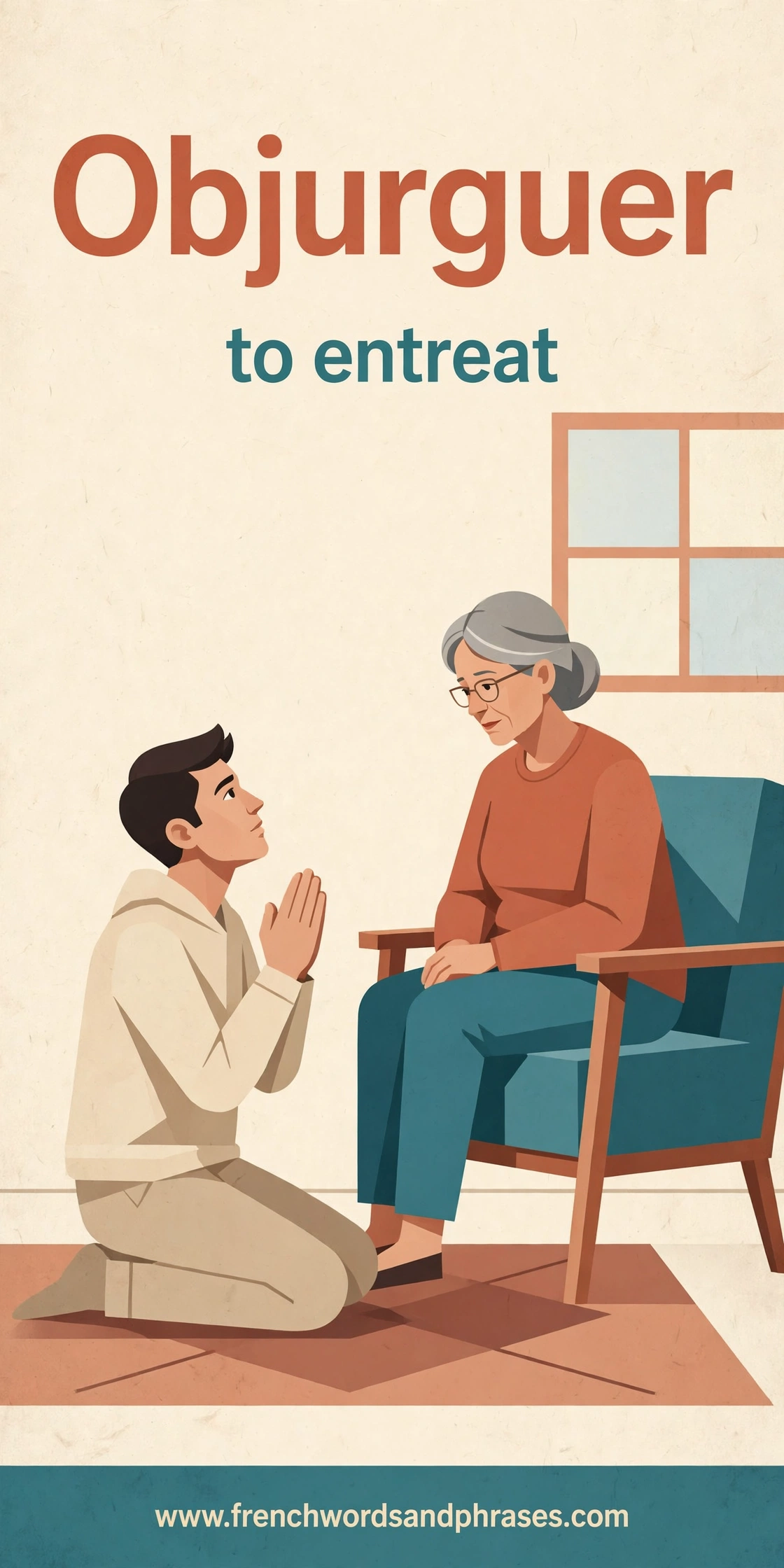
Objurguer means to entreat — to plead with someone earnestly, urgently, almost solemnly, as one pleads in a tragedy or a great letter.
A mother on her knees before a king, a father writing page after page to a son about to fight a duel — objurguer is the grand, literary verb of pleading: begging raised to the level of eloquence.
In this guide, you’ll learn how to conjugate objurguer in all the major French tenses and moods. Explore complete conjugation tables, French examples, English translations, and practice quizzes.
Understanding the French Verb Objurguer
Objurguer is a regular French verb belonging to the first group of verbs, those ending in -er.
It means to entreat. It is commonly used in literature and elevated prose for pleading with someone to act or to renounce — a duel, a marriage, a vengeance — and in journalism, slightly ironically, for the urgent appeals of politicians and editorialists.
Verb classification: First group (-er)
Auxiliary verb: Avoir
Past participle: objurgué
Present participle: objurguant
English equivalents: To entreat, to beseech, to plead with; objurguer quelqu’un de faire quelque chose — to implore someone to do something; les objurgations — earnest entreaties, pressing pleas.
One important detail: objurguer keeps its -gu- everywhere to protect the hard g sound: nous objurguons, en objurguant, j’objurguai. It starts with a vowel sound, so je becomes j’. Above all, know its register: objurguer is a literary verb, at home in novels, tragedies and formal letters — in the street you would supplier or implorer instead. Its noun, les objurgations, means pressing, repeated entreaties.
Experience the Word
Objurguer is pleading with the volume of history — knees on the floor, hands joined, words chosen like weapons.
Imagine a scene from a classical tragedy. The old counsellor crosses the throne room, kneels, and objurgue le roi — he entreats the king, in long burning sentences, to spare the prisoner and abandon his anger.
This is no casual request. He has entreated — il a objurgué — and the court holds its breath.
How to Conjugate Objurguer: Complete French Conjugation Guide
Let’s explore every major conjugation of objurguer, beginning with the indicative mood.
How to Conjugate Objurguer in the Indicative Mood
The indicative mood is used to express facts, observations, actions, and events.
How to Conjugate Objurguer in the Present Tense (Présent)
Used for actions happening now, habitual actions, and general truths.
| Subject | Conjugation |
|---|---|
| je | objurgue |
| tu | objurgues |
| il / elle | objurgue |
| nous | objurguons |
| vous | objurguez |
| ils / elles | objurguent |
Example
Elle objurgue son fils de renoncer à ce mariage.
She entreats her son to give up this marriage.
Quick Quiz 1
Complete the sentence:
Nous ______ le ministre de nous recevoir.
Reveal the answer
objurguons
Nous objurguons le ministre de nous recevoir.
We entreat the minister to receive us.
How to Conjugate Objurguer in the Passé Composé
Used for completed actions in the past. Objurguer takes the auxiliary verb avoir.
| Subject | Conjugation |
|---|---|
| j’ | ai objurgué |
| tu | as objurgué |
| il / elle | a objurgué |
| nous | avons objurgué |
| vous | avez objurgué |
| ils / elles | ont objurgué |
Example
Il a objurgué le juge de rouvrir le dossier.
He pleaded with the judge to reopen the case.
How to Conjugate Objurguer in the Imparfait (Imperfect Tense)
Used for habitual past actions, descriptions, and ongoing situations in the past.
| Subject | Conjugation |
|---|---|
| je | objurguais |
| tu | objurguais |
| il / elle | objurguait |
| nous | objurguions |
| vous | objurguiez |
| ils / elles | objurguaient |
Example
Chaque soir, elle objurguait son mari d’abandonner le duel.
Every evening, she used to entreat her husband to abandon the duel.
Quick Quiz 2
Choose the correct form:
He pleaded with the judge.
Il ______ le juge. (a objurgué / est objurgué)
Reveal the answer
a objurgué
Il a objurgué le juge.
Objurguer takes avoir.
How to Conjugate Objurguer in the Plus-que-parfait
Used to describe an action that had already been completed before another past event.
| Subject | Conjugation |
|---|---|
| j’ | avais objurgué |
| tu | avais objurgué |
| il / elle | avait objurgué |
| nous | avions objurgué |
| vous | aviez objurgué |
| ils / elles | avaient objurgué |
Example
Le vieillard avait objurgué les deux frères de se réconcilier.
The old man had entreated the two brothers to make peace.
How to Conjugate Objurguer in the Passé Simple
Primarily used in formal writing, literature, and historical narratives. It is rarely used in everyday conversation.
| Subject | Conjugation |
|---|---|
| je | objurguai |
| tu | objurguas |
| il / elle | objurgua |
| nous | objurguâmes |
| vous | objurguâtes |
| ils / elles | objurguèrent |
Example
Il objurgua son fils de renoncer au duel.
He entreated his son to renounce the duel.
How to Conjugate Objurguer in the Passé Antérieur
A literary tense used to express an action completed immediately before another past action, generally in the passé simple.
| Subject | Conjugation |
|---|---|
| j’ | eus objurgué |
| tu | eus objurgué |
| il / elle | eut objurgué |
| nous | eûmes objurgué |
| vous | eûtes objurgué |
| ils / elles | eurent objurgué |
Example
Quand elle eut objurgué le roi une dernière fois, elle se retira.
When she had entreated the king one last time, she withdrew.
How to Conjugate Objurguer in the Future Tense (Futur Simple)
Used to describe actions that will take place in the future.
| Subject | Conjugation |
|---|---|
| je | objurguerai |
| tu | objurgueras |
| il / elle | objurguera |
| nous | objurguerons |
| vous | objurguerez |
| ils / elles | objurgueront |
Example
Je vous objurguerai jusqu’à ce que vous cédiez.
I will entreat you until you give in.
How to Conjugate Objurguer in the Futur Antérieur (Future Perfect)
Used for an action that will have been completed before a particular point in the future.
| Subject | Conjugation |
|---|---|
| j’ | aurai objurgué |
| tu | auras objurgué |
| il / elle | aura objurgué |
| nous | aurons objurgué |
| vous | aurez objurgué |
| ils / elles | auront objurgué |
Example
À la fin de l’audience, il aura objurgué trois fois le tribunal.
By the end of the hearing, he will have pleaded with the court three times.
How to Conjugate Objurguer in the Near Future (Futur Proche)
Used to describe something that is going to happen soon. Formed with aller + infinitive.
| Subject | Conjugation |
|---|---|
| je | vais objurguer |
| tu | vas objurguer |
| il / elle | va objurguer |
| nous | allons objurguer |
| vous | allez objurguer |
| ils / elles | vont objurguer |
Example
Je vais l’objurguer de rester parmi nous.
I am going to entreat him to stay among us.
How to Conjugate Objurguer in the Conditional Mood
The conditional mood expresses what would happen under certain circumstances. It is also frequently used to make polite requests or express wishes.
How to Conjugate Objurguer in the Present Conditional
| Subject | Conjugation |
|---|---|
| je | objurguerais |
| tu | objurguerais |
| il / elle | objurguerait |
| nous | objurguerions |
| vous | objurgueriez |
| ils / elles | objurgueraient |
Example
À genoux, elle l’objurguerait encore si elle osait.
On her knees, she would entreat him again if she dared.
How to Conjugate Objurguer in the Past Conditional
| Subject | Conjugation |
|---|---|
| j’ | aurais objurgué |
| tu | aurais objurgué |
| il / elle | aurait objurgué |
| nous | aurions objurgué |
| vous | auriez objurgué |
| ils / elles | auraient objurgué |
Example
Il aurait objurgué le roi si la garde l’avait laissé passer.
He would have entreated the king if the guard had let him through.
Objurguer in the Literary Past Conditional Form
This less common literary form uses the imperfect subjunctive of avoir.
| Subject | Conjugation |
|---|---|
| j’ | eusse objurgué |
| tu | eusses objurgué |
| il / elle | eût objurgué |
| nous | eussions objurgué |
| vous | eussiez objurgué |
| ils / elles | eussent objurgué |
Example
Elle eût objurgué son fils avant le départ des navires.
She would have entreated her son before the ships sailed.
How to Conjugate Objurguer in the Subjunctive Mood
The subjunctive is used to express wishes, emotions, doubts, necessity, and uncertainty. It frequently follows expressions such as il faut que (it is necessary that) or bien que (although).
How to Conjugate Objurguer in the Present Subjunctive
| Subject | Conjugation |
|---|---|
| que je | objurgue |
| que tu | objurgues |
| qu’il / qu’elle | objurgue |
| que nous | objurguions |
| que vous | objurguiez |
| qu’ils / qu’elles | objurguent |
Example
Il faut que je l’objurgue une dernière fois.
I must entreat him one last time.
Quick Quiz 3
Complete the sentence using the subjunctive:
Il faut que je l’______ une dernière fois.
Reveal the answer
objurgue
Il faut que je l’objurgue une dernière fois.
I must entreat him one last time.
How to Conjugate Objurguer in the Imperfect Subjunctive
A literary tense, rarely encountered in modern spoken French.
| Subject | Conjugation |
|---|---|
| que je | objurguasse |
| que tu | objurguasses |
| qu’il / qu’elle | objurguât |
| que nous | objurguassions |
| que vous | objurguassiez |
| qu’ils / qu’elles | objurguassent |
Example
Le roi ne souffrait pas qu’on l’objurguât en public.
The king would not tolerate being entreated in public.
How to Conjugate Objurguer in the Pluperfect Subjunctive
A literary construction used to express an action completed before another past action.
| Subject | Conjugation |
|---|---|
| que j’ | eusse objurgué |
| que tu | eusses objurgué |
| qu’il / qu’elle | eût objurgué |
| que nous | eussions objurgué |
| que vous | eussiez objurgué |
| qu’ils / qu’elles | eussent objurgué |
Example
Les chroniques racontent qu’elle eût objurgué le ciel et la terre.
The chronicles tell that she had entreated heaven and earth.
How to Conjugate Objurguer in the Past Subjunctive
| Subject | Conjugation |
|---|---|
| que j’ | aie objurgué |
| que tu | aies objurgué |
| qu’il / qu’elle | ait objurgué |
| que nous | ayons objurgué |
| que vous | ayez objurgué |
| qu’ils / qu’elles | aient objurgué |
Example
Je doute qu’il ait objurgué qui que ce soit.
I doubt that he entreated anyone at all.
How to Conjugate Objurguer in the Imperative
The imperative is used to give commands, instructions, invitations, or suggestions. Subject pronouns are omitted.
How to Conjugate Objurguer in the Present Imperative
| Person | Conjugation |
|---|---|
| (tu) | objurgue |
| (nous) | objurguons |
| (vous) | objurguez |
Example
Objurguez le roi pendant qu’il est encore temps !
Entreat the king while there is still time!
Quick Quiz 4
How would you say Entreat the king (vous form)?
Reveal the answer
Objurguez le roi !
French Participles of Objurguer
Participles are verb forms that can be used in compound tenses and other grammatical constructions.
Present Participle of Objurguer
objurguant
En objurguant son fils, elle pleurait sans bruit.
While entreating her son, she wept silently.
Past Participle of Objurguer
objurgué
Objurgué par sa mère, le jeune homme renonça au duel.
Entreated by his mother, the young man gave up the duel.
Objurguer in Everyday French: Real-Life Examples
Now that you know the conjugations, let’s see how objurguer appears in everyday French.
Example 1 — Present
Elle objurgue son fils de renoncer au duel.
She entreats her son to give up the duel.
Example 2 — Passé composé
Il a objurgué le juge de rouvrir le dossier.
He pleaded with the judge to reopen the case.
Example 3 — Imparfait
Elle objurguait son mari d’abandonner le duel.
She used to entreat her husband to abandon the duel.
Example 4 — Future
Je vous objurguerai jusqu’à ce que vous cédiez.
I will entreat you until you give in.
Example 5 — Conditional
Elle l’objurguerait encore si elle osait.
She would entreat him again if she dared.
Example 6 — Imperative
Objurgue-le de rester parmi nous !
Entreat him to stay among us!
Beyond Translation: The Meaning of Objurguer
English objurgation survives as a dusty dictionary word for a rebuke; French objurguer kept the older fire of Latin objurgare and turned it toward pleading.
It is begging in ceremonial dress.
Nobody objurgue a friend to pass the salt. The verb belongs to knees, thrones, duels and last chances — use it in speech only with a smile, but recognise it in every classical text.
How to Remember the French Verb Objurguer
Remember it this way: Objurguer is about pleading on your knees before the throne.
- Objurguer quelqu’un de faire quelque chose — to entreat someone to do something.
- The -gu- never drops: nous objurguons, en objurguant, j’objurguai.
- A literary verb — in everyday French, supplier and implorer do its work.
The key idea is pleading on your knees before the throne.
Test Your Knowledge of Objurguer
Let’s see how much you’ve learned. Try answering these questions before revealing the answers.
Question 1
What register is objurguer — everyday or literary?
Reveal the answer
Literary. In everyday speech, French prefers supplier or implorer.
Question 2
Translate: He entreated his son to renounce the duel.
Reveal the answer
Il a objurgué son fils de renoncer au duel.
Question 3
What is the past participle of objurguer?
Reveal the answer
Objurgué.
Question 4
Complete the sentence with the subjunctive:
Il faut que je l’______ une dernière fois.
Reveal the answer
objurgue
Il faut que je l’objurgue une dernière fois.
I must entreat him one last time.
Question 5
Why does objurguer keep its -gu- in every form?
Reveal the answer
To protect the hard g sound — the -gu- stays throughout: nous objurguons, en objurguant, j’objurguai.
Your Final Challenge
Can You Use It?
How would you say this in French?
On her knees, she entreats the king to pardon the prisoner, and her voice trembles in the throne room.
Reveal the answer
À genoux, elle objurgue le roi de gracier le prisonnier, et sa voix tremble dans la salle du trône.
On her knees, she entreats the king to pardon the prisoner, and her voice trembles in the throne room.
A little French. A little curiosity. A richer everyday life.
LEARN FRENCH ONE WORD AT A TIME




