A French Word to Live By
Translate Naïf to English
/na.if/
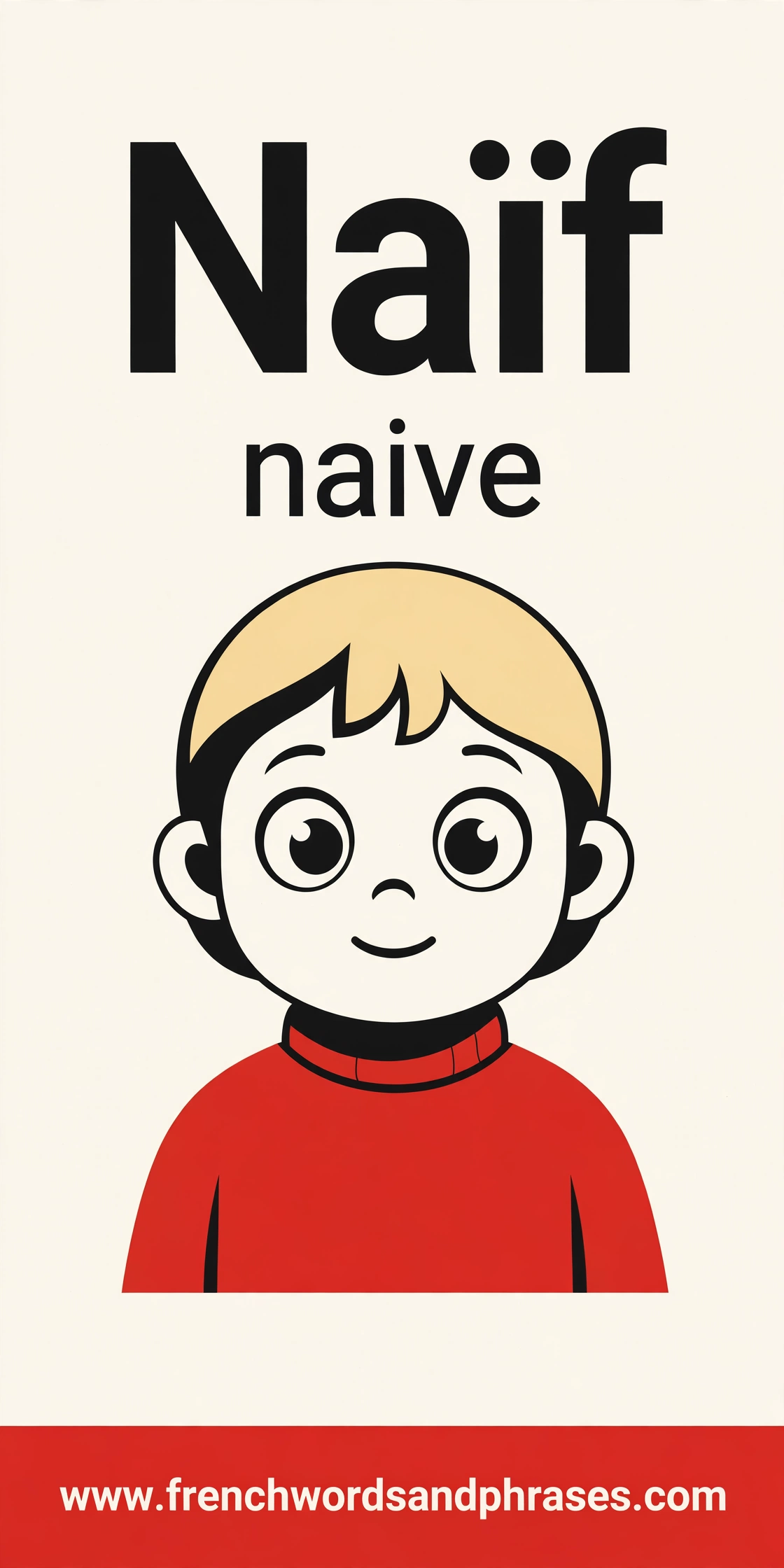
Naïf means naive.
A smiling stranger at the station offers to carry the young traveller’s bag, watch her phone, and hold her wallet too — and she very nearly says yes. Her friend pulls her aside: « Ne sois pas si naïve ! » — Don’t be so naive! Naïf is the adjective of trusting eyes in a world that does not always deserve them.
In this guide, you’ll learn what naïf means in English, how its feminine naïve is formed and why it wears a tréma, where it stands in the sentence, and when French means it kindly and when it does not. Explore French examples, English translations, and practice quizzes.
Understanding the French Adjective Naïf
Naïf is a French adjective of quality — the adjective of innocence and inexperience. Its feminine is naïve, with a tréma on the ï that spreads into the plural naïves: un garçon naïf, une question naïve, des regards naïfs. The tréma is the family signature: it tells you the a and the ï are pronounced as two separate sounds, na-ïf, na-ïve.
It means naive — innocent, unsuspecting, too ready to believe. It can be tender (l’innocence naïve d’un enfant, a child’s naive innocence) or critical (une réponse naïve, a naive answer). Art borrowed the word for painters who never went to school: l’art naïf, naive art, all bright colours and honest eyes.
Type: Adjective of quality — innocence and inexperience
Answers the question: What is he like? — naive, innocent, unsuspecting
Changes form: Feminine naïf → naïve; plurals naïfs / naïves — the tréma stays in every form
English equivalents: Naive; innocent; artless; ingenuous.
One important usage detail: naïf stands AFTER the noun — un enfant naïf, une remarque naïve. And mind the tone: said of a child or a painting, naïf is charming; said of an adult’s judgement, it is a polite warning — il est un peu naïf, he is a little naive, means he believes too easily.
Experience the Word
Naïf is the adjective of the unguarded heart — the look of someone meeting the world for the first time, without suspicion and without armour.
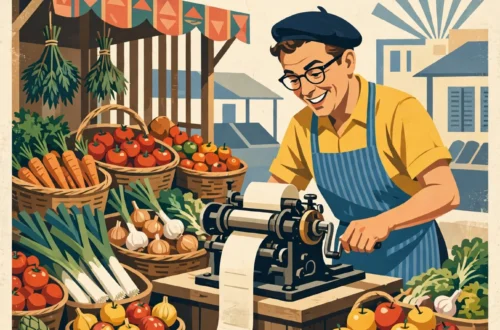
Imagine the douanier Rousseau, a customs officer who painted jungles he had never seen: lions among impossible flowers, dreamers asleep under huge moons. Critics called his art naïf, and meant it first as an insult — the word has since become the name of a whole beloved school of painting.
You have not just called someone simple. You have named the innocence that sees the world fresh — for better and for worse.
How to Use Naïf in French: Complete Guide
Let’s explore how naïf works in French, beginning with the whole word on one card.
Naïf at a Glance
Before the details, here is the whole word on one card.
The Whole Word on One Card
Meaning, type, position and forms — naïf in four lines.
| Point | Naïf |
|---|---|
| Meaning | naive — innocent, unsuspecting |
| Type | adjective of quality — innocence |
| Usual position | after the noun — un enfant naïf |
| Form | naïf / naïve — naïfs / naïves in the plural |
Example
Elle pose une question naïve, sans arrière-pensée.
She asks a naive question, with no hidden motive.
The Four Forms of Naïf
The feminine turns the f into a v and adds an e — naïve — while the tréma keeps its seat on the ï in all four forms.
| Form | Naïf | Example |
|---|---|---|
| Masculine singular | naïf | un garçon naïf — a naive boy |
| Feminine singular | naïve | une fille naïve — a naive girl |
| Masculine plural | naïfs | des enfants naïfs — naive children |
| Feminine plural | naïves | des réponses naïves — naive answers |
Example
Leurs questions naïves font sourire les adultes.
Their naive questions make the adults smile.
Quick Quiz 1
What is the feminine of naïf?
Reveal the answer
naïve
Une remarque naïve — the f becomes v, and the tréma stays on the ï.
A naive remark.
The Feminine of Naïf: Naïve, and the Tréma’s Job
Naïve is not a separate word to learn later — it is half of this word’s life, and its two dots do real work: they keep the a and the i apart, na-ïve, two syllables in the middle of the word.
| Situation | Example |
|---|---|
| Masculine | un regard naïf — a naive look |
| Feminine | une confiance naïve — naive trust |
| Why | the f softens to v and adds -e; the tréma keeps a and ï separate |
| The plural | add s — des confiances naïves, naive trusts |
Example
Sa confiance naïve envers les inconnus inquiète sa famille.
Her naive trust in strangers worries her family.
Where Naïf Goes: After the Noun
Naïf follows the noun it describes, like most French adjectives, and it sits comfortably after être.
| Pattern | Example |
|---|---|
| After the noun | un enfant naïf — a naive child |
| After être | il est un peu naïf — he is a little naive |
| With an adverb | une remarque vraiment naïve — a really naive remark |
| Before the noun | un naïf enfant — not in everyday French |
Example
Ne soyez pas naïfs : lisez le contrat jusqu’au bout.
Don’t be naive: read the contract to the end.
Quick Quiz 2
How do you say ‘a naive child’ — un naïf enfant or un enfant naïf?
Reveal the answer
un enfant naïf
Naïf stands after the noun.
A naive child.
More Naïf: Comparing with Naïf
Naïf compares the regular way, with plus, moins and aussi — the language of gentle warnings.
| Degree | Example |
|---|---|
| As naive as | aussi naïf que — as naive as |
| More naive | plus naïf — more naive |
| Less naive | moins naïf — less naive |
| The most naive (masc.) | le plus naïf — le plus naïf de la famille |
| The most naive (fem.) | la plus naïve — la plus naïve des sœurs |
Example
Elle est moins naïve qu’avant son voyage.
She is less naive than before her trip.
Everyday Expressions with Naïf
Naïf turns up wherever trust is discussed — and in the art gallery, where it names a whole school of painting.
| Expression | In English |
|---|---|
| un enfant naïf | a naive child |
| une question naïve | a naive question |
| l’art naïf | naive art — untrained, bright, honest painting |
| un air naïf | an innocent look |
| être naïf comme un enfant | to be as naive as a child |
| une joie naïve | simple, innocent joy |
Example
Le musée expose les toiles colorées de l’art naïf.
The museum shows the colourful canvases of naive art.
Quick Quiz 3
What is l’art naïf?
Reveal the answer
Naive art
L’art naïf — the painting of untrained artists: bright colours, flat shapes, honest eyes.
Naive art.
Naïf and Its Neighbours
Naïf stands in a family of innocence and its opposites; innocent is its tender twin, crédule its warning label.
| French | In English |
|---|---|
| innocent | innocent — the tender twin |
| crédule | gullible, credulous — believes too easily |
| ingénu | ingenuous, artless — literary cousin |
| candide | candid, wide-eyed innocent |
| méfiant | distrustful, wary — the opposite attitude |
| la naïveté | naivety — the noun |
Example
Crédule hier, méfiant aujourd’hui : il n’est plus naïf.
Gullible yesterday, wary today: he is naive no longer.
Watch Out: The Traps Around Naïf
The traps here are the tréma, the wandering f, and a tone that changes with the subject.
| Trap | The truth |
|---|---|
| The tréma | naïf and naïve keep their ï — without the two dots, the word is misspelled |
| The feminine f | naïf becomes naïve — the f turns into a v, as with actif/active |
| Tone | of a child, naïf is sweet; of an adult’s plan, it is a criticism — une idée naïve |
| The noun | a naive person can be un naïf, une naïve — le naïf du groupe, the innocent of the group |
Example
Le naïf du village croit encore toutes les promesses.
The innocent of the village still believes every promise.
Quick Quiz 4
How do you say ‘naive answers’?
Reveal the answer
des réponses naïves
Naïf follows the noun and agrees: feminine plural naïves.
Naive answers.
Naïf in Everyday French: Real-Life Examples
Now that you know the word, let’s see how naïf appears in everyday French.
Example 1 — A warning
Ne sois pas naïf, vérifie avant de payer.
Don’t be naive, check before you pay.
Example 2 — Childhood
Les enfants posent des questions naïves et merveilleuses.
Children ask naive, wonderful questions.
Example 3 — At the gallery
Cette peinture naïve est pleine de couleurs.
This naive painting is full of colour.
Example 4 — Trust
Elle a une confiance naïve envers tout le monde.
She has a naive trust in everyone.
Example 5 — Growing up
Après cette expérience, il est devenu moins naïf.
After that experience, he became less naive.
Example 6 — A look
Il la regarde avec un air naïf et sincère.
He looks at her with a naive, sincere expression.
Beyond Translation: The Meaning of Naïf
English says naive for the meaning of naïf — and borrowed it from French, dropping the two dots on the way across the Channel. French kept the tréma, and it earns its keep: na-ïf, two clean syllables, the sound of a word that has nothing to hide.
Naïf is the adjective of the open heart — charming in a child, famous in a painting, dangerous in a contract.
Learn it with its family — la naïveté, crédule, méfiant — and you can describe every shade of trust, from the first innocent question to the last wary glance.
How to Remember the French Adjective Naïf
Remember it this way: Naïf is the innocent adjective — naïf for him, naïve for her with the f turned to v, its tréma always in place, and its home behind the noun.
- You learn the pair together — un garçon naïf, une fille naïve.
- You keep the two dots — le tréma de naïf sépare le a et le ï : na-ïf, na-ïve.
- You watch the tone — charmant chez un enfant, naïf devient un avertissement chez un adulte.
The key idea is naïf / naïve means naive; the tréma keeps a and ï apart, and the feminine turns f into v.
Test Your Knowledge of Naïf
Let’s see how much you’ve learned. Try answering these questions before revealing the answers.
Question 1
What does naïf mean?
Reveal the answer
Naive — innocent, unsuspecting, too ready to believe.
Question 2
What is the feminine of naïf?
Reveal the answer
naïve — the f becomes v, and the tréma stays on the ï.
Question 3
Translate: a naive question.
Reveal the answer
Une question naïve.
Question 4
Complete the sentence:
Leurs remarques sont parfois très ______ .
Reveal the answer
naïves
Leurs remarques sont parfois très naïves.
Their remarks are sometimes very naive.
Question 5
How do you say ‘naive art’?
Reveal the answer
l’art naïf — the painting of untrained artists, bright and honest.
Your Final Challenge
Can You Use It?
How would you say this in French?
“Don’t be so naive.”
Reveal the answer
Ne sois pas si naïf.
Don’t be so naive.
A little French. A little curiosity. A richer everyday life.
LEARN FRENCH ONE WORD AT A TIME