A French Word to Live By
Translate Similaire to English
/si.mi.lɛʁ/
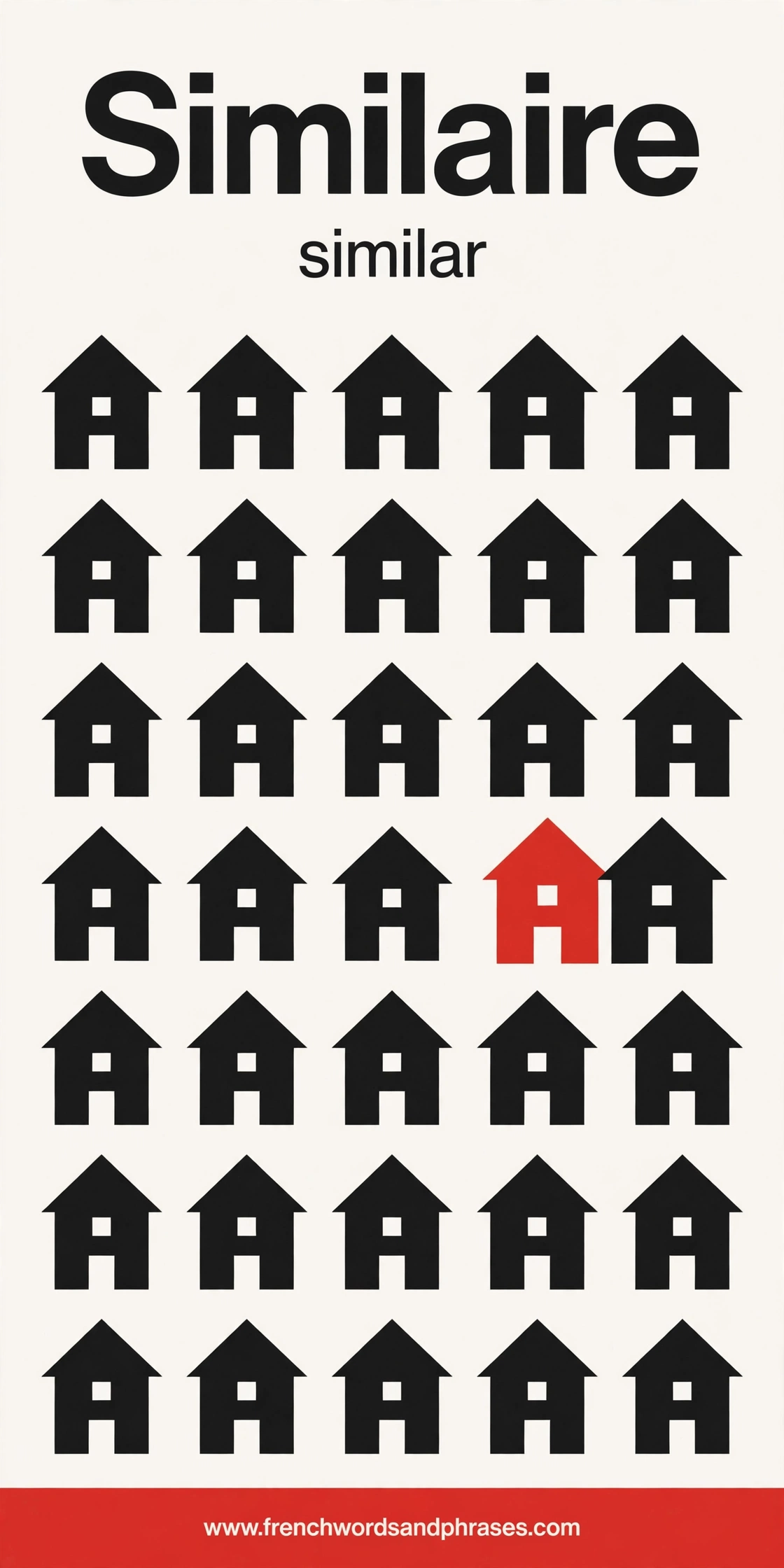
Similaire means similar.
Two sisters at the market stall, mistaken for each other three times in one morning: « Elles sont similaires. » Similaire is the adjective of resemblance — not the same thing, but close enough that the eye, and often the heart, confuses them.
In this guide, you’ll learn what similaire means in English, why its feminine is exactly the same word, where it stands in the sentence, and the small preposition it never travels without. Explore French examples, English translations, and practice quizzes.
Understanding the French Adjective Similaire
Similaire is a French adjective of resemblance, from the Latin similis, like. It is invariable in gender, because it already ends in -e: un cas similaire, une situation similaire, des résultats similaires. Only the plural changes, adding an s. Its essential partner is the preposition à: similaire à quelque chose, similar to something — never the English pattern word for word.
It means similar — alike, of the same kind, though not identical: un problème similaire, a similar problem; des goûts similaires, similar tastes; une expérience similaire, a similar experience. Shops and websites use it for the neighbouring shelf: des produits similaires, similar products, des articles similaires, similar items. The step beyond similaire is identique, identical — similaire promises resemblance, not sameness.
Type: Adjective of resemblance — alike, but not identical
Answers the question: What is it like? — similar, of the same kind
Changes form: Invariable in gender — similaire for him and for her; plural similaires
English equivalents: Similar; alike, comparable.
One important usage detail: similaire is followed by à — similaire à son frère, similar to his brother; the English « to » is already inside the French à, so never add anything else. The word stands after the noun: une situation similaire. For the noun, French says la similitude, the similarity, and for the adverb, similairement exists but is rare — everyday French prefers de façon similaire.
Experience the Word
Similaire is the adjective of the double-take: the face you greet before realising it is the sister, the street you walk down in the wrong town.
Imagine the twins at the station, each wearing the other’s coat by mistake, and neither noticing until the train — des vies similaires, down to the wardrobe, and still two different people entirely.
You have not just called two things alike. You have measured the exact distance between resemblance and sameness — similaire, close, but never identical.
How to Use Similaire in French: Complete Guide
Let’s explore how similaire works in French, beginning with the whole word on one card.
Similaire at a Glance
Before the details, here is the whole word on one card.
The Whole Word on One Card
Meaning, type, position and forms — similaire in four lines.
| Point | Similaire |
|---|---|
| Meaning | similar — alike, of the same kind, not identical |
| Type | adjective of resemblance — neutral register |
| Usual position | after the noun — un cas similaire, followed by à |
| Form | similaire for both genders — similaires in the plural |
Example
Un cas similaire s’est produit l’an dernier.
A similar case happened last year.
The Four Forms of Similaire
Similaire already ends in -e, so masculine and feminine are identical; only the plural adds an s.
| Form | Similaire | Example |
|---|---|---|
| Masculine singular | similaire | un problème similaire — a similar problem |
| Feminine singular | similaire | une situation similaire — a similar situation |
| Masculine plural | similaires | des résultats similaires — similar results |
| Feminine plural | similaires | des expériences similaires — similar experiences |
Example
Des expériences similaires les ont rapprochés.
Similar experiences brought them closer.
Quick Quiz 1
What is the feminine of similaire?
Reveal the answer
similaire
Une situation similaire — the word already ends in -e, so the feminine changes nothing.
A similar situation.
The Feminine of Similaire: The Same Word
Similaire is not a word with a separate feminine to learn later — it keeps one single form for him and for her, like all adjectives ending in -e.
| Situation | Example |
|---|---|
| Masculine | un goût similaire — a similar taste |
| Feminine | une couleur similaire — a similar colour |
| Why | adjectives ending in -e do not change for the feminine |
| The plural | add s — des couleurs similaires, similar colours |
Example
Une réponse similaire est arrivée le même jour.
A similar answer arrived the same day.
Where Similaire Goes: After the Noun, Followed by À
Similaire follows the noun it describes, and its comparison is introduced by à — similaire à, similar to.
| Pattern | Example |
|---|---|
| After the noun | un problème similaire — a similar problem |
| With à | similaire à son frère — similar to his brother |
| After être | les deux cas sont similaires — the two cases are similar |
| Before the noun | un similaire cas — not in everyday French |
Example
Son cas est similaire à celui de sa voisine.
His case is similar to his neighbour’s.
Quick Quiz 2
How do you say ‘a similar problem’ — un similaire problème or un problème similaire?
Reveal the answer
un problème similaire
Similaire stands after the noun, and its form does not change for gender.
A similar problem.
More Similaire: Comparing with Similaire
Similaire compares the regular way, with plus, moins and aussi — a scale of resemblance.
| Degree | Example |
|---|---|
| As similar as | aussi similaire que — as similar as |
| More similar | plus similaire — more similar |
| Less similar | moins similaire — less similar |
| The most similar (masc.) | le plus similaire — le plus similaire des deux |
| The most similar (fem.) | la plus similaire — la plus similaire des réponses |
Example
Cette maison est plus similaire à la nôtre.
This house is more similar to ours.
Everyday Expressions with Similaire
Similaire appears wherever French compares — in shops, offices and family resemblances.
| Expression | In English |
|---|---|
| un cas similaire | a similar case |
| des produits similaires | similar products |
| similaire à | similar to |
| des goûts similaires | similar tastes |
| une expérience similaire | a similar experience |
| et similaires | and the like, and suchlike (in lists) |
Example
Vous aimerez aussi des produits similaires.
You may also like similar products.
Quick Quiz 3
What does des produits similaires mean?
Reveal the answer
Similar products
Des produits similaires — products of the same kind, shown on the neighbouring shelf.
Similar products.
Similaire and Its Neighbours
Similaire keeps company with the other words of likeness — and stops one step short of the strongest of them.
| French | In English |
|---|---|
| identique | identical — exactly the same, one step beyond similaire |
| pareil | the same, alike — the everyday cousin |
| semblable | similar, alike — slightly literary |
| comparable | comparable — able to be compared |
| différent | different — the opposite |
| la similitude | the similarity — the noun |
Example
Similaire promet une ressemblance, identique promet une copie.
Similaire promises a resemblance, identique promises a copy.
Watch Out: The Traps Around Similaire
The traps here are the unchanging feminine and the little preposition à that the comparison cannot do without.
| Trap | The truth |
|---|---|
| The feminine | une situation similaire — no extra -e, no new form: similaire is invariable in gender |
| The plural | des résultats similaires — the plural still adds s, for both genders |
| The preposition | similaire à quelque chose — always à, never a word-for-word copy of English |
| Not identical | similaire means alike, not the same: for sameness, French says identique or pareil |
Example
Les deux robes sont similaires, pas identiques : regarde les boutons.
The two dresses are similar, not identical: look at the buttons.
Quick Quiz 4
How do you say ‘similar results’?
Reveal the answer
des résultats similaires
Similaire follows the noun and takes the plural s: similaires.
Similar results.
Similaire in Everyday French: Real-Life Examples
Now that you know the word, let’s see how similaire appears in everyday French.
Example 1 — Family
Elle a un sourire similaire à celui de sa mère.
She has a smile similar to her mother’s.
Example 2 — Shopping
Ce modèle existe en couleurs similaires.
This model comes in similar colours.
Example 3 — At work
Nous avons eu un problème similaire en mars.
We had a similar problem in March.
Example 4 — Tastes
Ils ont des goûts similaires en musique.
They have similar tastes in music.
Example 5 — Online
Les clients regardent aussi des articles similaires.
Customers also look at similar items.
Example 6 — Comparison
Les deux situations sont similaires, pas identiques.
The two situations are similar, not identical.
Beyond Translation: The Meaning of Similaire
Similaire descends from Latin similis, like — one of the oldest comparison words in Europe. French keeps it in the measured middle of the scale of likeness: below identique, which swears the two things are one, and beside pareil, its everyday cousin. Modern commerce has adopted it wholesale — des produits similaires is the phrase under every online shelf — because it promises the comfort of the familiar without the risk of the identical.
Similaire is the adjective of measured resemblance — close enough to comfort, different enough to matter.
Learn it beside identique and différent, and you can place anything on the scale of likeness in French.
How to Remember the French Adjective Similaire
Remember it this way: Similaire is the similar adjective — one form for him and for her, an s in the plural, and always à after it.
- You learn it once for both genders — un cas similaire, une situation similaire.
- You keep its partner close — similaire à, similar to, toujours avec à.
- You keep its limit in mind — similaire ressemble, identique est le même.
The key idea is similaire means similar; invariable in gender, plural similaires; similaire à = similar to.
Test Your Knowledge of Similaire
Let’s see how much you’ve learned. Try answering these questions before revealing the answers.
Question 1
What does similaire mean?
Reveal the answer
Similar — alike, of the same kind, but not identical.
Question 2
What is the feminine of similaire?
Reveal the answer
similaire — unchanged: the word already ends in -e.
Question 3
Translate: a similar problem.
Reveal the answer
Un problème similaire.
Question 4
Complete the sentence:
Des résultats ______ sont arrivés des deux écoles.
Reveal the answer
similaires
Des résultats similaires sont arrivés des deux écoles.
Similar results came in from both schools.
Question 5
Which preposition follows similaire?
Reveal the answer
à — similaire à son frère, similar to his brother.
Your Final Challenge
Can You Use It?
How would you say this in French?
“The two situations are similar, not identical.”
Reveal the answer
Les deux situations sont similaires, pas identiques.
The two situations are similar, not identical.
A little French. A little curiosity. A richer everyday life.
LEARN FRENCH ONE WORD AT A TIME