A French Word to Live By
How to Conjugate Masquer in French
/mas.ke/
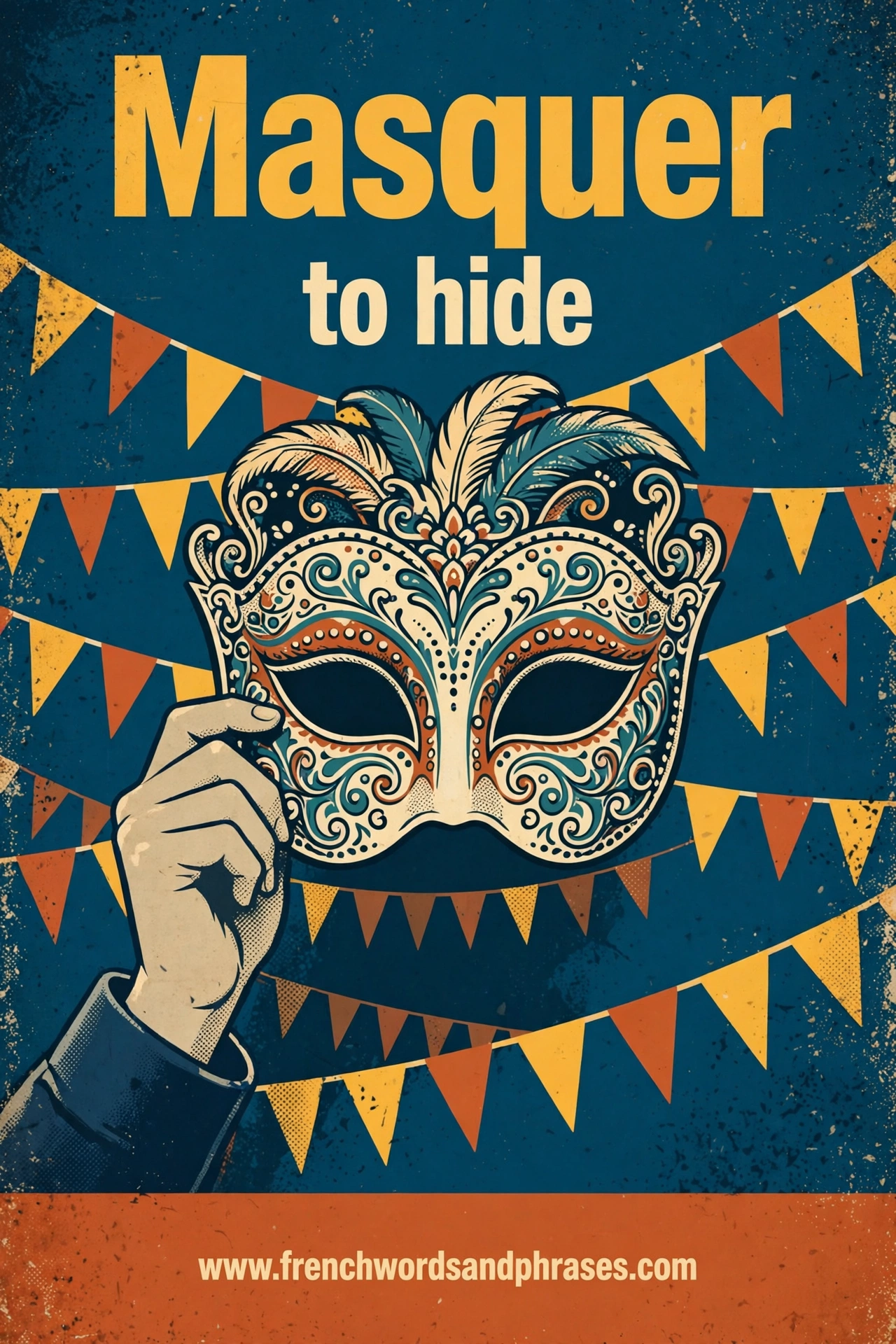
Masquer means to hide.
A scarf hiding a smile, a cloud hiding the sun, a hand hiding a yawn in a long meeting — masquer is the verb of covering up: to mask, to conceal, to put something between the eye and the truth.
In this guide, you’ll learn how to conjugate masquer in all the major French tenses and moods. Explore complete conjugation tables, French examples, English translations, and practice quizzes.
Understanding the French Verb Masquer
Masquer is a regular French verb belonging to the first group of verbs, those ending in -er.
It means to hide. It is commonly used for hiding faces, feelings and intentions (masquer son émotion, masquer la vérité), for things blocking a view (l’arbre masque la maison), for masking tape and masked balls, and in computing for hiding numbers, files and windows.
Verb classification: First group (-er)
Auxiliary verb: Avoir
Past participle: masqué
Present participle: masquant
English equivalents: To mask, to hide, to conceal; to block the view; (computing) to hide a window or a number.
One important detail: masquer is a -quer verb, and the qu never changes — je masque, nous masquons, je masquais — the u is simply there to keep the hard k sound before every ending. The family is famous: un masque is both the carnival mask and the face mask, and un bal masqué is a masked ball. On a screen, the same verb hides things politely: masquer un numéro, to withhold your number; masquer une fenêtre, to hide a window.
Experience the Word
Masquer is the verb of the covered face — something is still there behind the cloth, the cloud or the smile, but you can no longer see it.
Imagine a masked ball in an old Venetian palace. A hundred guests glide past in silk and feathers, and nobody — nobody at all — knows who just laughed behind that golden mask.
The face has not disappeared. It has been masked — hidden in plain sight.
How to Conjugate Masquer: Complete French Conjugation Guide
Let’s explore every major conjugation of masquer, beginning with the indicative mood.
How to Conjugate Masquer in the Indicative Mood
The indicative mood is used to express facts, observations, actions, and events.
How to Conjugate Masquer in the Present Tense (Présent)
Used for actions happening now, habitual actions, and general truths.
| Subject | Conjugation |
|---|---|
| je | masque |
| tu | masques |
| il / elle | masque |
| nous | masquons |
| vous | masquez |
| ils / elles | masquent |
Example
Elle masque sa nervosité avec un sourire.
She hides her nervousness with a smile.
Quick Quiz 1
Complete the sentence:
Nous ______ la vue avec un rideau.
Reveal the answer
masquons
Nous masquons la vue avec un rideau.
We block the view with a curtain.
How to Conjugate Masquer in the Passé Composé
Used for completed actions in the past. Masquer takes the auxiliary verb avoir.
| Subject | Conjugation |
|---|---|
| j’ | ai masqué |
| tu | as masqué |
| il / elle | a masqué |
| nous | avons masqué |
| vous | avez masqué |
| ils / elles | ont masqué |
Example
Il a masqué la tache avec un tableau.
He hid the stain with a painting.
How to Conjugate Masquer in the Imparfait (Imperfect Tense)
Used for habitual past actions, descriptions, and ongoing situations in the past.
| Subject | Conjugation |
|---|---|
| je | masquais |
| tu | masquais |
| il / elle | masquait |
| nous | masquions |
| vous | masquiez |
| ils / elles | masquaient |
Example
Le brouillard masquait la tour depuis le matin.
The fog had been hiding the tower since morning.
Quick Quiz 2
Choose the correct form:
He hid the stain.
Il ______ la tache. (a masqué / est masqué)
Reveal the answer
a masqué
Il a masqué la tache.
Masquer takes avoir.
How to Conjugate Masquer in the Plus-que-parfait
Used to describe an action that had already been completed before another past event.
| Subject | Conjugation |
|---|---|
| j’ | avais masqué |
| tu | avais masqué |
| il / elle | avait masqué |
| nous | avions masqué |
| vous | aviez masqué |
| ils / elles | avaient masqué |
Example
Nous avions masqué la surprise derrière la porte.
We had hidden the surprise behind the door.
How to Conjugate Masquer in the Passé Simple
Primarily used in formal writing, literature, and historical narratives. It is rarely used in everyday conversation.
| Subject | Conjugation |
|---|---|
| je | masquai |
| tu | masquas |
| il / elle | masqua |
| nous | masquâmes |
| vous | masquâtes |
| ils / elles | masquèrent |
Example
Elle masqua son émotion et continua son discours.
She concealed her emotion and continued her speech.
How to Conjugate Masquer in the Passé Antérieur
A literary tense used to express an action completed immediately before another past action, generally in the passé simple.
| Subject | Conjugation |
|---|---|
| j’ | eus masqué |
| tu | eus masqué |
| il / elle | eut masqué |
| nous | eûmes masqué |
| vous | eûtes masqué |
| ils / elles | eurent masqué |
Example
Quand il eut masqué la fissure, il repeignit le mur.
When he had covered the crack, he repainted the wall.
How to Conjugate Masquer in the Future Tense (Futur Simple)
Used to describe actions that will take place in the future.
| Subject | Conjugation |
|---|---|
| je | masquerai |
| tu | masqueras |
| il / elle | masquera |
| nous | masquerons |
| vous | masquerez |
| ils / elles | masqueront |
Example
Ce rideau masquera la vue sur le jardin.
This curtain will block the view of the garden.
How to Conjugate Masquer in the Futur Antérieur (Future Perfect)
Used for an action that will have been completed before a particular point in the future.
| Subject | Conjugation |
|---|---|
| j’ | aurai masqué |
| tu | auras masqué |
| il / elle | aura masqué |
| nous | aurons masqué |
| vous | aurez masqué |
| ils / elles | auront masqué |
Example
À la fin de la journée, les nuages auront masqué le soleil.
By the end of the day, the clouds will have hidden the sun.
How to Conjugate Masquer in the Near Future (Futur Proche)
Used to describe something that is going to happen soon. Formed with aller + infinitive.
| Subject | Conjugation |
|---|---|
| je | vais masquer |
| tu | vas masquer |
| il / elle | va masquer |
| nous | allons masquer |
| vous | allez masquer |
| ils / elles | vont masquer |
Example
Je vais masquer mon numéro avant d’appeler.
I am going to withhold my number before calling.
How to Conjugate Masquer in the Conditional Mood
The conditional mood expresses what would happen under certain circumstances. It is also frequently used to make polite requests or express wishes.
How to Conjugate Masquer in the Present Conditional
| Subject | Conjugation |
|---|---|
| je | masquerais |
| tu | masquerais |
| il / elle | masquerait |
| nous | masquerions |
| vous | masqueriez |
| ils / elles | masqueraient |
Example
Avec un écran, nous masquerions la machine à laver.
With a screen, we would hide the washing machine.
How to Conjugate Masquer in the Past Conditional
| Subject | Conjugation |
|---|---|
| j’ | aurais masqué |
| tu | aurais masqué |
| il / elle | aurait masqué |
| nous | aurions masqué |
| vous | auriez masqué |
| ils / elles | auraient masqué |
Example
Elle aurait masqué sa déception plus longtemps.
She would have concealed her disappointment for longer.
Masquer in the Literary Past Conditional Form
This less common literary form uses the imperfect subjunctive of avoir.
| Subject | Conjugation |
|---|---|
| j’ | eusse masqué |
| tu | eusses masqué |
| il / elle | eût masqué |
| nous | eussions masqué |
| vous | eussiez masqué |
| ils / elles | eussent masqué |
Example
Il eût masqué la vérité même à ses amis.
He would have hidden the truth even from his friends.
How to Conjugate Masquer in the Subjunctive Mood
The subjunctive is used to express wishes, emotions, doubts, necessity, and uncertainty. It frequently follows expressions such as il faut que (it is necessary that) or bien que (although).
How to Conjugate Masquer in the Present Subjunctive
| Subject | Conjugation |
|---|---|
| que je | masque |
| que tu | masques |
| qu’il / qu’elle | masque |
| que nous | masquions |
| que vous | masquiez |
| qu’ils / qu’elles | masquent |
Example
Il faut que tu masques cette fenêtre à l’écran.
You must hide this window on the screen.
Quick Quiz 3
Complete the sentence using the subjunctive:
Il faut que vous ______ cette fenêtre.
Reveal the answer
masquiez
Il faut que vous masquiez cette fenêtre.
You must hide this window.
How to Conjugate Masquer in the Imperfect Subjunctive
A literary tense, rarely encountered in modern spoken French.
| Subject | Conjugation |
|---|---|
| que je | masquasse |
| que tu | masquasses |
| qu’il / qu’elle | masquât |
| que nous | masquassions |
| que vous | masquassiez |
| qu’ils / qu’elles | masquassent |
Example
Je craignais qu’il masquât ses véritables intentions.
I feared he might be concealing his real intentions.
How to Conjugate Masquer in the Pluperfect Subjunctive
A literary construction used to express an action completed before another past action.
| Subject | Conjugation |
|---|---|
| que j’ | eusse masqué |
| que tu | eusses masqué |
| qu’il / qu’elle | eût masqué |
| que nous | eussions masqué |
| que vous | eussiez masqué |
| qu’ils / qu’elles | eussent masqué |
Example
Il regrettait que nous eussions masqué les faits.
He regretted that we had concealed the facts.
How to Conjugate Masquer in the Past Subjunctive
| Subject | Conjugation |
|---|---|
| que j’ | aie masqué |
| que tu | aies masqué |
| qu’il / qu’elle | ait masqué |
| que nous | ayons masqué |
| que vous | ayez masqué |
| qu’ils / qu’elles | aient masqué |
Example
Je suis content que tu aies masqué cette vilaine tache.
I am glad you hid that ugly stain.
How to Conjugate Masquer in the Imperative
The imperative is used to give commands, instructions, invitations, or suggestions. Subject pronouns are omitted.
How to Conjugate Masquer in the Present Imperative
| Person | Conjugation |
|---|---|
| (tu) | masque |
| (nous) | masquons |
| (vous) | masquez |
Example
Masque ton sourire, c’est une surprise !
Hide your smile, it is a surprise!
Quick Quiz 4
How would you say Hide your smile (tu form)?
Reveal the answer
Masque ton sourire !
French Participles of Masquer
Participles are verb forms that can be used in compound tenses and other grammatical constructions.
Present Participle of Masquer
masquant
En masquant la vue, l’arbre protège la maison du vent.
By blocking the view, the tree protects the house from the wind.
Past Participle of Masquer
masqué
Masqué par les nuages, le sommet restait invisible.
Hidden by the clouds, the summit remained invisible.
Masquer in Everyday French: Real-Life Examples
Now that you know the conjugations, let’s see how masquer appears in everyday French.
Example 1 — Present
Le grand arbre masque la maison de la rue.
The big tree hides the house from the street.
Example 2 — Passé composé
Elle a masqué son inquiétude toute la journée.
She hid her worry all day long.
Example 3 — Imparfait
La brume masquait le port le matin.
The mist used to hide the harbour in the morning.
Example 4 — Future
Je masquerai mon numéro pour cet appel.
I will withhold my number for this call.
Example 5 — Conditional
Tu masquerais la porte avec une plante ?
Would you hide the door with a plant?
Example 6 — Imperative
Masquez la fenêtre pour imprimer le document !
Hide the window to print the document!
Beyond Translation: The Meaning of Masquer
English separates hide, conceal, mask and block; French masquer gathers them all under one mask.
The mask works in both directions.
A tree masque a house by standing in front of it; a smile masque worry by covering it. Whether the hiding is cloth, cloud or courage, the verb is the same — something has been put between you and what is there.
How to Remember the French Verb Masquer
Remember it this way: Masquer is about the mask — faces, feelings and views, all covered.
- Un masque, un bal masqué — masquer is the verb of the mask itself.
- The qu never changes: je masque, nous masquons — u keeps the k hard.
- Regular -er: je masque, nous masquons, past participle masqué.
The key idea is the mask — faces, feelings and views, all covered.
Test Your Knowledge of Masquer
Let’s see how much you’ve learned. Try answering these questions before revealing the answers.
Question 1
What is un bal masqué?
Reveal the answer
A masked ball — a ball where the guests wear masks.
Question 2
How do you say The fog hides the tower in French?
Reveal the answer
Le brouillard masque la tour.
Question 3
Translate: She hides her nervousness with a smile.
Reveal the answer
Elle masque sa nervosité avec un sourire.
Question 4
What is the past participle of masquer?
Reveal the answer
Masqué.
Question 5
Complete the sentence:
Il faut que tu ______ ton numéro.
Reveal the answer
masques
Il faut que tu masques ton numéro.
You must withhold your number.
Your Final Challenge
Can You Use It?
How would you say this in French?
The sun hides behind the clouds, and the beach slowly empties.
Reveal the answer
Le soleil se masque derrière les nuages, et la plage se vide doucement.
The sun hides behind the clouds, and the beach slowly empties.
A little French. A little curiosity. A richer everyday life.
LEARN FRENCH ONE WORD AT A TIME