
A French Word to Live By
How to Conjugate Masculiniser in French
/mas.ky.li.ni.ze/
Masculiniser means to make masculine.
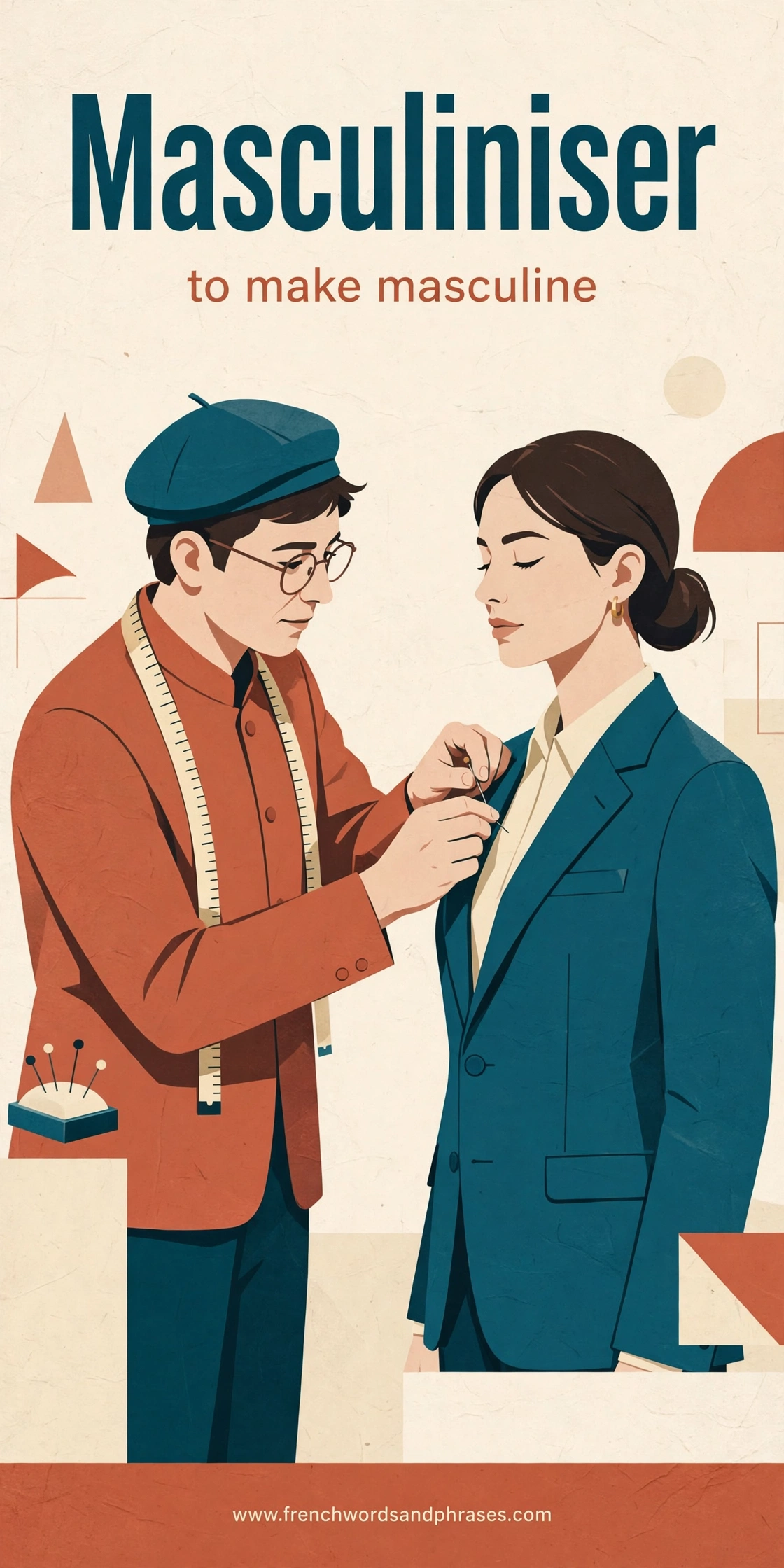
A tailor squaring the shoulders of a woman’s jacket, a perfume house darkening a floral scent with leather and wood, a girls’ name borrowed for a boy — masculiniser is the verb of shifting something toward the masculine, in cloth, in language and in character.
In this guide, you’ll learn how to conjugate masculiniser in all the major French tenses and moods. Explore complete conjugation tables, French examples, English translations, and practice quizzes.
Understanding the French Verb Masculiniser
Masculiniser is a regular French verb belonging to the first group of verbs, those ending in -er.
It means to make masculine. It is commonly used for adapting names and words to a masculine form, for styles, perfumes and silhouettes given a masculine edge, in biology for the effect of male hormones, and in the reflexive for voices, manners and fashions becoming more masculine over time.
Verb classification: First group (-er)
Auxiliary verb: Avoir
Past participle: masculinisé
Present participle: masculinisant
English equivalents: To make masculine, to masculinise; (se) to become masculine.
One important detail: masculiniser is another -iser verb, built on the adjective masculin — masculin + iser, to render masculine. It lives a double life: in grammar and biology it is a technical word (masculiniser un prénom, masculiniser un caractère), while tailors and perfumers use it for style — masculiniser une silhouette, to give a silhouette a masculine cut. The reflexive se masculiniser describes the drift itself: une voix qui se masculinise, a voice that grows more masculine.
Experience the Word
Masculiniser is the verb of the borrowed jacket — take something soft, floral or feminine, and give it shoulders, angles and shadow.
Imagine a Paris atelier before a fashion show. The designer takes a silk blouse, adds a stiff collar and a straight cut, and suddenly the whole rail of clothes stands a little taller.
Nothing has been replaced. It has been masculinised — the same garment, a new posture.
How to Conjugate Masculiniser: Complete French Conjugation Guide
Let’s explore every major conjugation of masculiniser, beginning with the indicative mood.
How to Conjugate Masculiniser in the Indicative Mood
The indicative mood is used to express facts, observations, actions, and events.
How to Conjugate Masculiniser in the Present Tense (Présent)
Used for actions happening now, habitual actions, and general truths.
| Subject | Conjugation |
|---|---|
| je | masculinise |
| tu | masculinises |
| il / elle | masculinise |
| nous | masculinisons |
| vous | masculinisez |
| ils / elles | masculinisent |
Example
Ce tailleur masculinise les vestes pour femmes.
This tailor gives women’s jackets a masculine cut.
Quick Quiz 1
Complete the sentence:
Nous ______ les coupes pour le défilé.
Reveal the answer
masculinisons
Nous masculinisons les coupes pour le défilé.
We are giving the cuts a masculine edge for the show.
How to Conjugate Masculiniser in the Passé Composé
Used for completed actions in the past. Masculiniser takes the auxiliary verb avoir.
| Subject | Conjugation |
|---|---|
| j’ | ai masculinisé |
| tu | as masculinisé |
| il / elle | a masculinisé |
| nous | avons masculinisé |
| vous | avez masculinisé |
| ils / elles | ont masculinisé |
Example
Elle a masculinisé sa silhouette avec un pantalon droit.
She gave her silhouette a masculine edge with straight trousers.
How to Conjugate Masculiniser in the Imparfait (Imperfect Tense)
Used for habitual past actions, descriptions, and ongoing situations in the past.
| Subject | Conjugation |
|---|---|
| je | masculinisais |
| tu | masculinisais |
| il / elle | masculinisait |
| nous | masculinisions |
| vous | masculinisiez |
| ils / elles | masculinisaient |
Example
Autrefois, les parfumeurs masculinisaient les senteurs avec du cuir.
In the old days, perfumers used to make scents masculine with leather.
Quick Quiz 2
Choose the correct form:
She made the perfume masculine.
Elle ______ le parfum. (a masculinisé / est masculinisé)
Reveal the answer
a masculinisé
Elle a masculinisé le parfum.
Masculiniser takes avoir.
How to Conjugate Masculiniser in the Plus-que-parfait
Used to describe an action that had already been completed before another past event.
| Subject | Conjugation |
|---|---|
| j’ | avais masculinisé |
| tu | avais masculinisé |
| il / elle | avait masculinisé |
| nous | avions masculinisé |
| vous | aviez masculinisé |
| ils / elles | avaient masculinisé |
Example
Nous avions masculinisé le prénom pour le registre.
We had put the first name into its masculine form for the register.
How to Conjugate Masculiniser in the Passé Simple
Primarily used in formal writing, literature, and historical narratives. It is rarely used in everyday conversation.
| Subject | Conjugation |
|---|---|
| je | masculinisai |
| tu | masculinisas |
| il / elle | masculinisa |
| nous | masculinisâmes |
| vous | masculinisâtes |
| ils / elles | masculinisèrent |
Example
Le couturier masculinisa la collection en une saison.
The designer gave the collection a masculine turn in a single season.
How to Conjugate Masculiniser in the Passé Antérieur
A literary tense used to express an action completed immediately before another past action, generally in the passé simple.
| Subject | Conjugation |
|---|---|
| j’ | eus masculinisé |
| tu | eus masculinisé |
| il / elle | eut masculinisé |
| nous | eûmes masculinisé |
| vous | eûtes masculinisé |
| ils / elles | eurent masculinisé |
Example
Quand elle eut masculinisé sa tenue, elle entra dans la salle.
When she had given her outfit a masculine edge, she walked into the room.
How to Conjugate Masculiniser in the Future Tense (Futur Simple)
Used to describe actions that will take place in the future.
| Subject | Conjugation |
|---|---|
| je | masculiniserai |
| tu | masculiniseras |
| il / elle | masculinisera |
| nous | masculiniserons |
| vous | masculiniserez |
| ils / elles | masculiniseront |
Example
Demain, le styliste masculinisera les chemises du défilé.
Tomorrow, the stylist will give the show’s shirts a masculine cut.
How to Conjugate Masculiniser in the Futur Antérieur (Future Perfect)
Used for an action that will have been completed before a particular point in the future.
| Subject | Conjugation |
|---|---|
| j’ | aurai masculinisé |
| tu | auras masculinisé |
| il / elle | aura masculinisé |
| nous | aurons masculinisé |
| vous | aurez masculinisé |
| ils / elles | auront masculinisé |
Example
À la fin du mois, ils auront masculinisé toute la gamme de parfums.
By the end of the month, they will have made the whole perfume range masculine.
How to Conjugate Masculiniser in the Near Future (Futur Proche)
Used to describe something that is going to happen soon. Formed with aller + infinitive.
| Subject | Conjugation |
|---|---|
| je | vais masculiniser |
| tu | vas masculiniser |
| il / elle | va masculiniser |
| nous | allons masculiniser |
| vous | allez masculiniser |
| ils / elles | vont masculiniser |
Example
Je vais masculiniser ce blazer avec une cravate.
I am going to give this blazer a masculine touch with a tie.
How to Conjugate Masculiniser in the Conditional Mood
The conditional mood expresses what would happen under certain circumstances. It is also frequently used to make polite requests or express wishes.
How to Conjugate Masculiniser in the Present Conditional
| Subject | Conjugation |
|---|---|
| je | masculiniserais |
| tu | masculiniserais |
| il / elle | masculiniserait |
| nous | masculiniserions |
| vous | masculiniseriez |
| ils / elles | masculiniseraient |
Example
Avec des épaules plus carrées, tu masculiniserais cette veste.
With squarer shoulders, you would make this jacket more masculine.
How to Conjugate Masculiniser in the Past Conditional
| Subject | Conjugation |
|---|---|
| j’ | aurais masculinisé |
| tu | aurais masculinisé |
| il / elle | aurait masculinisé |
| nous | aurions masculinisé |
| vous | auriez masculinisé |
| ils / elles | auraient masculinisé |
Example
Elle aurait masculinisé le parfum avec du vétiver.
She would have made the perfume masculine with vetiver.
Masculiniser in the Literary Past Conditional Form
This less common literary form uses the imperfect subjunctive of avoir.
| Subject | Conjugation |
|---|---|
| j’ | eusse masculinisé |
| tu | eusses masculinisé |
| il / elle | eût masculinisé |
| nous | eussions masculinisé |
| vous | eussiez masculinisé |
| ils / elles | eussent masculinisé |
Example
Il eût masculinisé la collection entière pour le défilé.
He would have given the whole collection a masculine turn for the show.
How to Conjugate Masculiniser in the Subjunctive Mood
The subjunctive is used to express wishes, emotions, doubts, necessity, and uncertainty. It frequently follows expressions such as il faut que (it is necessary that) or bien que (although).
How to Conjugate Masculiniser in the Present Subjunctive
| Subject | Conjugation |
|---|---|
| que je | masculinise |
| que tu | masculinises |
| qu’il / qu’elle | masculinise |
| que nous | masculinisions |
| que vous | masculinisiez |
| qu’ils / qu’elles | masculinisent |
Example
Il faut que le tailleur masculinise cette coupe.
The tailor must give this cut a masculine edge.
Quick Quiz 3
Complete the sentence using the subjunctive:
Il faut que vous ______ ce prénom.
Reveal the answer
masculinisiez
Il faut que vous masculinisiez ce prénom.
You must put this first name into its masculine form.
How to Conjugate Masculiniser in the Imperfect Subjunctive
A literary tense, rarely encountered in modern spoken French.
| Subject | Conjugation |
|---|---|
| que je | masculinisasse |
| que tu | masculinisasses |
| qu’il / qu’elle | masculinisât |
| que nous | masculinisassions |
| que vous | masculinisassiez |
| qu’ils / qu’elles | masculinisassent |
Example
Je voulais qu’elle masculinisât sa voix pour le rôle.
I wanted her to make her voice more masculine for the role.
How to Conjugate Masculiniser in the Pluperfect Subjunctive
A literary construction used to express an action completed before another past action.
| Subject | Conjugation |
|---|---|
| que j’ | eusse masculinisé |
| que tu | eusses masculinisé |
| qu’il / qu’elle | eût masculinisé |
| que nous | eussions masculinisé |
| que vous | eussiez masculinisé |
| qu’ils / qu’elles | eussent masculinisé |
Example
Il regrettait que nous eussions masculinisé le prénom.
He regretted that we had put the first name into its masculine form.
How to Conjugate Masculiniser in the Past Subjunctive
| Subject | Conjugation |
|---|---|
| que j’ | aie masculinisé |
| que tu | aies masculinisé |
| qu’il / qu’elle | ait masculinisé |
| que nous | ayons masculinisé |
| que vous | ayez masculinisé |
| qu’ils / qu’elles | aient masculinisé |
Example
Je suis content que tu aies masculinisé ce parfum.
I am glad you made this perfume more masculine.
How to Conjugate Masculiniser in the Imperative
The imperative is used to give commands, instructions, invitations, or suggestions. Subject pronouns are omitted.
How to Conjugate Masculiniser in the Present Imperative
| Person | Conjugation |
|---|---|
| (tu) | masculinise |
| (nous) | masculinisons |
| (vous) | masculinisez |
Example
Masculinise cette silhouette, ajoute une ceinture large !
Give this silhouette a masculine edge, add a wide belt!
Quick Quiz 4
How would you say Give this jacket a masculine edge (tu form)?
Reveal the answer
Masculinise cette veste !
French Participles of Masculiniser
Participles are verb forms that can be used in compound tenses and other grammatical constructions.
Present Participle of Masculiniser
masculinisant
En masculinisant les coupes, la marque a trouvé un nouveau public.
By giving the cuts a masculine edge, the brand found a new audience.
Past Participle of Masculiniser
masculinisé
Masculinisé par le tailleur, le blazer tombe parfaitement.
Given a masculine cut by the tailor, the blazer falls perfectly.
Masculiniser in Everyday French: Real-Life Examples
Now that you know the conjugations, let’s see how masculiniser appears in everyday French.
Example 1 — Present
Ce parfum masculinise les notes florales avec du bois.
This perfume makes the floral notes masculine with wood.
Example 2 — Passé composé
Elle a masculinisé sa tenue pour l’entretien.
She gave her outfit a masculine edge for the interview.
Example 3 — Imparfait
Les couturiers masculinisaient les robes après la guerre.
Designers used to give dresses a masculine cut after the war.
Example 4 — Future
Nous masculiniserons ce prénom pour le formulaire.
We will put this first name into its masculine form for the form.
Example 5 — Conditional
Tu masculiniserais cette veste avec des boutons dorés.
You would make this jacket more masculine with gold buttons.
Example 6 — Imperative
Masculinisez la collection pour l’hiver !
Give the collection a masculine turn for winter!
Beyond Translation: The Meaning of Masculiniser
English masculinise stays in the laboratory and the grammar book; French masculiniser works there too, but it also walks the runway.
One verb for hormones, names and haute couture.
A French fashion journalist can masculiniser une silhouette without raising an eyebrow — the word carries the tailor’s shears as naturally as the scientist’s syringe.
How to Remember the French Verb Masculiniser
Remember it this way: Masculiniser is about the borrowed jacket — shoulders, angles and a masculine edge.
- Masculin + -iser: the -iser machine again — to render something masculine.
- Se masculiniser — the drift itself: une voix qui se masculinise.
- Regular -er: je masculinise, nous masculinisons, past participle masculinisé.
The key idea is the borrowed jacket — shoulders, angles and a masculine edge.
Test Your Knowledge of Masculiniser
Let’s see how much you’ve learned. Try answering these questions before revealing the answers.
Question 1
What two parts build the verb masculiniser?
Reveal the answer
Masculin + -iser — the adjective masculin plus the transformation suffix.
Question 2
How do you say Her voice is becoming more masculine in French?
Reveal the answer
Sa voix se masculinise.
Question 3
Translate: The tailor gives women’s jackets a masculine cut.
Reveal the answer
Le tailleur masculinise les vestes pour femmes.
Question 4
What is the past participle of masculiniser?
Reveal the answer
Masculinisé.
Question 5
Complete the sentence:
Il faut que le styliste ______ cette coupe.
Reveal the answer
masculinise
Il faut que le styliste masculinise cette coupe.
The stylist must give this cut a masculine edge.
Your Final Challenge
Can You Use It?
How would you say this in French?
She gives her jacket a masculine edge with one gesture, and the silhouette changes its whole look.
Reveal the answer
Elle masculinise sa veste d’un geste, et la silhouette change d’allure.
She gives her jacket a masculine edge with one gesture, and the silhouette changes its whole look.
A little French. A little curiosity. A richer everyday life.
LEARN FRENCH ONE WORD AT A TIME




