
A French Word to Live By
How to Conjugate Maquer in French
/ma.ke/
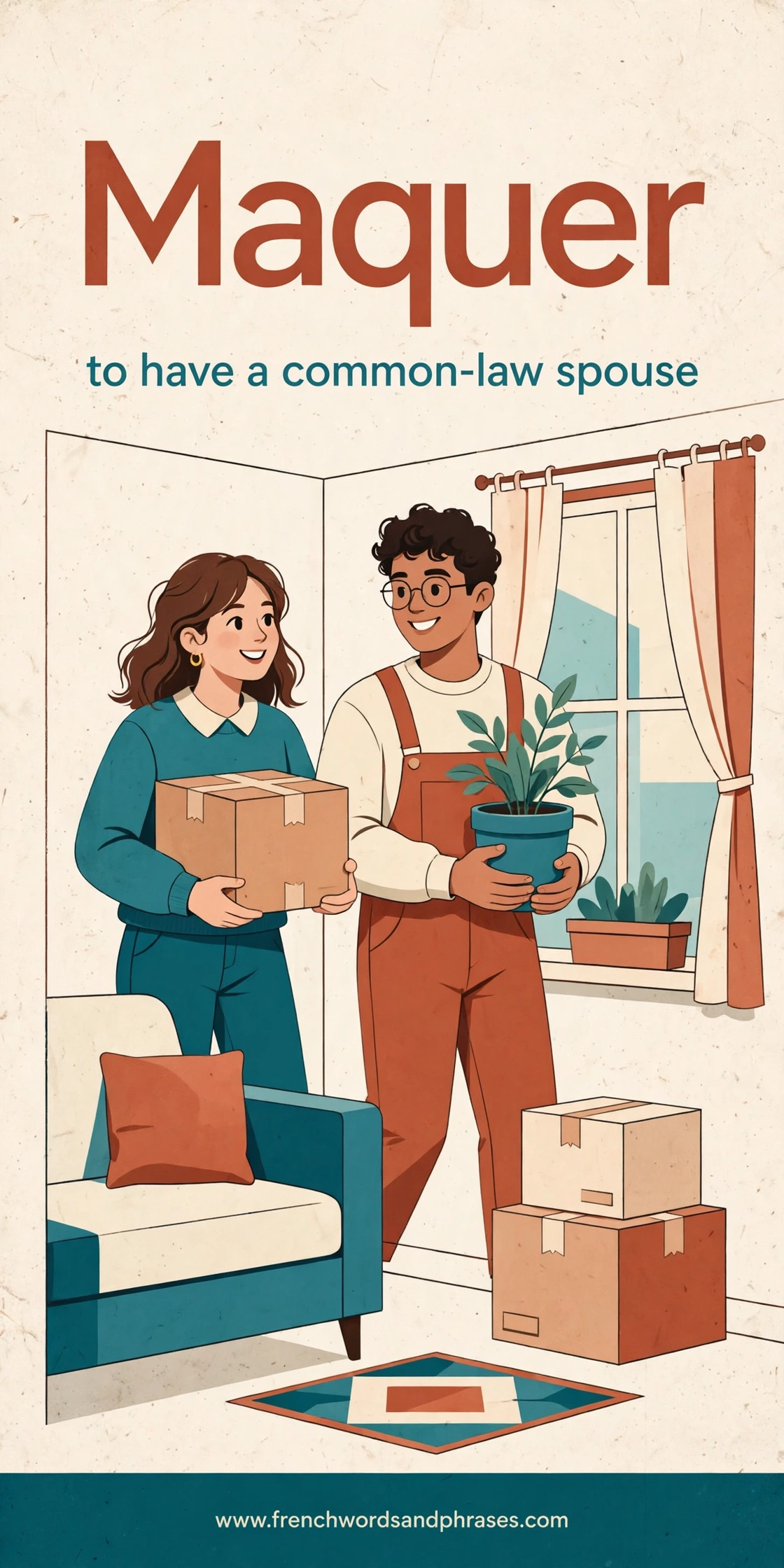
Maquer means to have a common-law spouse — in familiar French, to live with a partner without being married.
Two toothbrushes in one glass, one rent split two ways, no ring and no ceremony — maquer is familiar French for the unmarried life shared with a partner, a word that lives in jokes, gossip and easy conversation rather than in town halls.
In this guide, you’ll learn how to conjugate maquer in all the major French tenses and moods. Explore complete conjugation tables, French examples, English translations, and practice quizzes.
Understanding the French Verb Maquer
Maquer is a regular French verb belonging to the first group of verbs, those ending in -er.
It means to have a common-law spouse. It is commonly used in relaxed conversation about couples who share a home without marrying — se maquer, être maqué(e) avec quelqu’un — and in the teasing questions of family gatherings: alors, vous êtes maqués depuis quand ? It carries a grin, not a judgment, in modern usage.
Verb classification: First group (-er)
Auxiliary verb: Avoir
Past participle: maqué
Present participle: maquant
English equivalents: (Familiar) To live with a partner unmarried; se maquer — to move in with a partner; un maqué / une maquée — someone living in a common-law union.
One important detail: maquer belongs to familiar, slangy French — register matters. The usual form is reflexive: ils se sont maqués, they moved in together; elle est maquée avec un musicien, she lives with a musician. Non-reflexive maquer quelqu’un is rarer. You will hear it among friends and in films, not in official documents, where French prefers vivre en concubinage or vivre maritalement. It is playful rather than rude, but definitely not formal.
Experience the Word
Maquer is the verb of the shared flat and the unasked question — a couple, a home, and no paperwork.
Imagine two students who met at a bookshop. First a toothbrush stays over, then a shelf of books, then a cat — and one day their friends stop asking: ils se sont maqués, that is simply how it is.
Nothing has been signed at the mairie. They have moved in together — maqués, and perfectly content.
How to Conjugate Maquer: Complete French Conjugation Guide
Let’s explore every major conjugation of maquer, beginning with the indicative mood.
How to Conjugate Maquer in the Indicative Mood
The indicative mood is used to express facts, observations, actions, and events.
How to Conjugate Maquer in the Present Tense (Présent)
Used for actions happening now, habitual actions, and general truths.
| Subject | Conjugation |
|---|---|
| je | maque |
| tu | maques |
| il / elle | maque |
| nous | maquons |
| vous | maquez |
| ils / elles | maquent |
Example
Ils se maquent depuis trois ans et partagent un petit studio.
They have been living together for three years and share a small studio.
Quick Quiz 1
Complete the sentence:
Nous nous ______ depuis deux ans.
Reveal the answer
maquons
Nous nous maquons depuis deux ans.
We have been living together for two years.
How to Conjugate Maquer in the Passé Composé
Used for completed actions in the past. Maquer takes the auxiliary verb avoir.
| Subject | Conjugation |
|---|---|
| j’ | ai maqué |
| tu | as maqué |
| il / elle | a maqué |
| nous | avons maqué |
| vous | avez maqué |
| ils / elles | ont maqué |
Example
Elle s’est maquée avec un collègue l’hiver dernier.
She moved in with a colleague last winter.
How to Conjugate Maquer in the Imparfait (Imperfect Tense)
Used for habitual past actions, descriptions, and ongoing situations in the past.
| Subject | Conjugation |
|---|---|
| je | maquais |
| tu | maquais |
| il / elle | maquait |
| nous | maquions |
| vous | maquiez |
| ils / elles | maquaient |
Example
À l’époque, ils se maquaient dans un appartement minuscule.
At the time, they were living together in a tiny flat.
Quick Quiz 2
Choose the correct form:
She moved in with a colleague.
Elle ______ avec un collègue. (s’est maquée / a maquée)
Reveal the answer
s’est maquée
Elle s’est maquée avec un collègue.
Se maquer is reflexive.
How to Conjugate Maquer in the Plus-que-parfait
Used to describe an action that had already been completed before another past event.
| Subject | Conjugation |
|---|---|
| j’ | avais maqué |
| tu | avais maqué |
| il / elle | avait maqué |
| nous | avions maqué |
| vous | aviez maqué |
| ils / elles | avaient maqué |
Example
Ils s’étaient maqués bien avant de penser au mariage.
They had moved in together long before thinking about marriage.
How to Conjugate Maquer in the Passé Simple
Primarily used in formal writing, literature, and historical narratives. It is rarely used in everyday conversation.
| Subject | Conjugation |
|---|---|
| je | maquai |
| tu | maquas |
| il / elle | maqua |
| nous | maquâmes |
| vous | maquâtes |
| ils / elles | maquèrent |
Example
Après deux ans de lettres, elle se maqua avec lui à Paris.
After two years of letters, she moved in with him in Paris.
How to Conjugate Maquer in the Passé Antérieur
A literary tense used to express an action completed immediately before another past action, generally in the passé simple.
| Subject | Conjugation |
|---|---|
| j’ | eus maqué |
| tu | eus maqué |
| il / elle | eut maqué |
| nous | eûmes maqué |
| vous | eûtes maqué |
| ils / elles | eurent maqué |
Example
Quand ils se furent maqués, les parents cessèrent leurs questions.
When they had moved in together, the parents stopped their questions.
How to Conjugate Maquer in the Future Tense (Futur Simple)
Used to describe actions that will take place in the future.
| Subject | Conjugation |
|---|---|
| je | maquerai |
| tu | maqueras |
| il / elle | maquera |
| nous | maquerons |
| vous | maquerez |
| ils / elles | maqueront |
Example
L’été prochain, ils se maqueront près de la mer.
Next summer, they will move in together near the sea.
How to Conjugate Maquer in the Futur Antérieur (Future Perfect)
Used for an action that will have been completed before a particular point in the future.
| Subject | Conjugation |
|---|---|
| j’ | aurai maqué |
| tu | auras maqué |
| il / elle | aura maqué |
| nous | aurons maqué |
| vous | aurez maqué |
| ils / elles | auront maqué |
Example
À la rentrée, ils se seront maqués depuis un an.
By the start of term, they will have been living together for a year.
How to Conjugate Maquer in the Near Future (Futur Proche)
Used to describe something that is going to happen soon. Formed with aller + infinitive.
| Subject | Conjugation |
|---|---|
| je | vais maquer |
| tu | vas maquer |
| il / elle | va maquer |
| nous | allons maquer |
| vous | allez maquer |
| ils / elles | vont maquer |
Example
On dit qu’elle va se maquer avec son voisin.
They say she is going to move in with her neighbour.
How to Conjugate Maquer in the Conditional Mood
The conditional mood expresses what would happen under certain circumstances. It is also frequently used to make polite requests or express wishes.
How to Conjugate Maquer in the Present Conditional
| Subject | Conjugation |
|---|---|
| je | maquerais |
| tu | maquerais |
| il / elle | maquerait |
| nous | maquerions |
| vous | maqueriez |
| ils / elles | maqueraient |
Example
Avec un salaire de plus, ils se maqueraient dans un quartier plus calme.
With a bit more salary, they would move in together in a quieter district.
How to Conjugate Maquer in the Past Conditional
| Subject | Conjugation |
|---|---|
| j’ | aurais maqué |
| tu | aurais maqué |
| il / elle | aurait maqué |
| nous | aurions maqué |
| vous | auriez maqué |
| ils / elles | auraient maqué |
Example
Elle se serait maquée plus tôt si l’appartement avait été libre.
She would have moved in earlier if the flat had been free.
Maquer in the Literary Past Conditional Form
This less common literary form uses the imperfect subjunctive of avoir.
| Subject | Conjugation |
|---|---|
| j’ | eusse maqué |
| tu | eusses maqué |
| il / elle | eût maqué |
| nous | eussions maqué |
| vous | eussiez maqué |
| ils / elles | eussent maqué |
Example
Ils se fussent maqués dès le printemps, n’eût été la distance.
They would have moved in together in spring, had it not been for the distance.
How to Conjugate Maquer in the Subjunctive Mood
The subjunctive is used to express wishes, emotions, doubts, necessity, and uncertainty. It frequently follows expressions such as il faut que (it is necessary that) or bien que (although).
How to Conjugate Maquer in the Present Subjunctive
| Subject | Conjugation |
|---|---|
| que je | maque |
| que tu | maques |
| qu’il / qu’elle | maque |
| que nous | maquions |
| que vous | maquiez |
| qu’ils / qu’elles | maquent |
Example
Je ne crois pas qu’ils se maquent déjà.
I do not think they are living together yet.
Quick Quiz 3
Complete the sentence using the subjunctive:
Je doute qu’ils se ______ déjà.
Reveal the answer
maquent
Je doute qu’ils se maquent déjà.
I doubt they are living together yet.
How to Conjugate Maquer in the Imperfect Subjunctive
A literary tense, rarely encountered in modern spoken French.
| Subject | Conjugation |
|---|---|
| que je | maquasse |
| que tu | maquasses |
| qu’il / qu’elle | maquât |
| que nous | maquassions |
| que vous | maquassiez |
| qu’ils / qu’elles | maquassent |
Example
Ses parents doutaient qu’elle se maquât si jeune.
Her parents doubted she would move in with someone so young.
How to Conjugate Maquer in the Pluperfect Subjunctive
A literary construction used to express an action completed before another past action.
| Subject | Conjugation |
|---|---|
| que j’ | eusse maqué |
| que tu | eusses maqué |
| qu’il / qu’elle | eût maqué |
| que nous | eussions maqué |
| que vous | eussiez maqué |
| qu’ils / qu’elles | eussent maqué |
Example
Il plaisantait sur le fait qu’ils se fussent maqués si vite.
He joked about the fact that they had moved in together so quickly.
How to Conjugate Maquer in the Past Subjunctive
| Subject | Conjugation |
|---|---|
| que j’ | aie maqué |
| que tu | aies maqué |
| qu’il / qu’elle | ait maqué |
| que nous | ayons maqué |
| que vous | ayez maqué |
| qu’ils / qu’elles | aient maqué |
Example
Tout le monde sait qu’ils se sont maqués en juin.
Everyone knows they moved in together in June.
How to Conjugate Maquer in the Imperative
The imperative is used to give commands, instructions, invitations, or suggestions. Subject pronouns are omitted.
How to Conjugate Maquer in the Present Imperative
| Person | Conjugation |
|---|---|
| (tu) | maque |
| (nous) | maquons |
| (vous) | maquez |
Example
Maque-toi si tu veux, mais garde ton petit studio au cas où !
Move in if you like, but keep your little studio just in case!
Quick Quiz 4
How would you say Move in together and be happy (vous form)?
Reveal the answer
Maquez-vous et soyez heureux !
French Participles of Maquer
Participles are verb forms that can be used in compound tenses and other grammatical constructions.
Present Participle of Maquer
maquant
En se maquant, ils ont adopté le chat du voisin.
By moving in together, they adopted the neighbour’s cat.
Past Participle of Maquer
maqué
Maquée depuis cinq ans, elle rit quand on parle de mariage.
Living with her partner for five years, she laughs when people mention marriage.
Maquer in Everyday French: Real-Life Examples
Now that you know the conjugations, let’s see how maquer appears in everyday French.
Example 1 — Present
Ils se maquent depuis deux ans.
They have been living together for two years.
Example 2 — Passé composé
Elle s’est maquée avec un musicien.
She moved in with a musician.
Example 3 — Imparfait
On se maquait dans un studio sous les toits.
We were living together in a studio under the roofs.
Example 4 — Future
Vous vous maquerez quand, vous deux ?
When are you two moving in together?
Example 5 — Conditional
Ils se maqueraient bien, mais le loyer est trop cher.
They would gladly move in together, but the rent is too expensive.
Example 6 — Imperative
Maquez-vous et soyez heureux !
Move in together and be happy!
Beyond Translation: The Meaning of Maquer
English needs a whole legal phrase — common-law spouse, cohabiting partner; familiar French maquer does it with a wink in a single syllable.
Register is the whole lesson.
At the mairie you will read concubinage; at the café you will hear ils se sont maqués. Knowing both — and when each belongs — is real fluency.
How to Remember the French Verb Maquer
Remember it this way: Maquer is about the unmarried shared home — familiar French, with a wink.
- Se maquer — to move in with a partner; être maqué(e) avec — to be living with someone.
- Familiar register: café and friends, yes; official forms say vivre en concubinage.
- Regular -er: je me maque, nous nous maquons, past participle maqué.
The key idea is the unmarried shared home — familiar French, with a wink.
Test Your Knowledge of Maquer
Let’s see how much you’ve learned. Try answering these questions before revealing the answers.
Question 1
What register is maquer?
Reveal the answer
Familiar / slang — for official language, French says vivre en concubinage.
Question 2
How do you say They moved in together (familiar) in French?
Reveal the answer
Ils se sont maqués.
Question 3
Translate: She lives with a musician (familiar).
Reveal the answer
Elle est maquée avec un musicien.
Question 4
What is the past participle of maquer?
Reveal the answer
Maqué.
Question 5
Complete the sentence:
Je ne crois pas qu’ils se ______ déjà.
Reveal the answer
maquent
Je ne crois pas qu’ils se maquent déjà.
I do not think they are living together yet.
Your Final Challenge
Can You Use It?
How would you say this in French?
They moved in together in spring, and the little studio became a real home.
Reveal the answer
Ils se sont maqués au printemps, et le petit studio est devenu un vrai foyer.
They moved in together in spring, and the little studio became a real home.
A little French. A little curiosity. A richer everyday life.
LEARN FRENCH ONE WORD AT A TIME




