A French Word to Live By
How to Conjugate Joindre in French
/ʒwɛ̃dʁ/
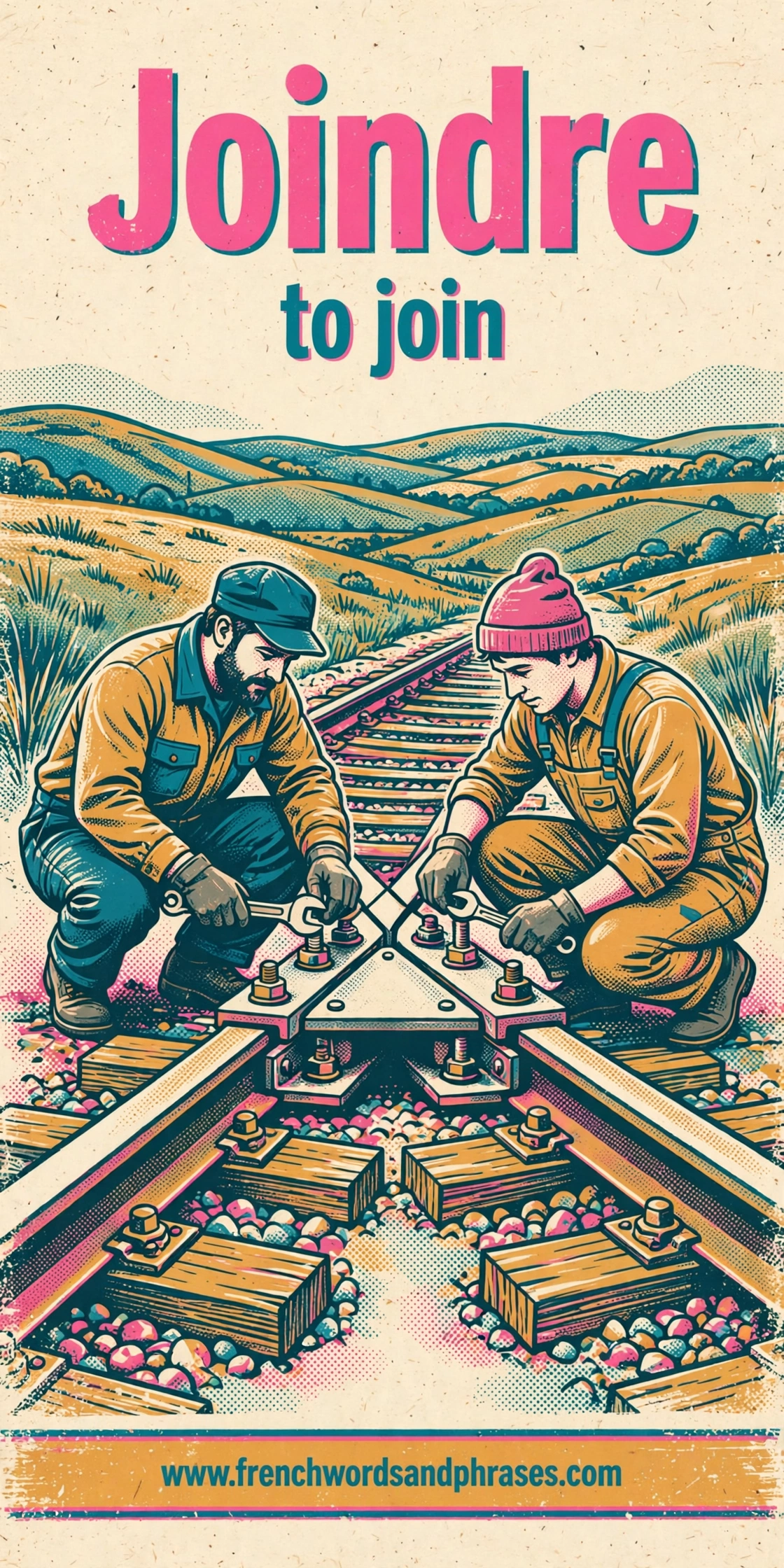
Joindre means to join — to bring two things together into one: joindre les deux bouts, to make ends meet; joindre une pièce à un dossier, to attach a document to a file; joindre les mains, to join one’s hands in prayer.
Two banks of a river, two ends of a rope, two hands in prayer, a photo slipped into an envelope — joindre is the verb of the meeting point, wherever separate things become one thing.
In this guide, you’ll learn how to conjugate joindre in all the major French tenses and moods. Explore complete conjugation tables, French examples, English translations, and practice quizzes.
Understanding the French Verb Joindre
Joindre is an irregular French verb ending in -dre, conjugated like peindre and craindre — the stem joign- in the plural and the participle, join- in the singular.
It means to join. Joindre lives three everyday lives: the physical — le pont joint les deux rives, the bridge joins the two banks; the postal and digital — joindre une pièce, un fichier, to attach; and the human — se joindre à un groupe, to join a group, where the verb turns reflexive. The idiom joindre les deux bouts, to make ends meet, is one of the most useful in the language.
Verb classification: Irregular (-oindre, like peindre)
Auxiliary verb: Avoir
Past participle: joint
Present participle: joignant
English equivalents: To join, to attach, to enclose; joindre les mains — to join one’s hands; joindre les deux bouts — to make ends meet; joindre un fichier — to attach a file; se joindre à — to join (a group).
One important detail: joindre follows the peindre family — je joins, tu joins, il joint in the singular, but nous joignons, vous joignez, ils joignent with a g in the plural; past participle joint, present participle joignant. The future keeps the d: je joindrai.
Experience the Word
Joindre is the verb of the seam — the line where two separate things agree to become one.
Imagine the old stone bridge at dawn: for a thousand years the two villages faced each other across the river; the bridge joint les deux rives, and the market, the marriages and the road all follow from that one joining.
Every attachment, every handshake, every prayer begins the same way. That is joindre — two ends, one whole.
How to Conjugate Joindre: Complete French Conjugation Guide
Let’s explore every major conjugation of joindre, beginning with the indicative mood.
How to Conjugate Joindre in the Indicative Mood
The indicative mood is used to express facts, observations, actions, and events.
How to Conjugate Joindre in the Present Tense (Présent)
Used for actions happening now, habitual actions, and general truths.
| Subject | Conjugation |
|---|---|
| je | joins |
| tu | joins |
| il / elle | joint |
| nous | joignons |
| vous | joignez |
| ils / elles | joignent |
Example
Elle joint les deux morceaux de tissu.
She joins the two pieces of fabric.
Quick Quiz 1
Complete the sentence:
Nous ______ les deux câbles avec soin.
Reveal the answer
joignons
Nous joignons les deux câbles avec soin.
We join the two cables carefully.
How to Conjugate Joindre in the Passé Composé
Used for completed actions in the past. Joindre takes the auxiliary verb avoir.
| Subject | Conjugation |
|---|---|
| j’ | ai joint |
| tu | as joint |
| il / elle | a joint |
| nous | avons joint |
| vous | avez joint |
| ils / elles | ont joint |
Example
Il a joint une photo à sa lettre.
He enclosed a photo with his letter.
How to Conjugate Joindre in the Imparfait (Imperfect Tense)
Used for habitual past actions, descriptions, and ongoing situations in the past.
| Subject | Conjugation |
|---|---|
| je | joignais |
| tu | joignais |
| il / elle | joignait |
| nous | joignions |
| vous | joigniez |
| ils / elles | joignaient |
Example
Le pont joignait les deux rives du fleuve.
The bridge joined the two banks of the river.
Quick Quiz 2
Choose the correct form:
He enclosed a photo with his letter.
Il ______ une photo à sa lettre. (a joint / est joint)
Reveal the answer
a joint
Il a joint une photo à sa lettre.
Joindre takes avoir.
How to Conjugate Joindre in the Plus-que-parfait
Used to describe an action that had already been completed before another past event.
| Subject | Conjugation |
|---|---|
| j’ | avais joint |
| tu | avais joint |
| il / elle | avait joint |
| nous | avions joint |
| vous | aviez joint |
| ils / elles | avaient joint |
Example
Nous avions joint tous les documents au dossier.
We had attached all the documents to the file.
How to Conjugate Joindre in the Passé Simple
Primarily used in formal writing, literature, and historical narratives. It is rarely used in everyday conversation.
| Subject | Conjugation |
|---|---|
| je | joignis |
| tu | joignis |
| il / elle | joignit |
| nous | joignîmes |
| vous | joignîtes |
| ils / elles | joignirent |
Example
Il joignit les mains et pria en silence.
He joined his hands and prayed in silence.
How to Conjugate Joindre in the Passé Antérieur
A literary tense used to express an action completed immediately before another past action, generally in the passé simple.
| Subject | Conjugation |
|---|---|
| j’ | eus joint |
| tu | eus joint |
| il / elle | eut joint |
| nous | eûmes joint |
| vous | eûtes joint |
| ils / elles | eurent joint |
Example
Quand il eut joint les pièces au dossier, il l’envoya au bureau.
When he had attached the documents to the file, he sent it to the office.
How to Conjugate Joindre in the Future Tense (Futur Simple)
Used to describe actions that will take place in the future.
| Subject | Conjugation |
|---|---|
| je | joindrai |
| tu | joindras |
| il / elle | joindra |
| nous | joindrons |
| vous | joindrez |
| ils / elles | joindront |
Example
Je joindrai une copie du contrat au message.
I will attach a copy of the contract to the message.
How to Conjugate Joindre in the Futur Antérieur (Future Perfect)
Used for an action that will have been completed before a particular point in the future.
| Subject | Conjugation |
|---|---|
| j’ | aurai joint |
| tu | auras joint |
| il / elle | aura joint |
| nous | aurons joint |
| vous | aurez joint |
| ils / elles | auront joint |
Example
À la fin du jour, elle aura joint toutes les pièces.
By the end of the day, she will have attached all the documents.
How to Conjugate Joindre in the Near Future (Futur Proche)
Used to describe something that is going to happen soon. Formed with aller + infinitive.
| Subject | Conjugation |
|---|---|
| je | vais joindre |
| tu | vas joindre |
| il / elle | va joindre |
| nous | allons joindre |
| vous | allez joindre |
| ils / elles | vont joindre |
Example
Je vais joindre le fichier au message.
I am going to attach the file to the message.
How to Conjugate Joindre in the Conditional Mood
The conditional mood expresses what would happen under certain circumstances. It is also frequently used to make polite requests or express wishes.
How to Conjugate Joindre in the Present Conditional
| Subject | Conjugation |
|---|---|
| je | joindrais |
| tu | joindrais |
| il / elle | joindrait |
| nous | joindrions |
| vous | joindriez |
| ils / elles | joindraient |
Example
Il joindrait volontiers son nom à la liste.
He would gladly add his name to the list.
How to Conjugate Joindre in the Past Conditional
| Subject | Conjugation |
|---|---|
| j’ | aurais joint |
| tu | aurais joint |
| il / elle | aurait joint |
| nous | aurions joint |
| vous | auriez joint |
| ils / elles | auraient joint |
Example
Nous aurions joint une lettre au colis.
We would have enclosed a letter with the parcel.
Joindre in the Literary Past Conditional Form
This less common literary form uses the imperfect subjunctive of avoir.
| Subject | Conjugation |
|---|---|
| j’ | eusse joint |
| tu | eusses joint |
| il / elle | eût joint |
| nous | eussions joint |
| vous | eussiez joint |
| ils / elles | eussent joint |
Example
Il eût joint sa voix au chœur s’il avait osé.
He would have joined his voice to the choir if he had dared.
How to Conjugate Joindre in the Subjunctive Mood
The subjunctive is used to express wishes, emotions, doubts, necessity, and uncertainty. It frequently follows expressions such as il faut que (it is necessary that) or bien que (although).
How to Conjugate Joindre in the Present Subjunctive
| Subject | Conjugation |
|---|---|
| que je | joigne |
| que tu | joignes |
| qu’il / qu’elle | joigne |
| que nous | joignions |
| que vous | joigniez |
| qu’ils / qu’elles | joignent |
Example
Il faut que tu joignes le certificat au dossier.
You must attach the certificate to the file.
Quick Quiz 3
Complete the sentence using the subjunctive:
Il faut que tu ______ le certificat au dossier.
Reveal the answer
joignes
Il faut que tu joignes le certificat au dossier.
You must attach the certificate to the file.
How to Conjugate Joindre in the Imperfect Subjunctive
A literary tense, rarely encountered in modern spoken French.
| Subject | Conjugation |
|---|---|
| que je | joignisse |
| que tu | joignisses |
| qu’il / qu’elle | joignît |
| que nous | joignissions |
| que vous | joignissiez |
| qu’ils / qu’elles | joignissent |
Example
Je ne croyais pas qu’il joignît un jour les deux bouts.
I did not think he would ever make ends meet.
How to Conjugate Joindre in the Pluperfect Subjunctive
A literary construction used to express an action completed before another past action.
| Subject | Conjugation |
|---|---|
| que j’ | eusse joint |
| que tu | eusses joint |
| qu’il / qu’elle | eût joint |
| que nous | eussions joint |
| que vous | eussiez joint |
| qu’ils / qu’elles | eussent joint |
Example
On regretta qu’ils eussent joint si tard leurs efforts.
People regretted that they had joined their efforts so late.
How to Conjugate Joindre in the Past Subjunctive
| Subject | Conjugation |
|---|---|
| que j’ | aie joint |
| que tu | aies joint |
| qu’il / qu’elle | ait joint |
| que nous | ayons joint |
| que vous | ayez joint |
| qu’ils / qu’elles | aient joint |
Example
Je suis content que tu aies joint la photo.
I am glad you enclosed the photo.
How to Conjugate Joindre in the Imperative
The imperative is used to give commands, instructions, invitations, or suggestions. Subject pronouns are omitted.
How to Conjugate Joindre in the Present Imperative
| Person | Conjugation |
|---|---|
| (tu) | joins |
| (nous) | joignons |
| (vous) | joignez |
Example
Joins une copie de ta carte au formulaire !
Attach a copy of your card to the form!
Quick Quiz 4
How would you say Attach a copy (tu form)?
Reveal the answer
Joins une copie !
French Participles of Joindre
Participles are verb forms that can be used in compound tenses and other grammatical constructions.
Present Participle of Joindre
joignant
En joignant les deux câbles, il a rétabli le courant.
By joining the two cables, he restored the power.
Past Participle of Joindre
joint
Jointe au dossier, la lettre explique tout.
Attached to the file, the letter explains everything.
Joindre in Everyday French: Real-Life Examples
Now that you know the conjugations, let’s see how joindre appears in everyday French.
Example 1 — Present
Elle joint les deux morceaux de tissu.
She joins the two pieces of fabric.
Example 2 — Passé composé
Il a joint une photo à sa lettre.
He enclosed a photo with his letter.
Example 3 — Imparfait
Le pont joignait les deux rives.
The bridge joined the two banks.
Example 4 — Future
Je joindrai une copie du contrat.
I will attach a copy of the contract.
Example 5 — Conditional
Il joindrait son nom à la liste.
He would add his name to the list.
Example 6 — Imperative
Joins une copie de ta carte au formulaire !
Attach a copy of your card to the form!
Beyond Translation: The Meaning of Joindre
Joindre is one of the quiet load-bearing verbs of French: it builds bridges in stone and in email — joindre un fichier is the daily click of modern life — and it holds the great idiom of modest survival, joindre les deux bouts, making the two ends of the month meet. Its family is everywhere: une jonction, un joint, rejoindre, to meet up again.
Where two things become one, French says joindre.
Learn it and you can attach, enclose, unite and make ends meet with a single verb.
How to Remember the French Verb Joindre
Remember it this way: Joindre is about je joins, nous joignons, past participle joint; joindre les deux bouts = to make ends meet.
- Like peindre: je joins, il joint in the singular, nous joignons, ils joignent with a g in the plural; past participle joint.
- The future keeps the d: je joindrai — joins today, joindrai tomorrow.
- Three lives: physical joining, attaching documents (joindre un fichier), and the idiom joindre les deux bouts, to make ends meet.
The key idea is je joins, nous joignons, past participle joint; joindre les deux bouts = to make ends meet.
Test Your Knowledge of Joindre
Let’s see how much you’ve learned. Try answering these questions before revealing the answers.
Question 1
What is the past participle of joindre?
Reveal the answer
Joint — je joins, nous joignons, joint.
Question 2
How do you say to make ends meet in French?
Reveal the answer
Joindre les deux bouts.
Question 3
Translate: He enclosed a photo with his letter.
Reveal the answer
Il a joint une photo à sa lettre.
Question 4
Which auxiliary does joindre take?
Reveal the answer
Avoir — il a joint une photo.
Question 5
Complete the sentence:
Il faut que tu ______ le certificat au dossier.
Reveal the answer
joignes
Il faut que tu joignes le certificat au dossier.
You must attach the certificate to the file.
Your Final Challenge
Can You Use It?
How would you say this in French?
He enclosed a photo with his letter, as in the old days.
Reveal the answer
Il a joint une photo à sa lettre, comme autrefois.
He enclosed a photo with his letter, as in the old days.
A little French. A little curiosity. A richer everyday life.
LEARN FRENCH ONE WORD AT A TIME