A French Word to Live By
Translate Faire la grasse matinée to English
/fɛʁ la ɡʁas ma.ti.ne/
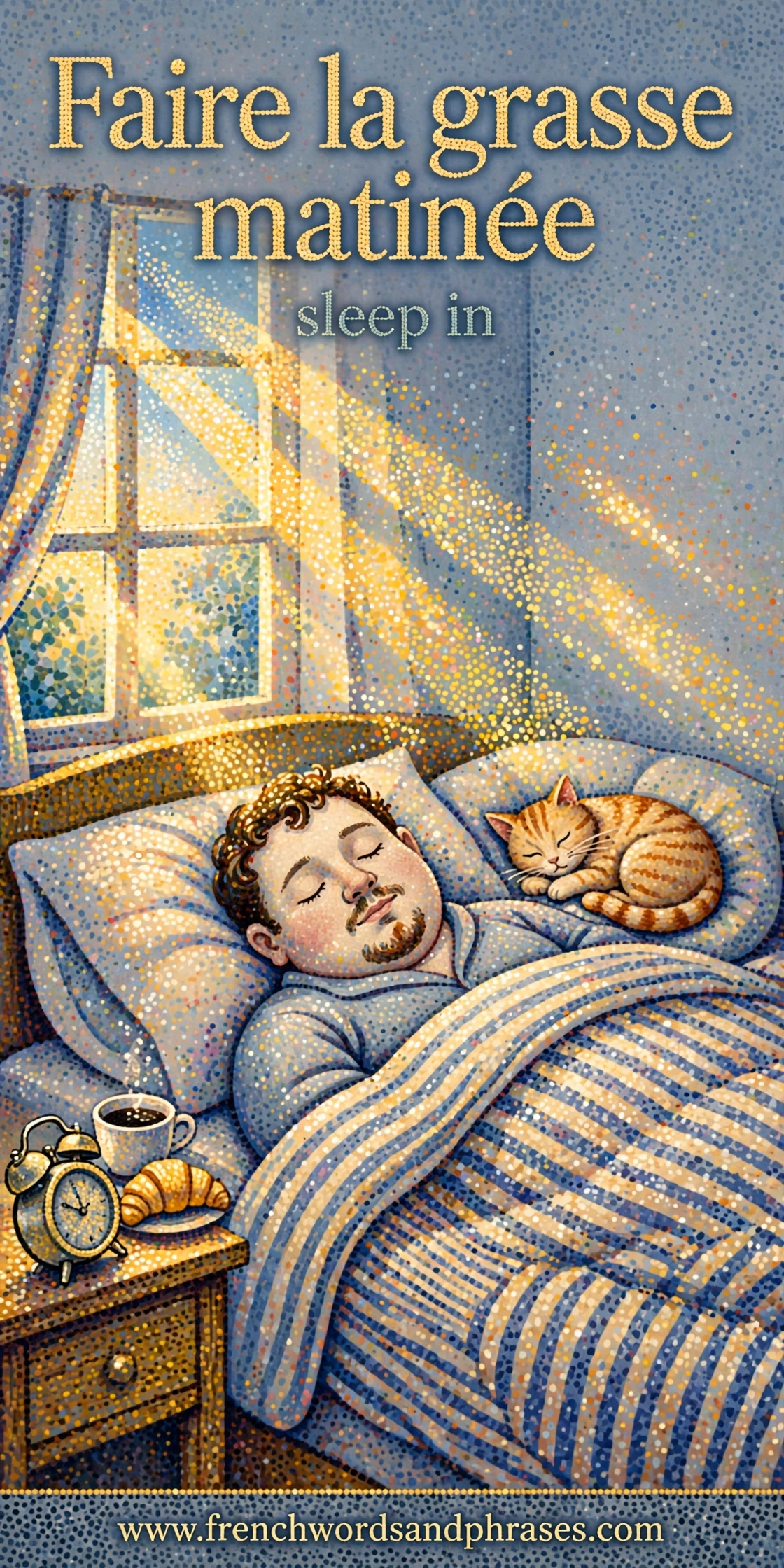
Faire la grasse matinée means to sleep in, to have a lie-in.
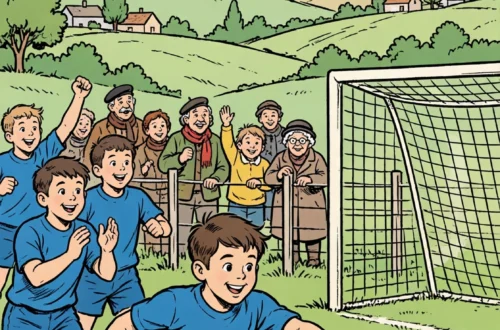
Sunday, nine o’clock, and the shutters are still closed. The croissants can wait, the market can wait, the whole world can wait — the house has voted, unanimously, for the most beloved of French weekend rituals: « Aujourd’hui, on fait la grasse matinée. »
Let’s explore how faire la grasse matinée works in French, beginning with the whole phrase on one card.
Understanding the French Phrase Faire la grasse matinée
Faire la grasse matinée is a French idiomatic expression built from faire (to do, to make), grasse (fat, feminine) and matinée (the morning, as a stretch of time). The morning is imagined growing fat — swelling comfortably into the day while you stay in bed.
It means to sleep in — to stay in bed late, on purpose, and enjoy it. It belongs to Sundays, holidays and the morning after a celebration. Nobody fait la grasse matinée by accident before an exam; it is a small, deliberate luxury, and French says it with affection.
Type: Idiomatic expression — sleeping late (faire + la grasse matinée)
Answers the need: Saying you stayed in bed late, deliberately and with pleasure
Register: Neutral, everyday — warm and affectionate, safe everywhere
Strength: Gentle — a lie-in, not laziness; a treat, not a habit
One important usage detail: the article is part of the phrase — faire LA grasse matinée, never faire une grasse matinée. And matinée is the morning as a duration: it stretches. That is exactly what the idiom needs, because a grasse matinée is measured by how long it lasts, not by when it starts.
Experience the Word
Faire la grasse matinée is the weekend’s opening ceremony — the alarm clock dismissed, the day postponed by pleasure.
Imagine the morning after a village wedding: the dancing ended at three, and by nine not one shutter in the street has opened. The whole village, young and old, fait la grasse matinée, and nobody apologises.
French protects its pleasures with good phrases. A fat morning is a morning that has been fed — with sleep, with time, with nothing at all to do.
How to Use Faire la grasse matinée in French: Complete Guide
Let’s explore how faire la grasse matinée works in French, beginning with the whole phrase on one card.
Faire la grasse matinée at a Glance
The Whole Phrase on One Card
Real meaning, literal picture, English twin and register — faire la grasse matinée in five lines.
| Point | Faire la grasse matinée |
|---|---|
| What it really means | to sleep in, to have a lie-in |
| Word for word | to do the fat morning |
| English equivalent | to sleep in / to have a lie-in / to have a slow morning in bed |
| Register | neutral and warm — everyday French, said with affection |
| Use it for | Sundays, holidays, the morning after — deliberate, delicious late starts |
Example
Le dimanche, je fais toujours la grasse matinée.
On Sundays, I always have a lie-in.
Word by Word: Building the Picture
Four small pieces — take them one by one and the morning swells.
| Word | Literal meaning | Its job in the phrase |
|---|---|---|
| faire | to do, to make | the great all-purpose verb — here, to have or enjoy the thing |
| la | the | fixed: it is la grasse matinée, never une |
| grasse | fat (feminine) | the morning grows fat, swelling into the day — gras takes its feminine form for matinée |
| matinée | morning (as a stretch) | the morning measured by its length — the same word also names an afternoon show at the theatre |
Example
Demain, pas de réveil : grasse matinée !
Tomorrow, no alarm clock: lie-in!
Quick Quiz 1
Why is grasse spelled with two s and an e?
Reveal the answer
Because matinée is feminine — gras (fat) takes its feminine form, grasse, to agree with it.
Après cette grasse matinée, je suis en pleine forme.
After that lie-in, I feel great.
When You Say It: The Lie-In Moments
Faire la grasse matinée fires at moments like these — when staying in bed is the plan, not the accident.
| Situation | Example |
|---|---|
| On Sundays | le dimanche, on fait la grasse matinée — on Sundays, we have a lie-in |
| After a party | après la fête, tout le monde a fait la grasse matinée — after the party, everyone slept in |
| On holiday | en vacances, elle fait la grasse matinée jusqu’à onze heures — on holiday, she sleeps in until eleven |
| A day off school | les enfants ont fait la grasse matinée, l’école est fermée — the children had a lie-in, school is closed |
| The thwarted wish | j’aimerais faire la grasse matinée, mais le chien me réveille à six heures — I’d love a lie-in, but the dog wakes me at six |
Example
Après la fête, tout le monde a fait la grasse matinée.
After the party, everyone slept in.
Make It Yours: The Phrase for Every Sleeper
Faire conjugates — je fais, tu fais, nous faisons — and the fat morning never changes.
| Form | French | In English |
|---|---|---|
| Present — I | je fais la grasse matinée | I’m having a lie-in |
| Present — we | nous faisons la grasse matinée | we’re having a lie-in |
| Past | elle a fait la grasse matinée jusqu’à midi | she slept in until noon |
| Tomorrow’s plan | demain, je fais la grasse matinée | tomorrow, I’m having a lie-in |
| As an announcement | demain, grasse matinée ! | tomorrow, lie-in! |
| Question | tu fais la grasse matinée demain ? | are you having a lie-in tomorrow? |
Example
Nous faisons la grasse matinée, le petit déjeuner attendra.
We’re having a lie-in, breakfast can wait.
Quick Quiz 2
How do you say “she slept in until noon” with this idiom?
Reveal the answer
Elle a fait la grasse matinée jusqu’à midi — the passé composé of faire, with jusqu’à to stretch the morning.
Dimanche, elle a fait la grasse matinée jusqu’à midi.
On Sunday, she slept in until noon.
Everyday Expressions: Building on the Phrase
Faire la grasse matinée slots into these everyday frames — each one ready to use as it stands.
| Frame | In English |
|---|---|
| faire la grasse matinée jusqu’à + time | to sleep in until eleven / until noon |
| demain, grasse matinée ! | tomorrow, lie-in! — the happy announcement |
| une bonne grasse matinée | a good lie-in |
| aimer faire la grasse matinée | to love having a lie-in |
| pas de grasse matinée pour moi | no lie-in for me |
Example
Une bonne grasse matinée, et je suis prêt pour la semaine.
A good lie-in, and I’m ready for the week.
Close Cousins: The Other Slow-Morning Phrases
French has a whole shelf of morning phrases — la grasse matinée is the affectionate one; its cousins are plainer, longer or later.
| Expression | The difference |
|---|---|
| faire la grasse matinée | to sleep in — the idiom, warm and deliberate |
| dormir tard | to sleep late — the plain description, no picture, no judgement |
| rester au lit | to stay in bed — awake or asleep, the bed is the point |
| traîner au lit | to lounge in bed — slower, lazier, half awake with a book |
| faire la sieste | to have a nap — the afternoon cousin, a different time of day entirely |
Example
Après la grasse matinée, une petite sieste l’après-midi : journée parfaite.
After the lie-in, a little nap in the afternoon: a perfect day.
Quick Quiz 3
Which cousin happens after lunch, not in the morning — faire la sieste or rester au lit?
Reveal the answer
Faire la sieste — the sieste is the afternoon nap; rester au lit is simply staying in bed.
Après le déjeuner, grand-père fait toujours la sieste.
After lunch, grandfather always has a nap.
Faire la grasse matinée and Its Neighbours
The morning shelf around the phrase — and the early risers at the far end.
| French | In English |
|---|---|
| se lever tôt | to get up early — the opposite habit |
| être du matin | to be a morning person — the opposite nature |
| faire la grasse matinée | to sleep in, to have a lie-in |
| la nuit blanche | the sleepless night — the night that eats the morning |
| mettre le réveil | to set the alarm — the lie-in’s natural enemy |
Example
Elle est du matin, mais le dimanche, même elle fait la grasse matinée.
She’s a morning person, but on Sundays even she has a lie-in.
Watch Out: The Traps Around the Fat Morning
The traps: two words for morning, an article that must not change, and a breakfast that is not included.
| Trap | The truth |
|---|---|
| matin or matinée? | matin is the morning as a moment, matinée as a length — the idiom needs the stretch: la grasse matinée |
| changing the article | faire une grasse matinée is a learner’s copy — the idiom’s article is fixed: la |
| a big breakfast? | the fat is the morning itself, not the food — you can faire la grasse matinée and eat nothing until lunch |
| every single day? | as a daily habit it starts to smell of its cousin avoir un poil dans la main — laziness; the idiom prefers weekends |
Example
Ce matin, pas de grasse matinée : le train part à sept heures.
This morning, no lie-in: the train leaves at seven.
Quick Quiz 4
True or false: faire une grasse matinée is just as correct as faire la grasse matinée.
Reveal the answer
False — the article is part of the idiom: faire la grasse matinée, always with la.
Le dimanche, on fait la grasse matinée.
On Sundays, we have a lie-in.
Faire la grasse matinée in Everyday French: Real-Life Examples
Now that you know the word, let’s see how faire la grasse matinée appears in everyday French.
Example 1 — Sundays
Le dimanche, je fais toujours la grasse matinée.
On Sundays, I always have a lie-in.
Example 2 — After the party
Après la fête, tout le monde a fait la grasse matinée.
After the party, everyone slept in.
Example 3 — The announcement
Demain, pas de réveil : grasse matinée !
Tomorrow, no alarm: lie-in!
Example 4 — On holiday
Elle fait la grasse matinée jusqu’à onze heures quand elle est en vacances.
She sleeps in until eleven when she’s on holiday.
Example 5 — School’s closed
Les enfants ont fait la grasse matinée, l’école est fermée aujourd’hui.
The children had a lie-in, school is closed today.
Example 6 — The dog decides
J’aimerais faire la grasse matinée, mais le chien me réveille à six heures.
I’d love a lie-in, but the dog wakes me at six.
Beyond Translation: The Meaning of Faire la grasse matinée
Languages judge sleeping late in different ways — some call it laziness, some call it recovery. French, characteristically, feeds it: the morning is grasse, fat, well nourished. To stay in bed is not to steal time but to let the morning grow.
Faire la grasse matinée is France’s small weekly permission to be unhurried.
It sits in a family of French time-pleasures — la sieste after lunch, l’apéro before dinner — a whole civilisation arranged, politely, around rest.
How to Remember the French Phrase Faire la grasse matinée
Remember it this way: Faire la grasse matinée is the morning grown fat — always with la, always deliberate, and grasse is feminine for matinée.
- You picture the swelling morning — grasse is fat, and the morning fattens while you sleep.
- You keep the article — la grasse matinée, never une.
- You keep the times apart — grasse matinée in the morning, sieste after lunch.
The key idea is faire la grasse matinée means to sleep in — to have a deliberate, delicious lie-in.
Test Your Knowledge of Faire la grasse matinée
Let’s see how much you’ve learned. Try answering these questions before revealing the answers.
Question 1
What does faire la grasse matinée mean?
Reveal the answer
To sleep in, to have a lie-in — staying in bed late, deliberately and with pleasure.
Question 2
What is the literal, word-for-word meaning?
Reveal the answer
To do the fat morning — the morning imagined growing fat while you stay in bed.
Question 3
Why is grasse feminine in form?
Reveal the answer
Because matinée is a feminine noun — gras becomes grasse to agree with it.
Question 4
What is the afternoon cousin of this phrase?
Reveal the answer
Faire la sieste — the nap after lunch, a different time of day.
Question 5
Complete the sentence:
Le dimanche, je fais la ______ matinée. (On Sundays, I have a lie-in.)
Reveal the answer
grasse
Le dimanche, je fais la grasse matinée.
On Sundays, I have a lie-in.
Your Final Challenge
Can You Use It?
How would you say this in French?
“Tomorrow is Sunday, so we are having a lie-in.”
Reveal the answer
Demain, c’est dimanche, alors on fait la grasse matinée.
Tomorrow is Sunday, so we are having a lie-in.
A little French. A little curiosity. A richer everyday life.
LEARN FRENCH ONE WORD AT A TIME