A French Word to Live By
How to Conjugate Expliquer in French
/ɛks.pli.ke/
Expliquer means to explain.
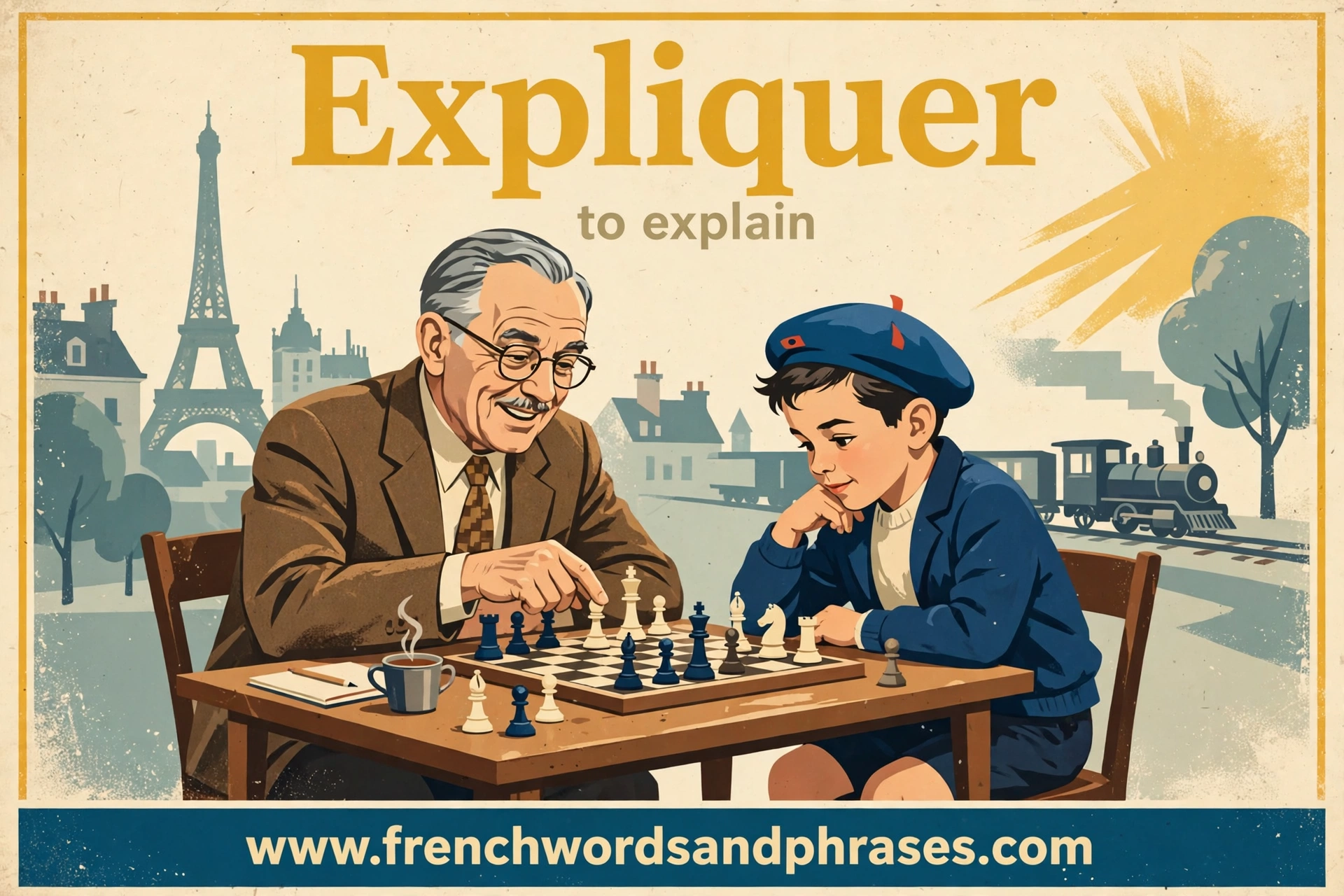
A teacher at the blackboard, a friend showing you the way, a parent answering a child’s endless ‘why?’ — to make something clear, step by step, is expliquer.
In this guide, you’ll learn how to conjugate expliquer in all the major French tenses and moods. Explore complete conjugation tables, French examples, English translations, and practice quizzes.
Understanding the French Verb Expliquer
Expliquer is a regular French verb belonging to the first group of verbs, those ending in -er.
It means to explain. It is commonly used for lessons, rules, and reasons, and — with à — for the person listening, as in expliquer la leçon aux élèves.
Verb classification: First group (-er)
Auxiliary verb: Avoir
Past participle: expliqué
Present participle: expliquant
English equivalents: To explain.
One important spelling detail: the qu is kept in every form — j’explique, nous expliquons, ils expliquaient — the u after the q is part of the spelling throughout, so the hard sound is preserved.
Experience the Word
Expliquer is more than giving an answer. It is taking something tangled and laying it out, thread by thread, until it makes sense.
Imagine a child asking why the moon follows the car. You could shrug — or you could explain, and watch her eyes light up as the world grows clearer.
You have not just answered a question. You have explained the world.
How to Conjugate Expliquer: Complete French Conjugation Guide
Let’s explore every major conjugation of expliquer, beginning with the indicative mood.
How to Conjugate Expliquer in the Indicative Mood
The indicative mood is used to express facts, observations, actions, and events.
How to Conjugate Expliquer in the Present Tense (Présent)
Used for actions happening now, habitual actions, and general truths.
| Subject | Conjugation |
|---|---|
| je | explique |
| tu | expliques |
| il / elle | explique |
| nous | expliquons |
| vous | expliquez |
| ils / elles | expliquent |
Example
Le professeur explique la leçon aux élèves.
The teacher explains the lesson to the pupils.
Quick Quiz 1
Complete the sentence:
Nous ______ toujours la règle d’abord.
Reveal the answer
expliquons
Nous expliquons toujours la règle d’abord.
We always explain the rule first.
How to Conjugate Expliquer in the Passé Composé
Used for completed actions in the past. Expliquer takes the auxiliary verb avoir.
| Subject | Conjugation |
|---|---|
| j’ | ai expliqué |
| tu | as expliqué |
| il / elle | a expliqué |
| nous | avons expliqué |
| vous | avez expliqué |
| ils / elles | ont expliqué |
Example
J’ai expliqué la règle à mon frère.
I explained the rule to my brother.
How to Conjugate Expliquer in the Imparfait (Imperfect Tense)
Used for habitual past actions, descriptions, and ongoing situations in the past.
| Subject | Conjugation |
|---|---|
| je | expliquais |
| tu | expliquais |
| il / elle | expliquait |
| nous | expliquions |
| vous | expliquiez |
| ils / elles | expliquaient |
Example
Quand il était jeune, il expliquait tout avec patience.
When he was young, he explained everything patiently.
Quick Quiz 2
Choose the correct form:
When we were students, we used to explain the lessons to each other.
Quand nous étions étudiants, nous ______ les leçons les uns aux autres.
Reveal the answer
expliquions
Quand nous étions étudiants, nous expliquions les leçons les uns aux autres.
How to Conjugate Expliquer in the Plus-que-parfait
Used to describe an action that had already been completed before another past event.
| Subject | Conjugation |
|---|---|
| j’ | avais expliqué |
| tu | avais expliqué |
| il / elle | avait expliqué |
| nous | avions expliqué |
| vous | aviez expliqué |
| ils / elles | avaient expliqué |
Example
J’avais déjà expliqué le plan avant qu’il n’arrive.
I had already explained the plan before he arrived.
How to Conjugate Expliquer in the Passé Simple
Primarily used in formal writing, literature, and historical narratives. It is rarely used in everyday conversation.
| Subject | Conjugation |
|---|---|
| je | expliquai |
| tu | expliquas |
| il / elle | expliqua |
| nous | expliquâmes |
| vous | expliquâtes |
| ils / elles | expliquèrent |
Example
Il expliqua la situation avec calme.
He explained the situation calmly.
How to Conjugate Expliquer in the Passé Antérieur
A literary tense used to express an action completed immediately before another past action, generally in the passé simple.
| Subject | Conjugation |
|---|---|
| j’ | eus expliqué |
| tu | eus expliqué |
| il / elle | eut expliqué |
| nous | eûmes expliqué |
| vous | eûtes expliqué |
| ils / elles | eurent expliqué |
Example
Dès qu’il eut expliqué les règles, le jeu commença.
As soon as he had explained the rules, the game began.
How to Conjugate Expliquer in the Future Tense (Futur Simple)
Used to describe actions that will take place in the future.
| Subject | Conjugation |
|---|---|
| je | expliquerai |
| tu | expliqueras |
| il / elle | expliquera |
| nous | expliquerons |
| vous | expliquerez |
| ils / elles | expliqueront |
Example
Demain, nous expliquerons le projet à toute l’équipe.
Tomorrow, we will explain the project to the whole team.
How to Conjugate Expliquer in the Futur Antérieur (Future Perfect)
Used for an action that will have been completed before a particular point in the future.
| Subject | Conjugation |
|---|---|
| j’ | aurai expliqué |
| tu | auras expliqué |
| il / elle | aura expliqué |
| nous | aurons expliqué |
| vous | aurez expliqué |
| ils / elles | auront expliqué |
Example
À midi, j’aurai déjà expliqué ma décision.
By noon, I will already have explained my decision.
How to Conjugate Expliquer in the Near Future (Futur Proche)
Used to describe something that is going to happen soon. Formed with aller + infinitive.
| Subject | Conjugation |
|---|---|
| je | vais expliquer |
| tu | vas expliquer |
| il / elle | va expliquer |
| nous | allons expliquer |
| vous | allez expliquer |
| ils / elles | vont expliquer |
Example
Je vais expliquer le problème dès ce soir.
I am going to explain the problem this evening.
How to Conjugate Expliquer in the Conditional Mood
The conditional mood expresses what would happen under certain circumstances. It is also frequently used to make polite requests or express wishes.
How to Conjugate Expliquer in the Present Conditional
| Subject | Conjugation |
|---|---|
| je | expliquerais |
| tu | expliquerais |
| il / elle | expliquerait |
| nous | expliquerions |
| vous | expliqueriez |
| ils / elles | expliqueraient |
Example
J’expliquerais la chose différemment si je pouvais.
I would explain it differently if I could.
How to Conjugate Expliquer in the Past Conditional
| Subject | Conjugation |
|---|---|
| j’ | aurais expliqué |
| tu | aurais expliqué |
| il / elle | aurait expliqué |
| nous | aurions expliqué |
| vous | auriez expliqué |
| ils / elles | auraient expliqué |
Example
J’aurais expliqué plus tôt si j’avais su.
I would have explained earlier if I had known.
Expliquer in the Literary Past Conditional Form
This less common literary form uses the imperfect subjunctive of avoir.
| Subject | Conjugation |
|---|---|
| j’ | eusse expliqué |
| tu | eusses expliqué |
| il / elle | eût expliqué |
| nous | eussions expliqué |
| vous | eussiez expliqué |
| ils / elles | eussent expliqué |
Example
Il eût expliqué autrement s’il avait pu.
He would have explained differently if he had been able to.
How to Conjugate Expliquer in the Subjunctive Mood
The subjunctive is used to express wishes, emotions, doubts, necessity, and uncertainty. It frequently follows expressions such as il faut que (it is necessary that) or bien que (although).
How to Conjugate Expliquer in the Present Subjunctive
| Subject | Conjugation |
|---|---|
| que je | explique |
| que tu | expliques |
| qu’il / qu’elle | explique |
| que nous | expliquions |
| que vous | expliquiez |
| qu’ils / qu’elles | expliquent |
Example
Il faut que j’explique tout à ma mère.
I need to explain everything to my mother.
Quick Quiz 3
Complete the sentence using the subjunctive:
Il faut que nous ______ le plan à tout le monde.
Reveal the answer
expliquions
Il faut que nous expliquions le plan à tout le monde.
We need to explain the plan to everyone.
How to Conjugate Expliquer in the Imperfect Subjunctive
A literary tense, rarely encountered in modern spoken French.
| Subject | Conjugation |
|---|---|
| que je | expliquasse |
| que tu | expliquasses |
| qu’il / qu’elle | expliquât |
| que nous | expliquassions |
| que vous | expliquassiez |
| qu’ils / qu’elles | expliquassent |
Example
Il souhaitait qu’elle expliquât son retard.
He wished that she would explain her lateness.
How to Conjugate Expliquer in the Pluperfect Subjunctive
A literary construction used to express an action completed before another past action.
| Subject | Conjugation |
|---|---|
| que j’ | eusse expliqué |
| que tu | eusses expliqué |
| qu’il / qu’elle | eût expliqué |
| que nous | eussions expliqué |
| que vous | eussiez expliqué |
| qu’ils / qu’elles | eussent expliqué |
Example
Il regrettait que nous eussions tout expliqué si tard.
He regretted that we had explained everything so late.
How to Conjugate Expliquer in the Past Subjunctive
| Subject | Conjugation |
|---|---|
| que j’ | aie expliqué |
| que tu | aies expliqué |
| qu’il / qu’elle | ait expliqué |
| que nous | ayons expliqué |
| que vous | ayez expliqué |
| qu’ils / qu’elles | aient expliqué |
Example
Je suis heureux que tu aies expliqué la situation.
I am happy that you explained the situation.
How to Conjugate Expliquer in the Imperative
The imperative is used to give commands, instructions, invitations, or suggestions. Subject pronouns are omitted.
How to Conjugate Expliquer in the Present Imperative
| Person | Conjugation |
|---|---|
| (tu) | explique |
| (nous) | expliquons |
| (vous) | expliquez |
Example
Explique-moi ce mot, s’il te plaît !
Explain this word to me, please!
Quick Quiz 4
How would you say Explain it to me! (tu form)?
Reveal the answer
Explique-moi !
French Participles of Expliquer
Participles are verb forms that can be used in compound tenses and other grammatical constructions.
Present Participle of Expliquer
expliquant
En expliquant lentement, il a aidé toute la classe.
By explaining slowly, he helped the whole class.
Past Participle of Expliquer
expliqué
Nous avons expliqué la route à nos voisins.
We explained the way to our neighbours.
Expliquer in Everyday French: Real-Life Examples
Now that you know the conjugations, let’s see how expliquer appears in everyday French.
Example 1 — Present
Nous expliquons toujours la règle avant de jouer.
We always explain the rule before playing.
Example 2 — Passé composé
Elle a expliqué le chemin aux touristes.
She explained the way to the tourists.
Example 3 — Imparfait
Il expliquait souvent les mots difficiles.
He often explained difficult words.
Example 4 — Future
Ils expliqueront le projet demain matin.
They will explain the project tomorrow morning.
Example 5 — Conditional
J’expliquerais à ta place si je pouvais.
I would explain in your place if I could.
Example 6 — Subjunctive
Bien que nous expliquions lentement, il ne comprend pas.
Although we explain slowly, he doesn’t understand.
Beyond Translation: The Meaning of Expliquer
English has one word, explain, for the meaning of expliquer. But the French word also suggests unfolding — its Latin roots mean ‘to spread out flat’, so that every fold of an idea can be seen.
Explaining is unfolding.
To expliquer is to take a knot and patiently turn it into a straight line. It evokes patience, clarity, and the small joy of finally understanding.
How to Remember the French Verb Expliquer
Remember it this way: Expliquer is about making something clear, step by step.
- A child asks you why it rains — tu expliques.
- A tourist looks lost in the street — tu expliques le chemin.
- The teacher opens the book — elle explique la leçon.
The key idea is making something clear, step by step.
Test Your Knowledge of Expliquer
Let’s see how much you’ve learned. Try answering these questions before revealing the answers.
Question 1
What auxiliary verb is used with expliquer in compound tenses?
Reveal the answer
Avoir
Question 2
How do you say I will explain in French?
Reveal the answer
J’expliquerai.
Question 3
Translate: We explained the way to our neighbours.
Reveal the answer
Nous avons expliqué la route à nos voisins.
Question 4
What is the present participle of expliquer?
Reveal the answer
Expliquant.
Question 5
Complete the sentence:
Si je pouvais, j’______ tout plus calmement.
Reveal the answer
expliquerais
Si je pouvais, j’expliquerais tout plus calmement.
If I could, I would explain everything more calmly.
Your Final Challenge
Can You Use It?
How would you say this in French?
“Tomorrow, I want to explain the project to the whole team.”
Reveal the answer
Demain, je veux expliquer le projet à toute l’équipe.
Tomorrow, I want to explain the project to the whole team.
A little French. A little curiosity. A richer everyday life.
LEARN FRENCH ONE WORD AT A TIME