
A French Word to Live By
How to Conjugate Exciter in French
/ɛɡ.zi.te/
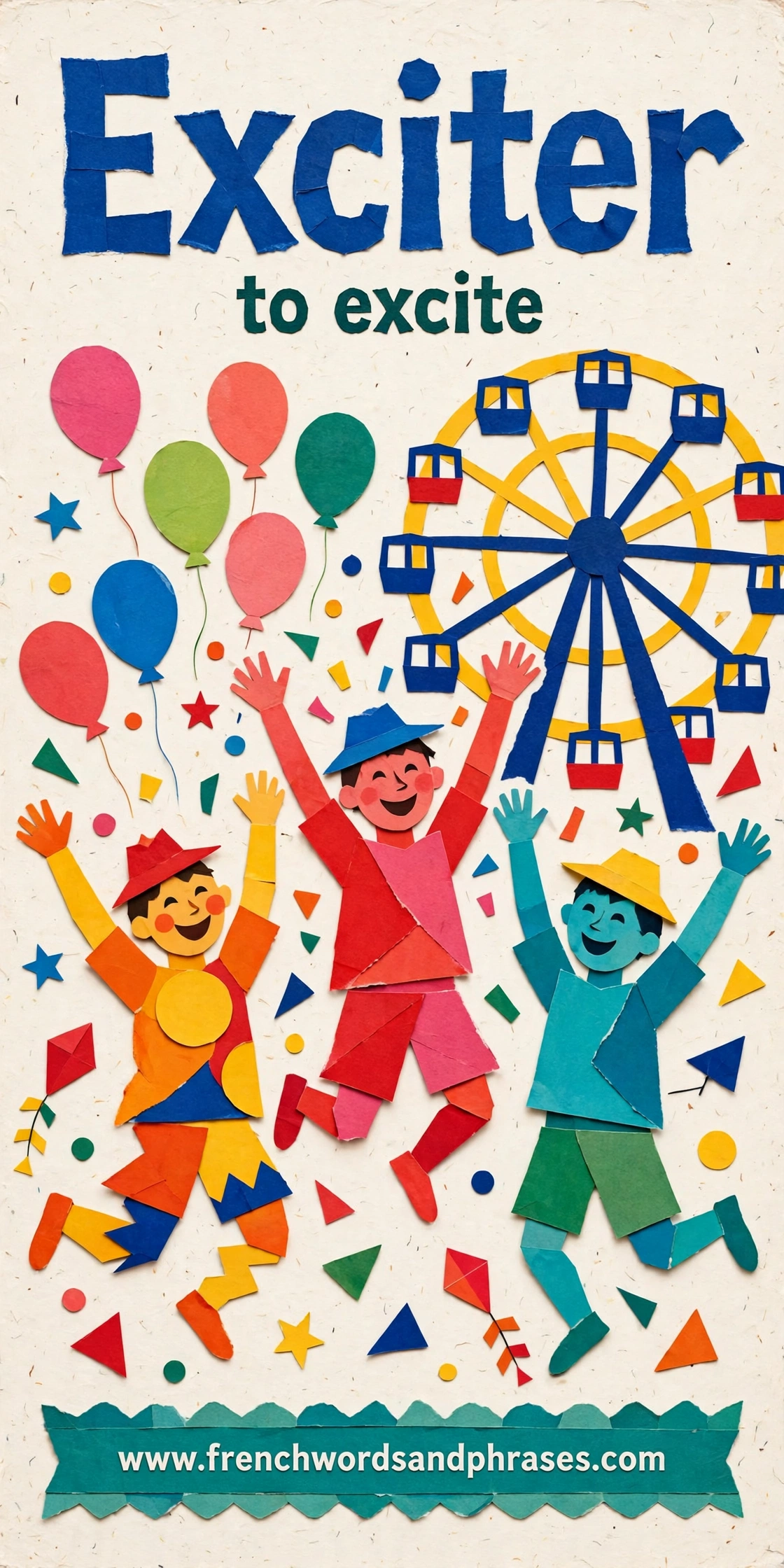
Exciter means to excite — to stir up energy, curiosity or nerves: a crowd before a match, children before a trip, a dog at the sight of its lead.
Thirty schoolchildren the hour before the school trip, a stadium humming before the final, a puppy spinning at the door — exciter is the verb of stirred-up energy, of feelings wound up like a spring.
In this guide, you’ll learn how to conjugate exciter in all the major French tenses and moods. Explore complete conjugation tables, French examples, English translations, and practice quizzes.
Understanding the French Verb Exciter
Exciter is a regular French verb belonging to the first group of verbs, those ending in-er.
It means to excite. Exciter works on feelings and crowds: exciter la foule, to stir up the crowd; exciter l’imagination, to fire the imagination; exciter l’appétit, to whet the appetite. About a person, être excité is to be excited — par le voyage, about the trip — and about children it often carries a smile and a warning: les enfants sont très excités ce soir, the children are very wound up tonight.
Verb classification: First group (-er)
Auxiliary verb: Avoir
Past participle: excité
Present participle: excitant
English equivalents: To excite, to stir up, to thrill, to wind up; exciter la curiosité — to arouse curiosity; exciter les enfants — to get the children excited; s’exciter — to get worked up; ne t’excite pas — calm down, don’t get excited.
One important detail: exciter is perfectly regular — j’excite, nous excitons, ils excitent, past participle excité. Watch the x: it sounds like gz at the start of the word — exciter begins « eg-zi ». The reflexive s’exciter is the everyday star: it means to get excited, to get worked up, and its imperative is a classic of French playgrounds and kitchens: ne t’excite pas !
Experience the Word
Exciter is the verb of the spring unwinding — energy stored, then suddenly everywhere at once.
Imagine the classroom five minutes before the end of term: bags packed since dawn, a rumour of ice cream, thirty voices rising like a kettle. The teacher closes her book with a sigh she does not entirely mean: « Ne vous excitez pas ! » Too late — the verb has already done its work.
Joy, nerves, curiosity — all wound up together. That is exciter — feelings, stirred to a simmer.
How to Conjugate Exciter: Complete French Conjugation Guide
Let’s explore every major conjugation of exciter, beginning with the indicative mood.
How to Conjugate Exciter in the Indicative Mood
The indicative mood is used to express facts, observations, actions, and events.
How to Conjugate Exciter in the Present Tense (Présent)
Used for actions happening now, habitual actions, and general truths.
| Subject | Conjugation |
|---|---|
| je | excite |
| tu | excites |
| il / elle | excite |
| nous | excitons |
| vous | excitez |
| ils / elles | excitent |
Example
Ce projet excite toute l’équipe depuis des semaines.
This project has been exciting the whole team for weeks.
Quick Quiz 1
Complete the sentence:
Nous ______ les enfants avec cette histoire de trésor.
Reveal the answer
excitons
Nous excitons les enfants avec cette histoire de trésor.
We are getting the children excited with this treasure story.
How to Conjugate Exciter in the Passé Composé
Used for completed actions in the past. Exciter takes the auxiliary verb avoir.
| Subject | Conjugation |
|---|---|
| j’ | ai excité |
| tu | as excité |
| il / elle | a excité |
| nous | avons excité |
| vous | avez excité |
| ils / elles | ont excité |
Example
La nouvelle a excité les enfants toute la journée.
The news kept the children excited all day.
How to Conjugate Exciter in the Imparfait (Imperfect Tense)
Used for habitual past actions, descriptions, and ongoing situations in the past.
| Subject | Conjugation |
|---|---|
| je | excitais |
| tu | excitais |
| il / elle | excitait |
| nous | excitions |
| vous | excitiez |
| ils / elles | excitaient |
Example
Le clown excitait les enfants à chaque spectacle.
The clown used to get the children excited at every show.
Quick Quiz 2
Choose the correct form:
The news excited the children.
La nouvelle ______ les enfants. (a excité / est excitée)
Reveal the answer
a excité
La nouvelle a excité les enfants.
Exciter takes avoir.
How to Conjugate Exciter in the Plus-que-parfait
Used to describe an action that had already been completed before another past event.
| Subject | Conjugation |
|---|---|
| j’ | avais excité |
| tu | avais excité |
| il / elle | avait excité |
| nous | avions excité |
| vous | aviez excité |
| ils / elles | avaient excité |
Example
Son discours avait excité la foule dès les premières phrases.
His speech had stirred the crowd from its very first sentences.
How to Conjugate Exciter in the Passé Simple
Primarily used in formal writing, literature, and historical narratives. It is rarely used in everyday conversation.
| Subject | Conjugation |
|---|---|
| je | excitai |
| tu | excitas |
| il / elle | excita |
| nous | excitâmes |
| vous | excitâtes |
| ils / elles | excitèrent |
Example
L’annonce excita une vive curiosité dans tout le village.
The announcement aroused keen curiosity throughout the village.
How to Conjugate Exciter in the Passé Antérieur
A literary tense used to express an action completed immediately before another past action, generally in the passé simple.
| Subject | Conjugation |
|---|---|
| j’ | eus excité |
| tu | eus excité |
| il / elle | eut excité |
| nous | eûmes excité |
| vous | eûtes excité |
| ils / elles | eurent excité |
Example
Quand la musique eut excité les danseurs, la salle entière se leva.
When the music had fired up the dancers, the whole room stood up.
How to Conjugate Exciter in the Future Tense (Futur Simple)
Used to describe actions that will take place in the future.
| Subject | Conjugation |
|---|---|
| je | exciterai |
| tu | exciteras |
| il / elle | excitera |
| nous | exciterons |
| vous | exciterez |
| ils / elles | exciteront |
Example
Ce voyage excitera les élèves plus que tout le reste.
This trip will excite the pupils more than anything else.
How to Conjugate Exciter in the Futur Antérieur (Future Perfect)
Used for an action that will have been completed before a particular point in the future.
| Subject | Conjugation |
|---|---|
| j’ | aurai excité |
| tu | auras excité |
| il / elle | aura excité |
| nous | aurons excité |
| vous | aurez excité |
| ils / elles | auront excité |
Example
À la fin du film, la musique aura excité toutes les émotions du public.
By the end of the film, the music will have stirred all the audience’s emotions.
How to Conjugate Exciter in the Near Future (Futur Proche)
Used to describe something that is going to happen soon. Formed with aller + infinitive.
| Subject | Conjugation |
|---|---|
| je | vais exciter |
| tu | vas exciter |
| il / elle | va exciter |
| nous | allons exciter |
| vous | allez exciter |
| ils / elles | vont exciter |
Example
Ce bruit va exciter le chien, ferme la porte.
That noise is going to excite the dog, shut the door.
How to Conjugate Exciter in the Conditional Mood
The conditional mood expresses what would happen under certain circumstances. It is also frequently used to make polite requests or express wishes.
How to Conjugate Exciter in the Present Conditional
| Subject | Conjugation |
|---|---|
| je | exciterais |
| tu | exciterais |
| il / elle | exciterait |
| nous | exciterions |
| vous | exciteriez |
| ils / elles | exciteraient |
Example
Une telle promesse exciterait n’importe quel enfant.
Such a promise would excite any child.
How to Conjugate Exciter in the Past Conditional
| Subject | Conjugation |
|---|---|
| j’ | aurais excité |
| tu | aurais excité |
| il / elle | aurait excité |
| nous | aurions excité |
| vous | auriez excité |
| ils / elles | auraient excité |
Example
Sans la pluie, la fête aurait excité tout le quartier.
Without the rain, the party would have thrilled the whole neighbourhood.
Exciter in the Literary Past Conditional Form
This less common literary form uses the imperfect subjunctive of avoir.
| Subject | Conjugation |
|---|---|
| j’ | eusse excité |
| tu | eusses excité |
| il / elle | eût excité |
| nous | eussions excité |
| vous | eussiez excité |
| ils / elles | eussent excité |
Example
La nouvelle eût excité les esprits, si elle eût été vraie.
The news would have stirred minds, had it been true.
How to Conjugate Exciter in the Subjunctive Mood
The subjunctive is used to express wishes, emotions, doubts, necessity, and uncertainty. It frequently follows expressions such as il faut que (it is necessary that) or bien que (although).
How to Conjugate Exciter in the Present Subjunctive
| Subject | Conjugation |
|---|---|
| que je | excite |
| que tu | excites |
| qu’il / qu’elle | excite |
| que nous | excitions |
| que vous | excitiez |
| qu’ils / qu’elles | excitent |
Example
Il ne faut pas que ce jeu excite trop les petits avant le coucher.
This game must not get the little ones too excited before bedtime.
Quick Quiz 3
Complete the sentence using the subjunctive:
Je suis ravi que ce livre ______ ta curiosité.
Reveal the answer
ait excité
Je suis ravi que ce livre ait excité ta curiosité.
I am delighted this book aroused your curiosity.
How to Conjugate Exciter in the Imperfect Subjunctive
A literary tense, rarely encountered in modern spoken French.
| Subject | Conjugation |
|---|---|
| que je | excitasse |
| que tu | excitasses |
| qu’il / qu’elle | excitât |
| que nous | excitassions |
| que vous | excitassiez |
| qu’ils / qu’elles | excitassent |
Example
Je craignais que la musique n’excitât les voisins.
I feared the music might disturb (stir up) the neighbours.
How to Conjugate Exciter in the Pluperfect Subjunctive
A literary construction used to express an action completed before another past action.
| Subject | Conjugation |
|---|---|
| que j’ | eusse excité |
| que tu | eusses excité |
| qu’il / qu’elle | eût excité |
| que nous | eussions excité |
| que vous | eussiez excité |
| qu’ils / qu’elles | eussent excité |
Example
On craignait que la rumeur n’eût excité la colère des habitants.
People feared the rumour had stirred the residents’ anger.
How to Conjugate Exciter in the Past Subjunctive
| Subject | Conjugation |
|---|---|
| que j’ | aie excité |
| que tu | aies excité |
| qu’il / qu’elle | ait excité |
| que nous | ayons excité |
| que vous | ayez excité |
| qu’ils / qu’elles | aient excité |
Example
Je suis ravi que ce livre ait excité ta curiosité.
I am delighted that this book aroused your curiosity.
How to Conjugate Exciter in the Imperative
The imperative is used to give commands, instructions, invitations, or suggestions. Subject pronouns are omitted.
How to Conjugate Exciter in the Present Imperative
| Person | Conjugation |
|---|---|
| (tu) | excite |
| (nous) | excitons |
| (vous) | excitez |
Example
N’excite pas le chien, il va aboyer !
Don’t excite the dog, he will bark!
Quick Quiz 4
How would you say Don’t get worked up (tu form)?
Reveal the answer
Ne t’excite pas !
French Participles of Exciter
Participles are verb forms that can be used in compound tenses and other grammatical constructions.
Present Participle of Exciter
excitant
En excitant la curiosité des élèves, elle rend la science vivante.
By arousing her pupils’ curiosity, she makes science come alive.
Past Participle of Exciter
excité
Excités par la musique, les enfants dansaient partout.
Excited by the music, the children were dancing everywhere.
Exciter in Everyday French: Real-Life Examples
Now that you know the conjugations, let’s see how exciter appears in everyday French.
Example 1 — Present
Ce projet excite toute l’équipe.
This project excites the whole team.
Example 2 — Passé composé
La nouvelle a excité les enfants.
The news excited the children.
Example 3 — Imparfait
Le clown excitait les enfants.
The clown used to excite the children.
Example 4 — Future
Ce voyage excitera les élèves.
This trip will excite the pupils.
Example 5 — Conditional
Cette promesse exciterait un enfant.
This promise would excite a child.
Example 6 — Imperative
N’excite pas le chien !
Don’t excite the dog!
Beyond Translation: The Meaning of Exciter
Exciter comes from the Latin excitare — to call out, to rouse up, to wake with a shake. French kept the physical picture inside the feeling: what is excité has been stirred from rest into motion, like water beginning to boil.
The reflexive s’exciter is where the verb lives its daily life — in every « ne t’excite pas ! » called across a playground, half warning, half laugh.
Between curiosity in the classroom and nerves before the match, exciter covers the whole kettle of human anticipation.
How to Remember the French Verb Exciter
Remember it this way: Exciter is about the classroom before the trip — thirty children, all excités at once.
- Regular -er: j’excite, nous excitons, past participle excité — and the x sounds « gz ».
- S’exciter is the everyday reflexive: to get excited, to get worked up.
- Ne t’excite pas ! — the classic call: calm down, don’t get worked up.
The key idea is the classroom before the trip — thirty children, all excités at once.
Test Your Knowledge of Exciter
Let’s see how much you’ve learned. Try answering these questions before revealing the answers.
Question 1
What does s’exciter mean?
Reveal the answer
To get excited, to get worked up — the reflexive is the everyday form.
Question 2
How do you say The news excited the children in French?
Reveal the answer
La nouvelle a excité les enfants.
Question 3
Translate: Don’t excite the dog!
Reveal the answer
N’excite pas le chien !
Question 4
What is the past participle of exciter?
Reveal the answer
Excité.
Question 5
Complete the sentence:
Il ne faut pas que ce jeu ______ trop les petits.
Reveal the answer
excite
Il ne faut pas que ce jeu excite trop les petits.
This game must not get the little ones too excited.
Your Final Challenge
Can You Use It?
How would you say this in French?
Five minutes before the holidays, the whole class gets excited — and the teacher smiles in spite of herself.
Reveal the answer
Cinq minutes avant les vacances, toute la classe s’excite — et la maîtresse sourit malgré elle.
Five minutes before the holidays, the whole class gets excited — and the teacher smiles in spite of herself.
A little French. A little curiosity. A richer everyday life.
LEARN FRENCH ONE WORD AT A TIME




