A French Word to Live By
Translate Être fauché to English
/ɛtʁ fo.ʃe/
Être fauché means to be broke — to have run out of money.
The twenty-seventh of the month, and the group wants to try the new restaurant by the station. Everyone is reading the menu in the window — everyone except Léo, who is studying his banking app with the face of a man reading bad weather. He closes the phone, smiles bravely, and delivers the oldest sentence in student French: « Désolé, les amis, je suis fauché. »
Let’s explore how être fauché works in French, beginning with the whole phrase on one card.
Understanding the French Phrase Être fauché
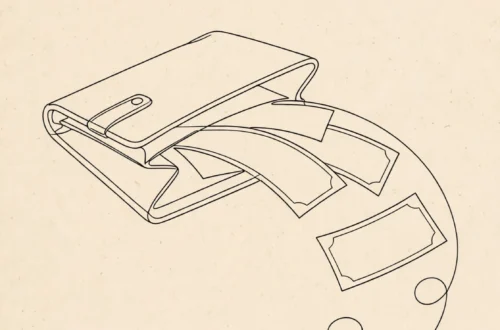
Être fauché is a French idiomatic expression built from être (to be) and fauché, the past participle of faucher — to mow, to scythe down. To be fauché is to be mown flat like a field after the harvest blade has passed: nothing left standing, and nothing left in the account.
It means to be broke — flat broke, without a euro to spare. The picture is agricultural and a little violent: the scythe has passed over your finances and cut everything down to stubble. But the state it names is usually temporary rather than tragic — it is the classic condition of students, artists, and everyone else in the last week of the month.
Type: Idiomatic expression — money (être + past participle)
Answers the need: Saying you have no money left, plainly and with humour
Register: Informal — everyday speech; formal writing prefers être à court d’argent
Strength: Total but temporary — the account is empty, not your whole life
One important usage detail: fauché agrees like an adjective — elle est fauchée, ils sont fauchés. The verb faucher leads other lives too: it means to mow a field, and in slang to pinch, to steal — on m’a fauché mon vélo, someone stole my bike. After être, with money in the air, it is always the empty wallet.
Experience the Word
Être fauché is the last week of the month told as a harvest — the field is bare, and payday is the spring.
Imagine the student flat on the twenty-seventh: pasta without sauce, a bus pass counted out in days, and the restaurant invitation answered with a smile and the classic sentence. Nobody at the table is tragic about it. The scythe has passed, that is all — and everyone there has stood in the same field.
The word refuses self-pity, because a field is not ruined; it is resting. To be fauché is to be cut down to the roots, with the whole of next month already underground, growing.
How to Use Être fauché in French: Complete Guide
Let’s explore how être fauché works in French, beginning with the whole phrase on one card.
Être fauché at a Glance
The Whole Phrase on One Card
Real meaning, literal picture, English twin and register — être fauché in five lines.
| Point | Être fauché |
|---|---|
| What it really means | to be broke — to have no money left at all |
| Word for word | to be mown down — cut flat like a field by the scythe |
| English equivalent | to be broke / skint / flat broke |
| Register | informal — everyday speech, students and friends |
| Use it for | the end of the month, the empty account, declining plans you cannot afford |
Example
Je suis fauché, je ne peux pas venir au restaurant.
I’m broke, I can’t come to the restaurant.
Word by Word: Building the Empty Field
Two small pieces — take them one by one and the scythe starts to swing.
| Word | Literal meaning | Its job in the phrase |
|---|---|---|
| être | to be | the state verb — this is your condition, at least until payday |
| fauché | mown down | from faucher, to mow with a scythe — the field is flat, and so is your bank account |
Example
Elle est fauchée depuis qu’elle a payé son loyer.
She’s been broke since she paid her rent.
Quick Quiz 1
What does faucher literally mean?
Reveal the answer
To mow, to scythe — to cut a field flat; your money has been cut down exactly the same way.
Le fermier fauche le pré en juin.
The farmer mows the meadow in June.
When You Say It: The Empty-Wallet Moments
Être fauché fires at moments like these — the plan is lovely, and the account says no.
| Situation | Example |
|---|---|
| Declining an invitation | je suis fauché, on remet ça au mois prochain — I’m broke, let’s move it to next month |
| End of the month | à la fin du mois, je suis toujours fauché — at the end of the month, I’m always broke |
| Student life | étudiant et fauché, c’est presque la même chose — a student and broke, it’s almost the same thing |
| After a big purchase | elle est fauchée après l’achat de sa voiture — she’s broke after buying her car |
| Asking for a delay | je suis fauché jusqu’à vendredi, tu peux attendre ? — I’m broke until Friday, can you wait? |
Example
Fauché mais heureux, il a quand même offert le café.
Broke but happy, he still bought the coffee.
Make It Yours: The Broke for Every Person
Fauché agrees like an adjective — the ending changes with the person who is broke.
| Form | French | In English |
|---|---|---|
| I am broke (man) | je suis fauché | I’m broke |
| I am broke (woman) | je suis fauchée | I’m broke |
| We are broke | nous sommes fauchés | we’re broke |
| Completely broke | je suis complètement fauché | I’m completely broke |
| Broke until payday | fauché jusqu’à la paie | broke until payday |
| Not any more | je ne suis plus fauché | I’m not broke any more |
Example
Nous sommes fauchés jusqu’à la paie, alors on cuisine à la maison.
We’re broke until payday, so we’re cooking at home.
Quick Quiz 2
A woman says it: je suis fauché or je suis fauchée?
Reveal the answer
Je suis fauchée — fauché behaves like an adjective and agrees with the person.
Elle est fauchée mais elle garde le sourire.
She’s broke but she’s still smiling.
Everyday Expressions: Building on the Scythe
Être fauché slots into these everyday frames — each one ready to use as it stands.
| Frame | In English |
|---|---|
| être fauché | to be broke |
| complètement fauché | completely broke, flat broke |
| fauché jusqu’à la paie | broke until payday |
| fauché comme les blés | broke as the wheat fields — the old full form of the picture |
| être fauché à la fin du mois | to be broke at the end of the month |
Example
Fauché comme les blés, il comptait ses dernières pièces.
Broke as the wheat fields, he was counting his last coins.
Close Cousins: The Other Empty Pockets
French has a whole shelf of no-money phrases — fauché is the mown field; its cousins run dry, go red, or turn serious.
| Expression | The difference |
|---|---|
| être fauché | to be broke — the scythe has passed; humorous and temporary |
| être à sec | to be dry — the account run dry; equally informal |
| être sans le sou | to be penniless — a little more literary; a sou is an old coin |
| être dans le rouge | to be in the red — the bank’s own picture, overdrawn |
| être pauvre | to be poor — the plain, serious word; not the same joke at all |
Example
À sec, dans le rouge, fauché : choisis ton image, le compte est vide.
Dry, in the red, mown flat: pick your picture, the account is empty.
Quick Quiz 3
Which cousin uses the bank’s own picture — être à sec or être dans le rouge?
Reveal the answer
Être dans le rouge — in the red, overdrawn; à sec is the dry well, and fauché is the mown field.
Encore un achat et je suis dans le rouge.
One more purchase and I’m in the red.
Être fauché and Its Neighbours
The money shelf around the phrase — the rent, the payday, and the ways out.
| French | In English |
|---|---|
| l’argent | money |
| le loyer | the rent |
| la paie | payday, the pay |
| un budget serré | a tight budget |
| emprunter | to borrow |
| économiser | to save up |
Example
Avec un budget serré, il économise pour ne plus être fauché.
On a tight budget, he’s saving up so he won’t be broke any more.
Watch Out: The Traps Around Être fauché
The traps: a stolen bike, a serious word it must not replace, and a real field of wheat.
| Trap | The truth |
|---|---|
| the theft trap | faucher also means to pinch, to steal — on m’a fauché mon portefeuille, my wallet was stolen; after être, though, fauché is the broke one |
| broke, not poor | fauché is a state of the week; pauvre is a condition of life — using fauché about real poverty would be a joke in poor taste |
| agreement | fauché agrees like an adjective — fauchée, fauchés, fauchées |
| the real field | un pré fauché is a genuinely mown meadow — farmers use the word without a euro in sight |
Example
On lui a fauché son vélo pendant qu’il était fauché : sale semaine.
Someone stole his bike while he was broke: a rotten week.
Quick Quiz 4
True or false: être fauché is the formal way to announce financial difficulty.
Reveal the answer
False — it is informal; formal French says être à court d’argent or être sans le sou.
Fauché entre amis, à court d’argent dans une lettre.
Fauché among friends, à court d’argent in a letter.
Être fauché in Everyday French: Real-Life Examples
Now that you know the word, let’s see how être fauché appears in everyday French.
Example 1 — The invitation
Je suis fauché, je passe mon tour ce soir.
I’m broke, I’ll sit this one out tonight.
Example 2 — End of month
À la fin du mois, tout le quartier est fauché.
At the end of the month, the whole neighbourhood is broke.
Example 3 — The student
Elle est fauchée mais elle trouve toujours de quoi offrir un café.
She’s broke but she always finds enough to buy a coffee.
Example 4 — After the car
Il est complètement fauché depuis l’achat de la moto.
He’s completely broke since buying the motorbike.
Example 5 — Until Friday
Nous sommes fauchés jusqu’à vendredi, jour de paie.
We’re broke until Friday, payday.
Example 6 — The recovery
J’étais fauché en janvier, ça va mieux maintenant.
I was broke in January, things are better now.
Beyond Translation: The Meaning of Être fauché
English is broke — something in the machine has snapped, and the word sounds like a repair bill. French is mown: the scythe passes over the account and leaves stubble, and there is a whole season of hope folded inside the picture, because a field, unlike a machine, grows back by itself.
To être fauché is to be a field in winter — cut flat, and already promised to spring.
That is why friends can say it laughing, and why nobody says it about anyone truly poor: the joke only works where the regrowth is certain.
How to Remember the French Phrase Être fauché
Remember it this way: Être fauché is payday economics with a scythe — the blade passes over your account and leaves stubble.
- You picture the field — faucher is to mow; fauché is the wallet cut flat, with payday as the spring.
- You agree it like an adjective — elle est fauchée, ils sont fauchés.
- You keep it light — fauché is the funny, temporary empty; pauvre is the serious word.
The key idea is être fauché means to be broke — mown down flat like a harvested field.
Test Your Knowledge of Être fauché
Let’s see how much you’ve learned. Try answering these questions before revealing the answers.
Question 1
What does être fauché mean?
Reveal the answer
To be broke — to have no money left, usually until payday.
Question 2
What is the literal picture?
Reveal the answer
To be mown down — faucher is to scythe a field flat; your finances get the same treatment.
Question 3
How does a woman say ‘I’m broke’?
Reveal the answer
Je suis fauchée — fauché agrees like an adjective.
Question 4
What else can faucher mean?
Reveal the answer
To steal, to pinch — on m’a fauché mon vélo, someone stole my bike.
Question 5
Complete the sentence:
Depuis le loyer, je suis complètement ______. (Since the rent, I’m completely broke.)
Reveal the answer
fauché
Depuis le loyer, je suis complètement fauché.
Since the rent, I’m completely broke.
Your Final Challenge
Can You Use It?
How would you say this in French?
“End of the month — I’m completely broke.”
Reveal the answer
Fin du mois — je suis complètement fauché.
End of the month — I’m completely broke.
A little French. A little curiosity. A richer everyday life.
LEARN FRENCH ONE WORD AT A TIME