A French Word to Live By
How to Conjugate Énoncer in French
/e.nɔ̃.se/
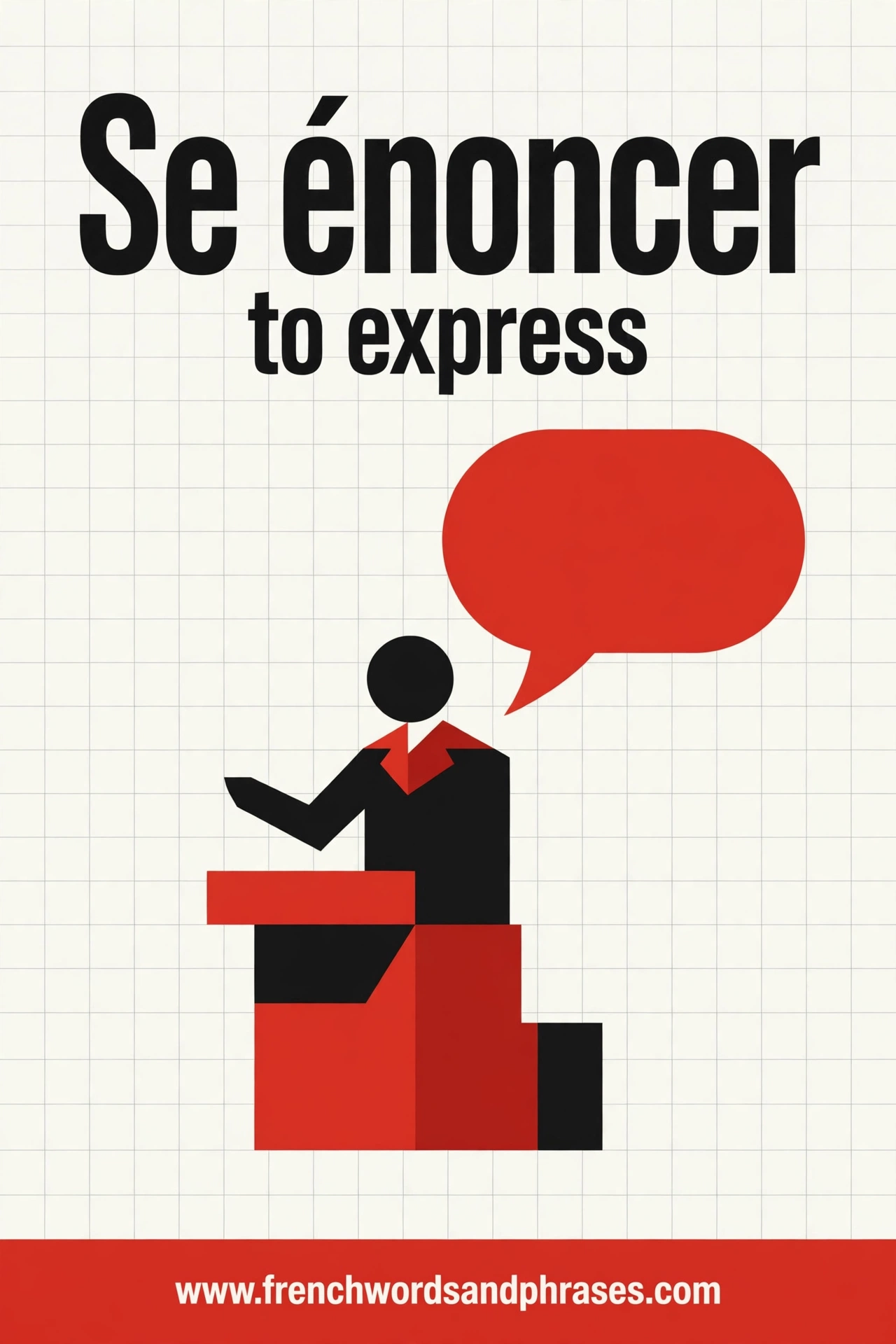
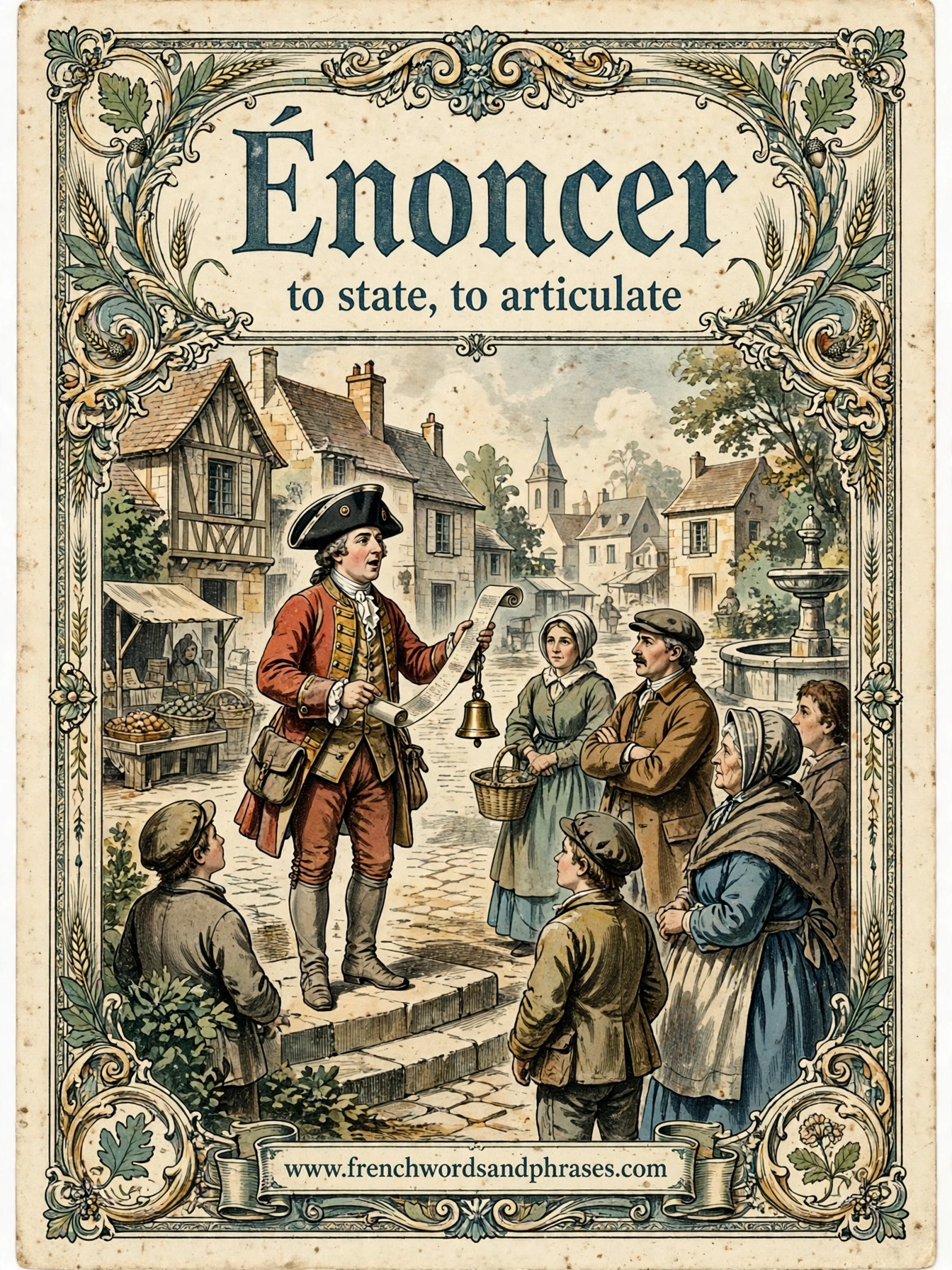
Énoncer means to state, to articulate — to set an idea, a rule or a problem out in clear, exact words.
A professor stating a theorem at the blackboard, a judge articulating the terms of a verdict, a teacher setting out the problem before the class — énoncer is the verb of clear statement: an idea, taken out of the head and laid down in exact words.
In this guide, you’ll learn how to conjugate énoncer in all the major French tenses and moods. Explore complete conjugation tables, French examples, English translations, and practice quizzes.
Understanding the French Verb Énoncer
Énoncer is a regular French verb belonging to the first group of verbs, those ending in-er.
It means to state, to articulate. It belongs to the classroom, the courtroom and the academy: problems are énoncés, principles are énoncés, verdicts are énoncés. In everyday speech French prefers dire or formuler; énoncer keeps the flavour of the written, exact statement — words weighed before they are spoken.
Verb classification: First group (-er)
Auxiliary verb: Avoir
Past participle: énoncé
Present participle: énonçant
English equivalents: To state, to articulate, to set out, to enunciate; énoncer un problème — to state a problem; énoncer une règle — to state a rule; énoncer clairement — to articulate clearly; l’énoncé — the statement, the wording of a problem.
One important detail: énoncer is a -cer verb, so the c becomes a cedilla before a or o to keep it soft: nous énonçons, j’énonçais, en énonçant — never a hard c. Its noun is one of the commonest words in French schooling: l’énoncé is the statement of an exam question, the wording you must read twice before answering. The verb itself is formal and precise: one énonce theorems, principles, conditions and facts — not gossip.
Experience the Word
Énoncer is the verb of the exact wording — nothing vague, nothing mumbled, every term in its place.
Imagine an examination hall in June. Thirty candidates turn the page at the same second and meet the same cool sentence at the top — le professeur a énoncé le problème en douze mots, twelve words, not one of them spare, and the whole room bends to work.
Nothing has been explained or solved yet. It has simply been stated — énoncé, laid out in words that cannot be misunderstood.
How to Conjugate Énoncer: Complete French Conjugation Guide
Let’s explore every major conjugation of énoncer, beginning with the indicative mood.
How to Conjugate Énoncer in the Indicative Mood
The indicative mood is used to express facts, observations, actions, and events.
How to Conjugate Énoncer in the Present Tense (Présent)
Used for actions happening now, habitual actions, and general truths.
| Subject | Conjugation |
|---|---|
| je | énonce |
| tu | énonces |
| il / elle | énonce |
| nous | énonçons |
| vous | énoncez |
| ils / elles | énoncent |
Example
Le professeur énonce le problème au tableau.
The teacher states the problem on the board.
Quick Quiz 1
Complete the sentence:
Nous ______ les règles du jeu.
Reveal the answer
énonçons
Nous énonçons les règles du jeu.
We state the rules of the game.
How to Conjugate Énoncer in the Passé Composé
Used for completed actions in the past. Énoncer takes the auxiliary verb avoir.
| Subject | Conjugation |
|---|---|
| j’ | ai énoncé |
| tu | as énoncé |
| il / elle | a énoncé |
| nous | avons énoncé |
| vous | avez énoncé |
| ils / elles | ont énoncé |
Example
Elle a énoncé les règles avec une grande clarté.
She stated the rules with great clarity.
How to Conjugate Énoncer in the Imparfait (Imperfect Tense)
Used for habitual past actions, descriptions, and ongoing situations in the past.
| Subject | Conjugation |
|---|---|
| je | énonçais |
| tu | énonçais |
| il / elle | énonçait |
| nous | énoncions |
| vous | énonciez |
| ils / elles | énonçaient |
Example
Le juge énonçait les faits un à un.
The judge used to state the facts one by one.
Quick Quiz 2
Choose the correct form:
She stated the rules clearly.
Elle ______ les règles clairement. (a énoncé / est énoncé)
Reveal the answer
a énoncé
Elle a énoncé les règles clairement.
Énoncer takes avoir.
How to Conjugate Énoncer in the Plus-que-parfait
Used to describe an action that had already been completed before another past event.
| Subject | Conjugation |
|---|---|
| j’ | avais énoncé |
| tu | avais énoncé |
| il / elle | avait énoncé |
| nous | avions énoncé |
| vous | aviez énoncé |
| ils / elles | avaient énoncé |
Example
Il avait énoncé le principe dès le premier chapitre.
He had stated the principle in the very first chapter.
How to Conjugate Énoncer in the Passé Simple
Primarily used in formal writing, literature, and historical narratives. It is rarely used in everyday conversation.
| Subject | Conjugation |
|---|---|
| je | énonçai |
| tu | énonças |
| il / elle | énonça |
| nous | énonçâmes |
| vous | énonçâtes |
| ils / elles | énonçèrent |
Example
Le savant énonça sa loi devant l’académie.
The scientist stated his law before the academy.
How to Conjugate Énoncer in the Passé Antérieur
A literary tense used to express an action completed immediately before another past action, generally in the passé simple.
| Subject | Conjugation |
|---|---|
| j’ | eus énoncé |
| tu | eus énoncé |
| il / elle | eut énoncé |
| nous | eûmes énoncé |
| vous | eûtes énoncé |
| ils / elles | eurent énoncé |
Example
Quand elle eut énoncé les conditions, tout le monde se tut.
When she had stated the conditions, everyone fell silent.
How to Conjugate Énoncer in the Future Tense (Futur Simple)
Used to describe actions that will take place in the future.
| Subject | Conjugation |
|---|---|
| je | énoncerai |
| tu | énonceras |
| il / elle | énoncera |
| nous | énoncerons |
| vous | énoncerez |
| ils / elles | énonceront |
Example
Demain, le ministre énoncera les nouvelles mesures.
Tomorrow, the minister will set out the new measures.
How to Conjugate Énoncer in the Futur Antérieur (Future Perfect)
Used for an action that will have been completed before a particular point in the future.
| Subject | Conjugation |
|---|---|
| j’ | aurai énoncé |
| tu | auras énoncé |
| il / elle | aura énoncé |
| nous | aurons énoncé |
| vous | aurez énoncé |
| ils / elles | auront énoncé |
Example
À la fin du cours, il aura énoncé trois théorèmes.
By the end of the lesson, he will have stated three theorems.
How to Conjugate Énoncer in the Near Future (Futur Proche)
Used to describe something that is going to happen soon. Formed with aller + infinitive.
| Subject | Conjugation |
|---|---|
| je | vais énoncer |
| tu | vas énoncer |
| il / elle | va énoncer |
| nous | allons énoncer |
| vous | allez énoncer |
| ils / elles | vont énoncer |
Example
Je vais énoncer le problème une deuxième fois.
I am going to state the problem a second time.
How to Conjugate Énoncer in the Conditional Mood
The conditional mood expresses what would happen under certain circumstances. It is also frequently used to make polite requests or express wishes.
How to Conjugate Énoncer in the Present Conditional
| Subject | Conjugation |
|---|---|
| je | énoncerais |
| tu | énoncerais |
| il / elle | énoncerait |
| nous | énoncerions |
| vous | énonceriez |
| ils / elles | énonceraient |
Example
Avec plus de temps, elle énoncerait chaque détail.
With more time, she would articulate every detail.
How to Conjugate Énoncer in the Past Conditional
| Subject | Conjugation |
|---|---|
| j’ | aurais énoncé |
| tu | aurais énoncé |
| il / elle | aurait énoncé |
| nous | aurions énoncé |
| vous | auriez énoncé |
| ils / elles | auraient énoncé |
Example
Il aurait énoncé la règle sans le bruit de la salle.
He would have stated the rule without the noise in the hall.
Énoncer in the Literary Past Conditional Form
This less common literary form uses the imperfect subjunctive of avoir.
| Subject | Conjugation |
|---|---|
| j’ | eusse énoncé |
| tu | eusses énoncé |
| il / elle | eût énoncé |
| nous | eussions énoncé |
| vous | eussiez énoncé |
| ils / elles | eussent énoncé |
Example
Il eût énoncé sa pensée sans détour, selon son habitude.
He would have stated his thought bluntly, as was his habit.
How to Conjugate Énoncer in the Subjunctive Mood
The subjunctive is used to express wishes, emotions, doubts, necessity, and uncertainty. It frequently follows expressions such as il faut que (it is necessary that) or bien que (although).
How to Conjugate Énoncer in the Present Subjunctive
| Subject | Conjugation |
|---|---|
| que je | énonce |
| que tu | énonces |
| qu’il / qu’elle | énonce |
| que nous | énoncions |
| que vous | énonciez |
| qu’ils / qu’elles | énoncent |
Example
Il faut que tu énonces le problème clairement.
You must state the problem clearly.
Quick Quiz 3
Complete the sentence using the subjunctive:
Il faut que tu ______ le problème clairement.
Reveal the answer
énonces
Il faut que tu énonces le problème clairement.
You must state the problem clearly.
How to Conjugate Énoncer in the Imperfect Subjunctive
A literary tense, rarely encountered in modern spoken French.
| Subject | Conjugation |
|---|---|
| que je | énoncasse |
| que tu | énoncasses |
| qu’il / qu’elle | énoncât |
| que nous | énoncassions |
| que vous | énoncassiez |
| qu’ils / qu’elles | énoncassent |
Example
Le président demandait que l’on énonçât les faits sans commentaire.
The chairman asked that the facts be stated without comment.
How to Conjugate Énoncer in the Pluperfect Subjunctive
A literary construction used to express an action completed before another past action.
| Subject | Conjugation |
|---|---|
| que j’ | eusse énoncé |
| que tu | eusses énoncé |
| qu’il / qu’elle | eût énoncé |
| que nous | eussions énoncé |
| que vous | eussiez énoncé |
| qu’ils / qu’elles | eussent énoncé |
Example
On admirait qu’il eût énoncé la loi en une seule phrase.
People admired that he had stated the law in a single sentence.
How to Conjugate Énoncer in the Past Subjunctive
| Subject | Conjugation |
|---|---|
| que j’ | aie énoncé |
| que tu | aies énoncé |
| qu’il / qu’elle | ait énoncé |
| que nous | ayons énoncé |
| que vous | ayez énoncé |
| qu’ils / qu’elles | aient énoncé |
Example
Je suis content qu’elle ait énoncé les règles dès le début.
I am glad she stated the rules from the start.
How to Conjugate Énoncer in the Imperative
The imperative is used to give commands, instructions, invitations, or suggestions. Subject pronouns are omitted.
How to Conjugate Énoncer in the Present Imperative
| Person | Conjugation |
|---|---|
| (tu) | énonce |
| (nous) | énonçons |
| (vous) | énoncez |
Example
Énonce le problème lentement, mot à mot !
State the problem slowly, word by word!
Quick Quiz 4
How would you say State the problem slowly (tu form)?
Reveal the answer
Énonce le problème lentement !
French Participles of Énoncer
Participles are verb forms that can be used in compound tenses and other grammatical constructions.
Present Participle of Énoncer
énonçant
En énonçant les faits, le juge regardait l’accusé.
While stating the facts, the judge looked at the accused.
Past Participle of Énoncer
énoncé
Énoncée clairement, la règle ne souffre aucune exception.
Stated clearly, the rule allows no exception.
Énoncer in Everyday French: Real-Life Examples
Now that you know the conjugations, let’s see how énoncer appears in everyday French.
Example 1 — Present
Le professeur énonce le problème au tableau.
The teacher states the problem on the board.
Example 2 — Passé composé
Elle a énoncé les règles avec clarté.
She stated the rules clearly.
Example 3 — Imparfait
Le juge énonçait les faits un à un.
The judge used to state the facts one by one.
Example 4 — Future
Le ministre énoncera les nouvelles mesures.
The minister will set out the new measures.
Example 5 — Conditional
Elle énoncerait chaque détail avec plus de temps.
She would articulate every detail with more time.
Example 6 — Imperative
Énonce le problème lentement !
State the problem slowly!
Beyond Translation: The Meaning of Énoncer
Every French schoolchild knows this verb’s noun before the verb itself: l’énoncé, the printed statement of the exam problem, source of a thousand sighs.
Énoncer is French precision showing off.
Where dire simply says, énoncer formulates — it belongs with theorems, laws and verdicts, anywhere the exact words matter as much as the idea. English enunciate is its cousin, though English mostly keeps it for clear speech rather than clear thought.
How to Remember the French Verb Énoncer
Remember it this way: Énoncer is about the twelve-word problem at the top of the exam paper.
- The noun is your school friend: l’énoncé is the statement of the exam problem.
- -cer spelling: nous énonçons, j’énonçais — the cedilla keeps the c soft.
- Formal and exact: one énonce theorems, rules, conditions and facts.
The key idea is the twelve-word problem at the top of the exam paper.
Test Your Knowledge of Énoncer
Let’s see how much you’ve learned. Try answering these questions before revealing the answers.
Question 1
Why does nous énonçons carry a cedilla?
Reveal the answer
The -cer rule — the ç keeps the c soft before a and o: nous énonçons, j’énonçais.
Question 2
How do you say The teacher states the problem in French?
Reveal the answer
Le professeur énonce le problème.
Question 3
Translate: She stated the rules with great clarity.
Reveal the answer
Elle a énoncé les règles avec une grande clarté.
Question 4
What is the past participle of énoncer?
Reveal the answer
Énoncé — also the noun: l’énoncé, the statement of a problem.
Question 5
Complete the sentence:
Il faut que tu ______ le problème clairement.
Reveal the answer
énonces
Il faut que tu énonces le problème clairement.
You must state the problem clearly.
Your Final Challenge
Can You Use It?
How would you say this in French?
The teacher states the problem in twelve words, and thirty pupils bend over their desks at the same moment.
Reveal the answer
Le professeur énonce le problème en douze mots, et trente élèves se penchent en même temps.
The teacher states the problem in twelve words, and thirty pupils bend over their desks at the same moment.
A little French. A little curiosity. A richer everyday life.
LEARN FRENCH ONE WORD AT A TIME