A French Word to Live By
How to Conjugate Ennuyer in French
/ɑ̃.nɥi.je/
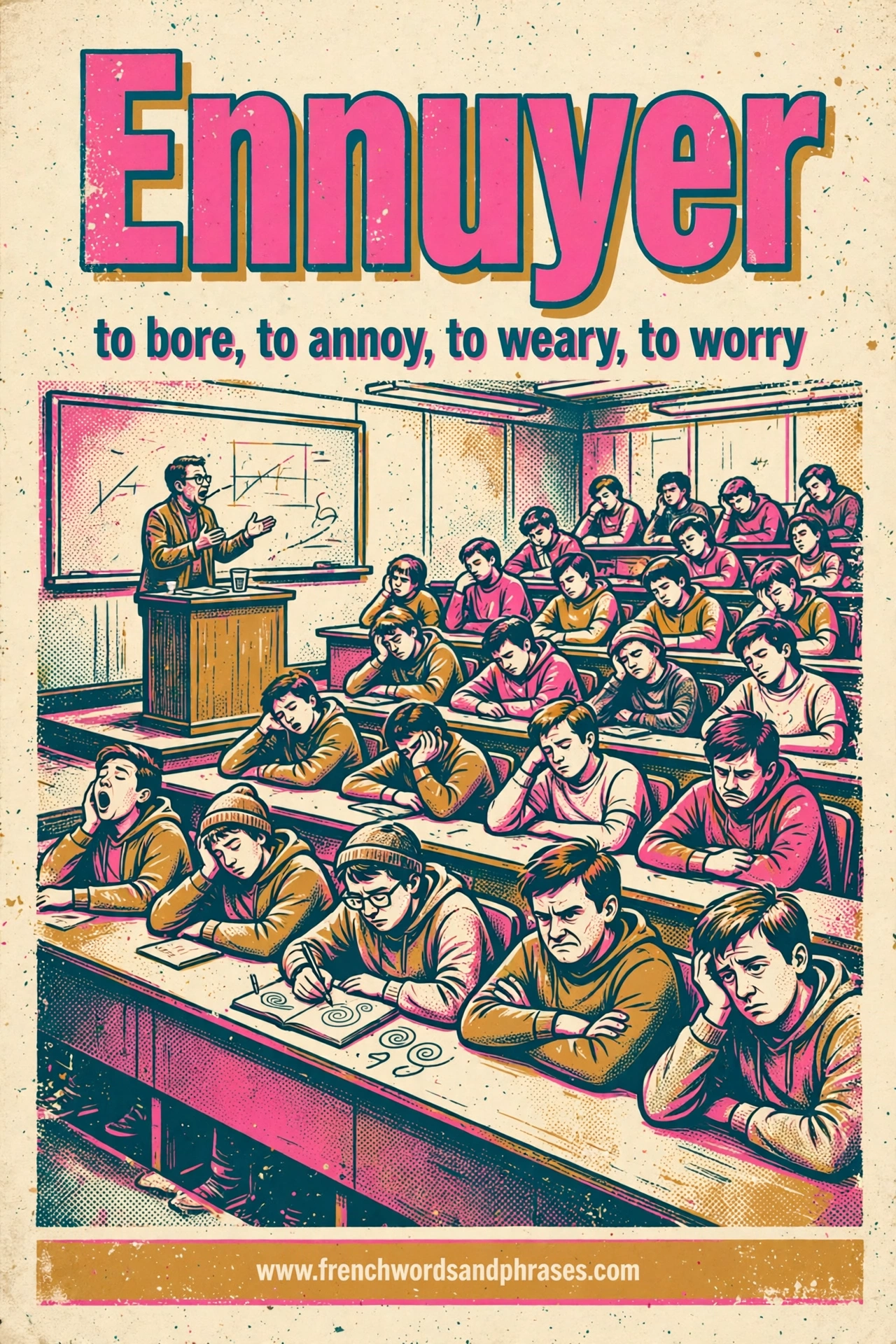
Ennuyer means to bore, to annoy, to weary, to worry — to weigh on someone with tedium, trouble or care until their spirits sink.
A lecture that empties a hall one yawn at a time, a dripping tap at three in the morning, a worry that will not leave the pillow — ennuyer is the great French verb of the burdened mind: to bore, to annoy, to weary and to worry, all in one word.
In this guide, you’ll learn how to conjugate ennuyer in all the major French tenses and moods. Explore complete conjugation tables, French examples, English translations, and practice quizzes.
Understanding the French Verb Ennuyer
Ennuyer is a regular French verb belonging to the first group of verbs, those ending in-er.
It means to bore, to annoy, to weary, to worry. It covers a whole grey spectrum: at one end, pure boredom inflicted — un discours qui ennuie; in the middle, irritation — ce bruit m’ennuie; at the far end, real worry and trouble — cette affaire m’ennuie, it worries me. Context, and the face of the speaker, tell you where on the spectrum you are.
Verb classification: First group (-er)
Auxiliary verb: Avoir
Past participle: ennuyé
Present participle: ennuyant
English equivalents: To bore, to annoy, to weary, to worry; ennuyer quelqu’un — to bore someone, to annoy someone; ce bruit m’ennuie — that noise annoys me; ennuyer le monde — to bore everyone stiff; ça m’ennuie de partir — it bothers me to leave.
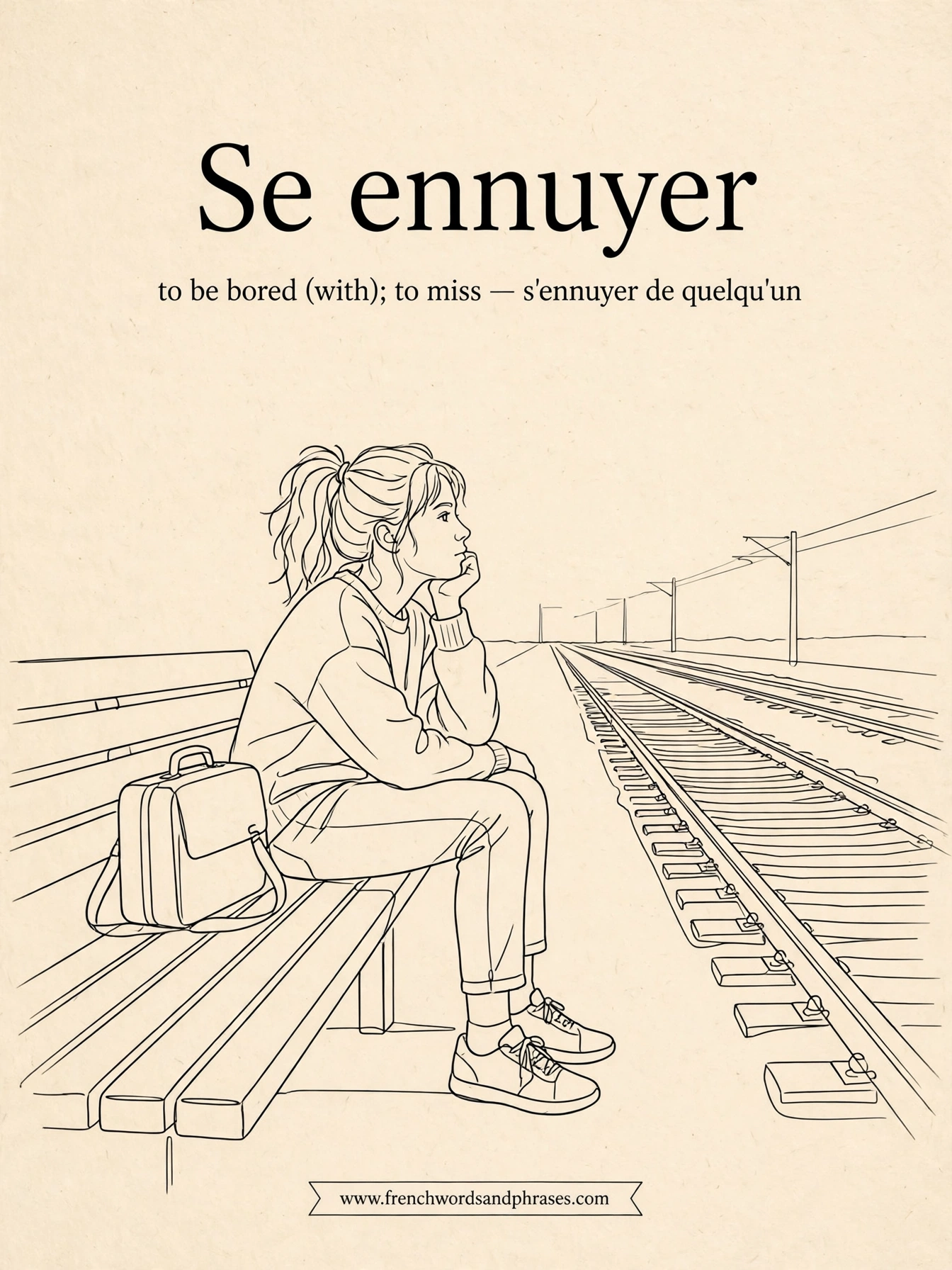
One important detail: ennuyer is a -uyer verb, and its y turns to i wherever the next syllable is mute: je ennuie, tu ennuies, il ennuie, ils ennuient, and through the whole future and conditional: je ennuierai, je ennuierais. The y survives where the ending is sounded: nous ennuyons, vous ennuyez, j’ennuyais — and note the imperfect and subjunctive nous forms, nous ennuyions, que nous ennuyiez, with their double i. Do not confuse the two directions of the verb: ennuyer quelqu’un is to bore or annoy them; s’ennuyer is to be bored oneself.
Experience the Word
Ennuyer is the verb of the weight on the mind — boredom, irritation and worry are its three shades of grey.
Imagine a village hall on a wet Sunday, a speaker reading his own report aloud, page after page. In the third row a farmer studies the ceiling; beside him, a schoolboy counts the windows — le conférencier ennuie tout le monde, and the clock itself seems to slow.
Nobody is angry or offended. They are bored — ennuyés, wearied by a voice that will not end.
How to Conjugate Ennuyer: Complete French Conjugation Guide
Let’s explore every major conjugation of ennuyer, beginning with the indicative mood.
How to Conjugate Ennuyer in the Indicative Mood
The indicative mood is used to express facts, observations, actions, and events.
How to Conjugate Ennuyer in the Present Tense (Présent)
Used for actions happening now, habitual actions, and general truths.
| Subject | Conjugation |
|---|---|
| je | ennuie |
| tu | ennuies |
| il / elle | ennuie |
| nous | ennuyons |
| vous | ennuyez |
| ils / elles | ennuient |
Example
Ce long discours ennuie toute la salle.
This long speech is boring the whole hall.
Quick Quiz 1
Complete the sentence:
Nous ______ les voisins avec notre musique.
Reveal the answer
ennuyons
Nous ennuyons les voisins avec notre musique.
We annoy the neighbours with our music.
How to Conjugate Ennuyer in the Passé Composé
Used for completed actions in the past. Ennuyer takes the auxiliary verb avoir.
| Subject | Conjugation |
|---|---|
| j’ | ai ennuyé |
| tu | as ennuyé |
| il / elle | a ennuyé |
| nous | avons ennuyé |
| vous | avez ennuyé |
| ils / elles | ont ennuyé |
Example
Son retard a ennuyé les organisateurs.
His lateness worried the organisers.
How to Conjugate Ennuyer in the Imparfait (Imperfect Tense)
Used for habitual past actions, descriptions, and ongoing situations in the past.
| Subject | Conjugation |
|---|---|
| je | ennuyais |
| tu | ennuyais |
| il / elle | ennuyait |
| nous | ennuyions |
| vous | ennuyiez |
| ils / elles | ennuyaient |
Example
La pluie ennuyait les enfants pendant les vacances.
The rain used to weary the children during the holidays.
Quick Quiz 2
Choose the correct form:
His lateness worried the organisers.
Son retard ______ les organisateurs. (a ennuyé / est ennuyé)
Reveal the answer
a ennuyé
Son retard a ennuyé les organisateurs.
Ennuyer takes avoir.
How to Conjugate Ennuyer in the Plus-que-parfait
Used to describe an action that had already been completed before another past event.
| Subject | Conjugation |
|---|---|
| j’ | avais ennuyé |
| tu | avais ennuyé |
| il / elle | avait ennuyé |
| nous | avions ennuyé |
| vous | aviez ennuyé |
| ils / elles | avaient ennuyé |
Example
Il avait ennuyé tout le monde avec ses histoires.
He had bored everyone with his stories.
How to Conjugate Ennuyer in the Passé Simple
Primarily used in formal writing, literature, and historical narratives. It is rarely used in everyday conversation.
| Subject | Conjugation |
|---|---|
| je | ennuyai |
| tu | ennuyas |
| il / elle | ennuya |
| nous | ennuyâmes |
| vous | ennuyâtes |
| ils / elles | ennuyèrent |
Example
Le sermon ennuia l’assistance entière.
The sermon bored the entire congregation.
How to Conjugate Ennuyer in the Passé Antérieur
A literary tense used to express an action completed immediately before another past action, generally in the passé simple.
| Subject | Conjugation |
|---|---|
| j’ | eus ennuyé |
| tu | eus ennuyé |
| il / elle | eut ennuyé |
| nous | eûmes ennuyé |
| vous | eûtes ennuyé |
| ils / elles | eurent ennuyé |
Example
Quand il eut ennuyé ses voisins une heure, il se tut.
When he had bored his neighbours for an hour, he fell silent.
How to Conjugate Ennuyer in the Future Tense (Futur Simple)
Used to describe actions that will take place in the future.
| Subject | Conjugation |
|---|---|
| je | ennuierai |
| tu | ennuieras |
| il / elle | ennuiera |
| nous | ennuierons |
| vous | ennuierez |
| ils / elles | ennuieront |
Example
Ce bruit ennuiera les voisins toute la nuit.
This noise will annoy the neighbours all night.
How to Conjugate Ennuyer in the Futur Antérieur (Future Perfect)
Used for an action that will have been completed before a particular point in the future.
| Subject | Conjugation |
|---|---|
| j’ | aurai ennuyé |
| tu | auras ennuyé |
| il / elle | aura ennuyé |
| nous | aurons ennuyé |
| vous | aurez ennuyé |
| ils / elles | auront ennuyé |
Example
À la fin du voyage, la route aura ennuyé les enfants.
By the end of the journey, the road will have wearied the children.
How to Conjugate Ennuyer in the Near Future (Futur Proche)
Used to describe something that is going to happen soon. Formed with aller + infinitive.
| Subject | Conjugation |
|---|---|
| je | vais ennuyer |
| tu | vas ennuyer |
| il / elle | va ennuyer |
| nous | allons ennuyer |
| vous | allez ennuyer |
| ils / elles | vont ennuyer |
Example
Je sens que ce film va ennuyer les enfants.
I feel this film is going to bore the children.
How to Conjugate Ennuyer in the Conditional Mood
The conditional mood expresses what would happen under certain circumstances. It is also frequently used to make polite requests or express wishes.
How to Conjugate Ennuyer in the Present Conditional
| Subject | Conjugation |
|---|---|
| je | ennuierais |
| tu | ennuierais |
| il / elle | ennuierait |
| nous | ennuierions |
| vous | ennuieriez |
| ils / elles | ennuieraient |
Example
Sans images, ton exposé ennuierait les élèves.
Without pictures, your talk would bore the pupils.
How to Conjugate Ennuyer in the Past Conditional
| Subject | Conjugation |
|---|---|
| j’ | aurais ennuyé |
| tu | aurais ennuyé |
| il / elle | aurait ennuyé |
| nous | aurions ennuyé |
| vous | auriez ennuyé |
| ils / elles | auraient ennuyé |
Example
Cette affaire aurait ennuyé le directeur sans ton aide.
This business would have worried the manager without your help.
Ennuyer in the Literary Past Conditional Form
This less common literary form uses the imperfect subjunctive of avoir.
| Subject | Conjugation |
|---|---|
| j’ | eusse ennuyé |
| tu | eusses ennuyé |
| il / elle | eût ennuyé |
| nous | eussions ennuyé |
| vous | eussiez ennuyé |
| ils / elles | eussent ennuyé |
Example
Il eût ennuyé la cour entière de ses plaintes.
He would have wearied the whole court with his complaints.
How to Conjugate Ennuyer in the Subjunctive Mood
The subjunctive is used to express wishes, emotions, doubts, necessity, and uncertainty. It frequently follows expressions such as il faut que (it is necessary that) or bien que (although).
How to Conjugate Ennuyer in the Present Subjunctive
| Subject | Conjugation |
|---|---|
| que je | ennuie |
| que tu | ennuies |
| qu’il / qu’elle | ennuie |
| que nous | ennuyions |
| que vous | ennuyiez |
| qu’ils / qu’elles | ennuient |
Example
Je ne veux pas que ce bruit ennuie les voisins.
I do not want this noise to annoy the neighbours.
Quick Quiz 3
Complete the sentence using the subjunctive:
Je ne veux pas que ce bruit ______ les voisins.
Reveal the answer
ennuie
Je ne veux pas que ce bruit ennuie les voisins.
I do not want this noise to annoy the neighbours.
How to Conjugate Ennuyer in the Imperfect Subjunctive
A literary tense, rarely encountered in modern spoken French.
| Subject | Conjugation |
|---|---|
| que je | ennuyasse |
| que tu | ennuyasses |
| qu’il / qu’elle | ennuyât |
| que nous | ennuyassions |
| que vous | ennuyassiez |
| qu’ils / qu’elles | ennuyassent |
Example
Il parlait bas, de peur que sa voix ennuyât les malades.
He spoke quietly, for fear his voice might weary the patients.
How to Conjugate Ennuyer in the Pluperfect Subjunctive
A literary construction used to express an action completed before another past action.
| Subject | Conjugation |
|---|---|
| que j’ | eusse ennuyé |
| que tu | eusses ennuyé |
| qu’il / qu’elle | eût ennuyé |
| que nous | eussions ennuyé |
| que vous | eussiez ennuyé |
| qu’ils / qu’elles | eussent ennuyé |
Example
On racontait qu’il eût ennuyé même ses amis les plus patients.
People said he had bored even his most patient friends.
How to Conjugate Ennuyer in the Past Subjunctive
| Subject | Conjugation |
|---|---|
| que j’ | aie ennuyé |
| que tu | aies ennuyé |
| qu’il / qu’elle | ait ennuyé |
| que nous | ayons ennuyé |
| que vous | ayez ennuyé |
| qu’ils / qu’elles | aient ennuyé |
Example
Je regrette que ce retard ait ennuyé tout le monde.
I am sorry this delay worried everyone.
How to Conjugate Ennuyer in the Imperative
The imperative is used to give commands, instructions, invitations, or suggestions. Subject pronouns are omitted.
How to Conjugate Ennuyer in the Present Imperative
| Person | Conjugation |
|---|---|
| (tu) | ennuie |
| (nous) | ennuyons |
| (vous) | ennuyez |
Example
N’ennuie pas tes camarades avec tes plaintes !
Do not weary your friends with your complaints!
Quick Quiz 4
How would you say Do not weary your friends (tu form)?
Reveal the answer
N’ennuie pas tes camarades !
French Participles of Ennuyer
Participles are verb forms that can be used in compound tenses and other grammatical constructions.
Present Participle of Ennuyer
ennuyant
En ennuyant la salle, l’orateur a perdu son public.
By boring the hall, the speaker lost his audience.
Past Participle of Ennuyer
ennuyé
Ennuyé par le bruit, le voisin a appelé la police.
Annoyed by the noise, the neighbour called the police.
Ennuyer in Everyday French: Real-Life Examples
Now that you know the conjugations, let’s see how ennuyer appears in everyday French.
Example 1 — Present
Ce long discours ennuie toute la salle.
This long speech is boring the whole hall.
Example 2 — Passé composé
Son retard a ennuyé les organisateurs.
His lateness worried the organisers.
Example 3 — Imparfait
La pluie ennuyait les enfants.
The rain used to weary the children.
Example 4 — Future
Ce bruit ennuiera les voisins toute la nuit.
This noise will annoy the neighbours all night.
Example 5 — Conditional
Ton exposé ennuierait les élèves sans images.
Your talk would bore the pupils without pictures.
Example 6 — Imperative
N’ennuie pas tes camarades !
Do not weary your friends!
Beyond Translation: The Meaning of Ennuyer
Behind ennuyer stands the great French noun l’ennui — boredom raised to a philosophy, the ennui of Baudelaire’s poems, the spleen of a whole literature.
Few verbs carry so much culture in so grey a coat.
The family is large and useful: ennuyeux is boring or annoying, un ennui can also be a trouble or a worry — avoir des ennuis is to have problems — and the reflexive s’ennuyer is the everyday verb for being bored. Learn this one verb and the whole grey family follows.
How to Remember the French Verb Ennuyer
Remember it this way: Ennuyer is about the endless speech, the dripping tap, the worry on the pillow.
- The y turns to i before a mute syllable: je ennuie, ils ennuient, je ennuierai — but nous ennuyons keeps the y.
- Three shades: to bore, to annoy, to worry — context picks the shade.
- Direction matters: ennuyer quelqu’un bores them; s’ennuyer is to be bored yourself.
The key idea is the endless speech, the dripping tap, the worry on the pillow.
Test Your Knowledge of Ennuyer
Let’s see how much you’ve learned. Try answering these questions before revealing the answers.
Question 1
What happens to the y of ennuyer in je ennuie?
Reveal the answer
It becomes i — the -uyer rule: je ennuie, ils ennuient, je ennuierai; but nous ennuyons keeps the y.
Question 2
How do you say This speech is boring the whole hall in French?
Reveal the answer
Ce discours ennuie toute la salle.
Question 3
Translate: His lateness worried the organisers.
Reveal the answer
Son retard a ennuyé les organisateurs.
Question 4
What is the past participle of ennuyer?
Reveal the answer
Ennuyé.
Question 5
Complete the sentence:
Je ne veux pas que ce bruit ______ les voisins.
Reveal the answer
ennuie
Je ne veux pas que ce bruit ennuie les voisins.
I do not want this noise to annoy the neighbours.
Your Final Challenge
Can You Use It?
How would you say this in French?
The speech bores the whole hall, but outside, the sun awaits the patient listeners.
Reveal the answer
Le discours ennuie la salle entière, mais dehors, le soleil attend les auditeurs patients.
The speech bores the whole hall, but outside, the sun awaits the patient listeners.
A little French. A little curiosity. A richer everyday life.
LEARN FRENCH ONE WORD AT A TIME