A French Word to Live By
How to Conjugate Enfreindre in French
/ɑ̃.fʁɛ̃dʁ/
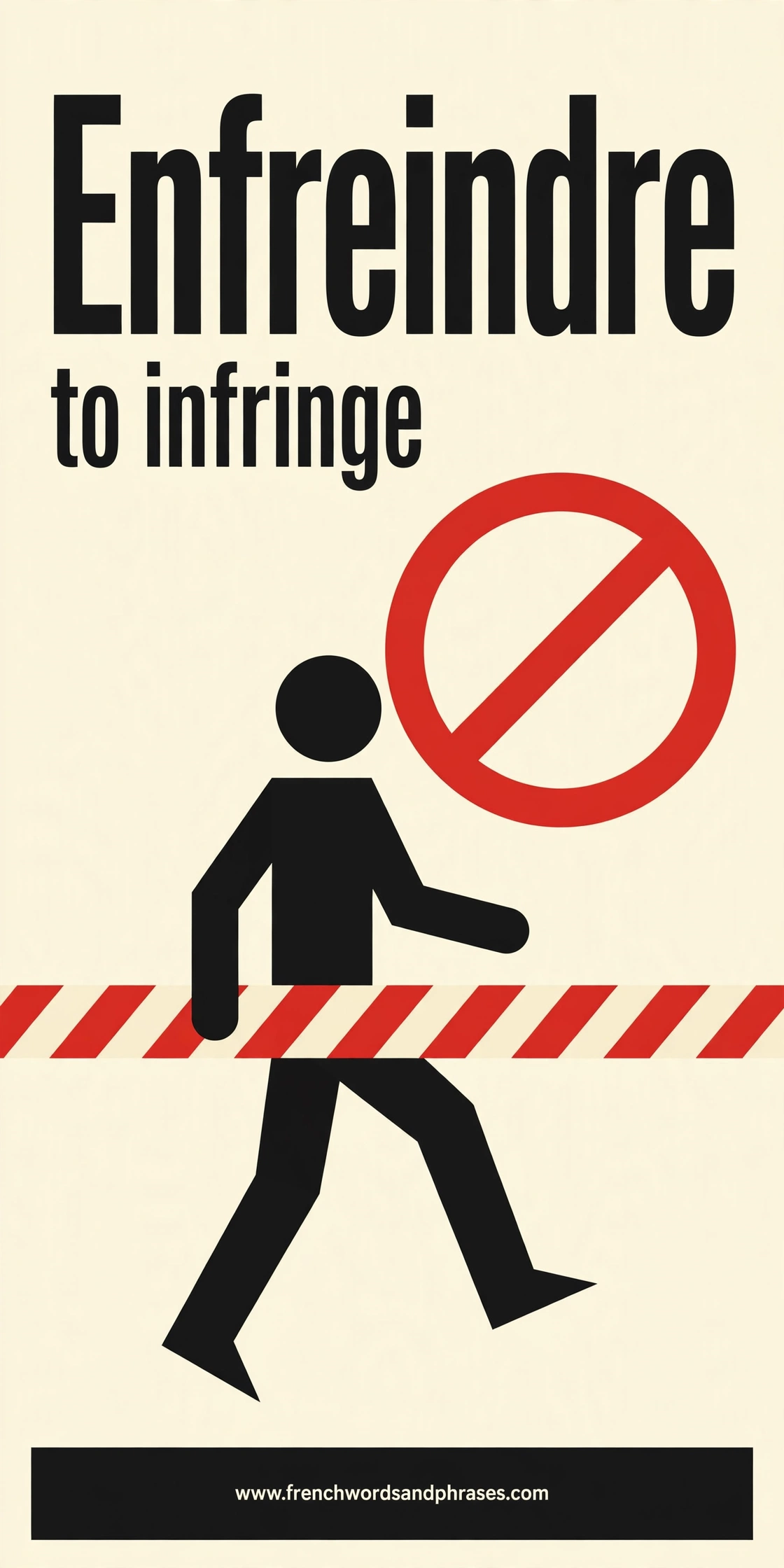
Enfreindre means to infringe — to break a law, a rule or a promise, crossing a line that was drawn for everyone.
A driver ignoring a ban, an official breaking the very rule he wrote, a company infringing a patent — enfreindre is the formal verb of rule-breaking: not smashing, but transgressing, stepping over a legal or moral line.
In this guide, you’ll learn how to conjugate enfreindre in all the major French tenses and moods. Explore complete conjugation tables, French examples, English translations, and practice quizzes.
Understanding the French Verb Enfreindre
Enfreindre is an irregular French verb ending in -eindre, conjugated like peindre and craindre.
It means to infringe. It is the formal, written verb of transgression — laws, treaties, regulations, bans and oaths — common in law, journalism and official warnings (il est interdit d’enfreindre…), where everyday speech would simply say casser or ne pas respecter. Its noun, une infraction, is the standard word for an offence or a traffic violation.
Verb classification: Irregular (-eindre, like peindre)
Auxiliary verb: Avoir
Past participle: enfreint
Present participle: enfreignant
English equivalents: To infringe, to breach, to violate; enfreindre la loi — to break the law; enfreindre un règlement — to infringe a regulation; enfreindre un interdit — to defy a ban; enfreindre sa promesse — to break one’s promise; une infraction — an offence.
One important detail: enfreindre belongs to the peindre / craindre family in -eindre — the stem swings between enfrein- (j’enfreins, il enfreint) and enfreign- (nous enfreignons, ils enfreignent, en enfreignant), and the future builds on enfreindr-: j’enfreindrai. The past participle is enfreint. Its objects are always lines and limits: la loi, un règlement, un serment, une promesse — you never enfreindre a window; for that, French uses briser or casser.
Experience the Word
Enfreindre is the verb of the crossed line — the rule is still written there, and someone has stepped over it.
Imagine a small town where lorries are banned from the centre on Sundays. At dawn, one lorry rolls slowly through the empty square anyway. No crash, no drama — but le chauffeur a enfreint l’interdiction, and the fine will say exactly that, in exactly that word.
Nothing is broken except the rule itself. It has been infringed — enfreinte — and that is enough.
How to Conjugate Enfreindre: Complete French Conjugation Guide
Let’s explore every major conjugation of enfreindre, beginning with the indicative mood.
How to Conjugate Enfreindre in the Indicative Mood
The indicative mood is used to express facts, observations, actions, and events.
How to Conjugate Enfreindre in the Present Tense (Présent)
Used for actions happening now, habitual actions, and general truths.
| Subject | Conjugation |
|---|---|
| je | enfreins |
| tu | enfreins |
| il / elle | enfreint |
| nous | enfreignons |
| vous | enfreignez |
| ils / elles | enfreignent |
Example
Celui qui enfreint la loi doit être puni.
Whoever breaks the law must be punished.
Quick Quiz 1
Complete the sentence:
Nous n’______ jamais les règles de sécurité.
Reveal the answer
enfreignons
Nous n’enfreignons jamais les règles de sécurité.
We never break the safety rules.
How to Conjugate Enfreindre in the Passé Composé
Used for completed actions in the past. Enfreindre takes the auxiliary verb avoir.
| Subject | Conjugation |
|---|---|
| j’ | ai enfreint |
| tu | as enfreint |
| il / elle | a enfreint |
| nous | avons enfreint |
| vous | avez enfreint |
| ils / elles | ont enfreint |
Example
Le conducteur a enfreint le code de la route.
The driver broke the highway code.
How to Conjugate Enfreindre in the Imparfait (Imperfect Tense)
Used for habitual past actions, descriptions, and ongoing situations in the past.
| Subject | Conjugation |
|---|---|
| je | enfreignais |
| tu | enfreignais |
| il / elle | enfreignait |
| nous | enfreignions |
| vous | enfreigniez |
| ils / elles | enfreignaient |
Example
À l’époque, on enfreignait souvent cette règle sans conséquence.
At the time, people often broke this rule without consequences.
Quick Quiz 2
Choose the correct form:
The driver broke the law.
Le conducteur ______ la loi. (a enfreint / est enfreint)
Reveal the answer
a enfreint
Le conducteur a enfreint la loi.
Enfreindre takes avoir.
How to Conjugate Enfreindre in the Plus-que-parfait
Used to describe an action that had already been completed before another past event.
| Subject | Conjugation |
|---|---|
| j’ | avais enfreint |
| tu | avais enfreint |
| il / elle | avait enfreint |
| nous | avions enfreint |
| vous | aviez enfreint |
| ils / elles | avaient enfreint |
Example
Elle avait enfreint le règlement sans le savoir.
She had infringed the regulation without knowing it.
How to Conjugate Enfreindre in the Passé Simple
Primarily used in formal writing, literature, and historical narratives. It is rarely used in everyday conversation.
| Subject | Conjugation |
|---|---|
| je | enfreignis |
| tu | enfreignis |
| il / elle | enfreignit |
| nous | enfreignîmes |
| vous | enfreignîtes |
| ils / elles | enfreignirent |
Example
Le ministre enfreignit la règle qu’il avait lui-même écrite.
The minister broke the rule he had written himself.
How to Conjugate Enfreindre in the Passé Antérieur
A literary tense used to express an action completed immediately before another past action, generally in the passé simple.
| Subject | Conjugation |
|---|---|
| j’ | eus enfreint |
| tu | eus enfreint |
| il / elle | eut enfreint |
| nous | eûmes enfreint |
| vous | eûtes enfreint |
| ils / elles | eurent enfreint |
Example
Dès qu’il eut enfreint l’interdiction, la police l’arrêta.
As soon as he had defied the ban, the police arrested him.
How to Conjugate Enfreindre in the Future Tense (Futur Simple)
Used to describe actions that will take place in the future.
| Subject | Conjugation |
|---|---|
| je | enfreindrai |
| tu | enfreindras |
| il / elle | enfreindra |
| nous | enfreindrons |
| vous | enfreindrez |
| ils / elles | enfreindront |
Example
Quiconque enfreindra le couvre-feu sera verbalisé.
Anyone who breaks the curfew will be fined.
How to Conjugate Enfreindre in the Futur Antérieur (Future Perfect)
Used for an action that will have been completed before a particular point in the future.
| Subject | Conjugation |
|---|---|
| j’ | aurai enfreint |
| tu | auras enfreint |
| il / elle | aura enfreint |
| nous | aurons enfreint |
| vous | aurez enfreint |
| ils / elles | auront enfreint |
Example
À ce rythme, il aura enfreint le règlement dix fois avant la fin du mois.
At this rate, he will have broken the rules ten times before the end of the month.
How to Conjugate Enfreindre in the Near Future (Futur Proche)
Used to describe something that is going to happen soon. Formed with aller + infinitive.
| Subject | Conjugation |
|---|---|
| je | vais enfreindre |
| tu | vas enfreindre |
| il / elle | va enfreindre |
| nous | allons enfreindre |
| vous | allez enfreindre |
| ils / elles | vont enfreindre |
Example
Attention, tu vas enfreindre la limite de vitesse !
Careful, you are about to break the speed limit!
How to Conjugate Enfreindre in the Conditional Mood
The conditional mood expresses what would happen under certain circumstances. It is also frequently used to make polite requests or express wishes.
How to Conjugate Enfreindre in the Present Conditional
| Subject | Conjugation |
|---|---|
| je | enfreindrais |
| tu | enfreindrais |
| il / elle | enfreindrait |
| nous | enfreindrions |
| vous | enfreindriez |
| ils / elles | enfreindraient |
Example
Sans surveillance, beaucoup enfreindraient les règles.
Without supervision, many would break the rules.
How to Conjugate Enfreindre in the Past Conditional
| Subject | Conjugation |
|---|---|
| j’ | aurais enfreint |
| tu | aurais enfreint |
| il / elle | aurait enfreint |
| nous | aurions enfreint |
| vous | auriez enfreint |
| ils / elles | auraient enfreint |
Example
Elle n’aurait jamais enfreint la loi sans cette urgence.
She would never have broken the law without this emergency.
Enfreindre in the Literary Past Conditional Form
This less common literary form uses the imperfect subjunctive of avoir.
| Subject | Conjugation |
|---|---|
| j’ | eusse enfreint |
| tu | eusses enfreint |
| il / elle | eût enfreint |
| nous | eussions enfreint |
| vous | eussiez enfreint |
| ils / elles | eussent enfreint |
Example
Il eût enfreint le serment plutôt que de trahir son ami.
He would have broken his oath rather than betray his friend.
How to Conjugate Enfreindre in the Subjunctive Mood
The subjunctive is used to express wishes, emotions, doubts, necessity, and uncertainty. It frequently follows expressions such as il faut que (it is necessary that) or bien que (although).
How to Conjugate Enfreindre in the Present Subjunctive
| Subject | Conjugation |
|---|---|
| que je | enfreigne |
| que tu | enfreignes |
| qu’il / qu’elle | enfreigne |
| que nous | enfreignions |
| que vous | enfreigniez |
| qu’ils / qu’elles | enfreignent |
Example
Il est inacceptable qu’un juge enfreigne la loi.
It is unacceptable for a judge to break the law.
Quick Quiz 3
Complete the sentence using the subjunctive:
Il est inacceptable que vous ______ le règlement.
Reveal the answer
enfreigniez
Il est inacceptable que vous enfreigniez le règlement.
It is unacceptable for you to infringe the regulation.
How to Conjugate Enfreindre in the Imperfect Subjunctive
A literary tense, rarely encountered in modern spoken French.
| Subject | Conjugation |
|---|---|
| que je | enfreignisse |
| que tu | enfreignisses |
| qu’il / qu’elle | enfreignît |
| que nous | enfreignissions |
| que vous | enfreignissiez |
| qu’ils / qu’elles | enfreignissent |
Example
Le préfet craignait que la foule n’enfreignît le barrage.
The prefect feared the crowd might breach the barrier.
How to Conjugate Enfreindre in the Pluperfect Subjunctive
A literary construction used to express an action completed before another past action.
| Subject | Conjugation |
|---|---|
| que j’ | eusse enfreint |
| que tu | eusses enfreint |
| qu’il / qu’elle | eût enfreint |
| que nous | eussions enfreint |
| que vous | eussiez enfreint |
| qu’ils / qu’elles | eussent enfreint |
Example
On affirmait qu’il eût enfreint le traité à plusieurs reprises.
It was claimed he had violated the treaty several times.
How to Conjugate Enfreindre in the Past Subjunctive
| Subject | Conjugation |
|---|---|
| que j’ | aie enfreint |
| que tu | aies enfreint |
| qu’il / qu’elle | ait enfreint |
| que nous | ayons enfreint |
| que vous | ayez enfreint |
| qu’ils / qu’elles | aient enfreint |
Example
Je regrette qu’elle ait enfreint sa promesse.
I regret that she broke her promise.
How to Conjugate Enfreindre in the Imperative
The imperative is used to give commands, instructions, invitations, or suggestions. Subject pronouns are omitted.
How to Conjugate Enfreindre in the Present Imperative
| Person | Conjugation |
|---|---|
| (tu) | enfreins |
| (nous) | enfreignons |
| (vous) | enfreignez |
Example
N’enfreignez jamais les règles de sécurité !
Never break the safety rules!
Quick Quiz 4
How would you say Never break the safety rules (tu form)?
Reveal the answer
N’enfreins jamais les règles de sécurité !
French Participles of Enfreindre
Participles are verb forms that can be used in compound tenses and other grammatical constructions.
Present Participle of Enfreindre
enfreignant
En enfreignant l’interdiction, il risquait une amende.
By defying the ban, he risked a fine.
Past Participle of Enfreindre
enfreint
Une fois enfreinte, la règle perd toute autorité.
Once broken, the rule loses all its authority.
Enfreindre in Everyday French: Real-Life Examples
Now that you know the conjugations, let’s see how enfreindre appears in everyday French.
Example 1 — Present
Celui qui enfreint la loi doit être puni.
Whoever breaks the law must be punished.
Example 2 — Passé composé
Le conducteur a enfreint le code de la route.
The driver broke the highway code.
Example 3 — Imparfait
On enfreignait souvent cette règle autrefois.
People often used to break this rule in the past.
Example 4 — Future
Quiconque enfreindra le couvre-feu sera verbalisé.
Anyone who breaks the curfew will be fined.
Example 5 — Conditional
Elle n’enfreindrait jamais la loi sans raison.
She would never break the law without a reason.
Example 6 — Imperative
N’enfreignez jamais les règles de sécurité !
Never break the safety rules!
Beyond Translation: The Meaning of Enfreindre
English infringe is a direct cousin — both come from Latin infringere, to break into or weaken — and French enfreindre keeps that legal chill: patents, treaties and rights are enfreints, not cassés.
Its noun runs everyday life.
Une infraction is any offence, from a parking ticket to a breach of contract, and être en infraction is simply to be in violation. Learn enfreindre and the whole vocabulary of French officialdom opens up.
How to Remember the French Verb Enfreindre
Remember it this way: Enfreindre is about the lorry rolling through the banned square at dawn — the line crossed, nothing smashed.
- The peindre family: j’enfreins, nous enfreignons, future j’enfreindrai, participle enfreint.
- Its objects are lines, not things: la loi, un règlement, un serment, une promesse.
- Its noun is everywhere: une infraction — an offence, a violation.
The key idea is the lorry rolling through the banned square at dawn — the line crossed, nothing smashed.
Test Your Knowledge of Enfreindre
Let’s see how much you’ve learned. Try answering these questions before revealing the answers.
Question 1
Which verb family does enfreindre belong to, and what is its past participle?
Reveal the answer
The peindre / craindre family in -eindre — past participle enfreint.
Question 2
How do you say The driver broke the highway code in French?
Reveal the answer
Le conducteur a enfreint le code de la route.
Question 3
Translate: Anyone who breaks the curfew will be fined.
Reveal the answer
Quiconque enfreindra le couvre-feu sera verbalisé.
Question 4
What is the noun from the same family meaning an offence?
Reveal the answer
Une infraction.
Question 5
Complete the sentence:
Il est inacceptable qu’un juge ______ la loi.
Reveal the answer
enfreigne
Il est inacceptable qu’un juge enfreigne la loi.
It is unacceptable for a judge to break the law.
Your Final Challenge
Can You Use It?
How would you say this in French?
Whoever breaks the law for his own profit teaches others to despise it.
Reveal the answer
Qui enfreint la loi pour son profit apprend aux autres à la mépriser.
Whoever breaks the law for his own profit teaches others to despise it.
A little French. A little curiosity. A richer everyday life.
LEARN FRENCH ONE WORD AT A TIME