A French Word to Live By
How to Conjugate Embarrer in French
/ɑ̃.ba.ʁe/
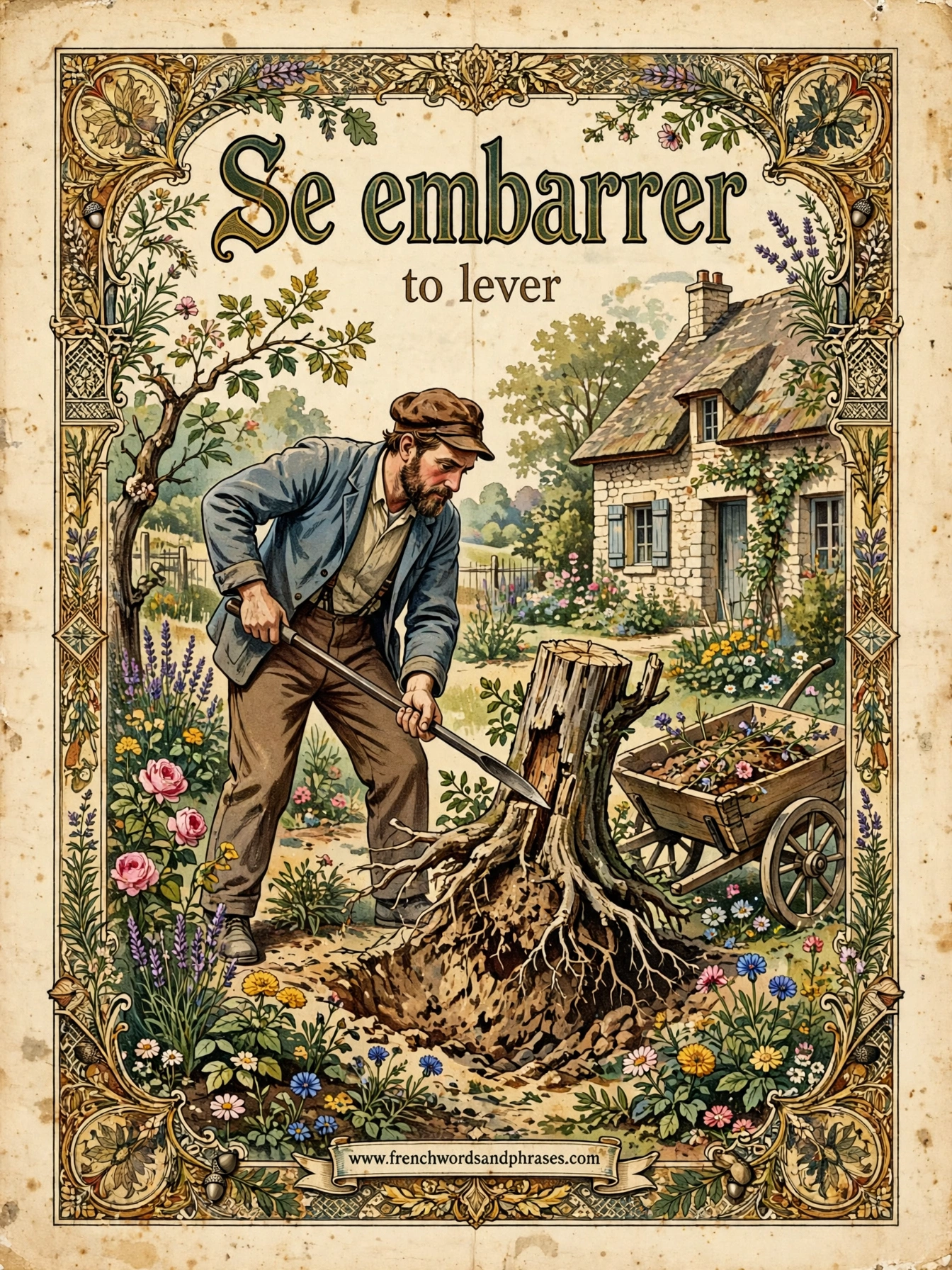
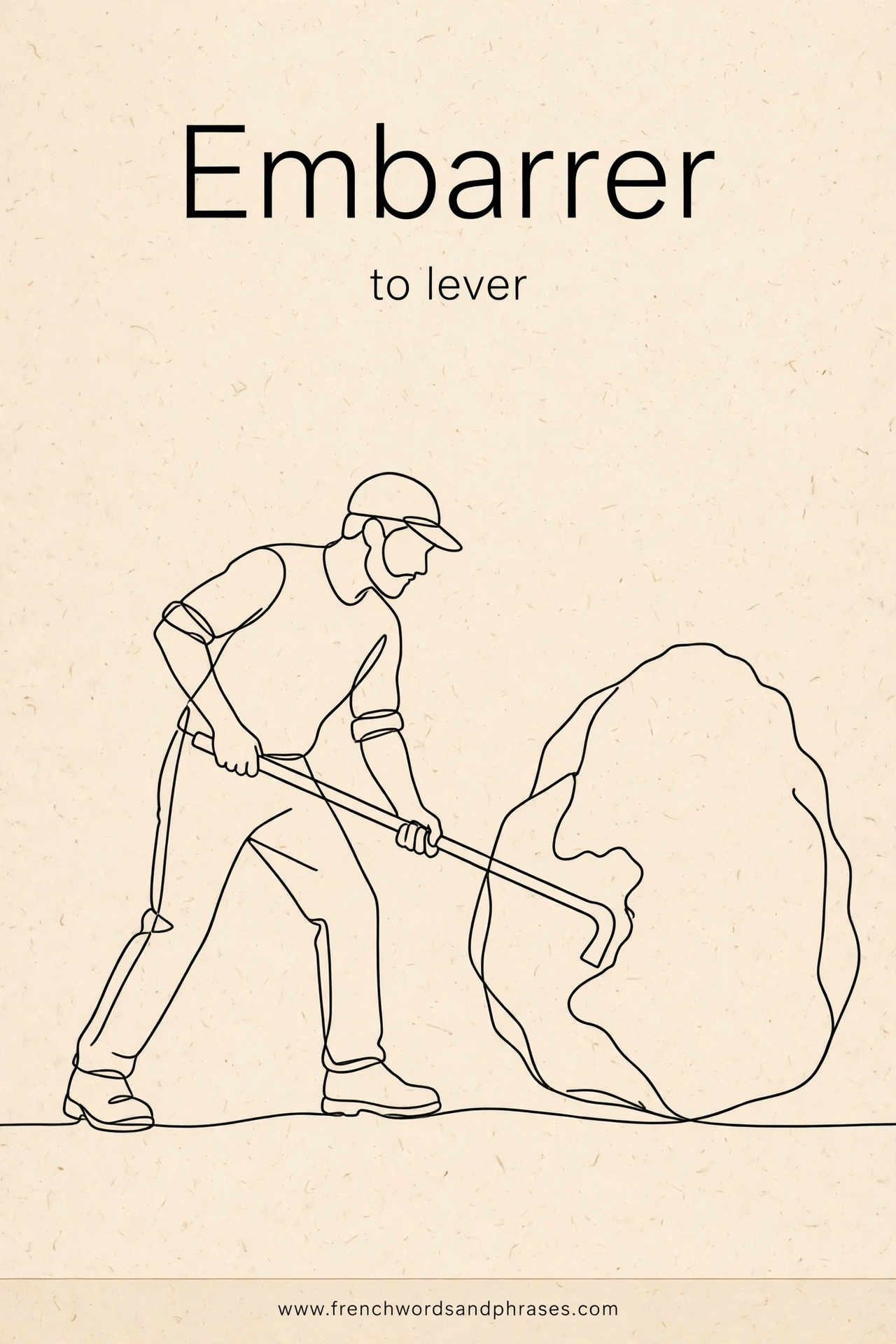
Embarrer means to lever — to shift something heavy by working it with a bar used as a lever, inch by patient inch.
A stone too heavy for hands, a log sunk in the mud of a towpath, a barge that must be poled away from the bank — embarrer is the workman’s and boatman’s verb of the bar: slide the iron under the weight, lean on it, gain an inch, and begin again.
In this guide, you’ll learn how to conjugate embarrer in all the major French tenses and moods. Explore complete conjugation tables, French examples, English translations, and practice quizzes.
Understanding the French Verb Embarrer
Embarrer is a regular French verb belonging to the first group of verbs, those ending in-er.
It means to lever. It is used by workmen shifting stones, stumps and machinery with a crowbar-like bar, and in river language for pushing a boat off a bank or out of the mud with a pole. Outside those trades it is scarcely heard — a sober, specialised word that dictionaries keep and harbours still use.
Verb classification: First group (-er)
Auxiliary verb: Avoir
Past participle: embarré
Present participle: embarrant
English equivalents: To lever, to move with a bar; embarrer une pierre — to lever a stone; embarrer un tronc — to lever a log along; embarrer une chaloupe — to pole a boat off, to push it with a bar; une barre — a bar, a rod, a pole.
One important detail: embarrer is a rare, technical word, and its whole meaning lives in its root — une barre, a bar. To embarrer is to work a bar under or against something too heavy or too stuck to move by hand: a stone, a stump, a stranded boat. It belongs to building sites, farms and towpaths, not to everyday conversation, where faire levier or soulever avec une barre says the same thing in more words. The verb itself is a perfectly regular -er: j’embarre, nous embarrons.
Experience the Word
Embarrer is the verb of the inch — no lifting, no carrying, just the bar, the weight, and patience.
Imagine two workmen moving a boundary stone older than the village. Hands are useless; ropes slide off. So they embarrent: the bar goes under, both men lean, the stone sighs and moves a finger’s width — then the bar goes under again, and the afternoon passes one inch at a time.
Nothing was lifted or dragged. The stone was levered — embarrée, walked to its new home on the end of a bar.
How to Conjugate Embarrer: Complete French Conjugation Guide
Let’s explore every major conjugation of embarrer, beginning with the indicative mood.
How to Conjugate Embarrer in the Indicative Mood
The indicative mood is used to express facts, observations, actions, and events.
How to Conjugate Embarrer in the Present Tense (Présent)
Used for actions happening now, habitual actions, and general truths.
| Subject | Conjugation |
|---|---|
| je | embarre |
| tu | embarres |
| il / elle | embarre |
| nous | embarrons |
| vous | embarrez |
| ils / elles | embarrent |
Example
Les ouvriers embarrent la pierre pour la déplacer.
The workmen lever the stone to move it.
Quick Quiz 1
Complete the sentence:
Nous ______ la souche avec une longue barre.
Reveal the answer
embarrons
Nous embarrons la souche avec une longue barre.
We are levering the stump with a long bar.
How to Conjugate Embarrer in the Passé Composé
Used for completed actions in the past. Embarrer takes the auxiliary verb avoir.
| Subject | Conjugation |
|---|---|
| j’ | ai embarré |
| tu | as embarré |
| il / elle | a embarré |
| nous | avons embarré |
| vous | avez embarré |
| ils / elles | ont embarré |
Example
Il a embarré le tronc jusqu’au bord du chemin.
He levered the log as far as the edge of the path.
How to Conjugate Embarrer in the Imparfait (Imperfect Tense)
Used for habitual past actions, descriptions, and ongoing situations in the past.
| Subject | Conjugation |
|---|---|
| je | embarrais |
| tu | embarrais |
| il / elle | embarrait |
| nous | embarrions |
| vous | embarriez |
| ils / elles | embarraient |
Example
On embarrait les tonneaux pour les faire rouler.
Barrels used to be levered along to make them roll.
Quick Quiz 2
Choose the correct form:
He levered the log to the path.
Il ______ le tronc jusqu’au chemin. (a embarré / est embarré)
Reveal the answer
a embarré
Il a embarré le tronc jusqu’au chemin.
Embarrer takes avoir.
How to Conjugate Embarrer in the Plus-que-parfait
Used to describe an action that had already been completed before another past event.
| Subject | Conjugation |
|---|---|
| j’ | avais embarré |
| tu | avais embarré |
| il / elle | avait embarré |
| nous | avions embarré |
| vous | aviez embarré |
| ils / elles | avaient embarré |
Example
Ils avaient embarré la machine sur le quai.
They had levered the machine onto the platform.
How to Conjugate Embarrer in the Passé Simple
Primarily used in formal writing, literature, and historical narratives. It is rarely used in everyday conversation.
| Subject | Conjugation |
|---|---|
| je | embarrai |
| tu | embarras |
| il / elle | embarra |
| nous | embarrâmes |
| vous | embarrâtes |
| ils / elles | embarrèrent |
Example
Le marin embarra la chaloupe loin du rivage.
The sailor poled the boat away from the shore.
How to Conjugate Embarrer in the Passé Antérieur
A literary tense used to express an action completed immediately before another past action, generally in the passé simple.
| Subject | Conjugation |
|---|---|
| j’ | eus embarré |
| tu | eus embarré |
| il / elle | eut embarré |
| nous | eûmes embarré |
| vous | eûtes embarré |
| ils / elles | eurent embarré |
Example
Quand ils eurent embarré le rocher, le chemin fut libre.
When they had levered the boulder aside, the path was clear.
How to Conjugate Embarrer in the Future Tense (Futur Simple)
Used to describe actions that will take place in the future.
| Subject | Conjugation |
|---|---|
| je | embarrerai |
| tu | embarreras |
| il / elle | embarrera |
| nous | embarrerons |
| vous | embarrerez |
| ils / elles | embarreront |
Example
Nous embarrerons cette souche demain matin.
We will lever this stump out tomorrow morning.
How to Conjugate Embarrer in the Futur Antérieur (Future Perfect)
Used for an action that will have been completed before a particular point in the future.
| Subject | Conjugation |
|---|---|
| j’ | aurai embarré |
| tu | auras embarré |
| il / elle | aura embarré |
| nous | aurons embarré |
| vous | aurez embarré |
| ils / elles | auront embarré |
Example
À midi, ils auront embarré toutes les pierres.
By noon, they will have levered all the stones.
How to Conjugate Embarrer in the Near Future (Futur Proche)
Used to describe something that is going to happen soon. Formed with aller + infinitive.
| Subject | Conjugation |
|---|---|
| je | vais embarrer |
| tu | vas embarrer |
| il / elle | va embarrer |
| nous | allons embarrer |
| vous | allez embarrer |
| ils / elles | vont embarrer |
Example
On va embarrer le coffre pour le soulever.
We are going to lever the chest to lift it.
How to Conjugate Embarrer in the Conditional Mood
The conditional mood expresses what would happen under certain circumstances. It is also frequently used to make polite requests or express wishes.
How to Conjugate Embarrer in the Present Conditional
| Subject | Conjugation |
|---|---|
| je | embarrerais |
| tu | embarrerais |
| il / elle | embarrerait |
| nous | embarrerions |
| vous | embarreriez |
| ils / elles | embarreraient |
Example
Avec une barre plus longue, on embarrerait ce bloc facilement.
With a longer bar, we would lever this block easily.
How to Conjugate Embarrer in the Past Conditional
| Subject | Conjugation |
|---|---|
| j’ | aurais embarré |
| tu | aurais embarré |
| il / elle | aurait embarré |
| nous | aurions embarré |
| vous | auriez embarré |
| ils / elles | auraient embarré |
Example
Elle aurait embarré la pierre si la barre n’avait pas cassé.
She would have levered the stone if the bar had not snapped.
Embarrer in the Literary Past Conditional Form
This less common literary form uses the imperfect subjunctive of avoir.
| Subject | Conjugation |
|---|---|
| j’ | eusse embarré |
| tu | eusses embarré |
| il / elle | eût embarré |
| nous | eussions embarré |
| vous | eussiez embarré |
| ils / elles | eussent embarré |
Example
Il eût embarré le tronc sans la boue.
He would have levered the log without the mud.
How to Conjugate Embarrer in the Subjunctive Mood
The subjunctive is used to express wishes, emotions, doubts, necessity, and uncertainty. It frequently follows expressions such as il faut que (it is necessary that) or bien que (although).
How to Conjugate Embarrer in the Present Subjunctive
| Subject | Conjugation |
|---|---|
| que je | embarre |
| que tu | embarres |
| qu’il / qu’elle | embarre |
| que nous | embarrions |
| que vous | embarriez |
| qu’ils / qu’elles | embarrent |
Example
Il faut que vous embarriez ce bloc avec précaution.
You must lever this block with care.
Quick Quiz 3
Complete the sentence using the subjunctive:
Il faut que tu ______ ce bloc doucement.
Reveal the answer
embarres
Il faut que tu embarres ce bloc doucement.
You must lever this block gently.
How to Conjugate Embarrer in the Imperfect Subjunctive
A literary tense, rarely encountered in modern spoken French.
| Subject | Conjugation |
|---|---|
| que je | embarrasse |
| que tu | embarrassasses |
| qu’il / qu’elle | embarrât |
| que nous | embarrassions |
| que vous | embarrassiez |
| qu’ils / qu’elles | embarrassent |
Example
Le contremaître voulait qu’on embarrât les fûts doucement.
The foreman wanted the casks levered gently.
How to Conjugate Embarrer in the Pluperfect Subjunctive
A literary construction used to express an action completed before another past action.
| Subject | Conjugation |
|---|---|
| que j’ | eusse embarré |
| que tu | eusses embarré |
| qu’il / qu’elle | eût embarré |
| que nous | eussions embarré |
| que vous | eussiez embarré |
| qu’ils / qu’elles | eussent embarré |
Example
On racontait qu’ils eussent embarré le canon à force de bras.
People said they had levered the cannon by sheer strength.
How to Conjugate Embarrer in the Past Subjunctive
| Subject | Conjugation |
|---|---|
| que j’ | aie embarré |
| que tu | aies embarré |
| qu’il / qu’elle | ait embarré |
| que nous | ayons embarré |
| que vous | ayez embarré |
| qu’ils / elles | aient embarré |
Example
Je suis étonné qu’il ait embarré ce poids tout seul.
I am surprised he levered that weight all alone.
How to Conjugate Embarrer in the Imperative
The imperative is used to give commands, instructions, invitations, or suggestions. Subject pronouns are omitted.
How to Conjugate Embarrer in the Present Imperative
| Person | Conjugation |
|---|---|
| (tu) | embarre |
| (nous) | embarrons |
| (vous) | embarrez |
Example
Embarrez le bloc, doucement !
Lever the block, gently!
Quick Quiz 4
How would you say Lever the block, gently (tu form)?
Reveal the answer
Embarre le bloc, doucement !
French Participles of Embarrer
Participles are verb forms that can be used in compound tenses and other grammatical constructions.
Present Participle of Embarrer
embarrant
En embarrant la souche, il s’est fait mal au dos.
By levering the stump, he hurt his back.
Past Participle of Embarrer
embarré
Embarrée avec soin, la pierre a glissé à sa place.
Levered with care, the stone slid into place.
Embarrer in Everyday French: Real-Life Examples
Now that you know the conjugations, let’s see how embarrer appears in everyday French.
Example 1 — Present
Les ouvriers embarrent la pierre pour la déplacer.
The workmen lever the stone to move it.
Example 2 — Passé composé
Il a embarré le tronc jusqu’au bord du chemin.
He levered the log as far as the edge of the path.
Example 3 — Imparfait
On embarrait les tonneaux pour les faire rouler.
Barrels used to be levered along to make them roll.
Example 4 — Future
Nous embarrerons cette souche demain matin.
We will lever this stump out tomorrow morning.
Example 5 — Conditional
Avec une barre plus longue, on embarrerait ce bloc facilement.
With a longer bar, we would lever this block easily.
Example 6 — Imperative
Embarrez le bloc, doucement !
Lever the block, gently!
Beyond Translation: The Meaning of Embarrer
The word is a tool turned into a verb: barre plus the machinery of French word-making gives embarrer, to do the bar’s work.
It is the vocabulary of before machines.
Stones, cannons, stranded boats and tree stumps were all moved this way for centuries — a bar, a fulcrum stone, two backs, and time. The word survives where the gesture survives: on farms, on building sites and along the towpaths, long after the cranes arrived.
How to Remember the French Verb Embarrer
Remember it this way: Embarrer is about two workmen, one iron bar, and a stone moving an inch at a time.
- The root is the tool: une barre, a bar — embarrer is to work something with a bar as a lever.
- A rare, technical word of building sites, farms and towpaths; everyday French says faire levier.
- Regular -er with avoir: j’embarre, nous embarrons, past participle embarré.
The key idea is two workmen, one iron bar, and a stone moving an inch at a time.
Test Your Knowledge of Embarrer
Let’s see how much you’ve learned. Try answering these questions before revealing the answers.
Question 1
What tool gives embarrer its meaning?
Reveal the answer
Une barre — a bar used as a lever: to embarrer is to shift a weight by working it with a bar.
Question 2
How do you say The workmen lever the stone to move it in French?
Reveal the answer
Les ouvriers embarrent la pierre pour la déplacer.
Question 3
Translate: He levered the log as far as the edge of the path.
Reveal the answer
Il a embarré le tronc jusqu’au bord du chemin.
Question 4
What is the past participle of embarrer?
Reveal the answer
Embarré.
Question 5
Complete the sentence:
Il faut que vous ______ ce bloc avec précaution.
Reveal the answer
embarriez
Il faut que vous embarriez ce bloc avec précaution.
You must lever this block with care.
Your Final Challenge
Can You Use It?
How would you say this in French?
Bar by bar, the workmen lever the old stone as far as its new place.
Reveal the answer
Barre à barre, les ouvriers embarrent la vieille pierre jusqu’à sa nouvelle place.
Bar by bar, the workmen lever the old stone as far as its new place.
A little French. A little curiosity. A richer everyday life.
LEARN FRENCH ONE WORD AT A TIME