A French Word to Live By
How to Conjugate Éduquer in French
/e.dy.ke/
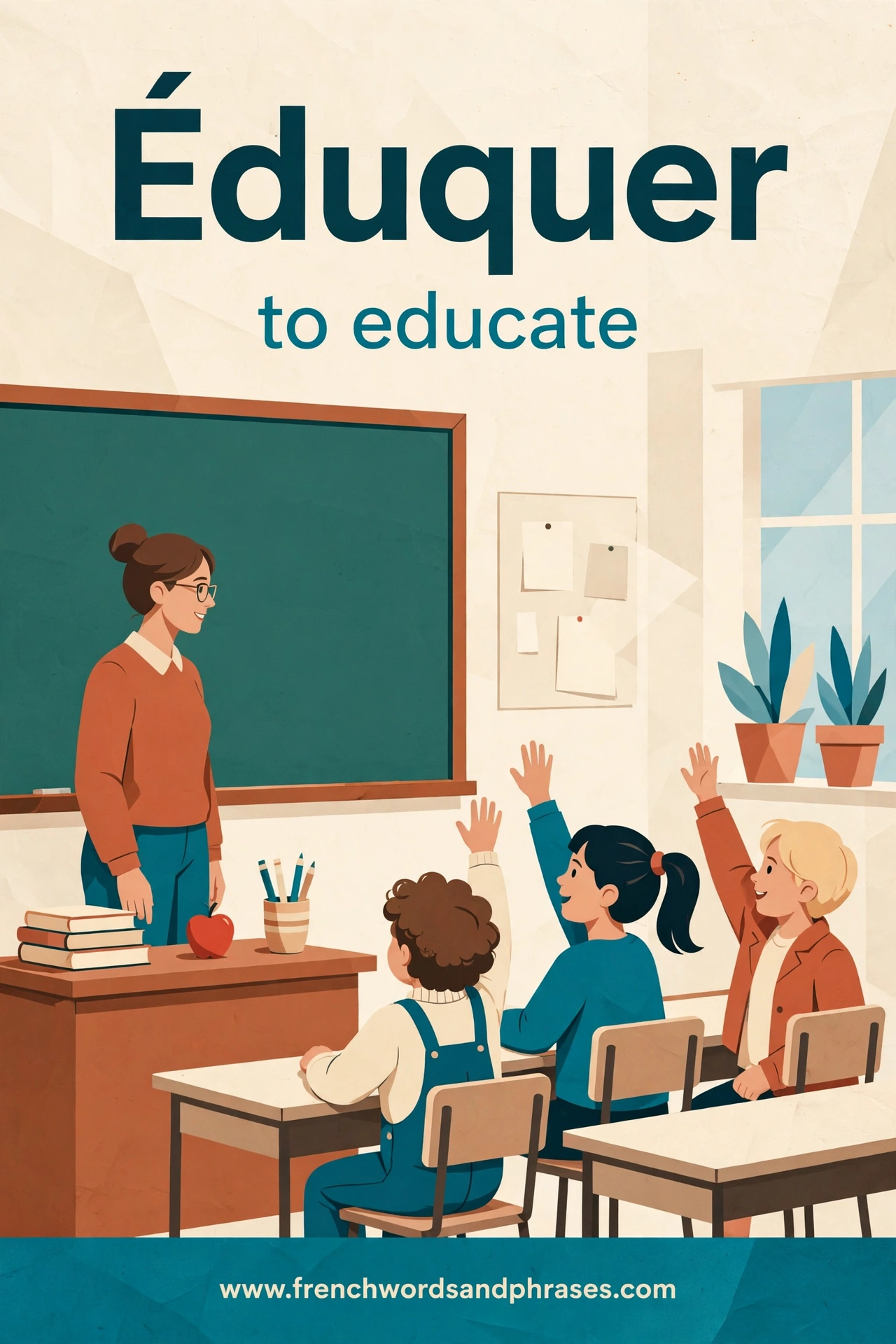
Éduquer means to educate.
A child’s first please and thank-you, a puppy learning to wait at the door, a young mind opening to the world — éduquer is the long, patient verb of bringing someone up, wider and warmer than any classroom.
In this guide, you’ll learn how to conjugate éduquer in all the major French tenses and moods. Explore complete conjugation tables, French examples, English translations, and practice quizzes.
Understanding the French Verb Éduquer
Éduquer is a regular French verb belonging to the first group of verbs, those ending in -er.
It means to educate. It is commonly used for raising children at home, for the forming work of schools and families together, for training dogs and other animals, and in public debate — éduquer à la citoyenneté, éduquer au goût — wherever character, habits and judgement are being shaped, not just knowledge poured in.
Verb classification: First group (-er)
Auxiliary verb: Avoir
Past participle: éduqué
Present participle: éduquant
English equivalents: To educate, to bring up (children); to train (an animal); bien éduqué — well brought up, well-mannered.
One important detail: éduquer is a -quer verb, so the qu stays everywhere to guard the hard /k/ sound: nous éduquons, vous éduquez, ils éduquent. And the word is wider than school: parents éduquent their children — they raise them — while teachers enseignent a subject. That is why un enfant bien éduqué means a well brought up child with good manners, not necessarily a child with good exam results. Dogs, too, get éduqués: éduquer un chien is to train it.
Experience the Word
Éduquer is the verb of the long game — a thousand small corrections, examples and encouragements that slowly become a person.
Imagine a grandmother teaching a small boy to greet the baker, to wait his turn, to say merci and mean it. No lesson is announced; nothing is written down. Twenty years later the manners are still there — elle l’a éduqué.
Nothing was exactly taught. He was éduqué — brought up, shaped by daily example.
How to Conjugate Éduquer: Complete French Conjugation Guide
Let’s explore every major conjugation of éduquer, beginning with the indicative mood.
How to Conjugate Éduquer in the Indicative Mood
The indicative mood is used to express facts, observations, actions, and events.
How to Conjugate Éduquer in the Present Tense (Présent)
Used for actions happening now, habitual actions, and general truths.
| Subject | Conjugation |
|---|---|
| je | éduque |
| tu | éduques |
| il / elle | éduque |
| nous | éduquons |
| vous | éduquez |
| ils / elles | éduquent |
Example
Les parents éduquent leurs enfants avec patience.
The parents are bringing up their children patiently.
Quick Quiz 1
Complete the sentence:
Nous ______ le chiot ensemble.
Reveal the answer
éduquerons
Nous éduquerons le chiot ensemble.
We will train the puppy together.
How to Conjugate Éduquer in the Passé Composé
Used for completed actions in the past. Éduquer takes the auxiliary verb avoir.
| Subject | Conjugation |
|---|---|
| j’ | ai éduqué |
| tu | as éduqué |
| il / elle | a éduqué |
| nous | avons éduqué |
| vous | avez éduqué |
| ils / elles | ont éduqué |
Example
Elle a éduqué seule ses trois enfants.
She brought up her three children on her own.
How to Conjugate Éduquer in the Imparfait (Imperfect Tense)
Used for habitual past actions, descriptions, and ongoing situations in the past.
| Subject | Conjugation |
|---|---|
| je | éduquais |
| tu | éduquais |
| il / elle | éduquait |
| nous | éduquions |
| vous | éduquiez |
| ils / elles | éduquaient |
Example
Autrefois, on éduquait les enfants plus sévèrement.
In the old days, children were brought up more strictly.
Quick Quiz 2
Choose the correct form:
She brought up her children.
Elle ______ ses enfants. (a éduqué / est éduquée)
Reveal the answer
a éduqué
Elle a éduqué ses enfants.
Éduquer takes avoir.
How to Conjugate Éduquer in the Plus-que-parfait
Used to describe an action that had already been completed before another past event.
| Subject | Conjugation |
|---|---|
| j’ | avais éduqué |
| tu | avais éduqué |
| il / elle | avait éduqué |
| nous | avions éduqué |
| vous | aviez éduqué |
| ils / elles | avaient éduqué |
Example
Ils avaient éduqué le chien avant l’arrivée du bébé.
They had trained the dog before the baby arrived.
How to Conjugate Éduquer in the Passé Simple
Primarily used in formal writing, literature, and historical narratives. It is rarely used in everyday conversation.
| Subject | Conjugation |
|---|---|
| je | éduquai |
| tu | éduquas |
| il / elle | éduqua |
| nous | éduquâmes |
| vous | éduquâtes |
| ils / elles | éduquèrent |
Example
Elle éduqua ses fils dans le respect des autres.
She raised her sons to respect others.
How to Conjugate Éduquer in the Passé Antérieur
A literary tense used to express an action completed immediately before another past action, generally in the passé simple.
| Subject | Conjugation |
|---|---|
| j’ | eus éduqué |
| tu | eus éduqué |
| il / elle | eut éduqué |
| nous | eûmes éduqué |
| vous | eûtes éduqué |
| ils / elles | eurent éduqué |
Example
Quand ils eurent éduqué leurs enfants, ils voyagèrent enfin.
When they had brought up their children, they finally travelled.
How to Conjugate Éduquer in the Future Tense (Futur Simple)
Used to describe actions that will take place in the future.
| Subject | Conjugation |
|---|---|
| je | éduquerai |
| tu | éduqueras |
| il / elle | éduquera |
| nous | éduquerons |
| vous | éduquerez |
| ils / elles | éduqueront |
Example
Nous éduquerons notre chiot dès le premier jour.
We will train our puppy from day one.
How to Conjugate Éduquer in the Futur Antérieur (Future Perfect)
Used for an action that will have been completed before a particular point in the future.
| Subject | Conjugation |
|---|---|
| j’ | aurai éduqué |
| tu | auras éduqué |
| il / elle | aura éduqué |
| nous | aurons éduqué |
| vous | aurez éduqué |
| ils / elles | auront éduqué |
Example
Quand le petit dernier aura dix-huit ans, ils auront éduqué quatre enfants.
When the youngest turns eighteen, they will have raised four children.
How to Conjugate Éduquer in the Near Future (Futur Proche)
Used to describe something that is going to happen soon. Formed with aller + infinitive.
| Subject | Conjugation |
|---|---|
| je | vais éduquer |
| tu | vas éduquer |
| il / elle | va éduquer |
| nous | allons éduquer |
| vous | allez éduquer |
| ils / elles | vont éduquer |
Example
Je vais éduquer le chat à ne pas monter sur la table.
I am going to train the cat not to climb on the table.
How to Conjugate Éduquer in the Conditional Mood
The conditional mood expresses what would happen under certain circumstances. It is also frequently used to make polite requests or express wishes.
How to Conjugate Éduquer in the Present Conditional
| Subject | Conjugation |
|---|---|
| je | éduquerais |
| tu | éduquerais |
| il / elle | éduquerait |
| nous | éduquerions |
| vous | éduqueriez |
| ils / elles | éduqueraient |
Example
Avec plus de temps, on éduquerait mieux les jeunes conducteurs.
With more time, we would educate young drivers better.
How to Conjugate Éduquer in the Past Conditional
| Subject | Conjugation |
|---|---|
| j’ | aurais éduqué |
| tu | aurais éduqué |
| il / elle | aurait éduqué |
| nous | aurions éduqué |
| vous | auriez éduqué |
| ils / elles | auraient éduqué |
Example
Ils auraient éduqué le chien plus tôt s’ils avaient su.
They would have trained the dog earlier if they had known.
Éduquer in the Literary Past Conditional Form
This less common literary form uses the imperfect subjunctive of avoir.
| Subject | Conjugation |
|---|---|
| j’ | eusse éduqué |
| tu | eusses éduqué |
| il / elle | eût éduqué |
| nous | eussions éduqué |
| vous | eussiez éduqué |
| ils / elles | eussent éduqué |
Example
La gouvernante eût éduqué les enfants selon les usages anciens.
The governess would have raised the children according to the old ways.
How to Conjugate Éduquer in the Subjunctive Mood
The subjunctive is used to express wishes, emotions, doubts, necessity, and uncertainty. It frequently follows expressions such as il faut que (it is necessary that) or bien que (although).
How to Conjugate Éduquer in the Present Subjunctive
| Subject | Conjugation |
|---|---|
| que je | éduque |
| que tu | éduques |
| qu’il / qu’elle | éduque |
| que nous | éduquions |
| que vous | éduquiez |
| qu’ils / qu’elles | éduquent |
Example
Il faut que l’école éduque aussi à la citoyenneté.
Schools must also educate for citizenship.
Quick Quiz 3
Complete the sentence using the subjunctive:
Il faut que vous ______ vos enfants avec patience.
Reveal the answer
éduquiez
Il faut que vous éduquiez vos enfants avec patience.
You must bring up your children patiently.
How to Conjugate Éduquer in the Imperfect Subjunctive
A literary tense, rarely encountered in modern spoken French.
| Subject | Conjugation |
|---|---|
| que je | éduquasse |
| que tu | éduquasses |
| qu’il / qu’elle | éduquât |
| que nous | éduquassions |
| que vous | éduquassiez |
| qu’ils / qu’elles | éduquassent |
Example
Le père souhaitait que l’on éduquât ses enfants avec douceur.
The father wanted his children to be brought up gently.
How to Conjugate Éduquer in the Pluperfect Subjunctive
A literary construction used to express an action completed before another past action.
| Subject | Conjugation |
|---|---|
| que j’ | eusse éduqué |
| que tu | eusses éduqué |
| qu’il / qu’elle | eût éduqué |
| que nous | eussions éduqué |
| que vous | eussiez éduqué |
| qu’ils / qu’elles | eussent éduqué |
Example
Elle était fière que ses parents l’eussent éduquée librement.
She was proud that her parents had raised her freely.
How to Conjugate Éduquer in the Past Subjunctive
| Subject | Conjugation |
|---|---|
| que j’ | aie éduqué |
| que tu | aies éduqué |
| qu’il / qu’elle | ait éduqué |
| que nous | ayons éduqué |
| que vous | ayez éduqué |
| qu’ils / qu’elles | aient éduqué |
Example
Je suis heureux que vous ayez éduqué vos enfants ainsi.
I am happy that you brought up your children that way.
How to Conjugate Éduquer in the Imperative
The imperative is used to give commands, instructions, invitations, or suggestions. Subject pronouns are omitted.
How to Conjugate Éduquer in the Present Imperative
| Person | Conjugation |
|---|---|
| (tu) | éduque |
| (nous) | éduquons |
| (vous) | éduquez |
Example
Éduquez vos enfants avec amour et fermeté !
Bring up your children with love and firmness!
Quick Quiz 4
How would you say Train your puppy from day one (tu form)?
Reveal the answer
Éduque ton chiot dès le premier jour !
French Participles of Éduquer
Participles are verb forms that can be used in compound tenses and other grammatical constructions.
Present Participle of Éduquer
éduquant
En éduquant son chien, il a appris la patience.
By training his dog, he learned patience.
Past Participle of Éduquer
éduqué
Éduqué à la campagne, il aime le grand air.
Brought up in the countryside, he loves the open air.
Éduquer in Everyday French: Real-Life Examples
Now that you know the conjugations, let’s see how éduquer appears in everyday French.
Example 1 — Present
Ils éduquent leurs enfants en deux langues.
They are raising their children in two languages.
Example 2 — Passé composé
Elle a éduqué son chien en trois mois.
She trained her dog in three months.
Example 3 — Imparfait
On éduquait les enfants à table, autrefois.
Children used to be taught their manners at the table.
Example 4 — Future
Nous éduquerons le chiot ensemble.
We will train the puppy together.
Example 5 — Conditional
Tu éduquerais un chat, toi ?
Would you train a cat, you?
Example 6 — Imperative
Éduque ton chien avant qu’il grandisse !
Train your dog before it grows up!
Beyond Translation: The Meaning of Éduquer
English educate mostly happens in institutions, with syllabuses and exams. French éduquer starts at the kitchen table: it is the whole forming of a person — manners, habits, taste, judgement.
Bien éduqué praises the parents, not the school.
Say of a polite teenager il est bien éduqué and you have complimented his upbringing; say il est bien instruit and you have complimented his schooling. French keeps the two apart, and éduquer is firmly on the side of the home.
How to Remember the French Verb Éduquer
Remember it this way: Éduquer is about the whole upbringing — children, manners and one patient dog.
- Qu everywhere: nous éduquons, vous éduquez — the u keeps the /k/ hard.
- Bien éduqué means well brought up (manners), not well schooled.
- Parents éduquent; teachers enseignent a subject — éduquer is the whole upbringing, dogs included.
The key idea is the whole upbringing — children, manners and one patient dog.
Test Your Knowledge of Éduquer
Let’s see how much you’ve learned. Try answering these questions before revealing the answers.
Question 1
What does bien éduqué mean?
Reveal the answer
Well brought up — polite, well-mannered. It praises the upbringing, not the exam results.
Question 2
How do you say She brought up her three children on her own in French?
Reveal the answer
Elle a éduqué seule ses trois enfants.
Question 3
Translate: She trained her dog in three months.
Reveal the answer
Elle a éduqué son chien en trois mois.
Question 4
What is the past participle of éduquer?
Reveal the answer
Éduqué.
Question 5
Complete the sentence:
Il faut que l’école ______ aussi à la citoyenneté.
Reveal the answer
éduque
Il faut que l’école éduque aussi à la citoyenneté.
Schools must also educate for citizenship.
Your Final Challenge
Can You Use It?
How would you say this in French?
They raised their children patiently, and the house is full of laughter.
Reveal the answer
Ils ont éduqué leurs enfants avec patience, et la maison est pleine de rires.
They raised their children patiently, and the house is full of laughter.
A little French. A little curiosity. A richer everyday life.
LEARN FRENCH ONE WORD AT A TIME