A French Word to Live By
How to Conjugate Ébourgeonner in French
/e.buʁ.ʒɔ.ne/
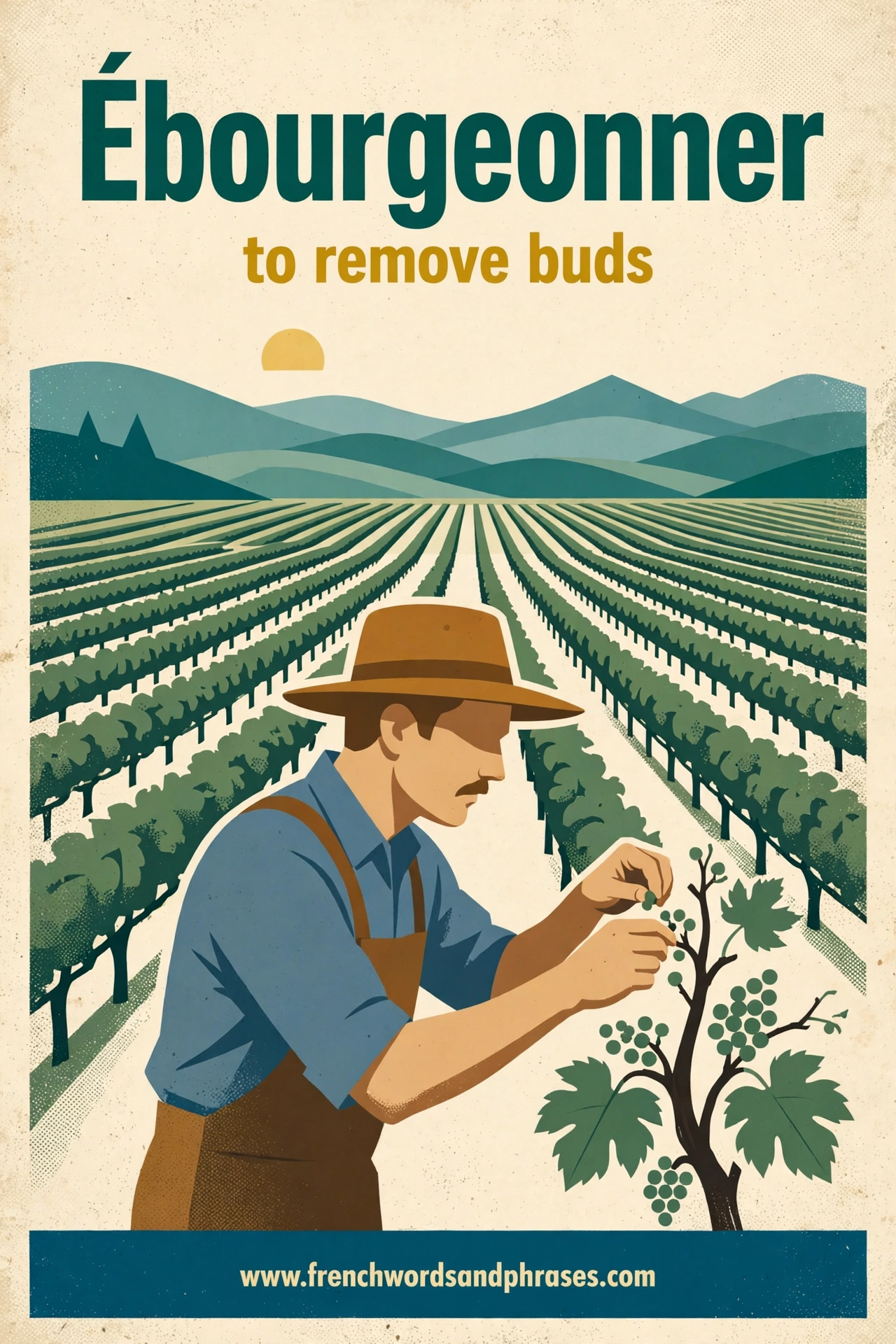
Ébourgeonner means to remove buds — to pinch out the surplus buds of a vine or tree so the plant puts its strength into the best shoots.
A vineyard in May, green fingers walking the rows, pinching away nine buds out of ten — ébourgeonner is the verb of the ruthless kindness by which a grower tells a vine: not everything you started will be finished, so that what remains is superb.
In this guide, you’ll learn how to conjugate ébourgeonner in all the major French tenses and moods. Explore complete conjugation tables, French examples, English translations, and practice quizzes.
Understanding the French Verb Ébourgeonner
Ébourgeonner is a regular French verb belonging to the first group of verbs, those ending in -er.
It means to remove buds. It is commonly used in vineyards in spring for rubbing out surplus buds and shoots on the vines, in orchards for disbudding fruit trees, and by gardeners for roses and young trees — anywhere a plant promises more than it can ripen, and a thumb must choose.
Verb classification: First group (-er)
Auxiliary verb: Avoir
Past participle: ébourgeonné
Present participle: ébourgeonnant
English equivalents: To remove buds, to disbud; le bourgeon — the bud; l’ébourgeonnage — disbudding, the spring removal of surplus buds.
One important detail: ébourgeonner is built on le bourgeon, the bud, with the removing prefix é- — the same é- as in ébrancher and ébourrer. The work itself is l’ébourgeonnage, one of the great spring rituals of the vineyard: every surplus bud rubbed off by thumb so that the vine feeds a few shoots instead of feeding a crowd. The spelling never changes — j’ébourgeonne, nous ébourgeonnons — the -geonn- keeps its e tucked inside, so the g stays soft on its own.
Experience the Word
Ébourgeonner is the verb of less-but-better — a whole philosophy of gardening in one pinch of the thumb.
Imagine a slope of vines in the Loire in May. Row by row, the growers rub off the soft green buds that crowd each plant, keeping two, removing six, and the discarded buds fall like green snow — the harvest is being decided now, in spring, by subtraction.
The vine has not been harmed. It has been ébourgeonnée — disbudded, concentrated, aimed.
How to Conjugate Ébourgeonner: Complete French Conjugation Guide
Let’s explore every major conjugation of ébourgeonner, beginning with the indicative mood.
How to Conjugate Ébourgeonner in the Indicative Mood
The indicative mood is used to express facts, observations, actions, and events.
How to Conjugate Ébourgeonner in the Present Tense (Présent)
Used for actions happening now, habitual actions, and general truths.
| Subject | Conjugation |
|---|---|
| je | ébourgeonne |
| tu | ébourgeonnes |
| il / elle | ébourgeonne |
| nous | ébourgeonnons |
| vous | ébourgeonnez |
| ils / elles | ébourgeonnent |
Example
Le vigneron ébourgeonne ses vignes dès le mois de mai.
The winegrower disbuds his vines from May onwards.
Quick Quiz 1
Complete the sentence:
Nous ______ les vignes au printemps.
Reveal the answer
ébourgeonnons
Nous ébourgeonnons les vignes au printemps.
We disbud the vines in spring.
How to Conjugate Ébourgeonner in the Passé Composé
Used for completed actions in the past. Ébourgeonner takes the auxiliary verb avoir.
| Subject | Conjugation |
|---|---|
| j’ | ai ébourgeonné |
| tu | as ébourgeonné |
| il / elle | a ébourgeonné |
| nous | avons ébourgeonné |
| vous | avez ébourgeonné |
| ils / elles | ont ébourgeonné |
Example
Nous avons ébourgeonné tout le coteau en une semaine.
We disbudded the whole hillside in a week.
How to Conjugate Ébourgeonner in the Imparfait (Imperfect Tense)
Used for habitual past actions, descriptions, and ongoing situations in the past.
| Subject | Conjugation |
|---|---|
| je | ébourgeonnais |
| tu | ébourgeonnais |
| il / elle | ébourgeonnait |
| nous | ébourgeonnions |
| vous | ébourgeonniez |
| ils / elles | ébourgeonnaient |
Example
Autrefois, on ébourgeonnait à la main, rang par rang.
In the old days, people disbudded by hand, row by row.
Quick Quiz 2
Choose the correct form:
They disbudded the orchard.
Ils ______ le verger. (ont ébourgeonné / sont ébourgeonnés)
Reveal the answer
ont ébourgeonné
Ils ont ébourgeonné le verger.
Ébourgeonner takes avoir.
How to Conjugate Ébourgeonner in the Plus-que-parfait
Used to describe an action that had already been completed before another past event.
| Subject | Conjugation |
|---|---|
| j’ | avais ébourgeonné |
| tu | avais ébourgeonné |
| il / elle | avait ébourgeonné |
| nous | avions ébourgeonné |
| vous | aviez ébourgeonné |
| ils / elles | avaient ébourgeonné |
Example
Ils avaient ébourgeonné les pommiers avant la floraison.
They had disbudded the apple trees before the blossom.
How to Conjugate Ébourgeonner in the Passé Simple
Primarily used in formal writing, literature, and historical narratives. It is rarely used in everyday conversation.
| Subject | Conjugation |
|---|---|
| je | ébourgeonnai |
| tu | ébourgeonnas |
| il / elle | ébourgeonna |
| nous | ébourgeonnâmes |
| vous | ébourgeonnâtes |
| ils / elles | ébourgeonnèrent |
Example
Le jardinier ébourgeonna les rosiers au printemps.
The gardener disbudded the rose bushes in spring.
How to Conjugate Ébourgeonner in the Passé Antérieur
A literary tense used to express an action completed immediately before another past action, generally in the passé simple.
| Subject | Conjugation |
|---|---|
| j’ | eus ébourgeonné |
| tu | eus ébourgeonné |
| il / elle | eut ébourgeonné |
| nous | eûmes ébourgeonné |
| vous | eûtes ébourgeonné |
| ils / elles | eurent ébourgeonné |
Example
Quand elle eut ébourgeonné le dernier rang, le soleil se coucha.
When she had disbudded the last row, the sun set.
How to Conjugate Ébourgeonner in the Future Tense (Futur Simple)
Used to describe actions that will take place in the future.
| Subject | Conjugation |
|---|---|
| je | ébourgeonnerai |
| tu | ébourgeonneras |
| il / elle | ébourgeonnera |
| nous | ébourgeonnerons |
| vous | ébourgeonnerez |
| ils / elles | ébourgeonneront |
Example
Demain, nous ébourgeonnerons les jeunes plants.
Tomorrow, we will disbud the young plants.
How to Conjugate Ébourgeonner in the Futur Antérieur (Future Perfect)
Used for an action that will have been completed before a particular point in the future.
| Subject | Conjugation |
|---|---|
| j’ | aurai ébourgeonné |
| tu | auras ébourgeonné |
| il / elle | aura ébourgeonné |
| nous | aurons ébourgeonné |
| vous | aurez ébourgeonné |
| ils / elles | auront ébourgeonné |
Example
À la fin du mois, ils auront ébourgeonné toutes les parcelles.
By the end of the month, they will have disbudded all the plots.
How to Conjugate Ébourgeonner in the Near Future (Futur Proche)
Used to describe something that is going to happen soon. Formed with aller + infinitive.
| Subject | Conjugation |
|---|---|
| je | vais ébourgeonner |
| tu | vas ébourgeonner |
| il / elle | va ébourgeonner |
| nous | allons ébourgeonner |
| vous | allez ébourgeonner |
| ils / elles | vont ébourgeonner |
Example
Je vais ébourgeonner ce pommier avant qu’il fleurisse.
I am going to disbud this apple tree before it blossoms.
How to Conjugate Ébourgeonner in the Conditional Mood
The conditional mood expresses what would happen under certain circumstances. It is also frequently used to make polite requests or express wishes.
How to Conjugate Ébourgeonner in the Present Conditional
| Subject | Conjugation |
|---|---|
| je | ébourgeonnerais |
| tu | ébourgeonnerais |
| il / elle | ébourgeonnerait |
| nous | ébourgeonnerions |
| vous | ébourgeonneriez |
| ils / elles | ébourgeonneraient |
Example
Avec plus de bras, on ébourgeonnerait deux fois plus de rangs.
With more hands, we would disbud twice as many rows.
How to Conjugate Ébourgeonner in the Past Conditional
| Subject | Conjugation |
|---|---|
| j’ | aurais ébourgeonné |
| tu | aurais ébourgeonné |
| il / elle | aurait ébourgeonné |
| nous | aurions ébourgeonné |
| vous | auriez ébourgeonné |
| ils / elles | auraient ébourgeonné |
Example
Ils auraient ébourgeonné plus tôt sans la pluie.
They would have disbudded earlier without the rain.
Ébourgeonner in the Literary Past Conditional Form
This less common literary form uses the imperfect subjunctive of avoir.
| Subject | Conjugation |
|---|---|
| j’ | eusse ébourgeonné |
| tu | eusses ébourgeonné |
| il / elle | eût ébourgeonné |
| nous | eussions ébourgeonné |
| vous | eussiez ébourgeonné |
| ils / elles | eussent ébourgeonné |
Example
Le vigneron eût ébourgeonné chaque cep deux fois.
The winegrower would have disbudded every vine twice.
How to Conjugate Ébourgeonner in the Subjunctive Mood
The subjunctive is used to express wishes, emotions, doubts, necessity, and uncertainty. It frequently follows expressions such as il faut que (it is necessary that) or bien que (although).
How to Conjugate Ébourgeonner in the Present Subjunctive
| Subject | Conjugation |
|---|---|
| que je | ébourgeonne |
| que tu | ébourgeonnes |
| qu’il / qu’elle | ébourgeonne |
| que nous | ébourgeonnions |
| que vous | ébourgeonniez |
| qu’ils / qu’elles | ébourgeonnent |
Example
Il faut que tu ébourgeonnes ces rosiers avant juin.
You must disbud these rose bushes before June.
Quick Quiz 3
Complete the sentence using the subjunctive:
Il faut que vous ______ les rosiers.
Reveal the answer
ébourgeonniez
Il faut que vous ébourgeonniez les rosiers.
You must disbud the rose bushes.
How to Conjugate Ébourgeonner in the Imperfect Subjunctive
A literary tense, rarely encountered in modern spoken French.
| Subject | Conjugation |
|---|---|
| que je | ébourgeonnasse |
| que tu | ébourgeonnasses |
| qu’il / qu’elle | ébourgeonnât |
| que nous | ébourgeonnassions |
| que vous | ébourgeonnassiez |
| qu’ils / qu’elles | ébourgeonnassent |
Example
Le maître voulait que l’apprenti ébourgeonnât sans abîmer l’écorce.
The master wanted the apprentice to disbud without damaging the bark.
How to Conjugate Ébourgeonner in the Pluperfect Subjunctive
A literary construction used to express an action completed before another past action.
| Subject | Conjugation |
|---|---|
| que j’ | eusse ébourgeonné |
| que tu | eusses ébourgeonné |
| qu’il / qu’elle | eût ébourgeonné |
| que nous | eussions ébourgeonné |
| que vous | eussiez ébourgeonné |
| qu’ils / qu’elles | eussent ébourgeonné |
Example
On voyait qu’ils eussent ébourgeonné avec grand soin.
You could see they had disbudded with great care.
How to Conjugate Ébourgeonner in the Past Subjunctive
| Subject | Conjugation |
|---|---|
| que j’ | aie ébourgeonné |
| que tu | aies ébourgeonné |
| qu’il / qu’elle | ait ébourgeonné |
| que nous | ayons ébourgeonné |
| que vous | ayez ébourgeonné |
| qu’ils / qu’elles | aient ébourgeonné |
Example
Je suis ravi que vous ayez ébourgeonné les vignes à temps.
I am delighted you disbudded the vines in time.
How to Conjugate Ébourgeonner in the Imperative
The imperative is used to give commands, instructions, invitations, or suggestions. Subject pronouns are omitted.
How to Conjugate Ébourgeonner in the Present Imperative
| Person | Conjugation |
|---|---|
| (tu) | ébourgeonne |
| (nous) | ébourgeonnons |
| (vous) | ébourgeonnez |
Example
Ébourgeonne ce cep, mais garde les deux plus beaux bourgeons !
Disbud this vine, but keep the two finest buds!
Quick Quiz 4
How would you say Disbud gently (tu form)?
Reveal the answer
Ébourgeonne doucement !
French Participles of Ébourgeonner
Participles are verb forms that can be used in compound tenses and other grammatical constructions.
Present Participle of Ébourgeonner
ébourgeonnant
En ébourgeonnant, elle chantait pour passer le temps.
While disbudding, she sang to pass the time.
Past Participle of Ébourgeonner
ébourgeonné
Ébourgeonnées au printemps, les vignes donnent des grappes magnifiques.
Disbudded in spring, the vines give magnificent bunches.
Ébourgeonner in Everyday French: Real-Life Examples
Now that you know the conjugations, let’s see how ébourgeonner appears in everyday French.
Example 1 — Present
On ébourgeonne les vignes au printemps.
We disbud the vines in spring.
Example 2 — Passé composé
Ils ont ébourgeonné les rosiers ce matin.
They disbudded the rose bushes this morning.
Example 3 — Imparfait
Mon grand-père ébourgeonnait chaque cep à la main.
My grandfather used to disbud every vine by hand.
Example 4 — Future
Nous ébourgeonnerons le verger la semaine prochaine.
We will disbud the orchard next week.
Example 5 — Conditional
J’ébourgeonnerais ce pommier s’il faisait moins froid.
I would disbud this apple tree if it were less cold.
Example 6 — Imperative
Ébourgeonnez doucement, sans arracher l’écorce !
Disbud gently, without tearing the bark!
Beyond Translation: The Meaning of Ébourgeonner
English says disbud, a rare technical word; French ébourgeonner grows straight out of bourgeon, a word every gardener knows.
The vineyard thinks in removals.
Ébourgeonner, ébrancher, éclaircir — French wine country has a whole vocabulary of taking away, because great wine is made by what you refuse to let grow.
How to Remember the French Verb Ébourgeonner
Remember it this way: Ébourgeonner is about the spring pinch — fewer buds, better grapes.
- Le bourgeon — the bud; é- removes it: ébourgeonner is bud-removal.
- L’ébourgeonnage — the spring disbudding of the vines, done by thumb, row by row.
- Regular -er: j’ébourgeonne, nous ébourgeonnons, past participle ébourgeonné.
The key idea is the spring pinch — fewer buds, better grapes.
Test Your Knowledge of Ébourgeonner
Let’s see how much you’ve learned. Try answering these questions before revealing the answers.
Question 1
What is un bourgeon?
Reveal the answer
A bud — the part ébourgeonner removes.
Question 2
How do you say We disbud the vines in spring in French?
Reveal the answer
On ébourgeonne les vignes au printemps.
Question 3
Translate: They disbudded the rose bushes this morning.
Reveal the answer
Ils ont ébourgeonné les rosiers ce matin.
Question 4
What is the past participle of ébourgeonner?
Reveal the answer
Ébourgeonné.
Question 5
Complete the sentence:
Il faut que tu ______ ces rosiers avant juin.
Reveal the answer
ébourgeonnes
Il faut que tu ébourgeonnes ces rosiers avant juin.
You must disbud these rose bushes before June.
Your Final Challenge
Can You Use It?
How would you say this in French?
In spring, the winegrower disbuds his vines, and already the autumn wine is being prepared.
Reveal the answer
Au printemps, le vigneron ébourgeonne ses vignes, et déjà le vin de l’automne se prépare.
In spring, the winegrower disbuds his vines, and already the autumn wine is being prepared.
A little French. A little curiosity. A richer everyday life.
LEARN FRENCH ONE WORD AT A TIME