A French Word to Live By
How to Conjugate Différer in French
/di.fe.ʁe/
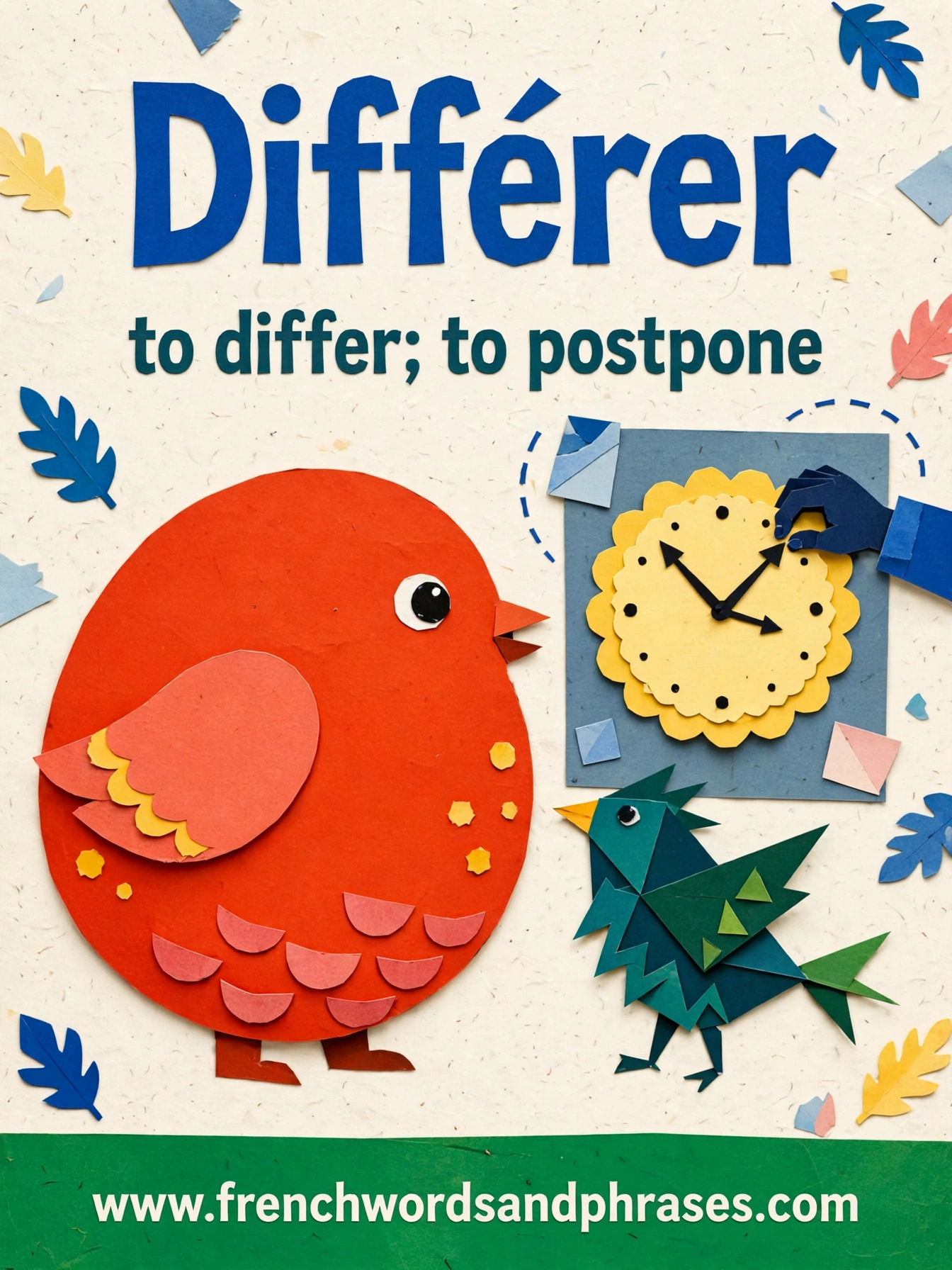
Différer means to differ — to be different from something else — and, in its second life, to postpone, to put off an event to a later date.
Two brothers who agree on nothing, a meeting pushed to next week, twins who could not be less alike — différer is the verb of the gap: between two opinions, two dates, two ways of seeing the same thing.
In this guide, you’ll learn how to conjugate différer in all the major French tenses and moods. Explore complete conjugation tables, French examples, English translations, and practice quizzes.
Understanding the French Verb Différer
Différer is a regular French verb belonging to the first group of verbs, those ending in-er.
It means to differ; to postpone. Its two lives divide cleanly: with de it compares — nos opinions diffèrent, our opinions differ; as a transitive verb it postpones — différer le départ, to postpone the departure. The noun of the second life is everywhere in administration: un différé is a deferral, and en différé is how French watches recorded television — not live, but later.
Verb classification: First group (-er)
Auxiliary verb: Avoir
Past participle: différé
Present participle: différant
English equivalents: To differ, to be different; to postpone, to put off, to defer; différer de quelqu’un — to differ from someone; différer un rendez-vous — to postpone an appointment; ne différer que par… — to differ only in…
One important detail: différer is an espérer-type verb — the é of the stem becomes è before a mute e. So the present runs je diffère, tu diffères, il diffère, ils diffèrent, but nous différons, vous différez keep é; the same è appears in the subjunctive singular and third plural (que je diffère, qu’ils diffèrent) and in the tu imperative (diffère !). The future and conditional keep é throughout: je différerai, je différerais.
Experience the Word
Différer is the verb of the respectful gap — the space between two dates and two minds.
Imagine two old friends over coffee, arguing happily about the same film for the fortieth year: l’un adore la fin, l’autre la déteste. Leurs goûts diffèrent — their tastes differ — and the friendship, somehow, is built exactly on the difference.
Nothing is broken; things are simply not the same, or not yet. That is différer — different, or later.
How to Conjugate Différer: Complete French Conjugation Guide
Let’s explore every major conjugation of différer, beginning with the indicative mood.
How to Conjugate Différer in the Indicative Mood
The indicative mood is used to express facts, observations, actions, and events.
How to Conjugate Différer in the Present Tense (Présent)
Used for actions happening now, habitual actions, and general truths.
| Subject | Conjugation |
|---|---|
| je | diffère |
| tu | diffères |
| il / elle | diffère |
| nous | différons |
| vous | différez |
| ils / elles | diffèrent |
Example
Nos opinions diffèrent sur ce point.
Our opinions differ on this point.
Quick Quiz 1
Complete the sentence:
Je ______ de toi sur ce point.
Reveal the answer
diffère
Je diffère de toi sur ce point.
I differ from you on this point — é becomes è.
How to Conjugate Différer in the Passé Composé
Used for completed actions in the past. Différer takes the auxiliary verb avoir.
| Subject | Conjugation |
|---|---|
| j’ | ai différé |
| tu | as différé |
| il / elle | a différé |
| nous | avons différé |
| vous | avez différé |
| ils / elles | ont différé |
Example
Ils ont différé la réunion à vendredi.
They postponed the meeting to Friday.
How to Conjugate Différer in the Imparfait (Imperfect Tense)
Used for habitual past actions, descriptions, and ongoing situations in the past.
| Subject | Conjugation |
|---|---|
| je | différais |
| tu | différais |
| il / elle | différait |
| nous | différions |
| vous | différiez |
| ils / elles | différaient |
Example
Autrefois, les deux villages différaient peu.
In the old days, the two villages differed little.
Quick Quiz 2
Choose the correct form:
They postponed the vote.
Ils ______ le vote. (ont différé / sont différés)
Reveal the answer
ont différé
Ils ont différé le vote.
Différer takes avoir.
How to Conjugate Différer in the Plus-que-parfait
Used to describe an action that had already been completed before another past event.
| Subject | Conjugation |
|---|---|
| j’ | avais différé |
| tu | avais différé |
| il / elle | avait différé |
| nous | avions différé |
| vous | aviez différé |
| ils / elles | avaient différé |
Example
Elle avait différé son départ de trois jours.
She had postponed her departure by three days.
How to Conjugate Différer in the Passé Simple
Primarily used in formal writing, literature, and historical narratives. It is rarely used in everyday conversation.
| Subject | Conjugation |
|---|---|
| je | différai |
| tu | différas |
| il / elle | différa |
| nous | différâmes |
| vous | différâtes |
| ils / elles | différèrent |
Example
Les deux frères différèrent en tout.
The two brothers differed in everything.
How to Conjugate Différer in the Passé Antérieur
A literary tense used to express an action completed immediately before another past action, generally in the passé simple.
| Subject | Conjugation |
|---|---|
| j’ | eus différé |
| tu | eus différé |
| il / elle | eut différé |
| nous | eûmes différé |
| vous | eûtes différé |
| ils / elles | eurent différé |
Example
Quand il eut différé le vote, la salle protesta.
When he had postponed the vote, the room protested.
How to Conjugate Différer in the Future Tense (Futur Simple)
Used to describe actions that will take place in the future.
| Subject | Conjugation |
|---|---|
| je | différerai |
| tu | différeras |
| il / elle | différera |
| nous | différerons |
| vous | différerez |
| ils / elles | différeront |
Example
Leurs avis différeront sans doute encore.
Their opinions will no doubt differ again.
How to Conjugate Différer in the Futur Antérieur (Future Perfect)
Used for an action that will have been completed before a particular point in the future.
| Subject | Conjugation |
|---|---|
| j’ | aurai différé |
| tu | auras différé |
| il / elle | aura différé |
| nous | aurons différé |
| vous | aurez différé |
| ils / elles | auront différé |
Example
À Noël, ils auront différé le mariage deux fois.
By Christmas, they will have postponed the wedding twice.
How to Conjugate Différer in the Near Future (Futur Proche)
Used to describe something that is going to happen soon. Formed with aller + infinitive.
| Subject | Conjugation |
|---|---|
| je | vais différer |
| tu | vas différer |
| il / elle | va différer |
| nous | allons différer |
| vous | allez différer |
| ils / elles | vont différer |
Example
Le directeur va différer la décision.
The director is going to postpone the decision.
How to Conjugate Différer in the Conditional Mood
The conditional mood expresses what would happen under certain circumstances. It is also frequently used to make polite requests or express wishes.
How to Conjugate Différer in the Present Conditional
| Subject | Conjugation |
|---|---|
| je | différerais |
| tu | différerais |
| il / elle | différerait |
| nous | différerions |
| vous | différeriez |
| ils / elles | différeraient |
Example
Sans la grève, nous ne différerions pas le départ.
Without the strike, we would not postpone the departure.
How to Conjugate Différer in the Past Conditional
| Subject | Conjugation |
|---|---|
| j’ | aurais différé |
| tu | aurais différé |
| il / elle | aurait différé |
| nous | aurions différé |
| vous | auriez différé |
| ils / elles | auraient différé |
Example
Il aurait différé la réunion si le président l’avait demandé.
He would have postponed the meeting if the president had asked.
Différer in the Literary Past Conditional Form
This less common literary form uses the imperfect subjunctive of avoir.
| Subject | Conjugation |
|---|---|
| j’ | eusse différé |
| tu | eusses différé |
| il / elle | eût différé |
| nous | eussions différé |
| vous | eussiez différé |
| ils / elles | eussent différé |
Example
Le conseil eût différé le vote sans hésiter.
The council would have postponed the vote without hesitating.
How to Conjugate Différer in the Subjunctive Mood
The subjunctive is used to express wishes, emotions, doubts, necessity, and uncertainty. It frequently follows expressions such as il faut que (it is necessary that) or bien que (although).
How to Conjugate Différer in the Present Subjunctive
| Subject | Conjugation |
|---|---|
| que je | diffère |
| que tu | diffères |
| qu’il / qu’elle | diffère |
| que nous | différions |
| que vous | différiez |
| qu’ils / qu’elles | diffèrent |
Example
Il est normal que nos goûts diffèrent.
It is normal that our tastes differ.
Quick Quiz 3
Complete the sentence using the subjunctive:
Il est possible que le maire ______ la décision.
Reveal the answer
diffère
Il est possible que le maire diffère la décision.
The mayor may postpone the decision.
How to Conjugate Différer in the Imperfect Subjunctive
A literary tense, rarely encountered in modern spoken French.
| Subject | Conjugation |
|---|---|
| que je | différasse |
| que tu | différasses |
| qu’il / qu’elle | différât |
| que nous | différassions |
| que vous | différassiez |
| qu’ils / qu’elles | différassent |
Example
Je doutais qu’elle différât encore son voyage.
I doubted she would postpone her trip again.
How to Conjugate Différer in the Pluperfect Subjunctive
A literary construction used to express an action completed before another past action.
| Subject | Conjugation |
|---|---|
| que j’ | eusse différé |
| que tu | eusses différé |
| qu’il / qu’elle | eût différé |
| que nous | eussions différé |
| que vous | eussiez différé |
| qu’ils / qu’elles | eussent différé |
Example
On comprenait qu’ils eussent différé la fête à cause de la pluie.
People understood that they had postponed the party because of the rain.
How to Conjugate Différer in the Past Subjunctive
| Subject | Conjugation |
|---|---|
| que j’ | aie différé |
| que tu | aies différé |
| qu’il / qu’elle | ait différé |
| que nous | ayons différé |
| que vous | ayez différé |
| qu’ils / qu’elles | aient différé |
Example
Je suis content que tu aies différé ton départ.
I am glad you postponed your departure.
How to Conjugate Différer in the Imperative
The imperative is used to give commands, instructions, invitations, or suggestions. Subject pronouns are omitted.
How to Conjugate Différer in the Present Imperative
| Person | Conjugation |
|---|---|
| (tu) | diffère |
| (nous) | différons |
| (vous) | différez |
Example
Ne diffère jamais tes devoirs !
Never put off your homework!
Quick Quiz 4
How would you say Don’t put it off (tu form)?
Reveal the answer
Ne diffère pas !
French Participles of Différer
Participles are verb forms that can be used in compound tenses and other grammatical constructions.
Present Participle of Différer
différant
En différant la décision, le maire a calmé la salle.
By postponing the decision, the mayor calmed the room.
Past Participle of Différer
différé
Différée trois fois, la réunion a enfin eu lieu.
Postponed three times, the meeting finally took place.
Différer in Everyday French: Real-Life Examples
Now that you know the conjugations, let’s see how différer appears in everyday French.
Example 1 — Present
Nos opinions diffèrent sur ce point.
Our opinions differ on this point.
Example 2 — Passé composé
Ils ont différé la réunion à vendredi.
They postponed the meeting to Friday.
Example 3 — Imparfait
Les deux villages différaient peu autrefois.
The two villages differed little in the old days.
Example 4 — Future
Leurs avis différeront encore demain.
Their opinions will differ again tomorrow.
Example 5 — Conditional
Nous ne différerions pas le départ sans raison.
We would not postpone the departure without a reason.
Example 6 — Imperative
Ne diffère jamais tes devoirs !
Never put off your homework!
Beyond Translation: The Meaning of Différer
Différer carries the whole philosophy of the gap in one verb: to differ is to be separated in opinion, to postpone is to be separated in time. Latin differre meant both — to carry apart — and French kept the double inheritance intact, where English split it into differ and defer (cousins that English speakers rarely notice are twins).
Différer is the verb of not-yet and not-the-same.
Its modern child is on every screen: en différé, recorded, delayed — the match watched tomorrow, the news at one remove.
How to Remember the French Verb Différer
Remember it this way: Différer is about the two old friends whose tastes differ, happily, for the fortieth year.
- Espérer family: é becomes è before a mute e — je diffère, ils diffèrent; nous différons keeps é.
- Future and conditional keep é: je différerai, je différerais.
- Two lives: différer de = to differ from; différer quelque chose = to postpone something.
The key idea is the two old friends whose tastes differ, happily, for the fortieth year.
Test Your Knowledge of Différer
Let’s see how much you’ve learned. Try answering these questions before revealing the answers.
Question 1
What is the main spelling trap with différer?
Reveal the answer
The é becomes è before a mute e — je diffère, ils diffèrent, but je différerai keeps é.
Question 2
How do you say Our opinions differ in French?
Reveal the answer
Nos opinions diffèrent.
Question 3
Translate: They postponed the meeting.
Reveal the answer
Ils ont différé la réunion.
Question 4
What is the past participle of différer?
Reveal the answer
Différé.
Question 5
Complete the sentence:
Il est normal que nos goûts ______.
Reveal the answer
diffèrent
Il est normal que nos goûts diffèrent.
It is normal that our tastes differ.
Your Final Challenge
Can You Use It?
How would you say this in French?
Their tastes have differed for forty years, and their friendship has never been stronger.
Reveal the answer
Leurs goûts diffèrent depuis quarante ans, et leur amitié n’a jamais été plus forte.
Their tastes have differed for forty years, and their friendship has never been stronger.
A little French. A little curiosity. A richer everyday life.
LEARN FRENCH ONE WORD AT A TIME