A French Word to Live By
How to Conjugate Désenrayer in French
/de.zɑ̃.ʁɛ.je/
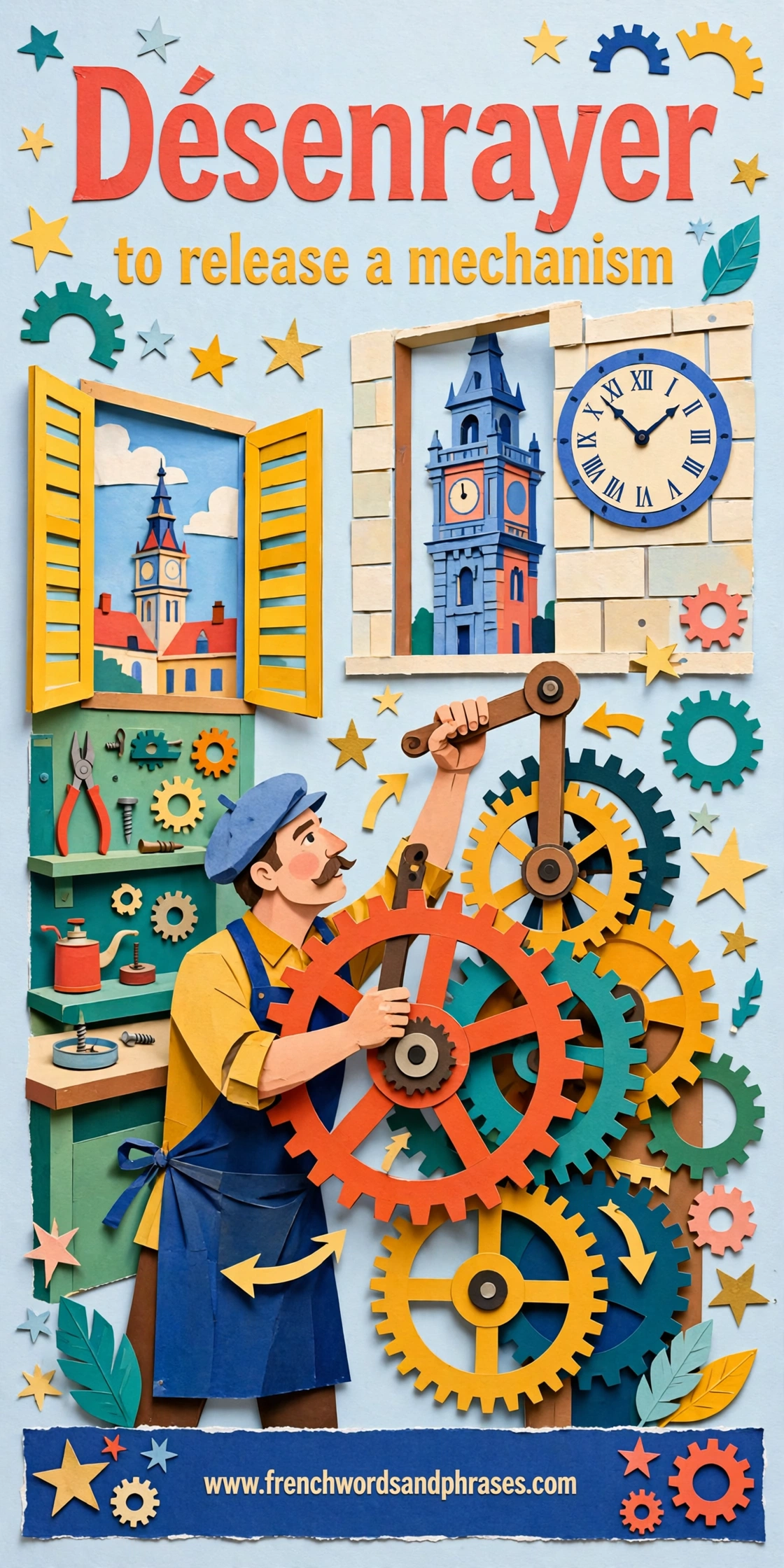
Désenrayer means to release a mechanism — to unjam a weapon, a machine or a brake that has seized, and set its moving parts free again.
A rifle that clicks instead of firing on the range, a machine whose wheel stops dead mid-cycle, a bicycle brake locked by rust — désenrayer is the armourer’s and mechanic’s verb: finding the jam, clearing it, and feeling the mechanism breathe again.
In this guide, you’ll learn how to conjugate désenrayer in all the major French tenses and moods. Explore complete conjugation tables, French examples, English translations, and practice quizzes.
Understanding the French Verb Désenrayer
Désenrayer is a regular French verb belonging to the first group of verbs, those ending in-er.
It means to release a mechanism. It is a technical verb of armourers, mechanics and cyclists — used of firearms that jam, machinery that seizes and brakes that lock. Outside workshops it is rare, but anyone who has freed a stuck mechanism has done exactly what it says.
Verb classification: First group (-er)
Auxiliary verb: Avoir
Past participle: désenrayé
Present participle: désenrayant
English equivalents: To release a mechanism, to unjam, to free; désenrayer une arme — to unjam a firearm; désenrayer une machine — to free a jammed machine; désenrayer un frein — to release a seized brake.
One important detail: désenrayer belongs to the -ayer family, where y turns to i before a mute syllable: je désenraie, tu désenraies, ils désenraient, future je désenraierai; the y survives in nous désenrayons, vous désenrayez, je désenrayais. Inside the word is the machine itself: enrayer is to jam (a spoke in the wheel, literally — un rayon is a spoke), and désenrayer takes the spoke out. Past participle désenrayé.
Experience the Word
Désenrayer is the verb of the satisfying click — the moment the seized wheel turns, the slide runs, the machine remembers its job.
Imagine a shooting range in the rain. A young soldier’s rifle jams on the third shot; the instructor takes it, clears the chamber with two calm movements — il désenraie l’arme — and hands it back without a word, the way a doctor hands back a patient.
No force was needed, just knowledge. The weapon was unjammed — désenrayée — and the exercise went on.
How to Conjugate Désenrayer: Complete French Conjugation Guide
Let’s explore every major conjugation of désenrayer, beginning with the indicative mood.
How to Conjugate Désenrayer in the Indicative Mood
The indicative mood is used to express facts, observations, actions, and events.
How to Conjugate Désenrayer in the Present Tense (Présent)
Used for actions happening now, habitual actions, and general truths.
| Subject | Conjugation |
|---|---|
| je | désenraie |
| tu | désenraies |
| il / elle | désenraie |
| nous | désenrayons |
| vous | désenrayez |
| ils / elles | désenraient |
Example
L’armurier désenraie le fusil en quelques secondes.
The gunsmith unjams the rifle in a few seconds.
Quick Quiz 1
Complete the sentence:
Nous ______ les machines bloquées chaque matin.
Reveal the answer
désenrayons
Nous désenrayons les machines bloquées chaque matin.
We free the jammed machines every morning.
How to Conjugate Désenrayer in the Passé Composé
Used for completed actions in the past. Désenrayer takes the auxiliary verb avoir.
| Subject | Conjugation |
|---|---|
| j’ | ai désenrayé |
| tu | as désenrayé |
| il / elle | a désenrayé |
| nous | avons désenrayé |
| vous | avez désenrayé |
| ils / elles | ont désenrayé |
Example
Le mécanicien a désenrayé la machine ce matin.
The mechanic freed the jammed machine this morning.
How to Conjugate Désenrayer in the Imparfait (Imperfect Tense)
Used for habitual past actions, descriptions, and ongoing situations in the past.
| Subject | Conjugation |
|---|---|
| je | désenrayais |
| tu | désenrayais |
| il / elle | désenrayait |
| nous | désenrayions |
| vous | désenrayiez |
| ils / elles | désenrayaient |
Example
Autrefois, les soldats désenrayaient leurs armes à la main.
In the old days, soldiers used to unjam their weapons by hand.
Quick Quiz 2
Choose the correct form:
He freed the mechanism.
Il ______ le mécanisme. (a désenrayé / est désenrayé)
Reveal the answer
a désenrayé
Il a désenrayé le mécanisme.
Désenrayer takes avoir.
How to Conjugate Désenrayer in the Plus-que-parfait
Used to describe an action that had already been completed before another past event.
| Subject | Conjugation |
|---|---|
| j’ | avais désenrayé |
| tu | avais désenrayé |
| il / elle | avait désenrayé |
| nous | avions désenrayé |
| vous | aviez désenrayé |
| ils / elles | avaient désenrayé |
Example
Elle avait désenrayé le frein avant la descente.
She had released the seized brake before the descent.
How to Conjugate Désenrayer in the Passé Simple
Primarily used in formal writing, literature, and historical narratives. It is rarely used in everyday conversation.
| Subject | Conjugation |
|---|---|
| je | désenrayai |
| tu | désenrayas |
| il / elle | désenraya |
| nous | désenrayâmes |
| vous | désenrayâtes |
| ils / elles | désenrayèrent |
Example
D’un geste sec, il désenraya le mécanisme.
With one sharp movement, he freed the mechanism.
How to Conjugate Désenrayer in the Passé Antérieur
A literary tense used to express an action completed immediately before another past action, generally in the passé simple.
| Subject | Conjugation |
|---|---|
| j’ | eus désenrayé |
| tu | eus désenrayé |
| il / elle | eut désenrayé |
| nous | eûmes désenrayé |
| vous | eûtes désenrayé |
| ils / elles | eurent désenrayé |
Example
Dès qu’il eut désenrayé son arme, l’exercice reprit.
As soon as he had unjammed his weapon, the exercise resumed.
How to Conjugate Désenrayer in the Future Tense (Futur Simple)
Used to describe actions that will take place in the future.
| Subject | Conjugation |
|---|---|
| je | désenraierai |
| tu | désenraieras |
| il / elle | désenraiera |
| nous | désenraierons |
| vous | désenraierez |
| ils / elles | désenraieront |
Example
Demain, l’atelier désenraiera toutes les machines bloquées.
Tomorrow, the workshop will free all the jammed machines.
How to Conjugate Désenrayer in the Futur Antérieur (Future Perfect)
Used for an action that will have been completed before a particular point in the future.
| Subject | Conjugation |
|---|---|
| j’ | aurai désenrayé |
| tu | auras désenrayé |
| il / elle | aura désenrayé |
| nous | aurons désenrayé |
| vous | aurez désenrayé |
| ils / elles | auront désenrayé |
Example
À midi, nous aurons désenrayé le treuil et repris le travail.
By noon, we will have freed the winch and resumed work.
How to Conjugate Désenrayer in the Near Future (Futur Proche)
Used to describe something that is going to happen soon. Formed with aller + infinitive.
| Subject | Conjugation |
|---|---|
| je | vais désenrayer |
| tu | vas désenrayer |
| il / elle | va désenrayer |
| nous | allons désenrayer |
| vous | allez désenrayer |
| ils / elles | vont désenrayer |
Example
Ne tire pas, je vais désenrayer l’arme d’abord.
Do not shoot, I am going to unjam the weapon first.
How to Conjugate Désenrayer in the Conditional Mood
The conditional mood expresses what would happen under certain circumstances. It is also frequently used to make polite requests or express wishes.
How to Conjugate Désenrayer in the Present Conditional
| Subject | Conjugation |
|---|---|
| je | désenraierais |
| tu | désenraierais |
| il / elle | désenraierait |
| nous | désenraierions |
| vous | désenraieriez |
| ils / elles | désenraieraient |
Example
Avec le bon outil, tu désenraierais ce mécanisme en une minute.
With the right tool, you would free this mechanism in a minute.
How to Conjugate Désenrayer in the Past Conditional
| Subject | Conjugation |
|---|---|
| j’ | aurais désenrayé |
| tu | aurais désenrayé |
| il / elle | aurait désenrayé |
| nous | aurions désenrayé |
| vous | auriez désenrayé |
| ils / elles | auraient désenrayé |
Example
Il aurait désenrayé la machine s’il avait eu la clé.
He would have freed the machine if he had had the spanner.
Désenrayer in the Literary Past Conditional Form
This less common literary form uses the imperfect subjunctive of avoir.
| Subject | Conjugation |
|---|---|
| j’ | eusse désenrayé |
| tu | eusses désenrayé |
| il / elle | eût désenrayé |
| nous | eussions désenrayé |
| vous | eussiez désenrayé |
| ils / elles | eussent désenrayé |
Example
Le soldat eût désenrayé son fusil même sous la pluie.
The soldier would have unjammed his rifle even in the rain.
How to Conjugate Désenrayer in the Subjunctive Mood
The subjunctive is used to express wishes, emotions, doubts, necessity, and uncertainty. It frequently follows expressions such as il faut que (it is necessary that) or bien que (although).
How to Conjugate Désenrayer in the Present Subjunctive
| Subject | Conjugation |
|---|---|
| que je | désenraie |
| que tu | désenraies |
| qu’il / qu’elle | désenraie |
| que nous | désenrayions |
| que vous | désenrayiez |
| qu’ils / qu’elles | désenraient |
Example
Il faut que l’armurier désenraie cette arme avant l’inspection.
The gunsmith must unjam this weapon before the inspection.
Quick Quiz 3
Complete the sentence using the subjunctive:
Il faut que vous ______ le treuil avant la nuit.
Reveal the answer
désenrayiez
Il faut que vous désenrayiez le treuil avant la nuit.
You must free the winch before nightfall.
How to Conjugate Désenrayer in the Imperfect Subjunctive
A literary tense, rarely encountered in modern spoken French.
| Subject | Conjugation |
|---|---|
| que je | désenrayasse |
| que tu | désenrayasses |
| qu’il / qu’elle | désenrayât |
| que nous | désenrayassions |
| que vous | désenrayassiez |
| qu’ils / qu’elles | désenrayassent |
Example
Il fallait que le mécanicien désenrayât le treuil avant la nuit.
The mechanic had to free the winch before nightfall.
How to Conjugate Désenrayer in the Pluperfect Subjunctive
A literary construction used to express an action completed before another past action.
| Subject | Conjugation |
|---|---|
| que j’ | eusse désenrayé |
| que tu | eusses désenrayé |
| qu’il / qu’elle | eût désenrayé |
| que nous | eussions désenrayé |
| que vous | eussiez désenrayé |
| qu’ils / qu’elles | eussent désenrayé |
Example
On racontait que le vieux soldat eût désenrayé son arme les yeux fermés.
People said the old soldier had unjammed his weapon with his eyes shut.
How to Conjugate Désenrayer in the Past Subjunctive
| Subject | Conjugation |
|---|---|
| que j’ | aie désenrayé |
| que tu | aies désenrayé |
| qu’il / qu’elle | ait désenrayé |
| que nous | ayons désenrayé |
| que vous | ayez désenrayé |
| qu’ils / qu’elles | aient désenrayé |
Example
Je suis content que tu aies désenrayé le frein à temps.
I am glad you released the seized brake in time.
How to Conjugate Désenrayer in the Imperative
The imperative is used to give commands, instructions, invitations, or suggestions. Subject pronouns are omitted.
How to Conjugate Désenrayer in the Present Imperative
| Person | Conjugation |
|---|---|
| (tu) | désenraie |
| (nous) | désenrayons |
| (vous) | désenrayez |
Example
Désenraie d’abord le mécanisme, ensuite on verra !
Free the mechanism first, then we will see!
Quick Quiz 4
How would you say Unjam the weapon (tu form)?
Reveal the answer
Désenraie l’arme !
French Participles of Désenrayer
Participles are verb forms that can be used in compound tenses and other grammatical constructions.
Present Participle of Désenrayer
désenrayant
En désenrayant la machine, il a trouvé la pièce cassée.
While freeing the machine, he found the broken part.
Past Participle of Désenrayer
désenrayé
Désenrayée et huilée, la vieille machine a redémarré.
Freed and oiled, the old machine started again.
Désenrayer in Everyday French: Real-Life Examples
Now that you know the conjugations, let’s see how désenrayer appears in everyday French.
Example 1 — Present
L’armurier désenraie le fusil.
The gunsmith unjams the rifle.
Example 2 — Passé composé
Le mécanicien a désenrayé la machine.
The mechanic freed the machine.
Example 3 — Imparfait
Les soldats désenrayaient leurs armes à la main.
The soldiers used to unjam their weapons by hand.
Example 4 — Future
L’atelier désenraiera le treuil demain.
The workshop will free the winch tomorrow.
Example 5 — Conditional
Tu désenraierais ce mécanisme avec le bon outil.
You would free this mechanism with the right tool.
Example 6 — Imperative
Désenrayez l’arme avant l’inspection !
Unjam the weapon before the inspection!
Beyond Translation: The Meaning of Désenrayer
The picture inside the word is medieval: un rayon is a spoke, and to enrayer a wheel was to thrust a bar through its spokes so it could not turn — the oldest brake in the world.
Désenrayer pulls the bar back out.
Armourers borrowed it for jammed rifles and mechanics for seized machines, but the image never changed: something has been deliberately stopped, and someone who knows how sets it free.
How to Remember the French Verb Désenrayer
Remember it this way: Désenrayer is about the instructor clearing the jammed rifle with two calm movements.
- Un rayon is a spoke: enrayer jams a bar through the wheel, désenrayer pulls it out.
- -ayer spelling: je désenraie with i, nous désenrayons with y.
- Past participle désenrayé; its world: armes, machines, freins, treuils.
The key idea is the instructor clearing the jammed rifle with two calm movements.
Test Your Knowledge of Désenrayer
Let’s see how much you’ve learned. Try answering these questions before revealing the answers.
Question 1
Why does je désenraie end in -aie while nous désenrayons keeps -ay-?
Reveal the answer
The -ayer rule — y becomes i before a mute syllable (je désenraie) and stays where the ending is sounded (nous désenrayons).
Question 2
How do you say The mechanic freed the jammed machine in French?
Reveal the answer
Le mécanicien a désenrayé la machine.
Question 3
Translate: The gunsmith unjams the rifle in a few seconds.
Reveal the answer
L’armurier désenraie le fusil en quelques secondes.
Question 4
What is the past participle of désenrayer?
Reveal the answer
Désenrayé.
Question 5
Complete the sentence:
Il faut que l’armurier ______ cette arme avant l’inspection.
Reveal the answer
désenraie
Il faut que l’armurier désenraie cette arme avant l’inspection.
The gunsmith must unjam this weapon before the inspection.
Your Final Challenge
Can You Use It?
How would you say this in French?
With one sharp movement, the soldier unjams his rifle and the exercise goes on.
Reveal the answer
D’un geste sec, le soldat désenraie son fusil et l’exercice continue.
With one sharp movement, the soldier unjams his rifle and the exercise goes on.
A little French. A little curiosity. A richer everyday life.
LEARN FRENCH ONE WORD AT A TIME