A French Word to Live By
How to Conjugate Défarder in French
/de.faʁ.de/
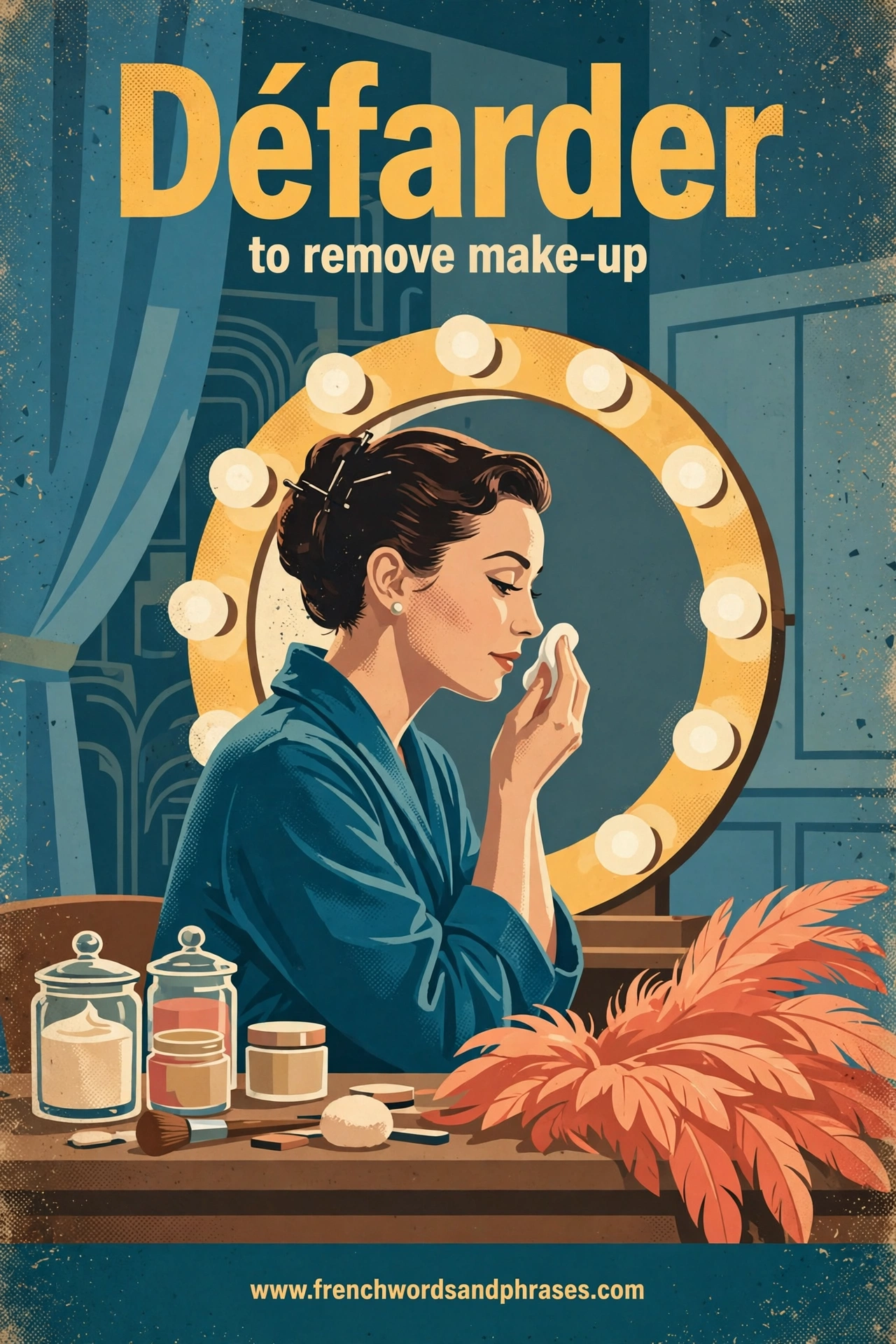
Défarder means to remove make-up.
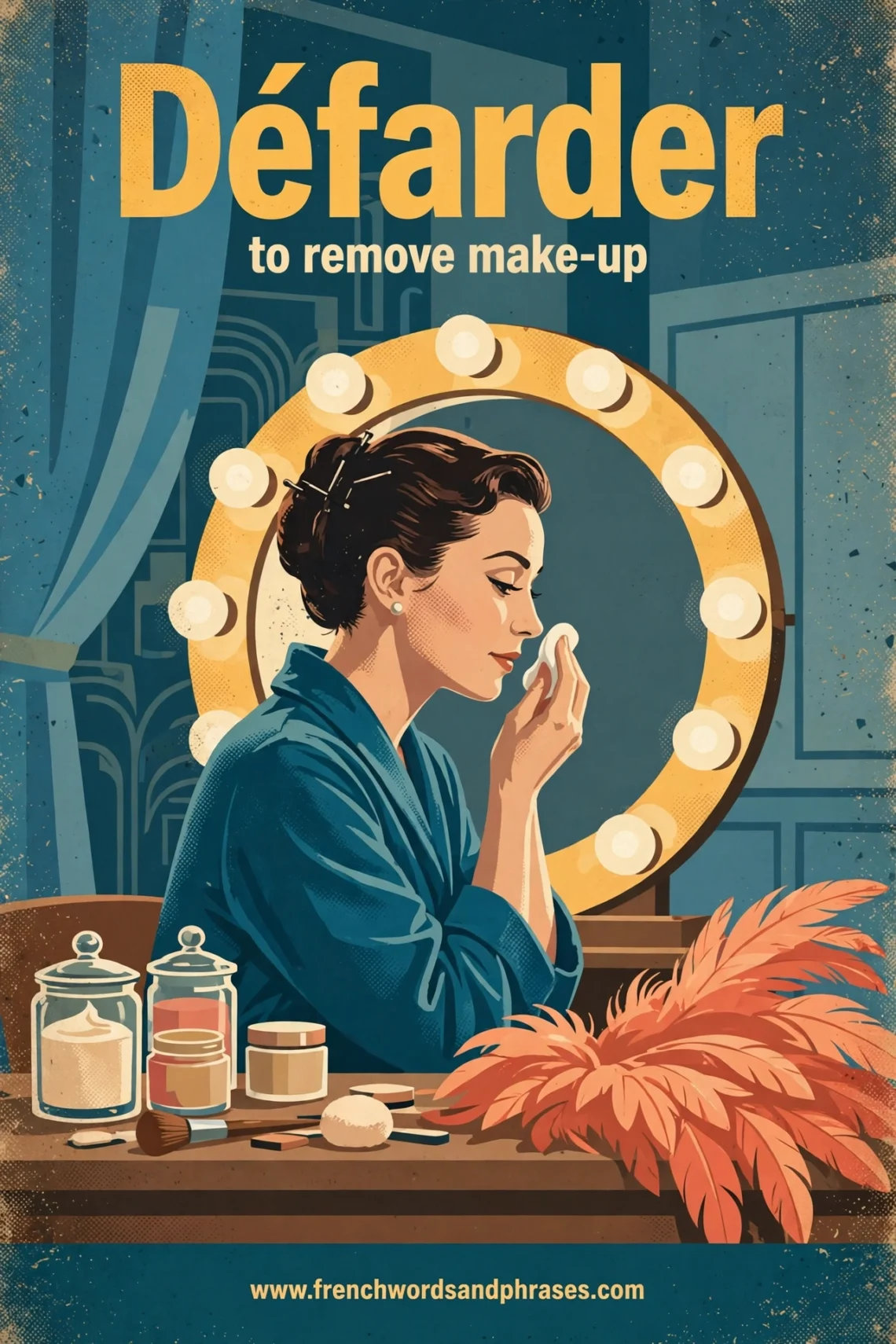
An actress at her mirror after the last curtain, cold cream and cotton wool undoing the face the audience applauded — défarder is the theatre’s verb for taking the make-up off and giving the skin its own face back.
In this guide, you’ll learn how to conjugate défarder in all the major French tenses and moods. Explore complete conjugation tables, French examples, English translations, and practice quizzes.
Understanding the French Verb Défarder
Défarder is a regular French verb belonging to the first group of verbs, those ending in -er.
It means to remove make-up. It is commonly used in the theatre for removing stage make-up after a performance, in older novels for a woman taking off her rouge before bed, and in the reflexive — se défarder — for the nightly ritual itself.
Verb classification: First group (-er)
Auxiliary verb: Avoir
Past participle: défardé
Present participle: défardant
English equivalents: To remove make-up (from); se défarder — to take one’s make-up off; le fard — rouge, make-up.
One important detail: défarder is built on le fard — rouge, make-up, the painted face — and dé- takes it off again. The verb keeps a theatrical, slightly old-fashioned flavour: an actor is défardé by the make-up artist, and a heroine of a novel se défarde before bed. In today’s bathroom, the everyday verb is démaquiller and the remover is le démaquillant; défarder survives backstage and in literature.
Experience the Word
Défarder is the verb of the face coming home — the character wiped away, the person looking back from the mirror.
Imagine a dressing room after the show. The applause is still in the corridor, but at the mirror the actress works quietly with cream and cotton: the queen, the villain, the lover — all défardés into a jar, until only her own tired, smiling face remains.
The performance has not been diminished. It has been taken off — défardé, wiped clean, ready for tomorrow.
How to Conjugate Défarder: Complete French Conjugation Guide
Let’s explore every major conjugation of défarder, beginning with the indicative mood.
How to Conjugate Défarder in the Indicative Mood
The indicative mood is used to express facts, observations, actions, and events.
How to Conjugate Défarder in the Present Tense (Présent)
Used for actions happening now, habitual actions, and general truths.
| Subject | Conjugation |
|---|---|
| je | défarde |
| tu | défardes |
| il / elle | défarde |
| nous | défardons |
| vous | défardez |
| ils / elles | défardent |
Example
La maquilleuse défarde les acteurs après le spectacle.
The make-up artist removes the actors’ make-up after the show.
Quick Quiz 1
Complete the sentence:
Nous ______ les acteurs après le spectacle.
Reveal the answer
défardons
Nous défardons les acteurs après le spectacle.
We remove the actors’ make-up after the show.
How to Conjugate Défarder in the Passé Composé
Used for completed actions in the past. Défarder takes the auxiliary verb avoir.
| Subject | Conjugation |
|---|---|
| j’ | ai défardé |
| tu | as défardé |
| il / elle | a défardé |
| nous | avons défardé |
| vous | avez défardé |
| ils / elles | ont défardé |
Example
Elle a défardé la comédienne en dix minutes.
She removed the actress’s make-up in ten minutes.
How to Conjugate Défarder in the Imparfait (Imperfect Tense)
Used for habitual past actions, descriptions, and ongoing situations in the past.
| Subject | Conjugation |
|---|---|
| je | défardais |
| tu | défardais |
| il / elle | défardait |
| nous | défardions |
| vous | défardiez |
| ils / elles | défardaient |
Example
Chaque soir, la logeuse défardait les danseuses une à une.
Every evening, the dresser used to remove the dancers’ make-up one by one.
Quick Quiz 2
Choose the correct form:
She removed the actress’s make-up.
Elle ______ la comédienne. (a défardé / est défardée)
Reveal the answer
a défardé
Elle a défardé la comédienne.
Défarder takes avoir.
How to Conjugate Défarder in the Plus-que-parfait
Used to describe an action that had already been completed before another past event.
| Subject | Conjugation |
|---|---|
| j’ | avais défardé |
| tu | avais défardé |
| il / elle | avait défardé |
| nous | avions défardé |
| vous | aviez défardé |
| ils / elles | avaient défardé |
Example
Il avait défardé le clown avant son départ.
He had removed the clown’s make-up before his departure.
How to Conjugate Défarder in the Passé Simple
Primarily used in formal writing, literature, and historical narratives. It is rarely used in everyday conversation.
| Subject | Conjugation |
|---|---|
| je | défardai |
| tu | défardas |
| il / elle | défarda |
| nous | défardâmes |
| vous | défardâtes |
| ils / elles | défardèrent |
Example
Elle défarda le vieil acteur avec douceur.
She gently removed the old actor’s make-up.
How to Conjugate Défarder in the Passé Antérieur
A literary tense used to express an action completed immediately before another past action, generally in the passé simple.
| Subject | Conjugation |
|---|---|
| j’ | eus défardé |
| tu | eus défardé |
| il / elle | eut défardé |
| nous | eûmes défardé |
| vous | eûtes défardé |
| ils / elles | eurent défardé |
Example
Quand elle eut défardé la chanteuse, la loge retrouva son calme.
When she had removed the singer’s make-up, the dressing room became calm again.
How to Conjugate Défarder in the Future Tense (Futur Simple)
Used to describe actions that will take place in the future.
| Subject | Conjugation |
|---|---|
| je | défarderai |
| tu | défarderas |
| il / elle | défardera |
| nous | défarderons |
| vous | défarderez |
| ils / elles | défarderont |
Example
Ce soir, tu défarderas les enfants après la fête.
This evening, you will remove the children’s make-up after the party.
How to Conjugate Défarder in the Futur Antérieur (Future Perfect)
Used for an action that will have been completed before a particular point in the future.
| Subject | Conjugation |
|---|---|
| j’ | aurai défardé |
| tu | auras défardé |
| il / elle | aura défardé |
| nous | aurons défardé |
| vous | aurez défardé |
| ils / elles | auront défardé |
Example
À minuit, elle aura défardé toute la troupe.
By midnight, she will have removed the whole company’s make-up.
How to Conjugate Défarder in the Near Future (Futur Proche)
Used to describe something that is going to happen soon. Formed with aller + infinitive.
| Subject | Conjugation |
|---|---|
| je | vais défarder |
| tu | vas défarder |
| il / elle | va défarder |
| nous | allons défarder |
| vous | allez défarder |
| ils / elles | vont défarder |
Example
Je vais défarder le comédien, il a fini pour aujourd’hui.
I am going to remove the actor’s make-up, he has finished for today.
How to Conjugate Défarder in the Conditional Mood
The conditional mood expresses what would happen under certain circumstances. It is also frequently used to make polite requests or express wishes.
How to Conjugate Défarder in the Present Conditional
| Subject | Conjugation |
|---|---|
| je | défarderais |
| tu | défarderais |
| il / elle | défarderait |
| nous | défarderions |
| vous | défarderiez |
| ils / elles | défarderaient |
Example
Avec une bonne crème, on défarderait ce maquillage en un instant.
With a good cream, we would remove this make-up in an instant.
How to Conjugate Défarder in the Past Conditional
| Subject | Conjugation |
|---|---|
| j’ | aurais défardé |
| tu | aurais défardé |
| il / elle | aurait défardé |
| nous | aurions défardé |
| vous | auriez défardé |
| ils / elles | auraient défardé |
Example
Elle aurait défardé les acteurs plus tôt sans la deuxième représentation.
She would have removed the actors’ make-up earlier without the second performance.
Défarder in the Literary Past Conditional Form
This less common literary form uses the imperfect subjunctive of avoir.
| Subject | Conjugation |
|---|---|
| j’ | eusse défardé |
| tu | eusses défardé |
| il / elle | eût défardé |
| nous | eussions défardé |
| vous | eussiez défardé |
| ils / elles | eussent défardé |
Example
La camériste eût défardé la marquise avant le souper.
The lady’s maid would have removed the marquise’s make-up before supper.
How to Conjugate Défarder in the Subjunctive Mood
The subjunctive is used to express wishes, emotions, doubts, necessity, and uncertainty. It frequently follows expressions such as il faut que (it is necessary that) or bien que (although).
How to Conjugate Défarder in the Present Subjunctive
| Subject | Conjugation |
|---|---|
| que je | défarde |
| que tu | défardes |
| qu’il / qu’elle | défarde |
| que nous | défardions |
| que vous | défardiez |
| qu’ils / qu’elles | défardent |
Example
Il faut que tu défardes les enfants avant le coucher.
You must remove the children’s make-up before bedtime.
Quick Quiz 3
Complete the sentence using the subjunctive:
Il faut que vous ______ la troupe.
Reveal the answer
défardiez
Il faut que vous défardiez la troupe.
You must remove the company’s make-up.
How to Conjugate Défarder in the Imperfect Subjunctive
A literary tense, rarely encountered in modern spoken French.
| Subject | Conjugation |
|---|---|
| que je | défardasse |
| que tu | défardasses |
| qu’il / qu’elle | défardât |
| que nous | défardassions |
| que vous | défardassiez |
| qu’ils / qu’elles | défardassent |
Example
La directrice voulait que la maquilleuse défardât les acteurs dès la sortie de scène.
The director wanted the make-up artist to remove the actors’ make-up as soon as they left the stage.
How to Conjugate Défarder in the Pluperfect Subjunctive
A literary construction used to express an action completed before another past action.
| Subject | Conjugation |
|---|---|
| que j’ | eusse défardé |
| que tu | eusses défardé |
| qu’il / qu’elle | eût défardé |
| que nous | eussions défardé |
| que vous | eussiez défardé |
| qu’ils / qu’elles | eussent défardé |
Example
Le régisseur attendit qu’elle eût défardé le dernier danseur.
The stage manager waited until she had removed the last dancer’s make-up.
How to Conjugate Défarder in the Past Subjunctive
| Subject | Conjugation |
|---|---|
| que j’ | aie défardé |
| que tu | aies défardé |
| qu’il / qu’elle | ait défardé |
| que nous | ayons défardé |
| que vous | ayez défardé |
| qu’ils / qu’elles | aient défardé |
Example
Je suis content que vous ayez défardé les enfants avant la photo de famille.
I am glad you removed the children’s make-up before the family photo.
How to Conjugate Défarder in the Imperative
The imperative is used to give commands, instructions, invitations, or suggestions. Subject pronouns are omitted.
How to Conjugate Défarder in the Present Imperative
| Person | Conjugation |
|---|---|
| (tu) | défarde |
| (nous) | défardons |
| (vous) | défardez |
Example
Défardons les acteurs, le spectacle est fini !
Let us remove the actors’ make-up, the show is over!
Quick Quiz 4
How would you say Let us remove the actors’ make-up?
Reveal the answer
Défardons les acteurs !
French Participles of Défarder
Participles are verb forms that can be used in compound tenses and other grammatical constructions.
Present Participle of Défarder
défardant
En défardant la troupe, elle chantonnait.
While removing the company’s make-up, she hummed.
Past Participle of Défarder
défardé
Défardée et fatiguée, l’actrice a enfin souri.
Her make-up removed and tired, the actress finally smiled.
Défarder in Everyday French: Real-Life Examples
Now that you know the conjugations, let’s see how défarder appears in everyday French.
Example 1 — Present
La maquilleuse défarde les danseuses après le spectacle.
The make-up artist removes the dancers’ make-up after the show.
Example 2 — Passé composé
Elle s’est défardée avant de se coucher.
She took her make-up off before going to bed.
Example 3 — Imparfait
Au théâtre, on défardait les acteurs dans les loges.
At the theatre, they used to remove the actors’ make-up in the dressing rooms.
Example 4 — Future
Tu défarderas les enfants après la kermesse.
You will remove the children’s make-up after the fair.
Example 5 — Conditional
Je défarderais la troupe entière si on me laissait le temps.
I would remove the whole company’s make-up if I were given the time.
Example 6 — Imperative
Défardons la troupe avant le souper !
Let us remove the company’s make-up before supper!
Beyond Translation: The Meaning of Défarder
English says remove your make-up and thinks no more of it; French défarder remembers when make-up was fard — paint, rouge, a second face.
It is the backstage verb.
Démaquiller belongs to the bathroom shelf; défarder belongs to the dressing room, the novel and the last cotton pad of the evening, when the character comes off and the person comes back.
How to Remember the French Verb Défarder
Remember it this way: Défarder is about the face coming home — stage paint off, skin back.
- Le fard — rouge, make-up; défarder takes the fard off again.
- Se défarder — to take your own make-up off; the everyday modern cousin is se démaquiller.
- Regular -er: je défarde, nous défardons, past participle défardé.
The key idea is the face coming home — stage paint off, skin back.
Test Your Knowledge of Défarder
Let’s see how much you’ve learned. Try answering these questions before revealing the answers.
Question 1
What is le fard?
Reveal the answer
Rouge, make-up — the painted face that défarder removes.
Question 2
How do you say She took her make-up off before bed in French?
Reveal the answer
Elle s’est défardée avant de se coucher.
Question 3
Translate: The make-up artist removes the actors’ make-up.
Reveal the answer
La maquilleuse défarde les acteurs.
Question 4
What is the past participle of défarder?
Reveal the answer
Défardé.
Question 5
Complete the sentence:
Il faut que tu ______ les enfants avant le coucher.
Reveal the answer
défardes
Il faut que tu défardes les enfants avant le coucher.
You must remove the children’s make-up before bedtime.
Your Final Challenge
Can You Use It?
How would you say this in French?
She removes the actress’s make-up, and the dressing room falls silent again.
Reveal the answer
Elle défarde la comédienne, et la loge redevient silencieuse.
She removes the actress’s make-up, and the dressing room falls silent again.
A little French. A little curiosity. A richer everyday life.
LEARN FRENCH ONE WORD AT A TIME