A French Word to Live By
How to Conjugate Blaguer in French
/bla.ɡe/
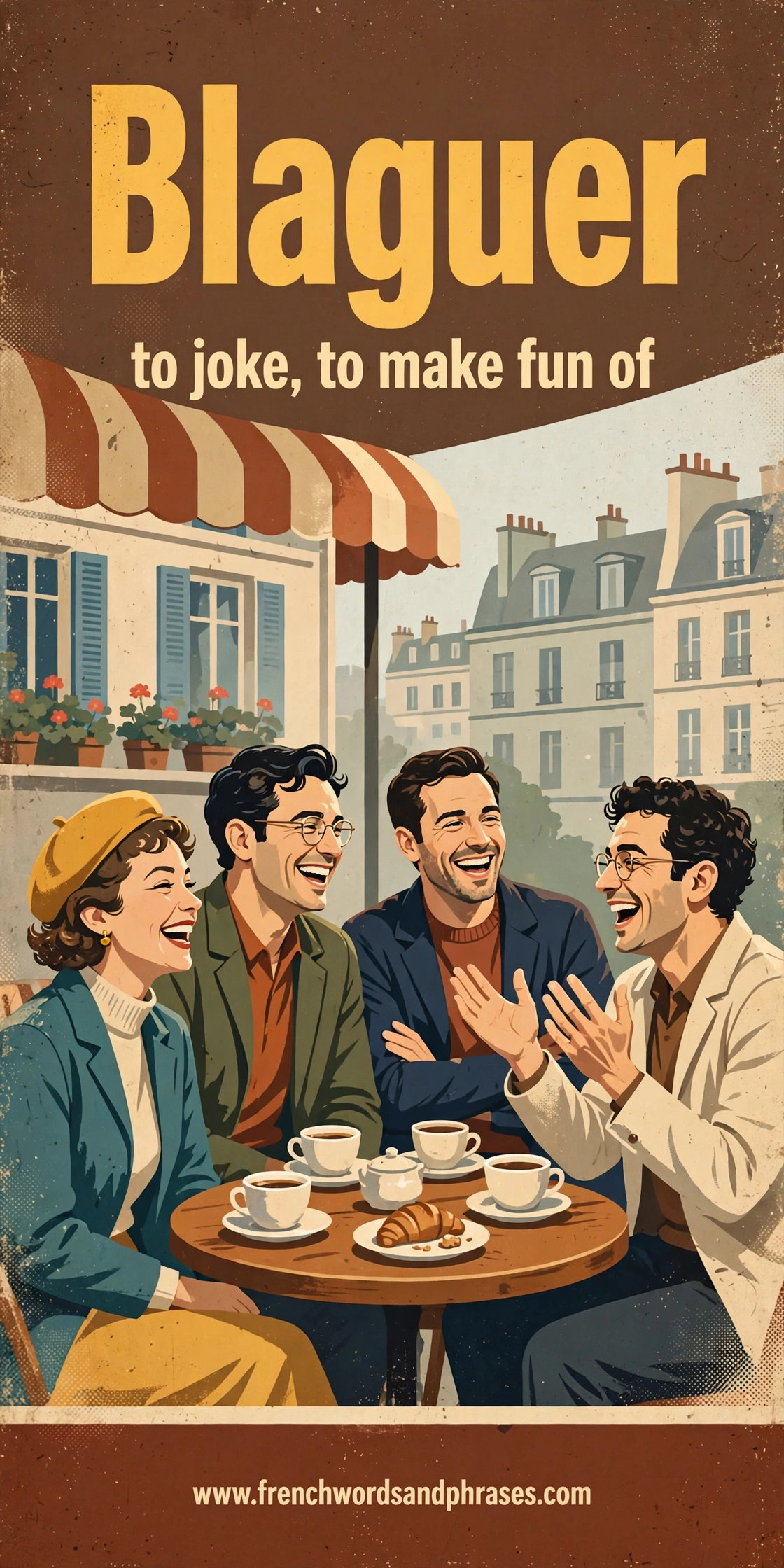
Blaguer means to joke, to make fun of — to treat the world, and everyone in it, as material for a laugh.
A grandfather who cannot tell a story without a punchline, a colleague who defuses every tense meeting with one dry remark — blaguer is the familiar verb of joking: teasing, kidding and laughing things off.
In this guide, you’ll learn how to conjugate blaguer in all the major French tenses and moods. Explore complete conjugation tables, French examples, English translations, and practice quizzes.
Understanding the French Verb Blaguer
Blaguer is a regular French verb belonging to the first group of verbs, those ending in -er.
It means to joke, to make fun of. It covers both joking with people (blaguer avec ses amis) and joking about things (blaguer sur la météo), and it is the natural verb behind the question tu blagues ou tu es sérieux ? — are you joking or are you serious? It is warm rather than cruel: blaguer teases, it does not attack.
Verb classification: First group (-er)
Auxiliary verb: Avoir
Past participle: blagué
Present participle: blaguant
English equivalents: To joke, to kid, to make fun of (familiar); blaguer avec quelqu’un — to joke with someone; blaguer sur quelque chose — to joke about something; tu blagues ! — you must be joking!; sans blague ! — no kidding!
One important detail: blaguer is a familiar verb — the everyday spoken word for joking, where a formal text would use plaisanter. Watch the -gu-: the u is kept everywhere so the g stays hard, even before a and o: je blaguais, nous blaguons, en blaguant — never drop it. The family is everywhere in spoken French: une blague is a joke (and also a small tobacco pouch, an old second sense), and the cry sans blague ! means no kidding, honestly!
Experience the Word
Blaguer is the verb of the family joker — every subject is a pretext, every silence an invitation.
Imagine a Sunday lunch that has gone slightly wrong: the roast is dry, the guests are polite, the conversation is dying. Then Uncle Marcel leans back and starts to blaguer — about the roast, about the weather, about his own bald head — and within two minutes the whole table is laughing and the dry roast no longer matters.
Nothing on the table has changed. He has joked — il a blagué — and the meal is saved.
How to Conjugate Blaguer: Complete French Conjugation Guide
Let’s explore every major conjugation of blaguer, beginning with the indicative mood.
How to Conjugate Blaguer in the Indicative Mood
The indicative mood is used to express facts, observations, actions, and events.
How to Conjugate Blaguer in the Present Tense (Présent)
Used for actions happening now, habitual actions, and general truths.
| Subject | Conjugation |
|---|---|
| je | blague |
| tu | blagues |
| il / elle | blague |
| nous | blaguons |
| vous | blaguez |
| ils / elles | blaguent |
Example
Tu blagues ou tu es sérieux ?
Are you joking or are you serious?
Quick Quiz 1
Complete the sentence:
Nous ______ avec les invités.
Reveal the answer
blaguons
Nous blaguons avec les invités.
We are joking with the guests.
How to Conjugate Blaguer in the Passé Composé
Used for completed actions in the past. Blaguer takes the auxiliary verb avoir.
| Subject | Conjugation |
|---|---|
| j’ | ai blagué |
| tu | as blagué |
| il / elle | a blagué |
| nous | avons blagué |
| vous | avez blagué |
| ils / elles | ont blagué |
Example
Il a blagué toute la soirée avec les invités.
He joked all evening with the guests.
How to Conjugate Blaguer in the Imparfait (Imperfect Tense)
Used for habitual past actions, descriptions, and ongoing situations in the past.
| Subject | Conjugation |
|---|---|
| je | blaguais |
| tu | blaguais |
| il / elle | blaguait |
| nous | blaguions |
| vous | blaguiez |
| ils / elles | blaguaient |
Example
Mon grand-père blaguait sans cesse, même à table.
My grandfather was always joking, even at the table.
Quick Quiz 2
Choose the correct form:
He joked all evening.
Il ______ toute la soirée. (a blagué / est blagué)
Reveal the answer
a blagué
Il a blagué toute la soirée.
Blaguer takes avoir.
How to Conjugate Blaguer in the Plus-que-parfait
Used to describe an action that had already been completed before another past event.
| Subject | Conjugation |
|---|---|
| j’ | avais blagué |
| tu | avais blagué |
| il / elle | avait blagué |
| nous | avions blagué |
| vous | aviez blagué |
| ils / elles | avaient blagué |
Example
Elle avait blagué sur son retard, puis elle s’était excusée.
She had joked about being late, then she had apologised.
How to Conjugate Blaguer in the Passé Simple
Primarily used in formal writing, literature, and historical narratives. It is rarely used in everyday conversation.
| Subject | Conjugation |
|---|---|
| je | blaguai |
| tu | blaguas |
| il / elle | blagua |
| nous | blaguâmes |
| vous | blaguâtes |
| ils / elles | blaguèrent |
Example
Le clown blagua, et toute la salle éclata de rire.
The clown joked, and the whole room burst out laughing.
How to Conjugate Blaguer in the Passé Antérieur
A literary tense used to express an action completed immediately before another past action, generally in the passé simple.
| Subject | Conjugation |
|---|---|
| j’ | eus blagué |
| tu | eus blagué |
| il / elle | eut blagué |
| nous | eûmes blagué |
| vous | eûtes blagué |
| ils / elles | eurent blagué |
Example
Quand il eut blagué un moment, l’ambiance se détendit.
When he had joked for a moment, the atmosphere relaxed.
How to Conjugate Blaguer in the Future Tense (Futur Simple)
Used to describe actions that will take place in the future.
| Subject | Conjugation |
|---|---|
| je | blaguerai |
| tu | blagueras |
| il / elle | blaguera |
| nous | blaguerons |
| vous | blaguerez |
| ils / elles | blagueront |
Example
Demain, on blaguera moins : l’examen approche.
Tomorrow we will joke less: the exam is coming.
How to Conjugate Blaguer in the Futur Antérieur (Future Perfect)
Used for an action that will have been completed before a particular point in the future.
| Subject | Conjugation |
|---|---|
| j’ | aurai blagué |
| tu | auras blagué |
| il / elle | aura blagué |
| nous | aurons blagué |
| vous | aurez blagué |
| ils / elles | auront blagué |
Example
À la fin de la soirée, ils auront blagué sur tout le monde.
By the end of the evening, they will have made fun of everyone.
How to Conjugate Blaguer in the Near Future (Futur Proche)
Used to describe something that is going to happen soon. Formed with aller + infinitive.
| Subject | Conjugation |
|---|---|
| je | vais blaguer |
| tu | vas blaguer |
| il / elle | va blaguer |
| nous | allons blaguer |
| vous | allez blaguer |
| ils / elles | vont blaguer |
Example
Attention, il va blaguer sur ta nouvelle coiffure.
Careful, he is going to make fun of your new haircut.
How to Conjugate Blaguer in the Conditional Mood
The conditional mood expresses what would happen under certain circumstances. It is also frequently used to make polite requests or express wishes.
How to Conjugate Blaguer in the Present Conditional
| Subject | Conjugation |
|---|---|
| je | blaguerais |
| tu | blaguerais |
| il / elle | blaguerait |
| nous | blaguerions |
| vous | blagueriez |
| ils / elles | blagueraient |
Example
Sans la présence du directeur, nous blaguerions davantage.
Without the boss present, we would joke more.
How to Conjugate Blaguer in the Past Conditional
| Subject | Conjugation |
|---|---|
| j’ | aurais blagué |
| tu | aurais blagué |
| il / elle | aurait blagué |
| nous | aurions blagué |
| vous | auriez blagué |
| ils / elles | auraient blagué |
Example
Elle aurait blagué si l’ambiance avait été moins tendue.
She would have joked if the atmosphere had been less tense.
Blaguer in the Literary Past Conditional Form
This less common literary form uses the imperfect subjunctive of avoir.
| Subject | Conjugation |
|---|---|
| j’ | eusse blagué |
| tu | eusses blagué |
| il / elle | eût blagué |
| nous | eussions blagué |
| vous | eussiez blagué |
| ils / elles | eussent blagué |
Example
Il eût blagué volontiers, mais la nouvelle était grave.
He would gladly have joked, but the news was serious.
How to Conjugate Blaguer in the Subjunctive Mood
The subjunctive is used to express wishes, emotions, doubts, necessity, and uncertainty. It frequently follows expressions such as il faut que (it is necessary that) or bien que (although).
How to Conjugate Blaguer in the Present Subjunctive
| Subject | Conjugation |
|---|---|
| que je | blague |
| que tu | blagues |
| qu’il / qu’elle | blague |
| que nous | blaguions |
| que vous | blaguiez |
| qu’ils / qu’elles | blaguent |
Example
Il faut que tu blagues un peu pour détendre l’atmosphère.
You need to joke a little to lighten the mood.
Quick Quiz 3
Complete the sentence using the subjunctive:
Il faut que vous ______ un peu avec nous.
Reveal the answer
blaguiez
Il faut que vous blaguiez un peu avec nous.
You must joke a little with us.
How to Conjugate Blaguer in the Imperfect Subjunctive
A literary tense, rarely encountered in modern spoken French.
| Subject | Conjugation |
|---|---|
| que je | blaguasse |
| que tu | blaguasses |
| qu’il / qu’elle | blaguât |
| que nous | blaguassions |
| que vous | blaguassiez |
| qu’ils / qu’elles | blaguassent |
Example
Je ne croyais pas qu’il blaguât en pareil moment.
I did not think he would joke at such a moment.
How to Conjugate Blaguer in the Pluperfect Subjunctive
A literary construction used to express an action completed before another past action.
| Subject | Conjugation |
|---|---|
| que j’ | eusse blagué |
| que tu | eusses blagué |
| qu’il / qu’elle | eût blagué |
| que nous | eussions blagué |
| que vous | eussiez blagué |
| qu’ils / qu’elles | eussent blagué |
Example
On doutait qu’il eût blagué avec le président lui-même.
People doubted he had joked with the president himself.
How to Conjugate Blaguer in the Past Subjunctive
| Subject | Conjugation |
|---|---|
| que j’ | aie blagué |
| que tu | aies blagué |
| qu’il / qu’elle | ait blagué |
| que nous | ayons blagué |
| que vous | ayez blagué |
| qu’ils / qu’elles | aient blagué |
Example
Je suis content qu’elle ait blagué malgré la mauvaise nouvelle.
I am glad she joked despite the bad news.
How to Conjugate Blaguer in the Imperative
The imperative is used to give commands, instructions, invitations, or suggestions. Subject pronouns are omitted.
How to Conjugate Blaguer in the Present Imperative
| Person | Conjugation |
|---|---|
| (tu) | blague |
| (nous) | blaguons |
| (vous) | blaguez |
Example
Blague avec nous, ne reste pas dans ton coin !
Joke with us, do not stay in your corner!
Quick Quiz 4
How would you say Joke a little, relax (tu form)?
Reveal the answer
Blague un peu, détends-toi !
French Participles of Blaguer
Participles are verb forms that can be used in compound tenses and other grammatical constructions.
Present Participle of Blaguer
blaguant
En blaguant, il a dit une vérité que personne n’osait dire.
While joking, he said a truth nobody dared to say.
Past Participle of Blaguer
blagué
Après avoir blagué toute la journée, il est devenu sérieux d’un coup.
After joking all day, he suddenly turned serious.
Blaguer in Everyday French: Real-Life Examples
Now that you know the conjugations, let’s see how blaguer appears in everyday French.
Example 1 — Present
Tu blagues, ce n’est pas possible !
You are joking, that is not possible!
Example 2 — Passé composé
On a blagué toute la soirée.
We joked all evening.
Example 3 — Imparfait
Il blaguait même pendant les cours.
He used to joke even during lessons.
Example 4 — Future
On blaguera après l’examen.
We will joke after the exam.
Example 5 — Conditional
Elle blaguerait si elle était moins fatiguée.
She would joke if she were less tired.
Example 6 — Imperative
Blaguez un peu, détendez-vous !
Joke a little, relax!
Beyond Translation: The Meaning of Blaguer
English joke is neutral; French blaguer is the spoken, friendly member of a small family — plaisanter is its well-dressed cousin, rigoler laughs harder, and se moquer turns the joke against someone.
Une blague is also a thing you can hold.
Before it meant a joke, une blague was a little pouch for tobacco — the story goes that tall tales were told while the pouch went round. The verb kept the sociable side of that scene: blaguer is joking as a way of being together, not a performance.
How to Remember the French Verb Blaguer
Remember it this way: Blaguer is about Uncle Marcel at Sunday lunch, turning a dry roast into an evening of laughter.
- Une blague is a joke; blaguer is to spend the evening making them — tu blagues ! = you must be joking!
- Familiar register: plaisanter is the formal twin; sans blague ! = no kidding!
- Keep the u of -gu- everywhere: je blaguais, nous blaguons, en blaguant — the g stays hard.
The key idea is Uncle Marcel at Sunday lunch, turning a dry roast into an evening of laughter.
Test Your Knowledge of Blaguer
Let’s see how much you’ve learned. Try answering these questions before revealing the answers.
Question 1
What does sans blague ! mean?
Reveal the answer
No kidding! — literally ‘without joke’, used to mean honestly, really.
Question 2
How do you say Are you joking or are you serious in French?
Reveal the answer
Tu blagues ou tu es sérieux ?
Question 3
Translate: We joked all evening.
Reveal the answer
On a blagué toute la soirée.
Question 4
What is the past participle of blaguer?
Reveal the answer
Blagué.
Question 5
Complete the sentence:
Il faut que tu ______ un peu pour détendre l’atmosphère.
Reveal the answer
blagues
Il faut que tu blagues un peu pour détendre l’atmosphère.
You need to joke a little to lighten the mood.
Your Final Challenge
Can You Use It?
How would you say this in French?
He jokes about everything, even about his own illness, and that is how he copes.
Reveal the answer
Il blague sur tout, même sur sa propre maladie, et c’est ainsi qu’il tient le coup.
He jokes about everything, even about his own illness, and that is how he copes.
A little French. A little curiosity. A richer everyday life.
LEARN FRENCH ONE WORD AT A TIME